• KGS/USD = 0.01144 0%
  • KZT/USD = 0.00204 0%
  • TJS/USD = 0.10394 -0.38%
  • UZS/USD = 0.00008 0%
  • TMT/USD = 0.28571 0%
  • KGS/USD = 0.01144 0%
  • KZT/USD = 0.00204 0%
  • TJS/USD = 0.10394 -0.38%
  • UZS/USD = 0.00008 0%
  • TMT/USD = 0.28571 0%
  • KGS/USD = 0.01144 0%
  • KZT/USD = 0.00204 0%
  • TJS/USD = 0.10394 -0.38%
  • UZS/USD = 0.00008 0%
  • TMT/USD = 0.28571 0%
  • KGS/USD = 0.01144 0%
  • KZT/USD = 0.00204 0%
  • TJS/USD = 0.10394 -0.38%
  • UZS/USD = 0.00008 0%
  • TMT/USD = 0.28571 0%
  • KGS/USD = 0.01144 0%
  • KZT/USD = 0.00204 0%
  • TJS/USD = 0.10394 -0.38%
  • UZS/USD = 0.00008 0%
  • TMT/USD = 0.28571 0%
  • KGS/USD = 0.01144 0%
  • KZT/USD = 0.00204 0%
  • TJS/USD = 0.10394 -0.38%
  • UZS/USD = 0.00008 0%
  • TMT/USD = 0.28571 0%
  • KGS/USD = 0.01144 0%
  • KZT/USD = 0.00204 0%
  • TJS/USD = 0.10394 -0.38%
  • UZS/USD = 0.00008 0%
  • TMT/USD = 0.28571 0%
  • KGS/USD = 0.01144 0%
  • KZT/USD = 0.00204 0%
  • TJS/USD = 0.10394 -0.38%
  • UZS/USD = 0.00008 0%
  • TMT/USD = 0.28571 0%

Viewing results 1687 - 1692 of 2730

Samarkand Replaces Paris as Host of UNESCO Conference

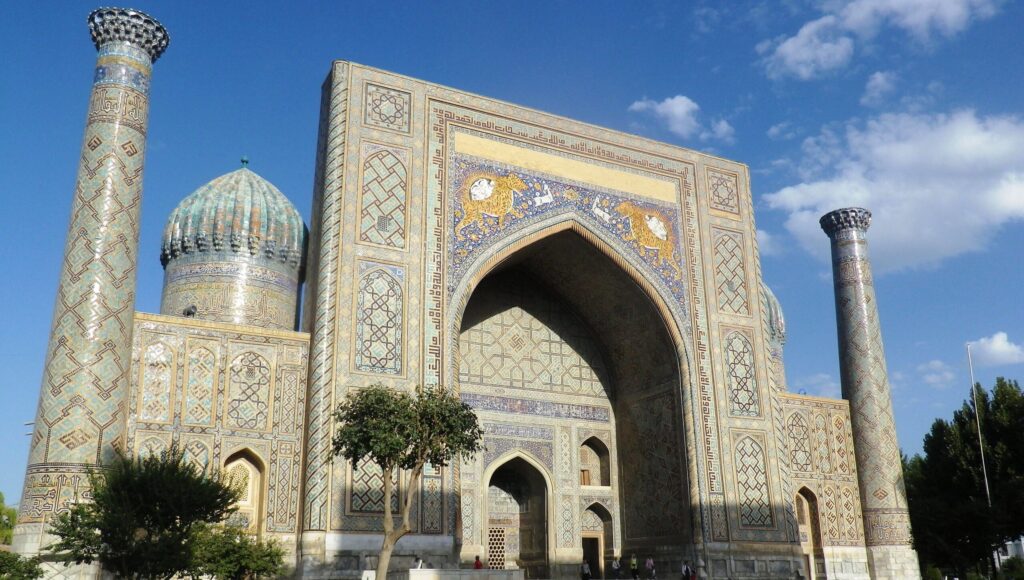
The Silk Road Samarkand tourism and convention complex will host the 43rd session of the UNESCO General Conference in 2025 -- the first time the globally significant event will be held outside of Paris since 1985. The conference will focus on discussions and decisions on UNESCO's activities. Besides Samarkand, conference events will also be held in the cities of Tashkent, Bukhara, Khiva and Shahrisabz. Samarkand was not chosen as the host venue by chance. Not only is it a great historical open-air museum city, but it has also managed to host a number of important international events over the past six months. At next year's UNESCO conference, officials plan to develop projects for establishing the State Museum of the Great Silk Road in Samarkand, restoring Amir Timur's gardens, restoring the Bibi-Khanum complex -- as well as a master plan for protecting the historical center of Bukhara, which is on the UNESCO World Heritage List. Samarkand, by the way, has recently become the subject of heated debate over the construction of the ethnographic tourist center Bokiy Bukhoro (Eternal Bukhara) on the borders with the historical center and buffer zone of Bukhara. The complex, which will occupy an area of 32.6 hectares, involves the demolition of 29 state facilities, including the buildings of the hokimiyats (municipal offices) of Bukhara region and Bukhara city, the regional prosecutor's office, school No. 2, Bukhara State Medical College, College of Culture, Bukhara Arena stadium and others. Since 2017, 14 unique examples of Uzbek national cultural heritage have been included in the UNESCO lists. Bukhara was included in the UNESCO Creative Cities Network, and last September, the 1,050th anniversary of the birth of the great polymath and scholar Abu Rayhon Beruni was widely celebrated at UNESCO headquarters.
Uzbekistan to Increase Production and Export of Agricultural Produce

At a government meeting chaired by President Shavkat Mirziyoyev on March 18th, it was reported that in 2023, Uzbekistan produced 23 million tons of fruit and vegetables, but exports reaped just $2 billion, far short of the anticipated $5 billion. Over the past year, over ten new markets have opened for Uzbek agricultural exports, including Australia, New Zealand, Singapore, Colombia, and Indonesia, raising the number of countries importing agricultural products from Uzbekistan to 85. There are however, shortfalls in the sector. The potential of one million hectares of land previously used for grain and earmarked for the cultivation of fruit and vegetables is yet to be exploited. The same applies to 508,000 hectares of household plots plus a further 260,000 hectares of land lying barren. At the meeting, the head of state expressed his readiness to consider any steps necessary for increasing agricultural and food exports in the coming year: “Controlling inflation and ensuring currency stability are directly related to exports. If we do not expand the conditions for export along with an increase in production, the result will not meet expectations.” To that end, the head of state supported the proposal to boost agricultural exports by opening Uzbekistan’s trading houses in major port cities such as Nagoya, Mersin, Rotterdam, Qingdao, Klaipeda, and Doha. One of the most vital issues is the certification of Uzbek agricultural produce for export. Following the launch of the first private laboratory with international accreditation at the Agricultural Services Centre in Yukorichirchik, $8 million will be invested in similar modern laboratories in Zangiata, Fergana, and Samarkand this year. A reference laboratory will also be opened in Tashkent to ensure that private laboratories comply with international standards.

Uzbekistan Starts Exporting Copper Products to the U.S. and Mexico

Exporters in Uzbekistan have begun sending products made of Uzbek copper to Mexico and the U.S., according to the Nigoh Telegram channel. In January and February, Almalyk Mining and Metallurgical Combine exported goods valued at $82 million dollars, fulfilling 101.3% of their forecasted capacity. Among the various products there were 7,300 tons of copper products, 4,600 tons of zinc metal, and 132 tons of molybdenum products. Items from the Almalyk plant are exported to more than 20 countries, and the geographic reach of their exports is expanding. In 2023 the company added two new markets for copper products in the Americas -- the U.S. and Mexico -- as well as a new European buyer, Finland.

Uzbekistan Reforms Punishments for Importation of Drones

From June 15, 2024, an Uzbek law will come into force to reduce punishment for the illegal import, sale, purchase, storage or use of drones in Uzbekistan. Under the current law, the unauthorised importation of drones carries a fine of $270-$540 and confiscation of the device. Punishment for repeated violations is harsh with fines reaching $670-$1,300, or up to three years' corrective labour, restriction of freedom or imprisonment. However, in case of voluntary surrender, the perpetrator is exempt from liability. Uzbekistan's Customs Committee stated, "The changes should lead to a reduction in the number of offenses related to the use of drones, as well as an increase in foreign tourists to Uzbekistan. In the past, foreign citizens have been detained more than once for importing UAVs, including through ignorance." . Earlier this year, the country's amended administrative liability replaced criminal liability for violating these rules for the first time. The import of drones has been prohibited since 2015, with the exception of cases specified by law, such as the use of drones for agricultural purposes. Sixty-two percent of the drones imported by Uzbekistan come from Sudan, 12% from Venezuela and 9% from Russia. In early 2022, Uzbekistan announced the launch of locally assembled Lochin (Falcon) drones at the Scientific and Production Centre for Unmanned Aerial Complexes, established under Uzbekistan's State Committee for Oboronprom. Equipped with specialized equipment and a test laboratory, the centre produces drones for surveillance and military strikes and information gathering as well as for work in agriculture and surveillance in nature reserves, geology and cartography.

Kazakhstan and Uzbekistan Set to Increase Trade

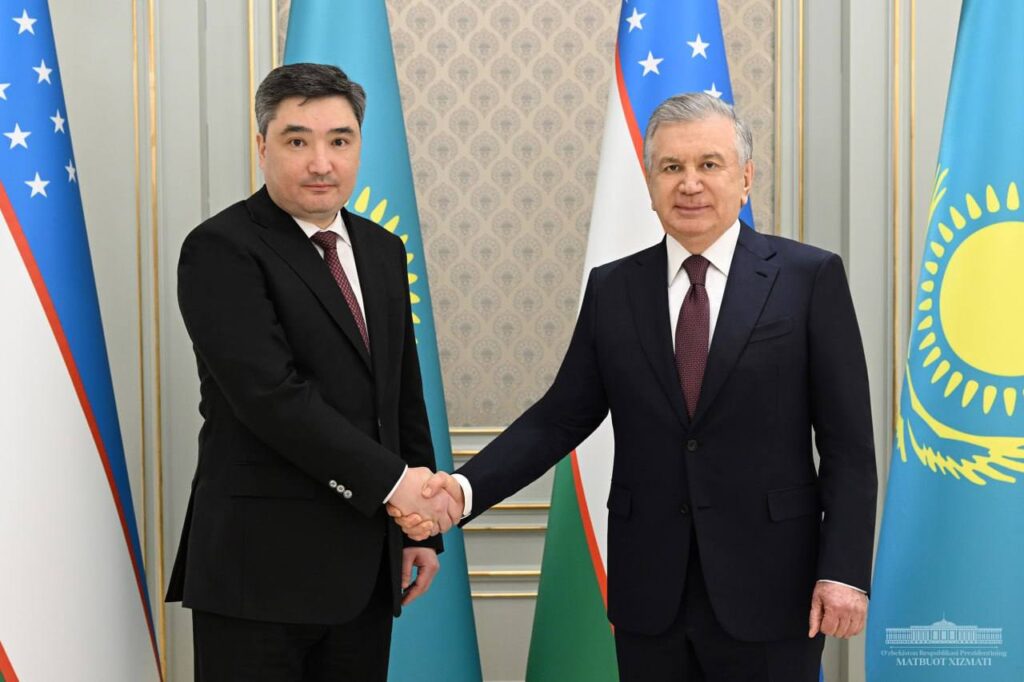
On March 15th, Kazakh Prime Minister Olzhas Bektenov and Uzbek President Shavkat Mirziyoyev and Prime Minister Abdulla Aripov met in Uzbekistan to discuss the expansion of Uzbek-Kazakh cooperation to increase the volume of mutual trade. The key sectors in the strategic partnership include industry, transport, and logistics and last year, trade turnover between Kazakhstan and Uzbekistan amounted to $4.5 billion. Negotiations with the Prime Minister of Uzbekistan Abdulla Aripov focused on measures to increase trade, investment, water, energy, transit, transport, and cultural cooperation, as well as strengthening interaction in the field of agriculture. The Kazakh prime minister placed emphasis on the need to increase the region's potential regarding transit and transport as well as the use of water. He also announced Kazakhstan’s readiness to expand export to Uzbekistan through the addition of 255 commodities in the amount of almost $500 million. Both parties noted significant progress in the industrial sector which has led to the implementation of 60 projects worth $2.6 billion and the creation of over 13,000 jobs.

Optimism Meets Reality at the B5+1 Forum in Almaty

The inaugural B5+1 Forum, a conference dedicated to strengthening business between the five Central Asian republics and the United States, came to a close today in Almaty after a second well received day of panel discussions. The B5+1 Forum was created by the Center for International Private Enterprise (CIPE), which aims to use public-private partnerships to create a better environment for business and trade. The B5+1 platform brings international and local companies together with high-ranking government officials from all six countries, to learn about the difficulties that each side faces, and suggest new ways to attract partners and investment. Following an opening day focused on “Looking within Central Asia”, today’s speakers brought attention to “Central Asia’s place in the world economy”. The morning began with a keynote speech by Eurasian affairs expert S. Frederick Starr, who argued that because the five countries are now members of different trade blocs, the revival of the Central Asian Economic Union could break down their existing barriers to business and trade with the United States. During a morning session on international partnerships, foreign experts brainstormed ways to speed up the Central Asia region’s economic integration with the rest of the world. To an audience of business leaders whose overall mood was optimistic, the EU’s ambassador to Kazakhstan Kestutis Jankauskas and World Bank economist David Knight brought a dose of realism, by explaining that business in Central Asia is not performing as well as in other emerging regions. This, they both said, is because the governments – and business owners – have mostly still not let go of self-defeating ways of approaching markets and investment. The middle session went into more detail about the investment landscape, particularly in terms of IT and fintech. Jennifer Miel, executive director for Kazakhstan for the US Chamber of Commerce, mentioned that all five Central Asian countries have seen healthy increases in foreign direct investment since 2021. This was soon tempered by Anatoly Motkin of the agency StrategEast, who said that to achieve further sustainable growth, the region must unify its legislation and best practices, so that foreign investors can treat it as a single market as much as possible. The Forum’s closing session explored the role of business associations in public-private dialogue. The panel was moderated by Eric Hontz, CIPE’s director for accountable investments, and featured the executive directors of the US Chambers of Commerce in Kyrgyzstan, Tajikistan and Uzbekistan – Aisuluu Sydygalieva, Nilufar Bulbulshoeva and Tatyana Bystrushkina. Discussion centered on best practices and solutions for effective member representation. The B5+1 Forum forms part of CIPE’s program called “Improving the Business Environment in Central Asia” (IBECA). CIPE themselves are affiliated to the US Chamber of Commerce – the catalyst behind the B7 and B20 platforms – and receive funding from the US Department of State. Early indications are that the B5+1 Forum in 2025 will be held in Bishkek, Kyrgyzstan.