• KGS/USD = 0.01144 0%
  • KZT/USD = 0.00192 -0%
  • TJS/USD = 0.10866 0.18%
  • UZS/USD = 0.00008 0%
  • TMT/USD = 0.28571 0%
  • KGS/USD = 0.01144 0%
  • KZT/USD = 0.00192 -0%
  • TJS/USD = 0.10866 0.18%
  • UZS/USD = 0.00008 0%
  • TMT/USD = 0.28571 0%
  • KGS/USD = 0.01144 0%
  • KZT/USD = 0.00192 -0%
  • TJS/USD = 0.10866 0.18%
  • UZS/USD = 0.00008 0%
  • TMT/USD = 0.28571 0%
  • KGS/USD = 0.01144 0%
  • KZT/USD = 0.00192 -0%
  • TJS/USD = 0.10866 0.18%
  • UZS/USD = 0.00008 0%
  • TMT/USD = 0.28571 0%
  • KGS/USD = 0.01144 0%
  • KZT/USD = 0.00192 -0%
  • TJS/USD = 0.10866 0.18%
  • UZS/USD = 0.00008 0%
  • TMT/USD = 0.28571 0%
  • KGS/USD = 0.01144 0%
  • KZT/USD = 0.00192 -0%
  • TJS/USD = 0.10866 0.18%
  • UZS/USD = 0.00008 0%
  • TMT/USD = 0.28571 0%
  • KGS/USD = 0.01144 0%
  • KZT/USD = 0.00192 -0%
  • TJS/USD = 0.10866 0.18%
  • UZS/USD = 0.00008 0%
  • TMT/USD = 0.28571 0%
  • KGS/USD = 0.01144 0%
  • KZT/USD = 0.00192 -0%
  • TJS/USD = 0.10866 0.18%
  • UZS/USD = 0.00008 0%
  • TMT/USD = 0.28571 0%
12 December 2025

Viewing results 1 - 6 of 10

Central Asia Advances Agenda at Record-Breaking SCO Summit in Tianjin

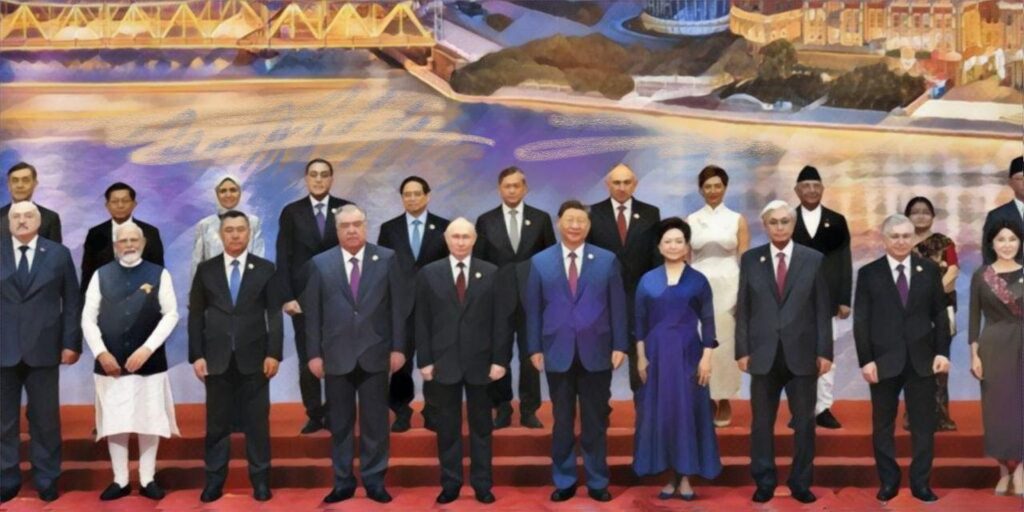
At the opening ceremony of the SCO Summit in Tianjin on August 31, Chinese President Xi Jinping, Russian President Vladimir Putin, and India’s Prime Minister Narendra Modi joined Central Asian leaders in a group photo. The Tianjin summit - China’s second time hosting the SCO and its “largest-ever” summit - was attended by all five Central Asian presidents alongside a host of key countries. In his welcome speech, Xi highlighted that the SCO now bears “greater responsibility” for safeguarding regional peace and stability, and said the summit was expected to produce a new 10-year development strategy. Xi proposed fast-tracking an SCO development bank, pledging 2 billion yuan ($280 million) in aid plus 10 billion yuan in loans to seed the fund. Xi also urged members to oppose a “Cold War mentality” and support an inclusive, multilateral trading system in a pointed rebuke to recent U.S. tariffs. Central Asian Leaders and Their Messages Kazakh President Kassym-Jomart Tokayev opened the summit for his delegation, thanking Xi and praising China’s “consistent policy aimed at strengthening security, stability, economic cooperation, and cultural ties within the SCO framework.” In his address, Tokayev marked the symbolic 80th anniversaries of the end of World War II, noting the value of unity and solidarity which he said the SCO embodies. Tokayev reaffirmed Kazakhstan’s support for a multipolar world order, respect for sovereignty, and mutually beneficial trade and investment, and pledged to keep combating the “three evils” of terrorism, separatism, and extremism. Beyond the opening remarks, Central Asian leaders used the summit to lay out their strategic priorities. Speaking at the heads-of-state meeting, President Shavkat Mirziyoyev of Uzbekistan called for further reform of SCO institutions and expansion of its dialogue partners. Mirziyoyev advocated for new cooperation mechanisms - a regional center for critical materials, a “Unified SCO Transport Space” linked to China’s Belt and Road Initiative, digital platforms, and green energy corridors - and proposed measures to boost intra-regional trade. Notably, Mirziyoyev urged the signing of an Agreement on Trade Facilitation, saying it “will give a boost to the growth of intra-regional trade within the SCO area.” In his closing remarks, he congratulated Kyrgyzstan’s Sadyr Japarov on assuming the SCO chairmanship for 2026, setting up the next summit. Tajik President Emomali Rahmon did not address the leaders’ meeting, but in a pre-summit interview, he highlighted China’s role in the SCO, crediting China with significant investment in Tajik infrastructure and energy, and welcoming Beijing’s proposal to locate an SCO Anti-Drug Center in Dushanbe. "We are confident that the center will make tangible contributions to strengthening regional cooperation and combating illicit drug trafficking," he stated. As a founding member, Rahmon stressed that the SCO’s top priority has long been Central Asian security and said that Tajikistan fully backs China’s Tianjin agenda, citing Beijing’s support for roads, tunnels, and power lines in Tajikistan. The incoming 2026 chair, Sadyr Japarov of Kyrgyzstan, met with Xi on August 31, reviewing plans to deepen all-around cooperation. Xi stated that China will fully support Kyrgyzstan in...

At EAEU Forum, Kyrgyzstan Calls for Integration in Trade, Logistics, and Migration

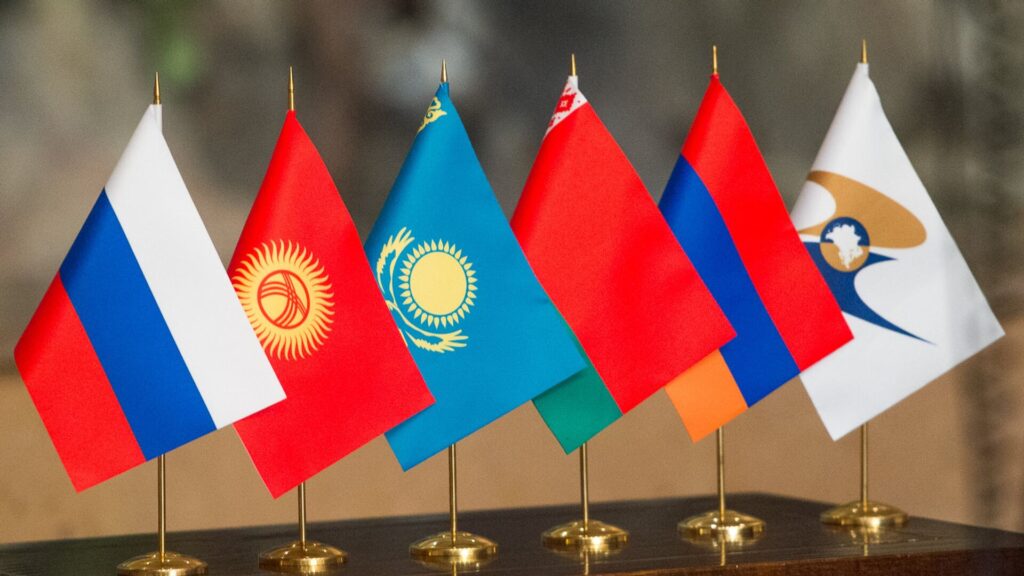
At the 4th Eurasian Economic Forum in Minsk, marking the 10th anniversary of the Eurasian Economic Union (EAEU), Kyrgyzstan highlighted ongoing internal barriers that continue to hinder its development. Chief among them are trade delays, logistical bottlenecks, and persistent challenges in labor migration. Deputy Minister of Economy Sultan Akhmatov reaffirmed Kyrgyzstan’s commitment to Eurasian integration and strengthening economic ties with other EAEU member states. According to the ministry’s press office, Akhmatov emphasized the need for deeper investment cooperation and expressed confidence that enhanced integration would bolster regional stability and mutual economic growth. He also advocated for expanded academic exchanges, the development of digital and vocational education, and the creation of joint research platforms across the EAEU. Yet, alongside these ambitions, Akhmatov pointed to systemic obstacles. He urged the removal of trade and customs barriers that burden importers and exporters at border checkpoints. He also emphasized the importance of mutual recognition of quality certifications and ensuring labor mobility within the Union. Labor Migration: An Economic Lifeline Labor migration remains a crucial pillar of Kyrgyzstan’s economy. In 2024, remittances from Kyrgyz migrants, most of whom live and work in Russia, reached $3 billion, equivalent to 24% of national GDP. This figure nearly matches the country’s total exports of $3.8 billion during the same period. However, the number of Kyrgyz labor migrants in Russia has been steadily declining. First Deputy Prime Minister Daniyar Amangeldiev attributed this trend to both domestic economic improvements and new restrictions introduced by Russian authorities, including changes to migration law. As of 2024, foreign workers in Russia are required to sign one-year contracts with employers, a condition that has created legal uncertainty and discouraged long-term employment. “I Left Moscow Because the Rules Changed” Aziret Abdiev, a Kyrgyz welder who worked in Moscow for nearly a decade, shared his reasons for leaving: “I didn’t leave because I disliked the work. I spoke fluent Russian, had a steady job, and was valued for my skills. But over the past year, the pressure increased, inspections, bureaucracy, hostility. It became clear I couldn’t continue. Now I’ve applied for a Schengen visa and will be heading to Lithuania to work in a metal factory.” Expert Opinion: Migration as a Core Integration Priority Kyrgyz experts argue that labor migration is central to the country’s national interest. Raising the issue at the Minsk forum, they contend, was both pragmatic and necessary. “For Kyrgyzstan, labor migration is more than an economic category. It is a matter of social stability, foreign currency inflows, and the future of entire generations,” political analyst Bakyt Baketaev told The Times of Central Asia. According to official statistics, up to one million Kyrgyz citizens work abroad, primarily in EAEU member states. This makes mutual recognition of qualifications, access to social protections and healthcare, and the safeguarding of migrant rights critical priorities for Kyrgyz policymakers. Baketaev believes progress is possible, if Kyrgyzstan acts consistently and professionally while building coalitions within the EAEU. He notes that other member states face similar challenges: “There is room...

Uzbekistan Completes Bilateral WTO Talks with U.S.

Uzbekistan has successfully concluded bilateral negotiations with the United States as part of its efforts to join the World Trade Organization (WTO), according to Azizbek Urunov, Special Representative of the President of Uzbekistan for the WTO. Urunov announced the milestone on his LinkedIn page. “Uzbekistan and the United States signed today, on December 19, 2024, the Protocol on the completion of the bilateral market access negotiations within Uzbekistan’s WTO accession,” Urunov wrote. The protocol was signed by Deputy Prime Minister Jamshid Khodjaev and U.S. Trade Representative Katherine Tai. Urunov described 2024 as a “historic year” for Uzbekistan’s WTO membership process, noting significant progress achieved by the end of the year. Expressing gratitude, Urunov commended the U.S. negotiating team for its constructive engagement and lauded the dedication of Uzbekistan’s negotiators. He emphasized the country’s commitment to finalizing its WTO accession by 2026, under the leadership of President Shavkat Mirziyoyev. In addition to the United States, Uzbekistan has also concluded bilateral negotiations with China, signaling accelerated efforts to meet its WTO membership target.

WTO Momentum: Uzbekistan Wraps up Talks with U.S.

Uzbekistan has taken another big stride in its march toward membership in the World Trade Organization, a goal that it hopes to finalize ahead of the WTO ministerial meeting in the spring of 2026. A bilateral agreement with the United States has been reached after 14 months of negotiations, according to Azizbek Urunov, Uzbekistan’s chief negotiator on WTO accession. Uzbekistan has now completed talks with 21 countries as it seeks to implement reforms and integrate more closely with the global economy, demonstrating considerable momentum toward WTO accession since no deals had been negotiated at the beginning of 2023. “It has been an adventurous journey, tough but substantive negotiations,” Urunov said after the talks with American counterparts last week. Uzbekistan started the WTO accession process in 1994, several years after independence from the Soviet Union, and then dropped the effort a decade later. It resumed the campaign a few years ago. Johanna Hill, deputy director-general of the WTO, said last month that Uzbekistan’s goal was to “reduce the number of outstanding bilateral negotiations to under 10 WTO Members by next year.” [caption id="attachment_25176" align="aligncenter" width="1149"] Uzbekistan's accession process; image: WTO[/caption]   Uzbekistan is pursuing reforms in the role of state trading enterprises, exports restrictions and subsidies, technical barriers to trade and other areas, according to Hill. "Uzbekistan has been one of the most active acceding governments of late. It has pushed ahead with economic reform, in the strategic region of Central Asia, with WTO accession very high on the government's agenda,” she said. Hill cited a WTO report this year that says economies reforming their markets during WTO accession grew on average 1.5% more than economies that did not reform. The WTO report maintains that trade and more global cooperation are critical to fostering equality and inclusivity, while acknowledging rising geopolitical tensions, measures to restrict trade, greater urgency surrounding the push for sustainability and other challenges. Some analysts point to the WTO’s ministerial conference in Abu Dhabi, United Arab Emirates earlier this year as a showcase for the troubles that the organization is facing. “On the critical agenda items - agricultural trade, fisheries subsidies, and reform of the WTO’s dispute-settlement mechanism - ministers simply kicked the can down the road, undertaking to continue work and once more extend deadlines that few expect to be met,” wrote Evan Rogerson, an analyst at the S. Rajaratnam School of International Studies in Singapore. His commentary on the meeting was among several presented by the Council of Councils, an international group of policy institutes.

Uzbekistan Concludes WTO Membership Talks With 18 Countries

According to a report issued by Azizbek Urunov, President Special Representative on International Trade, Uzbekistan has now completed negotiations on membership of the World Trade Organization (WTO) with 18 countries. Negotiations with Argentina closed on September 13, and protocols on finalizing market access negotiations have been signed with 14 of the 18 member countries, including Brazil and Sri Lanka. Posting on LinkedIn on September 12, Urunov wrote: "In the margins of the WTO Public Forum, we had signing ceremonies with the participation of DPM Jamshid Khodjaev, DDG Xiangchen Zhang, and ex-DDG Alan Wolff. The Uzbek delegation, led by Madam Saida Mirziyoyeva, is participating in the 2024 WTO Public Forum in Geneva." After pursuing its goal for almost 30 years, Uzbekistan seeks further support from the U.S. support to join the World Trade Organization. To date, the U.S. has provided some technical help, and during a recent visit, U.S. Trade Representative Katherine Tai reaffirmed America’s support.  However, to forward progress and strengthen trade ties, Uzbekistan could benefit from greater involvement from such U.S. institutions as the Development Finance Corporation (DFC), Export-Import Bank (EXIM), and the U.S. Trade and Development Agency (USTDA). Following a meeting with Katherine Tai during her visit to Uzbekistan in June, Uzbekistan’s Presidential Assistant, Saida Mirziyoyeva stated,  “We intend to become a full-fledged participant in the international trade system and rely on the support of the United States to accelerate the process of Uzbekistan becoming a member of the WTO." For background, Uzbekistan initiated the process of joining the WTO in 1994 before abandoning it 2005. In 2019, the country strengthened its efforts to become a member of the WTO, and on July 7, 2020, the joint working group was restored.

Economy Minister: 70% of Tajikistan’s Trade is With SCO Countries

The Pakistani capital of Islamabad has hosted the 23rd meeting of the Ministers of the Shanghai Cooperation Organization (SCO) Member States responsible for Foreign Economic and Trade Activities. The Minister of Economic Development and Trade of Tajikistan, Zavqi Zavqizoda, who participated in the meeting, said that the country considers the development of relations within the SCO as one of its foreign policy priorities. “Foreign trade turnover between Tajikistan and the SCO countries demonstrates steady growth, and every year, more than 70% of the republic’s foreign trade is with SCO countries,” Zavqizoda said. He recalled that the SCO accounts for almost half of the world’s population and 27% of global GDP, making the region a massive market with great opportunities. Zavqizoda noted that Tajikistan initiated the economic development strategy for the next five years with the SCO, which was developed and adopted by the organization's member states. He proposed to the participants a plan related to developing and implementing large infrastructure projects and expanding cooperation in digital and green economy, green energy, and e-commerce. It was also noted that wide use of transit opportunities of Tajikistan is envisaged. The Times of Central Asia has reported that Tajikistan seeks to become a central international transit hub. In the next two years, 317 kilometers of international highways will be commissioned in Tajikistan. In the remaining months of 2024, Tajikistan will continue implementing projects for highway reconstruction, with the construction of 32 bridges, five tunnels with a length of 11.2 km, and seven avalanche corridors aiming to turn the country into an international transit route.