• KGS/USD = 0.01144 0%
  • KZT/USD = 0.00210 0%
  • TJS/USD = 0.10528 0%
  • UZS/USD = 0.00008 0%
  • TMT/USD = 0.28571 0%
  • KGS/USD = 0.01144 0%
  • KZT/USD = 0.00210 0%
  • TJS/USD = 0.10528 0%
  • UZS/USD = 0.00008 0%
  • TMT/USD = 0.28571 0%
  • KGS/USD = 0.01144 0%
  • KZT/USD = 0.00210 0%
  • TJS/USD = 0.10528 0%
  • UZS/USD = 0.00008 0%
  • TMT/USD = 0.28571 0%
  • KGS/USD = 0.01144 0%
  • KZT/USD = 0.00210 0%
  • TJS/USD = 0.10528 0%
  • UZS/USD = 0.00008 0%
  • TMT/USD = 0.28571 0%
  • KGS/USD = 0.01144 0%
  • KZT/USD = 0.00210 0%
  • TJS/USD = 0.10528 0%
  • UZS/USD = 0.00008 0%
  • TMT/USD = 0.28571 0%
  • KGS/USD = 0.01144 0%
  • KZT/USD = 0.00210 0%
  • TJS/USD = 0.10528 0%
  • UZS/USD = 0.00008 0%
  • TMT/USD = 0.28571 0%
  • KGS/USD = 0.01144 0%
  • KZT/USD = 0.00210 0%
  • TJS/USD = 0.10528 0%
  • UZS/USD = 0.00008 0%
  • TMT/USD = 0.28571 0%
  • KGS/USD = 0.01144 0%
  • KZT/USD = 0.00210 0%
  • TJS/USD = 0.10528 0%
  • UZS/USD = 0.00008 0%
  • TMT/USD = 0.28571 0%

Viewing results 1939 - 1944 of 2913

Green Pitching Event at COP28 Focuses on Central Asia’s Sustainable Future

As reported on the United Nations Development Programme (UNDP) website, the UNDP in Kazakhstan organized a Green Projects Pitching Event for the countries of Central Asia, which aimed to spotlight innovative and sustainable initiatives across the region, showcasing a collaborative commitment to green growth and climate resilience. The 28th United Nations Climate Change Conference, or COP28, kicked off on November 30th and continues through to December 12th in Dubai, United Arab Emirates, with a growing urgency to increase action for meaningful change. The countries of Central Asia are presenting a common regional position on the most pressing climate issues at global scale, adopting the cooperative approach: Five countries – one region – one vote. As part of a region particularly vulnerable to the effects of climate change, the Central Asian nations are actively participating in the COP28 climate policy negotiations, advocating for commitments to reduce emissions, achieve carbon neutrality, and secure access to climate finance for the region. “The climate crisis knows no borders; it is a challenge that transcends individual nations,” said Nuri Ozbagdatli, UNDP Climate Change Specialist for Europe and Central Asia. “Success in addressing this global issue requires collective action. Together, the global community must pool our expertise, resources, and innovation to tackle climate change comprehensively, ensuring a sustainable future for all. In the countries of Central Asia, we strongly believe in the vast potential offered by the region's nature, population, and especially its youth. These factors form crucial elements in our joint endeavors to confront and overcome the challenges posed by climate change." The event was opened by the Ministers of Ecology from three Central Asian countries: Kazakhstan, Kyrgyzstan, and Uzbekistan. "Achieving a substantial reduction in greenhouse gases requires significant financial investment,” said Yerlan Nyssanbayev, Minister of Ecology and Natural Resources of Kazakhstan, in his welcoming speech. “The strategy of low-carbon development adopted by Kazakhstan this year estimates a net investment of US$610 billion in low-carbon technologies. At the same time, the importance of climate financing, which helps societies and economies build resilience and adapt to the impacts of climate change, cannot be overstated."

Europe-Uzbekistan Association for Economic Cooperation Launched in Tashkent

The Tashkent based Europe-Uzbekistan Association for Economic Cooperation (EUROUZ) was officially launched on December 5th. Speaking at the inauguration event, Charlotte Adriaen, the EU Ambassador to Uzbekistan, said that the EU has been supporting the establishment of a Europe-Uzbekistan business association for years. “We believe that the inclusion of EUROUZ in the worldwide European Business Organizations network will encourage more business exchanges between Europe and Uzbekistan, and in turn strengthen our partnership,” Adriaen said, noting that the EU supports the ambitious path of reforms Uzbekistan has embarked on, and will continue to assist the country with all tools, one of which is GSP+ (the EU's Generalised Scheme of Preferences). The ambassador also presented areas of opportunity for Uzbekistan’s exporters to improve their access to the EU market. “As we anticipate growth in the production of machinery, automotive, hi-tech goods and medical equipment, the demand will increase for various electronic sub-components and metal parts,” she said. “Moreover, as both the EU and Uzbekistan are transitioning to a greener economy, there is another sector of opportunity that could further boost exports from Uzbekistan to the EU, including supplies of critical raw materials.” The EU ambassador added that 2024 will be a year marked by high-level visits, including the first ever EU-Central Asia Summit, which is planned to be hosted in Uzbekistan.

Window to Europe for Uzbekistan to Remain Open Until December 2027

The European Union has decided to extend the validity of the General System of Preferences Plus (GSP+) for beneficiary countries, including Uzbekistan, for the next four years until December 31st 2027. This decision gives serious impetus to the development of Uzbekistan's private sector, providing easier access to the European market, stimulating closer cooperation between European and Uzbek companies, and leading to significant savings at borders. As a result of the measures taken to strengthen trade relations with the EU and expand the global geography of Uzbekistan's exports by the end of 2022, 628 enterprises (an increase of 116 on the corresponding period in 2021) were exporting local products to European markets in the amount of U$647-million. This is more than double the $292-million figure recorded in 2020. In particular, within the framework of the GSP+ textile industry products worth $177.4-million were exported to the EU markets (an increase of 126.4% compared to 2021), agriculture and food industry products totaled $19.7-million (a 103% increase), the electrical industry recorded $9-million (a 117% increase), whilst the chemical industry totaled $138.3-million (a 4.7-times expansion). In 2022, thanks to GSP+, Uzbek exporters saved $30.65-million in duties, thus signaling a major contribution by the EU to the development of the private sector in Uzbekistan. Over the period from 2019 to 2022, EU investment in the private sector in Uzbekistan has grown more than tenfold.

Uzbekistan Signs Strategic Partnership Agreement with Abu Dhabi Future Energy Company

Uzbekistan Signs Strategic Partnership Agreement with Abu Dhabi Future Energy Company Following a meeting between the President of Uzbekistan and a delegation of leading UAE enterprises led by Minister of Investment, Muhammad Hassan al-Suwaidi, an agreement on a strategic partnership with the Abu Dhabi Future Energy Company (Masdar) was signed. On December 2nd, President of Uzbekistan, Shavkat Mirziyoyev received a delegation of leading UAE companies led by the Minister of Investment and Chief Executive Officer of the ADQ holding, Muhammad Hassan al-Suwaidi. The meeting was held as part of the business program in Dubai, where the UN climate conference (COP28) took place a day earlier. The delegation also included the heads of leading Emirati companies, TAQA, Jasim Hussein Thabet, and Masdar Muhammad Jamil al-Ramahi. The parties discussed issues of supporting and promoting joint projects in trade, economic and investment cooperation. After the meeting, President Mirziyoyev presented the Chief Executive Officer of Masdar, Muhammad Jamil al-Ramahi, with a state award of Uzbekistan - the Order of Dustlik for his personal contribution to the development of Uzbek-Emirati multifaceted relations. Masdar is building several solar photovoltaic power plants in Uzbekistan. In 2023, the company began the construction of three photovoltaic power plants - Nur Jizzakh for 220 MW in the Jizzakh region, Nur Samarkand for 220 MW in the Samarkand region, and Nur Sherabad for 457 MW in the Surkhandarya region. For these projects, it attracted loans of almost $400 million.

CAREC Countries Endorse New Vision to Fight Climate Change Together

Member countries of the Central Asia Regional Economic Cooperation (CAREC) program committed to working together to cut greenhouse gas emissions and build resilience to climate change. “We endorse the Regional Action on Climate Change: A Vision for CAREC to help countries implement their commitments under the Paris Agreement”, said a joint ministerial statement issued at the 22nd CAREC Ministerial Conference held on November 30th in Tbilisi. The statement was endorsed by ministers and high-level officials from Azerbaijan, the People’s Republic of China, Georgia, Kazakhstan, the Kyrgyz Republic, Mongolia, Pakistan, Tajikistan, Turkmenistan, and Uzbekistan. “I am confident this shared Vision will enhance the CAREC program’s impact on this most critical climate challenge facing the subregion”, said Asian Development Bank (ADB) President, Masatsugu Asakawa. “I look forward to concrete progress on bringing forward more climate projects - including in renewable energy, sustainable agriculture, efficient water use, economic diversification, and strengthening supply chains - to improve the region’s climate resilience and adaptation”. The Vision emphasizes the importance of energy transition and the improved use of renewable energy sources, strengthening the regional electricity trade, deploying innovative financing solutions, and investing in climate-resilient infrastructure and policies. It calls for strengthened collaboration and coordination with the program’s development partners in supporting the region’s climate agenda. A scoping study published earlier this year showed climate change is expected to have severe impacts in the CAREC region, including higher-than-average temperature rises, water scarcity, expanded desertification, and glacial melting. To address water issues in the region, CAREC will support countries to improve their expertise and capacities in transboundary water management, water productivity, and to invest in more efficient irrigation systems to boost agricultural productivity. CAREC will also support efforts to decarbonize transport and continue deepening regional connectivity with efficient transport technologies and infrastructure. Other priority areas include developing climate-smart cities with electrified mass transit systems and promoting climate and disaster resilience through regional risk management and financing initiatives. The CAREC program is a partnership of countries and development partners working together to promote sustainable development, accelerate economic growth, and reduce poverty. The ADB hosts the CAREC secretariat.

Uzbekistan to Expand Investment in Renewable Energy

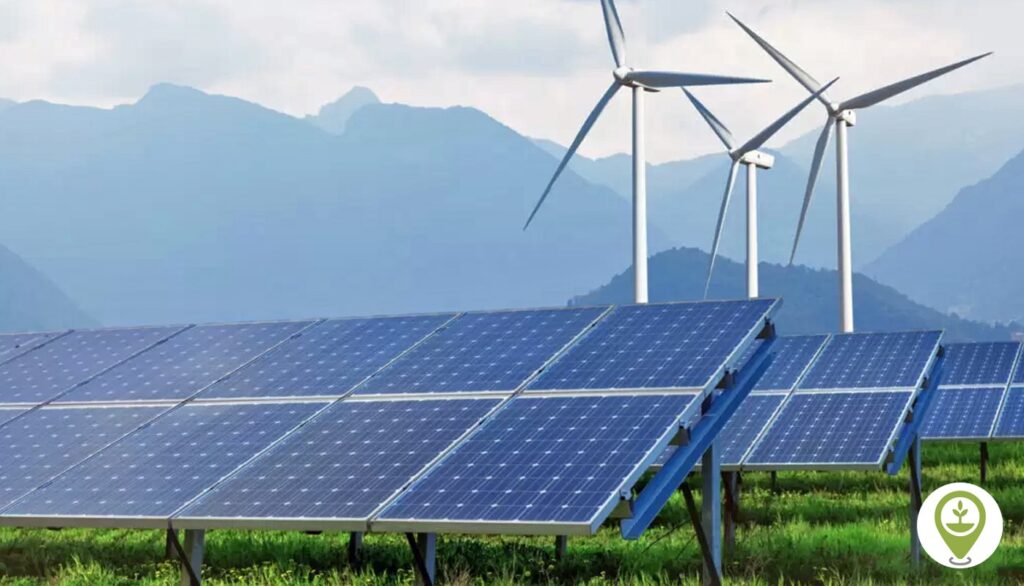
Uzbekistan to Expand Investment in Renewable Energy The Ministry of Investment, Industry and Trade and the Ministry of Energy of Uzbekistan and the Ministry of Investment of the UAE have signed a Memorandum of Understanding aimed at developing investment cooperation in priority sectors of the economy, including the production, transmission and distribution of renewable energy. The document seeks to create a solid basis for attracting investments, implementing joint research programs, and exchanging technical knowledge, skills and experience between government agencies, regulatory authorities and private sector enterprises of both countries. The forms of cooperation provided for by the agreement include the identification, exchange and assessment of projects and investment opportunities for the production of wind, solar, and hydroelectric power plants, and the construction of energy storage facilities. To ensure the effective implementation of the document, a joint plan for further activities will be developed, including specific mechanisms and responsible structures for its timely implementation.