• KGS/USD = 0.01144 0%
  • KZT/USD = 0.00208 0%
  • TJS/USD = 0.10458 -0.1%
  • UZS/USD = 0.00008 0%
  • TMT/USD = 0.28490 0%
  • KGS/USD = 0.01144 0%
  • KZT/USD = 0.00208 0%
  • TJS/USD = 0.10458 -0.1%
  • UZS/USD = 0.00008 0%
  • TMT/USD = 0.28490 0%
  • KGS/USD = 0.01144 0%
  • KZT/USD = 0.00208 0%
  • TJS/USD = 0.10458 -0.1%
  • UZS/USD = 0.00008 0%
  • TMT/USD = 0.28490 0%
  • KGS/USD = 0.01144 0%
  • KZT/USD = 0.00208 0%
  • TJS/USD = 0.10458 -0.1%
  • UZS/USD = 0.00008 0%
  • TMT/USD = 0.28490 0%
  • KGS/USD = 0.01144 0%
  • KZT/USD = 0.00208 0%
  • TJS/USD = 0.10458 -0.1%
  • UZS/USD = 0.00008 0%
  • TMT/USD = 0.28490 0%
  • KGS/USD = 0.01144 0%
  • KZT/USD = 0.00208 0%
  • TJS/USD = 0.10458 -0.1%
  • UZS/USD = 0.00008 0%
  • TMT/USD = 0.28490 0%
  • KGS/USD = 0.01144 0%
  • KZT/USD = 0.00208 0%
  • TJS/USD = 0.10458 -0.1%
  • UZS/USD = 0.00008 0%
  • TMT/USD = 0.28490 0%
  • KGS/USD = 0.01144 0%
  • KZT/USD = 0.00208 0%
  • TJS/USD = 0.10458 -0.1%
  • UZS/USD = 0.00008 0%
  • TMT/USD = 0.28490 0%

Viewing results 679 - 684 of 941

President of Uzbekistan Sets Economic Tasks for 2024

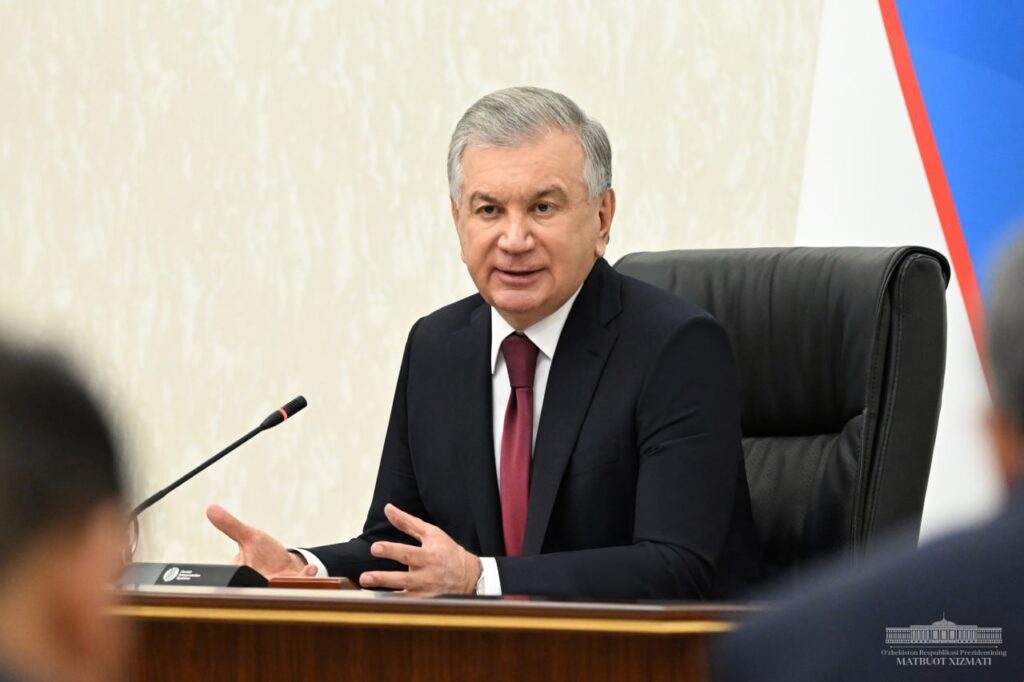
On January 16th, President Shavkat Mirziyoyev chaired a government meeting on priority tasks for the country’s economic development in 2024. It was stated that in 2023, economic growth was at 6%, and this year the plan is to maintain growth at the same level and bring gross domestic product to $100 billion. The head of state stated that with an increase in industrial production, the added value of products did not exceed 40%, which is mainly due to dependence on imports, high energy consumption, and excessive production costs. The President ordered that 2024 be a year of efficiency and production cost reduction for leaders of the economic sector and all state-owned enterprises. This year, the task is to increase the added value of domestic products to 45%, reduce production costs by 15%, and ensure industrial growth of 7%. Another source of budget revenue is privatization. However, 484 state assets included in the privatization program have yet to be put up for auction. Therefore, the President ordered the Cabinet of Ministers to prepare a new privatization program which aims to earn $1.6 billion in revenue this year. The meeting emphasized that a pressing issue today is the shadow economy, especially in the services sector, construction, and industry. Mirziyoyev stated that the shadow economy is an obstacle to fair competition, and outlined new measures to combat it. In particular, the powers of the Department for Combating Economic Crimes under the Prosecutor General's Office will be expanded, and a separate department to tackle the shadow economy will be created within the General Prosecutor's Office. Another important issue discussed at the meeting was inflation, which was at 8.77% last year, its lowest level since 2016. This year the plan is to keep inflation below 9%. Issues of lending were also discussed, with the task being set to develop a program to lower bank interest rates on loans by at least 2-3%.

Uzbekistan to launch an entrepreneurship sustainability rating

As reported by the press service of the President of the Republic of Uzbekistan on its website, Uzbekistan plans to launch a rating of entrepreneurs' sustainability by March 1, 2024, which will constitute a new incentive for entrepreneurial activity in the country. The rating list is planned to have four main categories, which in turn will be based on 23 criteria, including such areas as the duration of activity, level of profitability, payment discipline, participation in providing employment and the level of wages. The list will be compiled on the basis of data from fundamental state services, such as tax, justice and judicial authorities, among others. The aim of the project is to motivate entrepreneurs to join the ranks of disciplined businessmen. Accordingly, benefits of securing a top spot on the list will include: Exemption from all types of tax audits; Value Added Tax will be returned to these entrepreneurs in full amount within 24 hours, and overpayment of other types of taxes in three days; Customs and tax authorities will be able to offset VAT on import and sale of goods; The term of payment for acquired state property or land plots purchased at auction will be extended from three to five years; Annual interest will not be charged on the remaining amount if the initial installment is not less than 15%. The press service also notes in regards to this rating that entrepreneurs will be evaluated not by the tax service, but by an electronic system, which in turn will increase the level of fairness of accrual of subsidies, benefits and preferences. In addition, the rating will give entrepreneurs reliable information about competitors as well as provide warnings about possible risks, dubious transactions and unfair competition. This is expected to reduce the level of "shadow economy", according to the report.

Increased Cooperation Between Uzbekistan and Singapore

On January 15, an online meeting was held with the participation of the Minister of Agriculture of the Republic of Uzbekistan, Ibrahim Abdurahmanov; the governor of the Tashkent region, Zoir Mirzayev, and the representative of Wilmar International Company of Singapore, Charles Cheau. During the meeting, the parties discussed issues of expanding areas of cooperation between the two countries in the field of agriculture, including possibilities of further acceleration of previously implemented projects and cooperation agreements. While many achievements have been made in bilateral relations, it was noted that there remain opportunities for expanding practical cooperation. Uzbekistan's Minister of Agriculture noted that a donation system was established with Singapore several years ago in the field of agriculture, and that the focus of the current cooperation meeting was on active reforms to be implemented in the future, development of the value chain in agriculture, and the importance of the agro-food system. Wilmar Company was founded on April 1, 1991 in Singapore and is the leading agro-industrial corporation in Asia. The company has a high market capitalization on the Singapore Stock Exchange. From an operational perspective, the company has a strong position as an integrated agribusiness model covering the entire agricultural value chain. An agreement was signed as a result of the meeting by Uzbekistan's Ministry of Agriculture, the administration of its Tashkent region and the Wilmar International Company.

Uzbekistan and Kazakhstan Among Nations Prepared to Invest in Afghanistan

Uzbekistan and Kazakhstan, as well as Turkey, Russia, and Iran are ready to invest in Afghanistan, Taliban press secretary, Zabihullah Mujahid has told TOLOnews. A number of companies from these countries could invest in the mining and energy sectors, and the construction of hydroelectric power stations in 2024, he stated. Mujahid said that in 2023, great work had been done to attract foreign investment, and this work will continue in 2024. This issue is currently in the negotiating stage with some companies, whilst others have already started work. The Ministry of Economy noted that foreign investors will be provided with all necessary assistance, adding that foreign parties are ready to invest in agriculture, trade, energy, railway and infrastructure projects. The Ministry of Industry and Trade spokesman, Okhundzoda Abdulsalam Javad also informed TOLOnews that Afghanistan’s trade turnover with Uzbekistan increased in 2023 to $266 million, up from $44 million in 2022.

Uzbekistan to Boost Development in Karakalpakstan

On January 10th, the President of Uzbekistan, Shavkat Mirziyoyev held a government meeting on the socioeconomic development of the Republic of Karakalpakstan, an impoverished autonomous region in the northwest of the country. In recent years, Karakalpakstan has made headlines as a politically volatile area which saw deadly unrest break out in July 2022. The region has also suffered acutely from the consequences of the Aral Sea ecological disaster. At the meeting, it was stated that over the past seven years, Karakalpakstan has undergone unprecedented changes. Twelve of the autonomous republic’s fifteen districts were formerly subsidized by the central government, but now they have begun to bring in revenues to the state budget. More than 5,300 projects have been implemented through investment. Forest plantations covering 1.8 million hectares have been sown on the desiccated bed of the former Aral Sea, and living conditions for 51,000 families have been improved. In Karakalpakstan, there are incentives and opportunities for doing business which are not available in any other parts of Uzbekistan - taxes on profit, turnover, land and property have all been lowered twofold, and social tax has been set at 1%. Over the past two years, seven decrees and resolutions have been adopted on the development of industry, agriculture, entrepreneurship, and the improvement of the infrastructure in mahallas (local neighborhoods) in Karakalpakstan, with a total of $400 million and 250 billion Uzbek som have been allocated for these purposes. Today, the population of Karakalpakstan exceeds two million, and every year 50,000 citizens enter the region’s labor market. At the meeting, the President emphasized the need to train them in modern professions, and provide them with gainful employment and decent conditions. In 2024, the government plans to attract $2.1 billion in foreign investment to the region. This injection of funds will help implement 206 projects in industry, 240 in the services sector, and 34 in agriculture, creating 13,000 jobs. The head of state pointed out that tourism can become a driver of economic growth in Karakalpakstan, and set the task of developing a program to kick-start tourism in the region, with a focus on environmental, ethnographic, and pilgrimage destinations. The establishment of a tourism cluster and attracting foreign experts to the local tourist industry were also discussed.

Uzbek-Japanese Forum Held in Tashkent

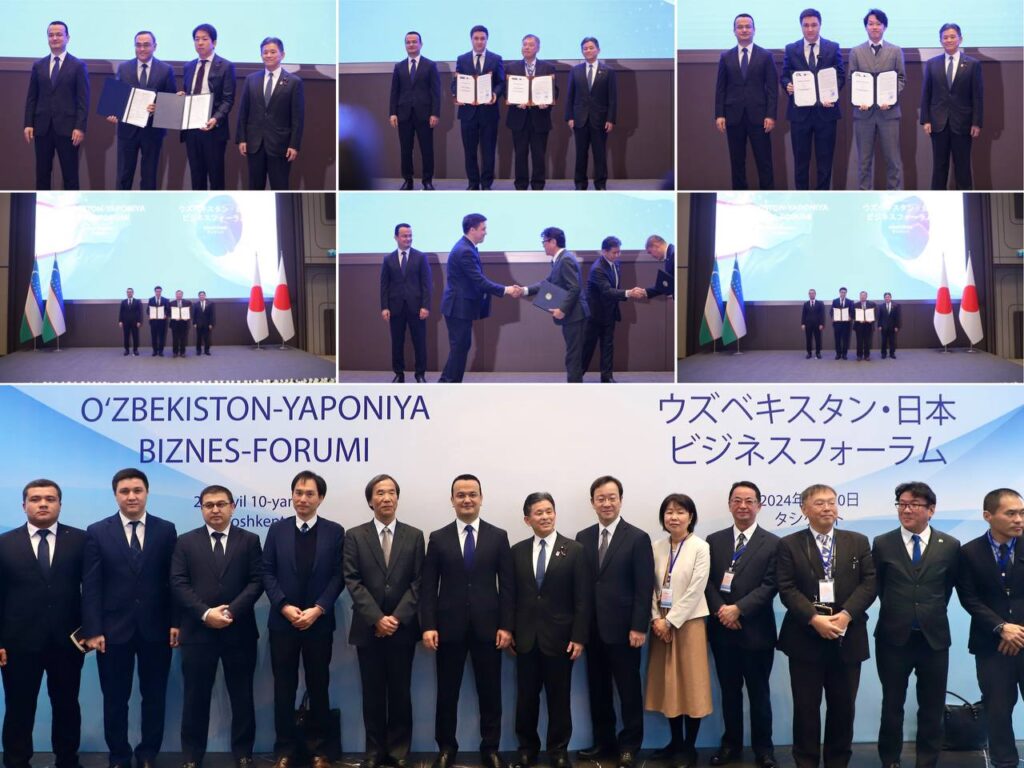
On January 10th, an Uzbek-Japanese business forum was held in Tashkent within the framework of the visit of Japan's State Minister of the Economy, Trade and Industry, Ryosuke Kozuki. The forum gathered together the heads of key ministries, industry associations, as well as representatives from around 200 major companies from the two countries, the Ministry of Investment, Industry and Trade of Uzbekistan has reported. Minister Kozuki and the Minister of Investment, Industry and Trade of Uzbekistan, Laziz Kudratov delivered the opening remarks at the forum. Kudratov outlined Uzbekistan's key achievements in economic development and the improvement of the investment climate, highlighting the introduction of effective legislative norms aimed at protecting the rights of investors, the availability of energy resources, and the possibility of duty-free exports to EU markets within the framework of the EU’s GSP+ program for Uzbekistan. Both sides emphasized the importance of intensifying direct contact between representatives of the business circles of the two countries. Alternative energy, IT, education, medicine, tourism, and digitization were named the most promising areas for joint investment projects. The forum also included panel discussions on the topics of "Prospects for Energy Transformation," and "Digital Transformation in Industrial Development: Japanese startups as a tool for the development of Uzbekistan's economy." Fourteen cooperation documents in the fields of education, IT-technologies, alternative energy, medicine, and the use of space technologies in geodesy and cartography were signed.