• KGS/USD = 0.01143 0%
  • KZT/USD = 0.00208 0%
  • TJS/USD = 0.10438 -0.1%
  • UZS/USD = 0.00008 0%
  • TMT/USD = 0.28579 0%
  • KGS/USD = 0.01143 0%
  • KZT/USD = 0.00208 0%
  • TJS/USD = 0.10438 -0.1%
  • UZS/USD = 0.00008 0%
  • TMT/USD = 0.28579 0%
  • KGS/USD = 0.01143 0%
  • KZT/USD = 0.00208 0%
  • TJS/USD = 0.10438 -0.1%
  • UZS/USD = 0.00008 0%
  • TMT/USD = 0.28579 0%
  • KGS/USD = 0.01143 0%
  • KZT/USD = 0.00208 0%
  • TJS/USD = 0.10438 -0.1%
  • UZS/USD = 0.00008 0%
  • TMT/USD = 0.28579 0%
  • KGS/USD = 0.01143 0%
  • KZT/USD = 0.00208 0%
  • TJS/USD = 0.10438 -0.1%
  • UZS/USD = 0.00008 0%
  • TMT/USD = 0.28579 0%
  • KGS/USD = 0.01143 0%
  • KZT/USD = 0.00208 0%
  • TJS/USD = 0.10438 -0.1%
  • UZS/USD = 0.00008 0%
  • TMT/USD = 0.28579 0%
  • KGS/USD = 0.01143 0%
  • KZT/USD = 0.00208 0%
  • TJS/USD = 0.10438 -0.1%
  • UZS/USD = 0.00008 0%
  • TMT/USD = 0.28579 0%
  • KGS/USD = 0.01143 0%
  • KZT/USD = 0.00208 0%
  • TJS/USD = 0.10438 -0.1%
  • UZS/USD = 0.00008 0%
  • TMT/USD = 0.28579 0%

Viewing results 703 - 708 of 947

Uzbekistan Provides Incentives for Households to Install Solar Panels

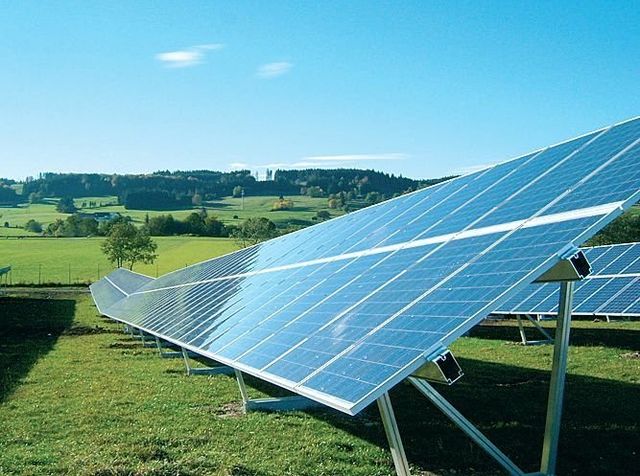
As part of a government program to encourage the installation of low-power solar panels (up to 50 kW) in households in regions of Uzbekistan, citizens are to be provided with a subsidy for electrical energy produced by solar panels. For electricity produced by solar panels installed on properties and facilities owned by individuals, a subsidy of 1,000 Uzbek som (0.081U$) is to be allocated for every kilowatt-hour of surplus electrical energy transferred to the national power grid, the Uzbek Energy Ministry said. Persons who have installed renewable energy sources are also exempt from land tax and property tax. Individuals and legal entities who have installed renewable energy sources with a total capacity of up to 100 kW are exempt from paying the property tax from such devices, land tax on plots occupied by devices, and profit tax for electricity sold by legal entities to the national power grid for a period of three years from the date of their commissioning and when installing electricity storage systems with a capacity of at least 25% of the installed capacity of solar panels for ten years. In recent years, Uzbekistan has experienced increasing electricity shortages, especially in the cold winter months, as the country’s population grows and natural gas reserves are depleting. This has prompted the Uzbek government to embark on a large-scale program to introduce renewable energy sources (wind and solar power plants).

USAID Launches New Project to Empower Communities in Uzbekistan

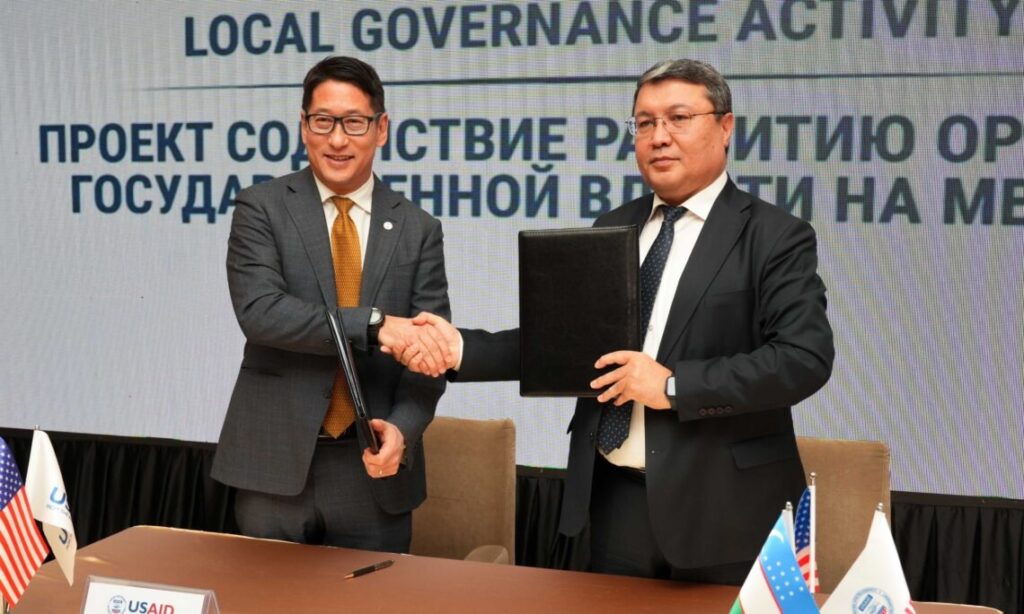
The United States Agency for International Development (USAID) has launched the Local Governance Activity in Uzbekistan, the U.S. Embassy in Uzbekistan has stated. Implemented by Chemonics International, the project will work closely with national government counterparts to improve the responsiveness and accountability of local governments, enhance citizen engagement, and promote a more inclusive and equitable decision-making processes. As a significant step towards strengthening collaboration and advancing local governance goals, the Ministry of Justice of Uzbekistan and USAID signed a Memorandum of Understanding (MOU) during the project launch ceremony on December 14th. The MOU outlines the framework for collaboration between the two parties, focusing on enhancing the legal and regulatory environment for effective local governance, promoting citizen participation, and strengthening the capacity of local government institutions. “Empowering local communities to participate actively in governance is essential for building a more responsive and accountable government,” said USAID Mission Director in Uzbekistan, David Hoffman. “This activity will work to strengthen the voices of citizens, particularly women, youth, people with disabilities, and minority groups, ensuring that their needs are heard and addressed at a local level.” The Local Governance Activity will identify and address the diverse needs of various stakeholders, including citizens, entrepreneurs, marginalized populations, activists, influencers, media, and other government entities. Through this inclusive approach, the activity will ensure local governance reforms are tailored to the specific needs and realities of Uzbek communities. Additionally, it aims to strengthen collaboration with national counterparts, ensure that the project’s activities are aligned with the Uzbekistan Strategy 2030, and that outcomes are sustainable beyond the project’s lifespan. Through collaboration, innovation, technical expertise, and a focus on user-centered approaches, the Local Governance Activity will work to address the diverse needs of Uzbek communities and contribute to a more inclusive, responsive, and accountable government.

Uzbekistan Plans to Manufacture One Million Cars a Year by 2030

Uzbekistan Plans to Manufacture One Million Cars a Year by 2030 The number of cars manufactured in Uzbekistan has grown threefold in recent years, with total annual production expected to reach 415,000 by the end of this year. This was said at a government meeting chaired by President Shavkat Mirziyoyev on December 14th. In order to end the state monopoly and develop competition in the Uzbek automotive industry, three new private automakers and prestigious foreign brands have been attracted to Uzbekistan. Today, eight plants in the country manufacture dozens of types of cars, freight and passenger transport, and agricultural machinery. In addition, more than 2,000 enterprises in the industry closely cooperate with each other, and a 50% localization of component production is ensured. It was said at the meeting that by 2030, Uzbekistan plans to increase the annual production of passenger cars to a million. Today, the world's leading automakers are switching to the production of electric vehicles. If domestic enterprises are slow to develop in this direction, in the future they will face difficulties in occupying a worthy place in the market. Uzbekistan has already started the first projects in this direction. It is planned that next year a car plant capable of producing 10,000 electric vehicles a year will be launched in the country. The President pointed out the importance of special attention being paid to the production of electric vehicles, and ordered the production of components for them.

Australian Company to Help Digitalize Gold Mining in Uzbekistan

Australian Company to Help Digitalize Gold Mining in Uzbekistan A meeting of the plant's management with a delegation from the Australian company, Micromine took place at the representative office of JSC NMMC in Tashkent. During the meeting, strategic aspects of the digital transformation of NMMC JSC aimed at improving the efficiency and competitiveness of the plant were discussed. Representatives of both sides noted the importance of integrating modern technologies into the company's current projects in order to optimize processes and increase productivity. During the meeting, the parties also discussed the prospects for further cooperation, especially in the context of the digital transformation of the enterprise. It is noted that the use of modern technologies and tools can significantly improve the efficiency of mining operations and reduce the cost of mining. Micromine is known for its digital solutions for mining, engineering, and the optimization of production processes. It has a wide range of products and services covering almost all mining processes, the report states.  

Uzbekistan’s Transition to Market Economy to Accelerate

Uzbekistan’s Transition to Market Economy to Accelerate The World Bank’s Board of Executive Directors on December 8th approved a Development Policy Operation to financially support the Government of Uzbekistan in implementing a new generation of economic, social, and climate reforms. The objective of these reforms is to expedite the country’s transition to a market economy, ensuring that economic opportunities are accessible to all citizens and creating a strong foundation for sustained growth. In Uzbekistan, despite significant progress in the transition to a market economy, there is a need to complete this process and to shift urgently towards a greener and more equitable economic model which would help the country achieve its development and environmental goals. The government aims to halve the poverty rate by 2026, and elevate the country to the status of an upper-middle-income economy by 2030. Achieving these objectives requires much faster growth, which is possible through reducing state control over the economy and empowering the private sector to become the primary driver of economic development. “The World Bank’s new operation supports key government priorities, including reducing state dominance in crucial sectors such as agriculture, railway, chemicals, and energy,” said Marco Mantovanelli, World Bank Country Manager for Uzbekistan. “This will allow for greater private sector participation in the given areas. The operation also aims to strengthen social and legal protection for vulnerable groups, and address pressing issues of climate change and environmental protection.” The World Bank will provide financial support to the government through a combination of highly concessional and low-cost loans totaling $800 million. The financing will offer the government a low-cost, long-term repayment option compared to what would be available in international financial markets, resulting in a significantly lower loan repayment cost. This, in turn, will free up more resources for the country’s urgent development priorities. “The Government has a strong commitment to reforms that will transform Uzbekistan into a more open and competitive market economy. The World Bank is supporting the country in achieving this goal by providing the necessary expertise, international experience, and financing,” said Jasur Karshibaev, Deputy Minister of the Economy and Finance of Uzbekistan. The financing from the World Bank operation will support the government’s reforms and actions in a number of critical areas, including: Energy sector: Establishing an independent energy regulator and implementing energy tariff reform to improve the energy sector’s performance, enhance the efficient use of energy resources, attract private investment in modernizing energy infrastructure, and promoting competition and private sector participation in the industry. Railway sector: Undertaking institutional reforms in the railway sector to modernize price setting for passenger and freight transportation and strengthen competition and the institutional environment in the industry. Chemical sector: Establishing a framework for institutional reforms in the chemicals sector and privatizing FerganAzot JSC, a large state-owned chemical plant, to liberalize the sector, attract private investments for its modernization, and enhance competition and efficiency in the industry. Agriculture sector: Abolishing the crop placement system for all crops to promote greater diversity and productivity in crop...

Europe-Uzbekistan Association for Economic Cooperation Launched in Tashkent

The Tashkent based Europe-Uzbekistan Association for Economic Cooperation (EUROUZ) was officially launched on December 5th. Speaking at the inauguration event, Charlotte Adriaen, the EU Ambassador to Uzbekistan, said that the EU has been supporting the establishment of a Europe-Uzbekistan business association for years. “We believe that the inclusion of EUROUZ in the worldwide European Business Organizations network will encourage more business exchanges between Europe and Uzbekistan, and in turn strengthen our partnership,” Adriaen said, noting that the EU supports the ambitious path of reforms Uzbekistan has embarked on, and will continue to assist the country with all tools, one of which is GSP+ (the EU's Generalised Scheme of Preferences). The ambassador also presented areas of opportunity for Uzbekistan’s exporters to improve their access to the EU market. “As we anticipate growth in the production of machinery, automotive, hi-tech goods and medical equipment, the demand will increase for various electronic sub-components and metal parts,” she said. “Moreover, as both the EU and Uzbekistan are transitioning to a greener economy, there is another sector of opportunity that could further boost exports from Uzbekistan to the EU, including supplies of critical raw materials.” The EU ambassador added that 2024 will be a year marked by high-level visits, including the first ever EU-Central Asia Summit, which is planned to be hosted in Uzbekistan.