• KGS/USD = 0.01144 0%
  • KZT/USD = 0.00211 0%
  • TJS/USD = 0.10526 0%
  • UZS/USD = 0.00008 0%
  • TMT/USD = 0.28530 0%
  • KGS/USD = 0.01144 0%
  • KZT/USD = 0.00211 0%
  • TJS/USD = 0.10526 0%
  • UZS/USD = 0.00008 0%
  • TMT/USD = 0.28530 0%
  • KGS/USD = 0.01144 0%
  • KZT/USD = 0.00211 0%
  • TJS/USD = 0.10526 0%
  • UZS/USD = 0.00008 0%
  • TMT/USD = 0.28530 0%
  • KGS/USD = 0.01144 0%
  • KZT/USD = 0.00211 0%
  • TJS/USD = 0.10526 0%
  • UZS/USD = 0.00008 0%
  • TMT/USD = 0.28530 0%
  • KGS/USD = 0.01144 0%
  • KZT/USD = 0.00211 0%
  • TJS/USD = 0.10526 0%
  • UZS/USD = 0.00008 0%
  • TMT/USD = 0.28530 0%
  • KGS/USD = 0.01144 0%
  • KZT/USD = 0.00211 0%
  • TJS/USD = 0.10526 0%
  • UZS/USD = 0.00008 0%
  • TMT/USD = 0.28530 0%
  • KGS/USD = 0.01144 0%
  • KZT/USD = 0.00211 0%
  • TJS/USD = 0.10526 0%
  • UZS/USD = 0.00008 0%
  • TMT/USD = 0.28530 0%
  • KGS/USD = 0.01144 0%
  • KZT/USD = 0.00211 0%
  • TJS/USD = 0.10526 0%
  • UZS/USD = 0.00008 0%
  • TMT/USD = 0.28530 0%

Viewing results 637 - 642 of 1163

Real Estate Worth $8 Million Found in Dubai Belonging to Son of Ex-Prosecutor General of Uzbekistan

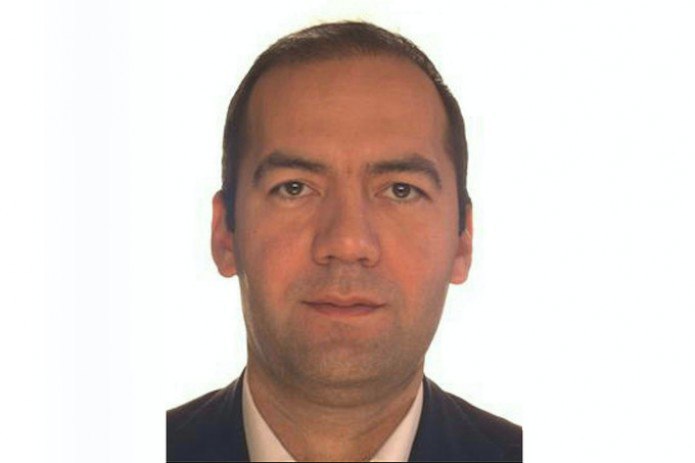
The Organized Crime and Corruption Reporting Project (OCCRP) and 75 media partners worldwide have released an investigation, Dubai Unlocked, which uncovers the foreign owners of real estate in Dubai. According to the report, the son of former Uzbek Prosecutor General, Alisherbek Kadirov, has commercial real estate in Dubai with an estimated value of approximately $8 million. According to Gazeta.uz, the investigation is based on leaked data on real estate in Dubai from 2020 and 2022, mostly from the Dubai Land Department, as well as from state-owned utility companies. The authors note that they only included people whose identities are of public interest. "Among the participants of the list is one representative of Uzbekistan. This is Alisherbek Kadirov, son of former Prosecutor General Rashitjon Kadirov. In 2018, shortly after the detention of Rashitjon Kadirov, the Interior Ministry declared Alisherbek Kadirov a wanted man. According to the investigation, he owns four offices in the business center, Marina Plaza, the total cost of which is estimated at $ 7.97 million," stated the report. Rashitjon Kadirov headed the Prosecutor General's office of Uzbekistan from 2000-2015, and was then elected judge of the Constitutional Court (2015-2017). In February 2018, the initiation of criminal proceedings against him became known. In June 2019, he was sentenced to ten years imprisonment on charges of bribery, incitement to bribery, fraud, willful evasion of taxes and other mandatory payments, interference in investigation, and other crimes. He was released on parole in January 2023.

Buildings “Full of Tattoos:” Tashkent Mosaics, Newly Protected, Tell of a City’s Rebirth

In one Tashkent mosaic, Shirin, a protagonist in a Persian love poem that ends in tragedy, sits with flowing hair on a colorful carpet. Another mosaic in the Uzbek capital depicts the scientist Abu Rayhan al-Biruni with the planet Saturn overhead and flowing water below. The scientist holds the Tree of Life. The mosaic is located on Babur Street in the Yakkasaray district of Tashkent. Other images portray Soviet-era optimism – a young couple, a female irrigation engineer and corn and wheat, symbols of production and abundance. Tales of degraded heritage in Uzbekistan and elsewhere are familiar, but there are bright spots. In late March, the government designated about 160 mosaics on buildings in Tashkent and other regions as cultural heritage, meaning they are protected, officially at least, from being dismantled, painted over or covered with advertisements. The city’s subway art is also a source of pride. The state sees the images as a tourist draw, and Tashkent residents and other enthusiasts who have campaigned for their preservation are spreading the word. [caption id="attachment_17717" align="alignnone" width="1200"] Photo by Fotima Abdurakhmanova[/caption] A slick new website titled “Mosaics of Tashkent" offers information about more than 330 mosaics, documenting how artists and architects from across the Soviet Union and beyond put their stamp on the reconstruction of a city that was virtually leveled in a 1966 earthquake. Investigations are still underway to determine who made some of the mosaics. Many were dismantled or damaged over the years and not all of those remaining have government protection. “Each mosaic told its own story, gave emotions, diluted the gray landscape of high-rise buildings, marking the beginning of a new life and a new era,” says the website, which was created by Tashkent’s Department of Digital Development. The quake left hundreds of thousands without homes. One official toll put the number of dead at 15, though it was probably higher. [caption id="attachment_17718" align="alignnone" width="1167"] Photo by Fotima Abdurakhmanova[/caption] Some residential buildings with mosaics on their facades “look like a body which is completely full of tattoos,” Philipp Meuser, a German architect, said during a presentation at the Goethe-Institut in Tashkent last week. Meuser wrote a book about the Tashkent mosaics of the Zharsky brothers – Pyotr, Nikolai and Alexander. The three designers and decorators decorated hundreds of buildings in a city whose reimagined character was shaped by Soviet modernism, regional influences and some Western ideas about urban layout. Two of the brothers were born in France. The Zharskys started mosaic designs with a sketch, and the process was scaled up from there, Meuser said. In one method, colored tiles were pressed by hand into soft concrete that had been poured into a steel mold to create a mosaic. The survival of the art decades later testifies to the durability of the techniques. [caption id="attachment_17719" align="alignnone" width="1078"] Photo by Fotima Abdurakhmanova[/caption] Communism-extolling mosaics were an official art form across the Soviet Union, but the imagery of many of those which survive in Tashkent is not ideological. Geometric...

Reporters Without Borders Downgrades State Of Press Freedom in Uzbekistan To “Very Serious”

The international agency Reporters Without Borders (RSF) published its annual Press Freedom Index on May 3, World Press Freedom Day. The report draws attention to the dire state that reporting in Uzbekistan is in. Uzbekistan fell by 11 places in the global ranking, relegated to 148th out of 180 countries. RSF staff downgraded their rating of the state of freedom of speech in Uzbekistan from "severe" to "very serious”. “Following the 2016 death of President Islam Karimov, circumstances have only barely improved for the media, and criticizing those in power remains very complicated,” reads RSF's introduction to the Uzbekistan section of the report. To compile the index, RSF graded the state of media freedom in 180 countries around the world using five different indicators: political, legal, economic, social and security. Uzbekistan ranked 157th on the political indicator, which is 20 places lower than last year. For the legal indicator the result is similarly disappointing, a fall of 17 places. The country ranked 143rd in the economic indicator, which is 9 places lower than last year. The security indicator also worsened by 9 places. Only in the social indicator did Uzbekistan's position rise, by two places to a still-lowly 145th. RSF describes the political context in Uzbekistan as one where the authorities wield a great deal of control over the media -- and also over a large group of bloggers with close ties to the government. RSF also mentions in the report that officials don’t hesitate to exert economic pressure or attempt to corrupt or influence journalists. “The growth of independent media is also largely hampered by laws and regulations that restrict their funding, especially by foreign-based organizations that support a free press,” reads an assessment from the economic section. In its socio-cultural section, RSF notes that topics that aren't covered in official mass media are highlighted on social media, including on platforms like Russia’s Odnoklassniki, Facebook and Telegram. Some groups are said to share information about government corruption on these platforms. The report also points out that the last of the journalists who have been imprisoned, some for as long as 20 years, have now been released, but they have not been cleared of wrongdoing. Bloggers are still being threatened or arrested -- as was the case with Otabek Sattoryi, the founder of the YouTube channel “Xalq Fikri” (People’s Opinion). He was sentenced to six and a half years in prison in May 2021 on false charges of defamation and extortion. Journalists who tried to cover his trial were physically assaulted or unjustly persecuted. The crackdown on reporters covering demonstrations to support the republic of Karakalpakstan remaining autonomous shows the government's determination to silence all dissent. A report by Amnesty International published in April stated that the United Nations Working Group on Arbitrary Detention concluded that Otabek Sattoryi’s detention was unjustified, and called for his release. Of Uzbekistan's fall in the Press Freedom Index, a journalist from the BBC Uzbek Service, Ibrat Safo, wrote on his Facebook page: "[A] sharp drop... I’m...

Central Asia as an Emerging Economic Region

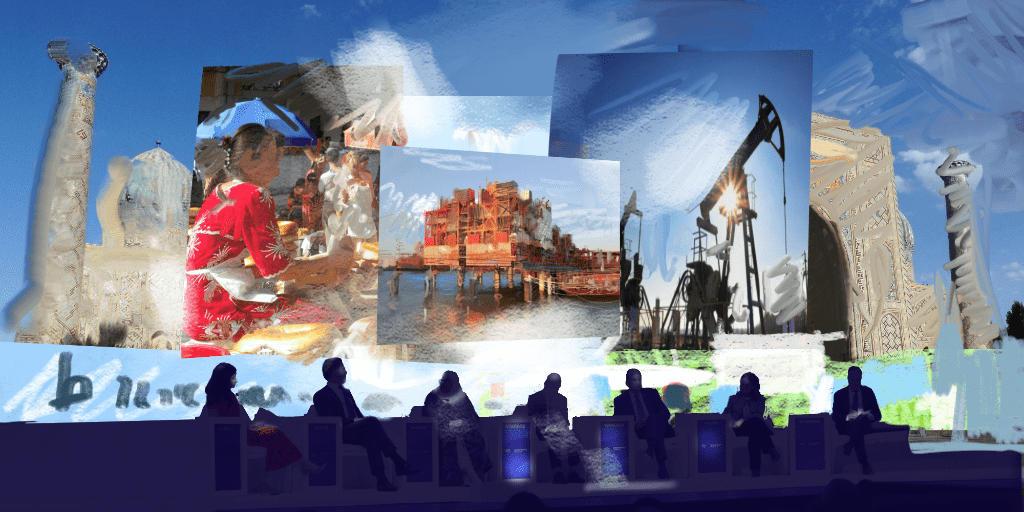
Central Asia, spanning an area from the Caspian Sea in the west to China in the east and from Afghanistan in the south to Russia in the north, is rapidly emerging as a significant economic block. Comprising five post-Soviet states — Kazakhstan, Kyrgyzstan, Tajikistan, Turkmenistan, and Uzbekistan — this region is distinguished by its rich natural resources and strategic geographic position, as well as its natural beauty and cultural heritage. With a combined population of around 75 million people, Central Asia has emerged as a dynamically developing market that is increasingly attracting global interest. The transformation unfolding in Central Asia holds both promise and significant challenges for its residents and foreign investors alike. This shift is driven by increasing calls for political reform, the dynamism of a youthful population, and an imperative for sustainable development alongside the pressing need to diversify economic bases.   Structural changes following independence in 1991 set the stage for robust growth from 2000s onward Following the collapse of the Soviet Union in 1991, Central Asian countries faced the challenge of transitioning from centrally-planned to market-oriented economies. This period was marked by significant economic difficulties across the region including negative GDP growth and hyperinflation, compounded by the complexities of privatization, legal reforms, and both social and political instability. The nations responded with different development strategies aimed at market liberalization, infrastructure improvement, and the utilization of natural resources. By 2000, Central Asia experienced a noticeable economic resurgence, marking a striking contrast to the conditions in 1991. In that year, Uzbekistan's GDP growth was at -0.5%, Kyrgyzstan at -7.9%, and Kazakhstan at -11%. A decade later, these countries reported positive growth rates of 4.2%, 5.3%, and 13.5%, respectively. This remarkable turnaround can be attributed to the "low base effect," where the initially low economic indicators set the stage for significant improvements over time. The total GDP of Central Asian countries has grown seven times since the beginning of the 2000s. In comparison with the global economic growth rate of +2.6% annually, the Central Asian region grew by an average of 6.2% between 2000 and 2023 according to IMF data. All Central Asian states are forecasted to outpace the IMF’s projected growth rate for emerging markets and developing economies 2024 which stands at 4.2%; however, actual growth will depend on reforms and foreign investment. Kazakhstan has set the highest growth goal with a five-year target GDP increase to $450 billion, which would require an achievable but challenging 6% annual growth. As illustrated below, Kazakhstan stands out as the economic powerhouse of Central Asia with a GDP almost 1.5 times that of all the other countries combined.     Labor markets: Optimal demographics for growth and innovation According to United Nations data, approximately 75 million people live in Central Asia, representing 1% of the world’s population. Relative to the global median age, all of Central Asia boasts a young population. A youthful population fuels economic growth by replenishing the workforce, driving innovation, and expanding consumer markets. It supports older demographics...

Celebrating Russian Orthodox Easter in Central Asia: A Fusion of Traditions and Cultures

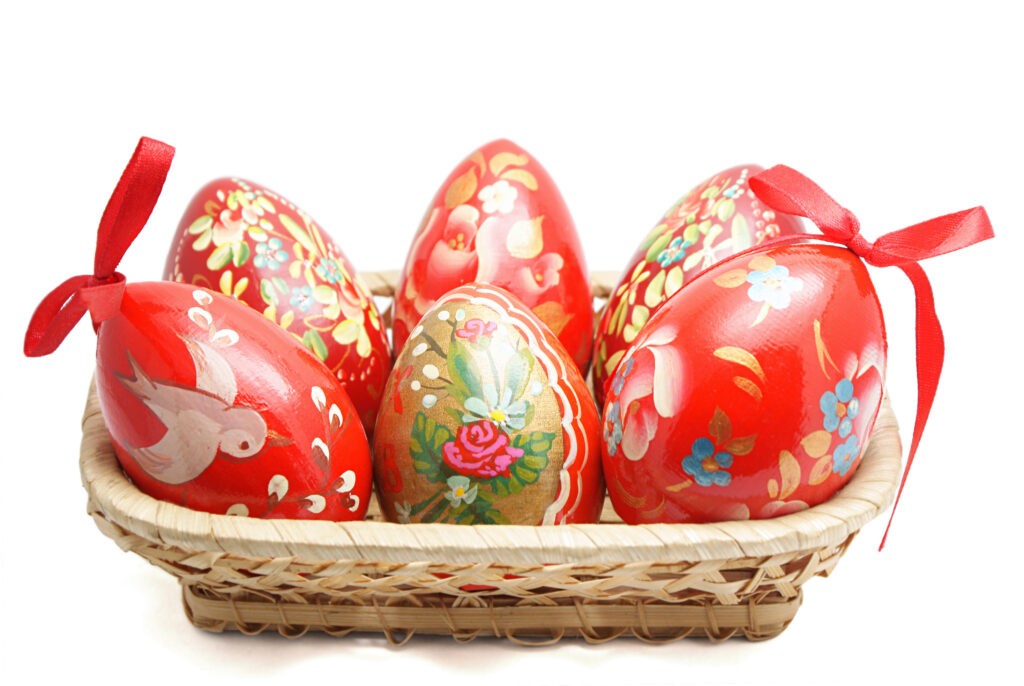
Russian Orthodox Easter, known as Pascha, is one of the most significant and joyously celebrated holidays among Russian communities worldwide, including those residing in the diverse tapestry of Central Asia. This celebration, deeply rooted in religious traditions, brings a unique blend of spiritual solemnity and communal festivities that stand out amidst the landscapes of Kazakhstan, Kyrgyzstan, Tajikistan, Turkmenistan, and Uzbekistan. The Heart of Russian Orthodox Easter The essence of Russian Orthodox Easter lies in its adherence to the Julian calendar, which often sets the celebration on a different date from Easter observed by Western Christian churches following the Gregorian calendar. The focal point of this celebration is the resurrection of Jesus Christ, a moment of immense spiritual rejoicing and the culmination of the Holy Week, preceded by the Great Lent, a period of fasting and penitence. Easter Traditions Transcending Borders In Central Asia, Russian Orthodox communities maintain their rich cultural heritage through distinctive Easter traditions. The ritual foods - Kulich, a tall, sweet yeast bread, and Paskha, a cheese dessert shaped into a pyramid to symbolize the Tomb of Christ, are central to the celebration. Eggs, painted in vibrant colors with a predominance of red, symbolize new life and hope, serving as both decorative items and gifts exchanged among friends and family. Easter Eve is marked by a solemn service that extends into the early hours of Sunday. The service begins in pitch darkness, symbolizing the tomb's interior. At midnight, churches and homes alike are filled with light and joyous exclamations of "Christ is Risen!" to which the response is "Indeed He is Risen!" This exchange, sometimes accompanied by threefold kisses, underscores the communal and inclusive spirit of Easter celebrations. A Celebration Amidst Diversity Despite the predominantly Muslim backdrop of Central Asia, the observance of Russian Orthodox Easter across the region is a testament to the religious freedoms and interfaith harmony that prevails. Local authorities and communities accommodate and respect these celebrations, making way for processions, services, and the public sharing of Easter foods and greetings. The open expression of such traditions fosters a sense of unity and mutual respect among the region's mosaic of cultures and religions. Cultural Fusion and Community Russian Orthodox communities in Central Asia not only preserve their traditions but also open avenues for cultural exchange. Easter festivities often see a blend of local and Russian customs, creating a rich, multicultural celebration. From the blessing of Easter baskets in churches to community gatherings and charitable acts, the essence of Easter - renewal and hope - resonates across diverse landscapes. Conclusion Russian Orthodox Easter in Central Asia is a testament to the enduring spirit of faith and community beyond geographical and cultural boundaries. It exemplifies how deeply-held religious traditions can coexist and flourish amidst diversity, bringing people together in celebration of shared values of rebirth, joy, and eternal hope. In the heart of Central Asia, Easter remains a vibrant and unifying force, showcasing the beauty of cultural convergence and the universal message of peace and renewal inherent...

What Will Uzbekistan’s Role in Central Asia’s Connectivity Be?

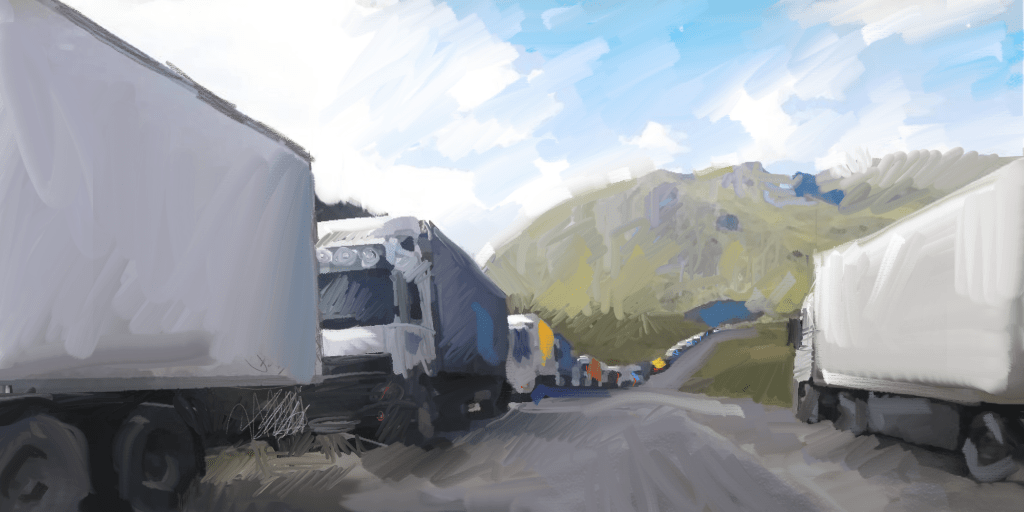
By Robert M. Cutler A new World Bank report on Central Asian connectivity published in April 2024 highlights the importance of the Middle Corridor, a trade route spanning Central Asia, the Caspian Sea, and the Caucasus, connecting China and East Asia with Georgia, Turkey, and Europe. This corridor is seen as a critical alternative to Russian-controlled routes, especially in light of recent geopolitical tensions. The World Bank identifies ten steps to address bottlenecks in the Middle Corridor, aiming to increase trade volumes by tripling them by 2030. This would significantly reduce travel times and increase trade volumes to 11 million tons, with proper investment and efficiency measures in place.   Uzbekistan and the Middle Corridor The report emphasizes the need for a "holistic" approach to improving transport connectivity in Central Asia. By this, it means a comprehensive and integrated strategy that combines improvements in infrastructure and logistics improvements with a reduction in border delays and tariffs, along with the harmonization of standards across countries. This includes improving both physical and digital infrastructure, enhancing governance and efficiency and addressing productivity issues amongst the state-owned enterprises that dominate the transport sectors in the region. The World Bank notes that Uzbekistan would profit from better rail connections with Kazakhstan; yet it does not identify any potentials for such projects. That is likely because a report by the Bank identified the Trans-Caspian International Trade Route (TITR) through southern Kazakhstan as the preferred program for international support.  Uzbekistan's participation in the Middle Corridor is still in a developmental stage. Tashkent has an active interest and a strategic geographic location, but concrete actions and project details are still emerging. There have been no public announcements about specific infrastructure projects or investments that Uzbekistan is undertaking within the Middle Corridor framework. It can be foreseen, however, that railway modernization should be high on the list of programs. There is, however, a new railway project - the Darbaza–Maktaaral line - currently underway in Kazakhstan that could be extended to improve connectivity with Uzbekistan. It is projected for completion in 2025. A second phase including an extension to Kazakhstan's Syrdarya station could then facilitate a further branch line from Syrdarya to Zhetysai, on the border with Uzbekistan. This project would reduce congestion at the existing Saryagash border crossing between the two countries and thus increase the capacity for transporting goods between the two countries by as much as 10 million tons per year.   The Middle Corridor and improvements to digital connectivity At present, the region has only limited connectivity.  The Central Asian countries have heavily invested in infrastructure since the turn of the century, but the region still lags behind middle-income countries in both investment and maintenance. Most areas continue to suffer from insufficient infrastructure and expensive services. These in turn hinder the potential for internal and external trade. The World Bank's report also provides a comprehensive analysis of the challenges and opportunities for enhancing connectivity in Central Asia. For this purpose, it focuses on both physical and...