• KGS/USD = 0.01143 0%
  • KZT/USD = 0.00205 0%
  • TJS/USD = 0.10433 0.1%
  • UZS/USD = 0.00008 0%
  • TMT/USD = 0.28577 0%
  • KGS/USD = 0.01143 0%
  • KZT/USD = 0.00205 0%
  • TJS/USD = 0.10433 0.1%
  • UZS/USD = 0.00008 0%
  • TMT/USD = 0.28577 0%
  • KGS/USD = 0.01143 0%
  • KZT/USD = 0.00205 0%
  • TJS/USD = 0.10433 0.1%
  • UZS/USD = 0.00008 0%
  • TMT/USD = 0.28577 0%
  • KGS/USD = 0.01143 0%
  • KZT/USD = 0.00205 0%
  • TJS/USD = 0.10433 0.1%
  • UZS/USD = 0.00008 0%
  • TMT/USD = 0.28577 0%
  • KGS/USD = 0.01143 0%
  • KZT/USD = 0.00205 0%
  • TJS/USD = 0.10433 0.1%
  • UZS/USD = 0.00008 0%
  • TMT/USD = 0.28577 0%
  • KGS/USD = 0.01143 0%
  • KZT/USD = 0.00205 0%
  • TJS/USD = 0.10433 0.1%
  • UZS/USD = 0.00008 0%
  • TMT/USD = 0.28577 0%
  • KGS/USD = 0.01143 0%
  • KZT/USD = 0.00205 0%
  • TJS/USD = 0.10433 0.1%
  • UZS/USD = 0.00008 0%
  • TMT/USD = 0.28577 0%
  • KGS/USD = 0.01143 0%
  • KZT/USD = 0.00205 0%
  • TJS/USD = 0.10433 0.1%
  • UZS/USD = 0.00008 0%
  • TMT/USD = 0.28577 0%

Viewing results 343 - 348 of 792

SCO Summit in Astana: Correspondents from China Global Television Network, Times of Central Asia Discuss Upcoming Meeting

National leaders and other dignitaries from over 20 countries will be in the Kazakh capital of Astana this week for the annual summit of the Shanghai Cooperation Organization (SCO). The Times of Central Asia will be covering the SCO Summit live on 3 and 4 July from the city’s Palace of Peace and Reconciliation. The SCO is a political, security and economic alliance in the wider Eurasia region. This year’s Summit host Kazakhstan was a founding member of the Organization in 2001, alongside China and Russia, and its Central Asian neighbors Kyrgyzstan, Tajikistan and Uzbekistan. The last time the Summit was held in Astana, in 2017, India and Pakistan became full members. There are currently nine full member states, four observer states, and 14 dialogue partners, covering half of the world’s population, and almost a third of global GDP. This year's Summit will have significant implications for regional and global affairs. It is likely to produce initiatives aimed at reducing trade barriers, and promoting investments between SCO member states. High on the agenda will be the Belt and Road Initiative (BRI) – a crucial framework for enhancing connectivity and economic ties between China and its Central Asian partners. Other anticipated outcomes include new initiatives on climate change and sustainable development, as well as strengthened cultural and educational exchanges. Upon the initiative of Kazakhstan’s President Kassym-Jomart Tokayev, 2024 has been named the SCO “Year of Ecology”. Ahead of the Astana Summit, The Times of Central Asia’s senior editor Jonathan Campion spoke with an anchor from China Global Television Network, Mr Zhong Shi, about the role of the Shanghai Cooperation Organization plays in the Central Asia region. Their talk can be viewed in full in the videos below. In response to The Times of Central Asia’s question about what makes the SCO different from other alliances that the countries of Central Asia are aligned with, Mr Zhong explained that: “The SCO has been truly effective in combatting what we call the three enemies of all members, namely terrorism, extremism and separatism. There have been joint military drills conducted to enhance the coordination among armed forces”. Listen to Mr Zhong’s full response below: [video width="1920" height="1080" mp4="https://timesca.com/wp-content/uploads/2024/06/fullscreen-Zhong-Shi-answer-2-questions.mp4"][/video]   [video width="1920" height="1080" mp4="https://timesca.com/wp-content/uploads/2024/06/tw0-windows-Zhong-Shi-answer-2-questions.mp4"][/video] In turn, Mr Campion gave The Times of Central Asia’s perspective on the upcoming Summit. Asked about the impact that the Belt and Road Initiative has had on Central Asia, he replied: "Central Asia is evolving as a land bridge component to the Belt and Road Initiative linking China to the Caspian Sea. We’re seeing that investments in transport infrastructure are unlocking the region’s vast natural resources. With the world making a green transition, Kazakhstan stands out, as it has an abundance of critical materials – or green metals as they are known – that are used in the components of green technologies.” Listen to Mr Campion’s full response below: [video width="1920" height="1080" mp4="https://timesca.com/wp-content/uploads/2024/06/Jonathon-answer-Q2.mp4"][/video]   [video width="1920" height="1080" mp4="https://timesca.com/wp-content/uploads/2024/06/Jonathon-answer-Q3.mp4"][/video]  
Central Asian Leaders Offer Support, Condolences to Putin After Dagestan Attack

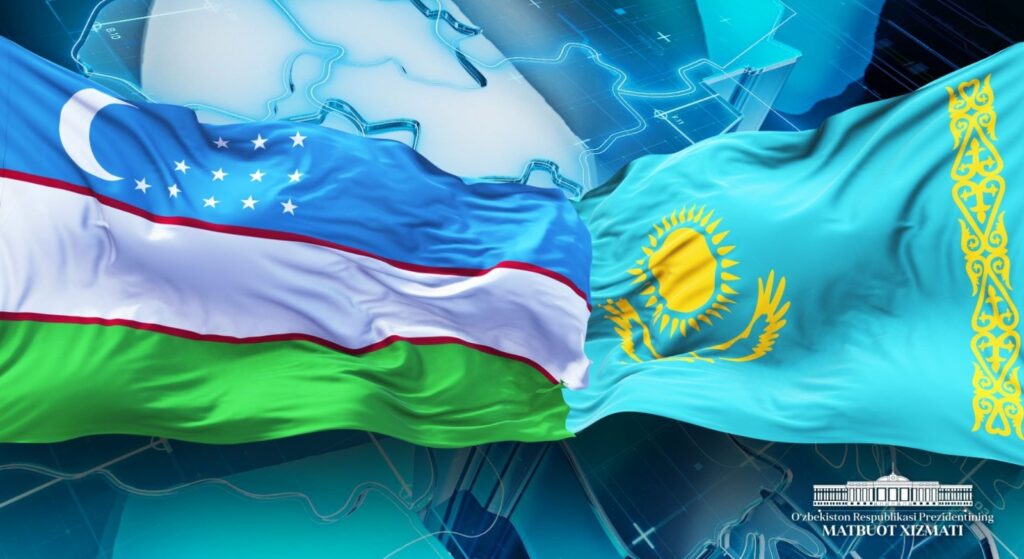
Several leaders in Central Asia have spoken by telephone with Russian President Vladimir Putin and expressed their condolences after attacks by alleged Islamic militants in the Russian area of Dagestan killed about 20 people.  The quick expressions of support on Monday reflect longstanding security ties between Russia and Central Asian countries, as well as growing concerns about extremist attacks in the region, particularly following the March 22 assault on the Crocus City concert hall in the Moscow area that killed more than 140 people. The violence in Russia on Sunday happened in two cities in a mostly Muslim region of the North Caucasus and targeted police and places of worship.  Uzbek President Shavkat Mirziyoyev said in his conversation with Putin that Uzbekistan was ready “to continue active cooperation between the relevant structures in the fight against common threats in the field of security,” according to a statement by Mirziyoyev. The two leaders also discussed implementation of agreements reached during a visit by Putin to Uzbekistan on May 26-28.  Kazakh President Kassym-Jomart Tokayev made similar remarks in a call with Putin, saying Kazakhstan “condemns any assassination and evil attempt on the lives of civilians and regards it as a great threat to international and regional security,” Tokayev’s office reported. It said the two presidents talked about strengthening their “strategic partnership” and discussed the agenda of the Shanghai Cooperation Organization summit, to be held in the Kazakh capital of Astana on July 3-4.  Tajikistan’s leader Emomali Rahmon sent a message expressing “a feeling of deep sadness” and pledges of collaboration on security issues to Putin, saying his country had been fighting terrorism for decades. “Tajikistan, which has been fighting against all forms of terrorism for more than 30 years, strongly condemns this inhuman act of violence in Dagestan and advocates active cooperation in the fight against terrorism,” Rahmon said.  Kyrgyzstan’s leader, Sadyr Japarov, who left Bishkek on Monday on an official trip to Belgium, also expressed solidarity with Russia.  The Islamic State group claimed responsibility for the March 22 attack in suburban Moscow and several Tajik suspects were arrested, leading to some harassment and increased scrutiny of many Central Asian migrants who travel to Russia in hopes of finding work. The situation fueled diplomatic tension between Russia and some Central Asian countries, though their leaders have worked to stabilize relations.  Putin blamed battlefield adversary Ukraine for the March 22 attack, but he didn’t offer evidence and Kyiv denied the allegation.

Decline in Uzbekistan’s Production of Natural Gas, Oil and Coal

According to data released by the Statistics Agency of Uzbekistan, from January – May, the country’s production of natural gas amounted to 18.8 billion cubic meters, one billion cubic meters less than in the same period last year. Natural gas production in Uzbekistan has seen a steady decline in recent years and from 2019-23, fell by 22.8 percent. In 2022, gas production decreased from 53.8 billion to 51.67 billion cubic meters, or 4%, and in 2023, from 51.67 billion to 46.71 billion cubic meters, or 9.6%. To compensate for the drop in domestic production, Uzbekistan has increased its import of natural gas from Turkmenistan and Russia. In the first 5 months of this year, Uzbekistan also saw a decrease in coal and oil production. Coal production fell by 73 thousand tons, to 1.9 million tons, and oil production, by 22 thousand tons, to 305 thousand tons.  

Uzbek Prison Visit by EU, US, and UK Diplomats

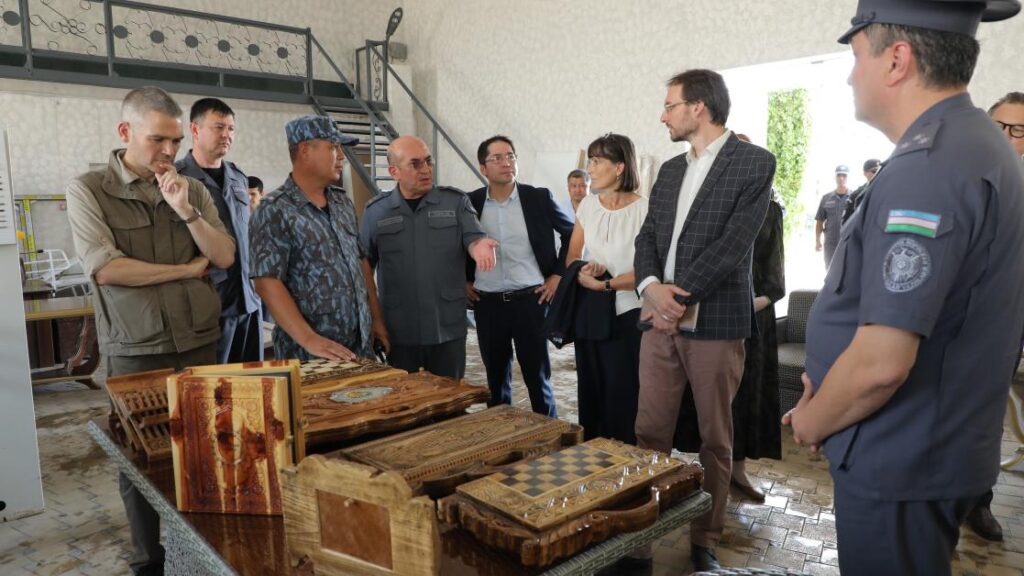
At the invitation of Uzbek authorities, UK Ambassador Timothy Smart, EU Ambassador Charlotte Adriaen and US Deputy Chief of Mission Paul Poletes visited a prison colony in the Chirchik district close to Tashkent, on 20 June. As reported by the Delegation of the European Union to Uzbekistan, the visit included a tour of facilities for medical care and therapy, as well as two workshops where prisoners produce garments and furniture. Presentations by staff, provided an insight into the daily lives of prisoners serving their sentences. The visit marks a milestone in engagement between Uzbekistan and the European Union, the United Kingdom, and the United States, and the diplomats acknowledged both the openness of the prison staff and  improvements made in recent years. Uzbekistan has announced its intention to ratify the Optional Protocol to the Convention against Torture (OPCAT) under which the National Preventative Mechanism will conduct comprehensive and independent reports on detention facilities to support the Uzbek government in forwarding reforms to improve the justice sector. Charlotte Adriaen thanked both the Uzbek government and the administration of prison #13 for enabling the visit and said: “Transparency in the penitentiary system is key to Uzbekistan’s path towards the ratification of OPCAT. In this regard, and considering the positive impression provided by today’s visit, it is my firm belief that openness and cooperation with international and national monitors can only benefit the life of prisoners and Uzbekistan.” Enthused by the visit, Timothy Smart added: “It is encouraging to see Uzbekistan continue its journey towards improving human rights in the country. In the UK we have had many issues with our prisons and through open discussion and independent scrutiny, have been able to improve conditions. I am most grateful to the Uzbek government and authorities of prison #13 for such access.  I was struck by both the quality of the facilities we saw today and the focus on rehabilitation. The life skills provided are invaluable to both the individuals as well as their mahallas”.

Testing Limits: Marathoners Head For the Shrinking Aral Sea to Run in the Desert

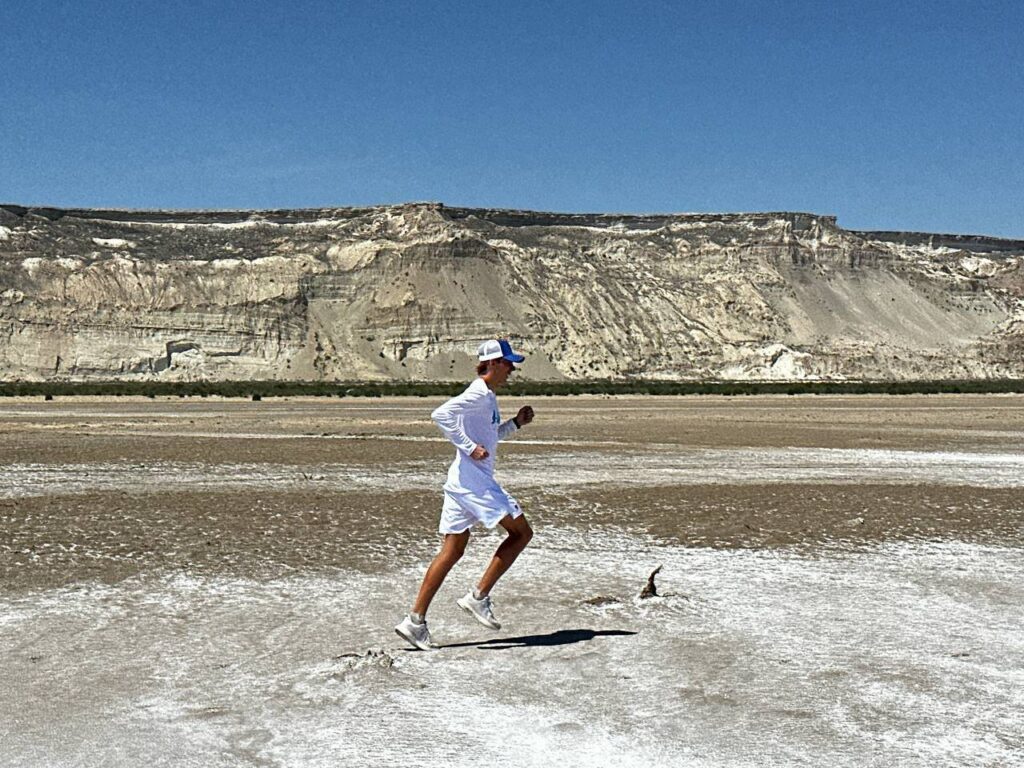
The dry bed of the Aral Sea, a symbol of ecological disaster in Central Asia, will host one of the world’s more extreme marathons on Sunday. Supported by aid stations and medical staff, a small band of athletes will run on sand, gravel and stones, inhaling salty air in scorching temperatures and bracing themselves against strong winds. The Aral Sea Eco Marathon is being held in Karakalpakstan, Uzbekistan and planners aim to draw attention to what was once the fourth biggest saltwater lake and is now about 10 percent of its original size. Race promoters also want to highlight the need for sustainable use of water. The marathon roughly coincides with the United Nations-designated day to combat desertification and drought, which falls on June 17.  Andrey Kulikov, founder of the ProRun running school in Uzbekistan, ran a marathon distance in the area last year with American ultramarathoner Dean Karnazes in 4:51:18. Kulikov planned this year’s event with the help of Aziz Abdukhakimov, Uzbekistan’s minister of ecology, environmental protection and climate change. A limit of 100 runners was set, though far fewer signed up. Still, Kulikov said participants are from countries including Japan, China, France, Pakistan, Kenya, Togo and the Philippines. He hopes to expand the event next year. Uzbek participant Denis Mambetov said in a text interview on Telegram that he is taking part because of “a passion for adventure, for something new and unusual, to test one’s strength, and, of course, to draw the attention of others to an environmental problem of global proportions.” The Aral Sea, which lies between northern Uzbekistan and southern Kazakhstan, began shrinking significantly in the 1960s when water from the rivers that fed it was rerouted for Soviet-led agricultural irrigation. The subsequent emergency of the Aralkum Desert and the sand and dust storms arising from the world’s newest desert have polluted the environment and severely affected health in local communities. There are regional and international efforts to restore the Aral Sea ecosystem, including seed-planting and the implementation of water-saving technologies. The five Central Asian countries - Uzbekistan, Kazakhstan, Kyrgyzstan, Tajikistan and Turkmenistan – formed a group three decades ago, soon after independence from Soviet rule, to address the problem. The gap between goals and results is wide, though the countries are recognizing the wider threat of water scarcity as the planet becomes hotter.  “Colleagues are well aware that the problem of water shortage in Central Asia has become acute and irreversible and will only worsen in the future,” Uzbek President Shavkat Mirziyoyev said at a regional meeting on the Aral Sea last year. “Experts believe that in some regions of Central Asia pressure on water resources will increase three times by 2040. Economic damage could eventually reach 11 percent of regional gross product.” Nurbek Khusanov, who will run the marathon on Sunday,  works at SQB, a top bank in Uzbekistan, and is a leader of its efforts to promote “green” policies that aid the environment. The marathon will “attract more people to the Aral...

Eurasian Connectivity Comes One Step Closer at the 2024 CAMCA Forum in Bishkek

The wider Eurasia region took another step towards cooperation and connectivity last week, as the 10th annual CAMCA Regional Forum was held in Bishkek. CAMCA – standing for Central Asia, Mongolia, the Caucasus and Afghanistan – is an initiative to accelerate dialogue between governments, private enterprises and media figures from these ten nations. Organized by the Washington, D.C.-based Central Asia-Caucasus Institute and the Rumsfeld Foundation, this year’s Forum – the first such event to take place in Kyrgyzstan – featured over 300 delegates across its two days, and presented insights from over 70 speakers. Attendees came from 25 countries in total. Professor Frederick Starr, the Central Asia-Caucasus Institute’s chairman, used his opening address to call on the countries of the region to start preparing for a future within a cohesive international bloc. Dr Starr reasoned that Russia and China, imperial powers that have traditionally had a controlling presence in Central Asia, may see their global influence wane in the coming decade. This would give the countries of Central Asia, and their neighbors, more space to create projects that serve their economies directly. A leading CAMCA regional project is the ‘Middle Corridor’ trade route, which bypasses Russia to transport goods more efficiently between Europe and China. Discussions are also taking place concerning the creation of single business and tourist visas for the whole Central Asia region. The importance of collaboration between countries in the Caucasus and Central Asia to mitigate the impact of climate change has never been so great. Addresses by senior members of the Kyrgyz government highlighted the progress that Kyrgyzstan has made since the administration of president Sadyr Japarov began its work in 2021. The country’s deputy prime minister Edil Baisalov reported that Kyrgyzstan is on track to double its GDP to $30 billion by 2030, while the minister for digital development, Nuria Kutnaeva, spoke about the rapid digitalization of the country’s government services.  In a noticeably warm and collaborative atmosphere, the event nonetheless highlighted the barriers that prevent the ten countries from forming a tangible ‘CAMCA’ space in the present. A key goal is the harmonization of their legislation and policy directions; however, no delegates from Tajikistan could travel to Bishkek for the Forum, as otherwise solid relations between Tajikistan and Kyrgyzstan are still strained by a dispute over their common border. Likewise, Armenian voices were also absent this time, in light of several of the sessions featuring Azerbaijani speakers and talking points. The event featured only one guest from Turkmenistan.  Even in these conflicts, however, Central Asian diplomacy is at work. The conflict on the Kyrgyz-Tajik border, mainly in Tajikistan’s Vorukh district, is being resolved through negotiations between the two countries’ governments, which would have been unthinkable even five years ago. Meanwhile, Kazakhstan is acting as a mediator between Baku and Yerevan in the aftermath of the war in Nagorno-Karabakh. Other topics on the agenda included security priorities for Central Asia, digital innovation in business, cooperation with Afghanistan, transitions in global energy markets, and infrastructure projects...