Viewing results 643 - 648 of 1151
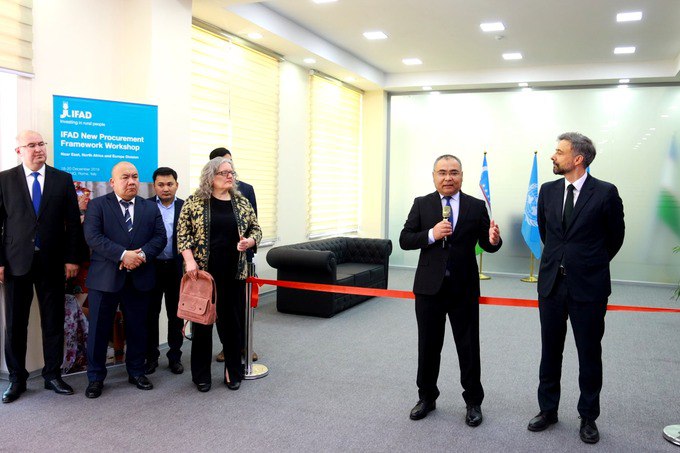
The International Fund for Agricultural Development (IFAD) has opened an office in Uzbekistan. The opening ceremony was attended by IFAD President, Alvaro Lario, and the Uzbek Minister of Agriculture, Ibrohim Abdurakhmonov. IFAD is an international financial institution and a specialized agency of the United Nations, established in 1978. "The opening of the Fund's office in Tashkent reflects our commitment to sustainable economic development in Uzbekistan and the region. Through partnerships with the government and the private sector, we can support more ambitious investments in climate change adaptation and rural prosperity," said Lario. "Uzbekistan has been cooperating with the fund since joining it as a member state in 2011. Having a representative office in the country will allow to better address specific needs and problems of the agricultural sector," the fund said in a statement. Over the past decade, IFAD's portfolio of projects in the region has grown significantly, with a total investment of $435.3 million covering more than 550,000 rural residents.
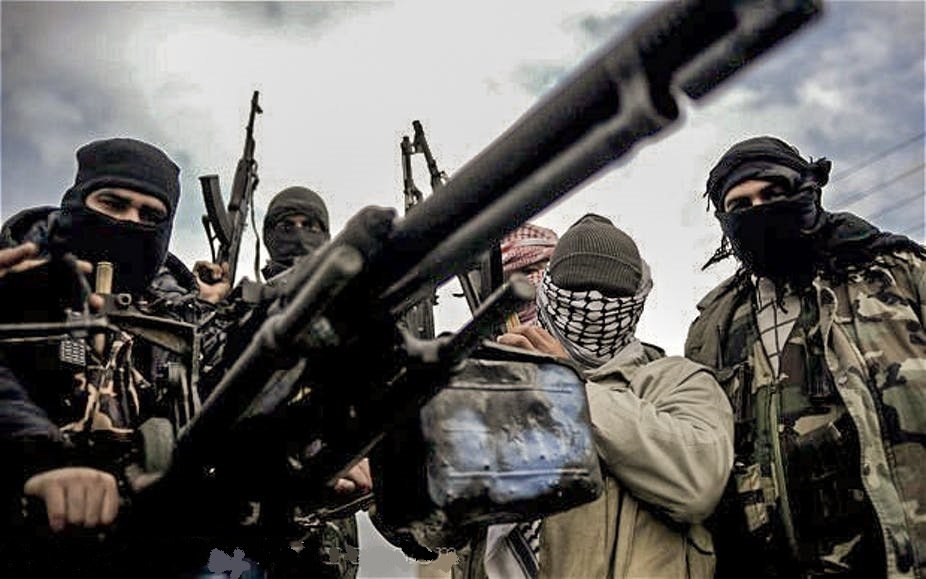
The U.S. State Department, in agreement with the Republic of Turkey, has announced that it added a number of individuals to the “blacklist” of the ISIS terrorist group. The department recognized the leader of ISIS in Georgia, Adam Khamirzayev, as a “global terrorist.” All three members of the ISIS-related smuggling network have been identified as terrorists, and all three of them are from Uzbekistan: Muhammadyusuf Alisher Ogli Mirzoev is a Uzbekistani national involved in work to establish an ISIS-linked “military” training camp in mid-2023. Mirzoev is also being designated by the Government of Turkey. Muhammad Ibrohimjon Niyazov is a Uzbekistani national and a supporter of the ISIS-linked smuggling network. Niyazov has provided administrative and logistics support for ISIS members in Turkey. Niyazov is also being designated by the Government of Turkey. Olimkhon Makhmudjon Ugli Ismailov is based in Uzbekistan and is a member of the ISIS-linked smuggling network. Internal measures are being taken against all of the men in Turkey. As stated in the report, any U.S. or foreign persons who engages in certain transactions with these individuals may be exposed to sanctions, including under secondary sanctions authorities.
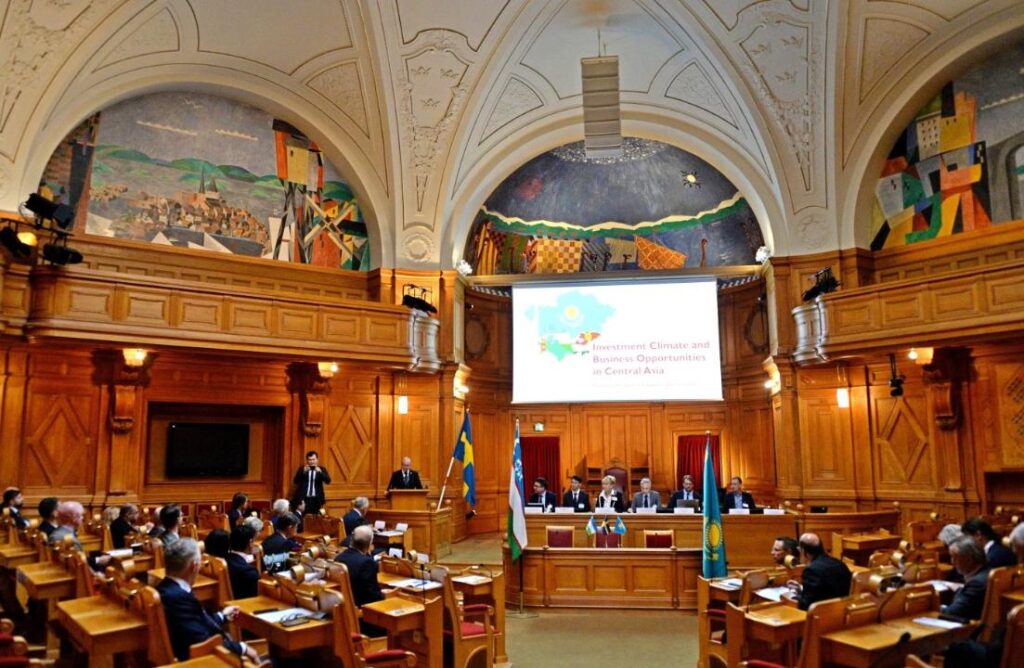
The first business seminar on the investment climate and business opportunities in Kazakhstan and Central Asia was held last week in Stockholm, Sweden. As reported by Kazakhstan’s Foreign Ministry, the event was attended by Chairman of the Sweden–Central Asia Friendship Group of the Riksdag (Swedish Parliament) Bjorn Soder, Ambassador of Uzbekistan to Sweden Nodir Ganiev, Ambassador of Sweden to Kazakhstan Ewa Polano, Ambassador of Sweden to Uzbekistan Tomas Danestad, Chairman of the Swedish Chamber of Commerce for Eurasia Heinz Sjogren, and representatives of Swedish ministries and large companies. Speaking at the event, Bjorn Soder noted the strategic importance of enhancing cooperation between Sweden’s and Central Asia’s public and private sectors. Attention was drawn to Central Asia’s huge potential for strengthening trade and economic relations with Sweden, and the limitless prospects for expanding investment partnership. Ewa Polano and Tomas Danestad shared their views on the dynamic development of Central Asia, emphasizing that Kazakhstan and Uzbekistan are the “core-countries” of the region. Referencing growing competition in the region, the two ambassadors called on the Swedish business community to invest in Central Asia, as well as expand its presence in the region. Representative of Scania AB, Fredrik Wijkander, outlined the Swedish company’s presence in Kazakhstan where it has been operating since 2007. In 2023, the assembly of Scania trucks was launched in Saran, in the Karaganda region, and in 2024, Scania AB set up Scania Central Asia as an independent business unit in the region with its head office in Almaty. Fredrik Wijkander said that despite the high competition from Chinese automakers, the Swedish company will continue to strengthen its presence in Central Asia and expand production. To this effect, he confirmed plans for the assembly of trucks and buses, and establish local production in Kazakhstan.
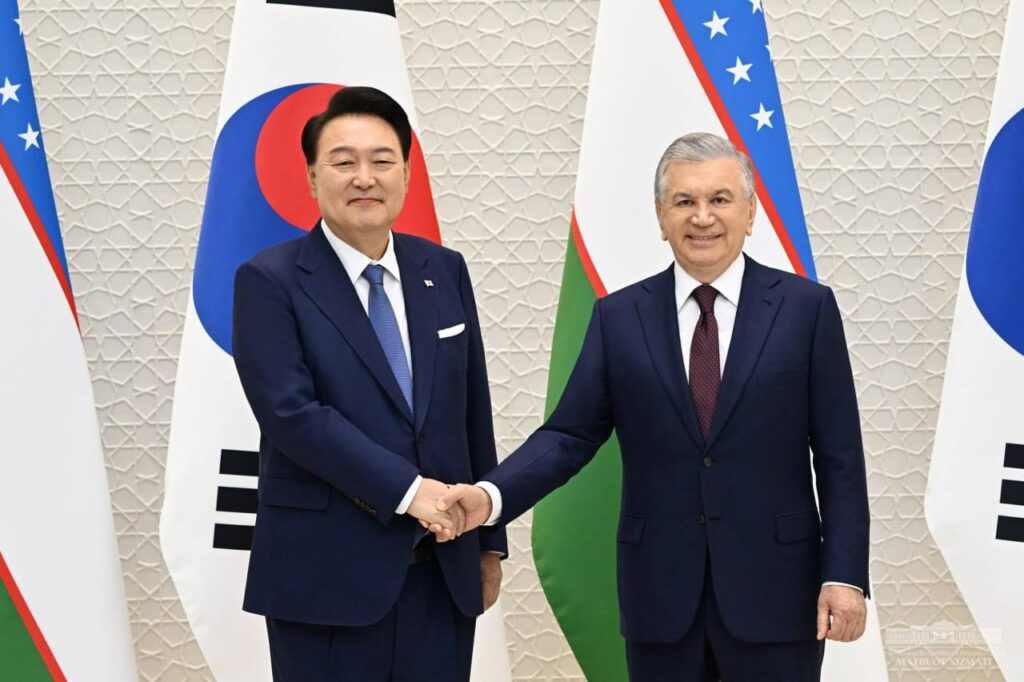
On 14 June, South Korean President Yoon Suk Yeol held talks with Uzbekistan President Shavkat Mirziyoyev. During their meeting in Tashkent, it was noted that the Republic of Korea is among Uzbekistan’s leading trade and investment partners. Last year, bilateral trade turnover reached $2.5 billion, and Korean investments in Uzbekistan now exceed $7.5 billion. Negotiations focused on the formation of a new, high-tech agenda for Uzbek-Korean strategic partnership over the next three years. As a result, the two leaders tasked their governments to prepare a Strategic Program for the creation of a regional high-tech hub in Uzbekistan, with priority given to the following “anchor” areas of the Strategy: Partnership on critical mineral resources with deep processing and creation of a complete added value chain. Strategic cooperation in the field of semiconductors, in which the Republic of Korea is recognized as a global leader, and the implementation of plans to create in Uzbekistan’s first fully-fledged research and production cluster of semiconductor products. Full-scale partnership in the chemical industry, including new projects to produce green hydrogen and ammonia, as well as finished rubber products. Deepening cooperation in mechanical engineering. This spring, an assembly line for KIA cars was launched in Uzbekistan’s Jizzakh region, to be followed next year, by a plant with the capacity to manufacture over 60 thousand vehicles per year. Transfer of technologies to develop “smart” agriculture, including via the digitalization of the agricultural sector, the introduction of “smart” and “green” technologies. Agreements have already been reached on the creation of modern greenhouses and garden complexes in Uzbekistan’s regions based on renewable energy sources. Infrastructure modernization and a program for urban development, based on the high interest of Korean banks and companies in the modernization of transport infrastructure, and the design and construction of residential and commercial real estate in Uzbekistan on the principles of public-private partnership. With regard to developing potential projects in green energy and increase energy efficiency, strategic dialogue is to be resumed between energy ministers and a meeting organized in Uzbekistan in the near future.
On June 13, Tashkent hosted the inaugural meeting of the Working Groups on the development of Uzbekistan’s capital market and creation of the International Financial and Technology Center. The event which also addressed the development of the Law on Alternative Investments, was organized within the framework of the Foreign Investors Council under the President of Uzbekistan. Representatives of international financial organizations and Uzbekistan’s business community joined heads of Uzbek ministries and foreign investors in discussions on the establishment of an International Financial and Technology Center, with an emphasis on attracting financial technology companies to Uzbekistan. The Uzbek Ministry of Investment, Industry and Trade reported that the agenda also included the development of a law governing the Center's operations as well as the creation of a strategy to promote opportunities offered by the center to entice foreign investment in Uzbekistan. According to experts, the launch of the Center will ensure long-term sustainable investment growth, increase the country’s GDP by 1% annually, and attract portfolio investments amounting to $7-$8 billion by 2028. It is also expected to create 15-20 thousand new highly skilled jobs over the next ten years. The meeting also reviewed draft amendments to the Law of the Republic of Uzbekistan "On Joint Stock Companies and Protection of Investors' Rights" and the concept of the law "On the International Financial and Technology Center".
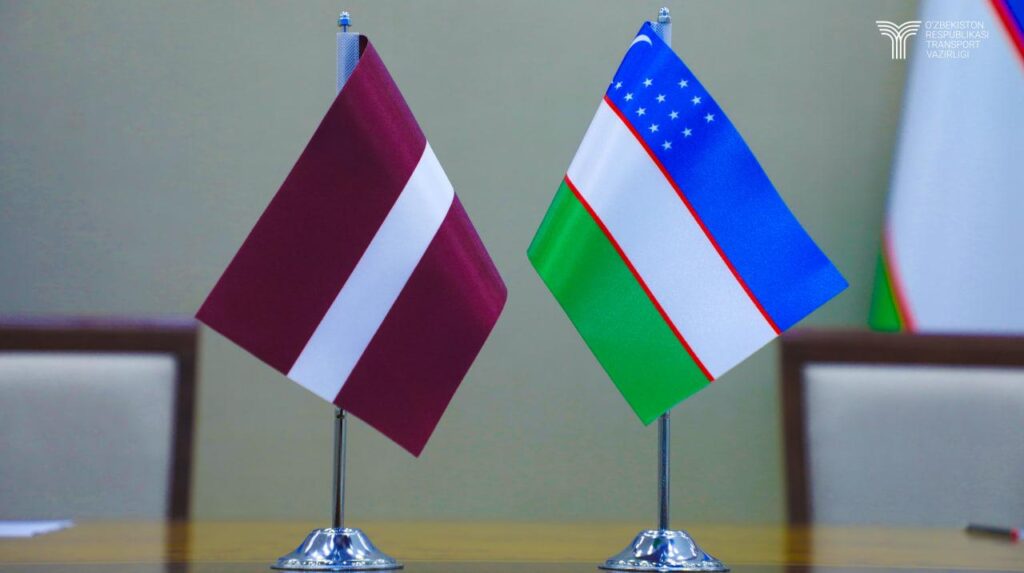
According to the Ministry of Transport of Uzbekistan's press service reports, Uzbekistan and Latvia have agreed to develop road freight transportation through Latvian ports. The decision followed discussions by the Uzbek-Latvian Joint Commission on International Road Transportation on issues related to trade development, economic relations, and increasing the volume of international cargo transportation. In a statement welcoming the move, the Ministry of Transport of Uzbekistan announced, "Today, the importance of the route passing through Latvian ports is growing and expanding trade relations between Uzbekistan and EU countries. In this regard, the meeting focused on the effective utilization of Latvia's port infrastructure potential. Head of the Public Transport Department of the Latvian Ministry of Transport Annija Novikova has expressed readiness to provide comprehensive assistance in creating favorable conditions for national carriers of Uzbekistan within the framework of cooperation,” During the meeting, the parties agreed to provide special permits for organizing cargo transportation by road through Latvian ports and established a quota of permits for 2024.