• KGS/USD = 0.01144 0%
  • KZT/USD = 0.00211 0%
  • TJS/USD = 0.10460 0%
  • UZS/USD = 0.00008 0%
  • TMT/USD = 0.28571 0.28%
  • KGS/USD = 0.01144 0%
  • KZT/USD = 0.00211 0%
  • TJS/USD = 0.10460 0%
  • UZS/USD = 0.00008 0%
  • TMT/USD = 0.28571 0.28%
  • KGS/USD = 0.01144 0%
  • KZT/USD = 0.00211 0%
  • TJS/USD = 0.10460 0%
  • UZS/USD = 0.00008 0%
  • TMT/USD = 0.28571 0.28%
  • KGS/USD = 0.01144 0%
  • KZT/USD = 0.00211 0%
  • TJS/USD = 0.10460 0%
  • UZS/USD = 0.00008 0%
  • TMT/USD = 0.28571 0.28%
  • KGS/USD = 0.01144 0%
  • KZT/USD = 0.00211 0%
  • TJS/USD = 0.10460 0%
  • UZS/USD = 0.00008 0%
  • TMT/USD = 0.28571 0.28%
  • KGS/USD = 0.01144 0%
  • KZT/USD = 0.00211 0%
  • TJS/USD = 0.10460 0%
  • UZS/USD = 0.00008 0%
  • TMT/USD = 0.28571 0.28%
  • KGS/USD = 0.01144 0%
  • KZT/USD = 0.00211 0%
  • TJS/USD = 0.10460 0%
  • UZS/USD = 0.00008 0%
  • TMT/USD = 0.28571 0.28%
  • KGS/USD = 0.01144 0%
  • KZT/USD = 0.00211 0%
  • TJS/USD = 0.10460 0%
  • UZS/USD = 0.00008 0%
  • TMT/USD = 0.28571 0.28%

Viewing results 73 - 78 of 200

Repatriating Islamic State Fighters and Families: Balancing Security and Humanity

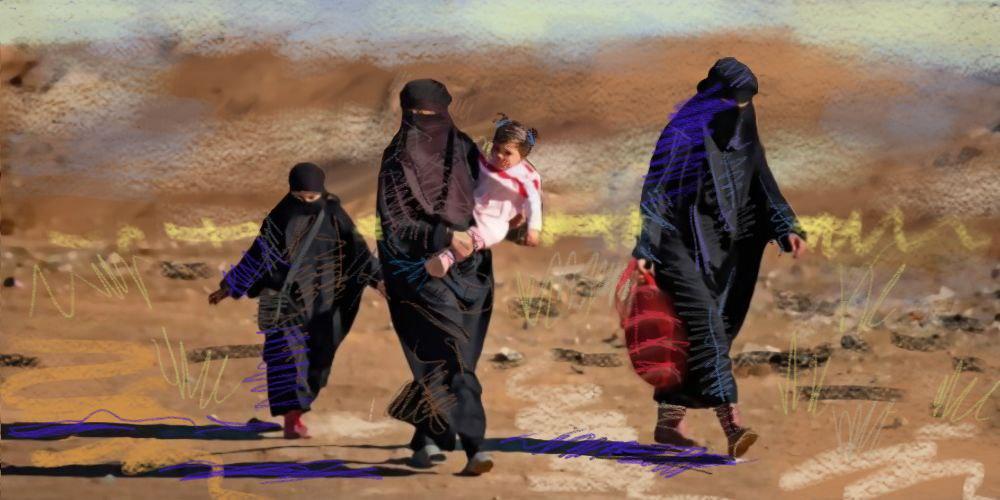
With the fall of the Assad regime in Syria, repatriating foreign fighters is a pressing issue at the intersection of global security, humanitarian principles, and national responsibility. Central Asian governments — namely, Kazakhstan, Uzbekistan, Kyrgyzstan, and Tajikistan — have emerged as proactive players in repatriating their citizens from camps in northeastern Syria. While these efforts are laudable, they come with challenges and unanswered questions. Tens of thousands of people, many of them women and children associated with former ISIS or the Islamic State of Iraq and Syria - a terrorist organization known for its extreme ideology and violent actions of its’ fighters — remain trapped in the camps of northeastern Syria. Their lives are defined by squalor and uncertainty, and they face a bleak future. Central Asian nations have stepped up where many others have faltered, asserting their responsibility to help their citizens who languish there. Yet, this commitment is not without its limits. Repatriating men — many of whom were fighters — remains a challenge that even the most ambitious programs have struggled to address. This issue looms large, as it intertwines with broader questions. These include reintegration, security risks, and the potential for radicalization, both in prison systems and broader society. The scale of efforts undertaken by four of the Central Asian countries is significant. Together, they have repatriated around 2,200 citizens: Kazakhstan, the most, 754 individuals, followed by others with numbers ranging from 381 to 533. These figures represent more than just logistical achievements. They reflect these governments' commitment to humanitarian principles. However, the path has not been entirely smooth, as some of the repatriated women and children have returned back to conflict zones. As counterintuitive as this may seem, they might do so out of ideological commitment, social ties, coercion or threats, trauma bonding, or difficulty reintegrating into their home societies. All this suggests cracks in reintegration programs that must be addressed. The strategies employed by the Central Asian states, despite their common goal, differ in focus and execution. Kazakhstan’s “Operation Zhusan” is often mentioned as a model of coordination and commitment. It has gone beyond mere repatriation to a vision embracing comprehensive reintegration, including other services, such as DNA testing to identify orphaned children. Yet such efforts rely heavily on state resources and long-term political will, neither of which can be taken for granted. Uzbekistan’s Mehr ("Kindness") initiative has particularly focused on protecting children and supporting the unification of families. Yet even with international appreciation, Uzbekistan faces the same challenges as its neighbors: how to sustain this momentum and address lingering societal stigmas toward returnees. Kyrgyzstan paused its repatriation operations in Iraq due to legal roadblocks and has turned its attention to Syria. However, Kyrgyzstan relies significantly on international cooperation, as its own economic resources for such activities are comparatively limited. So far, it has repatriated 511 citizens. Tajikistan’s steady progress highlights even more pointedly the role of international cooperation with organizations like UNICEF and the European Union. The Tajik authorities have worked closely with...
Underground Smuggling Tunnel Uncovered on Uzbek-Kazakh Border

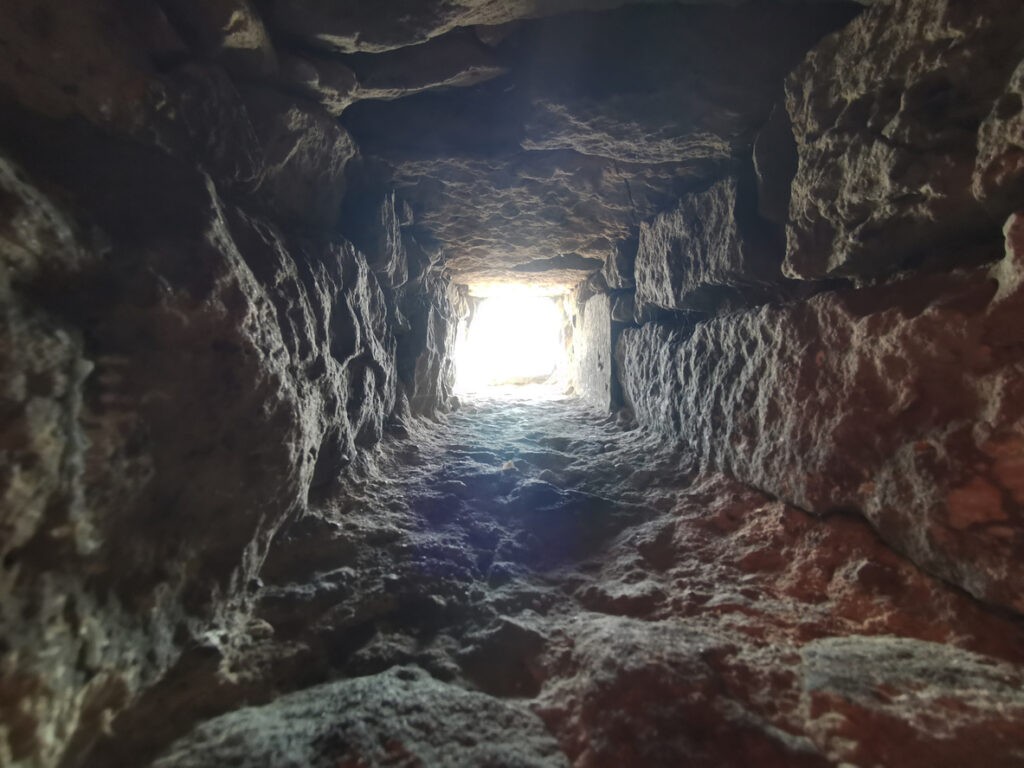
Under the coordination of Kazakhstan’s Turkestan Region Prosecutor’s Office and in cooperation with Uzbek law enforcement, authorities dismantled a criminal group and shut down a tunnel used for smuggling petroleum products. One tunnel, stretching 450 meters between the two countries, was used to smuggle 5–7 tons of fuel and lubricants daily. The smuggling operation had been active for two months before being brought to an end. Investigations revealed that a well-organized transnational criminal group was behind the tunnel, using it to facilitate the illicit transfer of goods and funds between Kazakhstan and Uzbekistan. Meanwhile, Uzbekistan’s State Security Service (DXX) uncovered another illegal underground tunnel on the Tashkent-Kazakhstan border. Working in coordination with the Tashkent-Aero customs complex, border troops, and military personnel, the DXX exposed a cross-border smuggling operation involving large quantities of substandard drugs imported from India into Uzbekistan via Kazakhstan. In a related case, a similar underground passage was discovered in April in Kyrgyzstan’s Jalal-Abad region. This tunnel was being used to smuggle people and contraband goods into Uzbekistan.

Uzbekistan Moves to Penalize Financing of Mass Disturbances

Uzbekistan’s Parliament, the Oliy Majlis, is taking decisive steps to address the organization and financing of public disturbances. On December 11, the Legislative Chamber approved a draft law amending Article 244 of the Criminal Code. Passed in its first reading, the amendments aim to strengthen the country’s legal framework for tackling mass disturbances. During a parliamentary session on December 24, the draft law advanced further, reaching its third reading and gaining adoption. The updated Article 244 introduces several significant changes: A new third section establishes specific liability for individuals undergoing training with the intent to participate in mass disturbances. A fourth section introduces fines for financing such activities. A fifth section provides an exemption from criminal liability for individuals who voluntarily report to law enforcement after undergoing such training. These amendments are designed to deter organized disturbances while promoting cooperation with authorities.

Deportations of Central Asians from the U.S. Increased in 2024

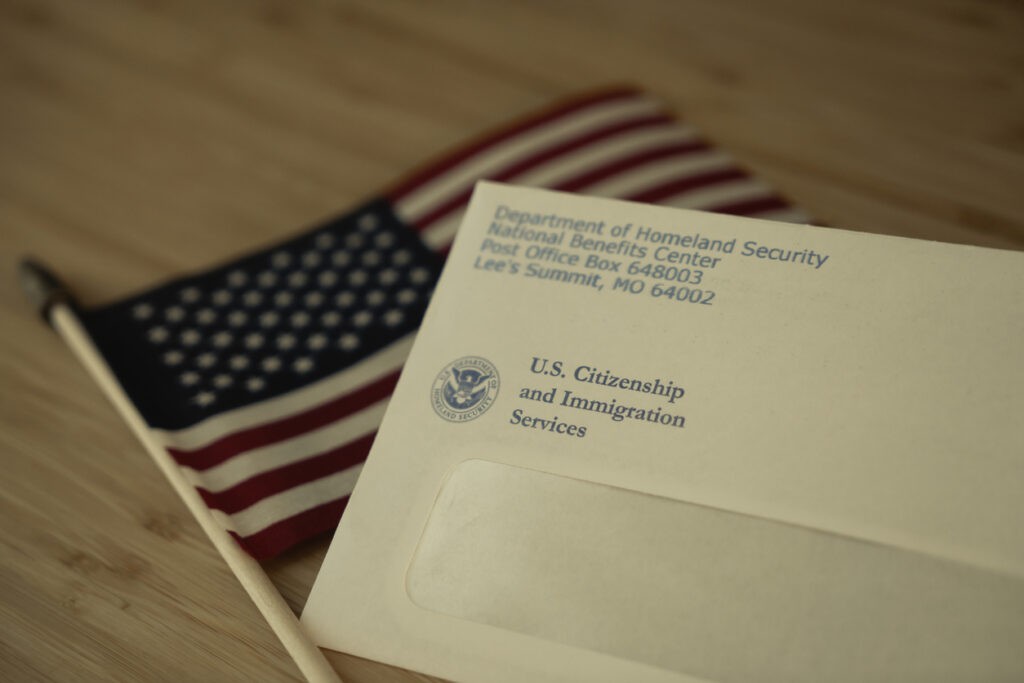
U.S. Immigration and Customs Enforcement (ICE) has released its Fiscal Year 2024 Annual Report, detailing the agency’s accomplishments over the past year. The report highlights how ICE’s directorates and program offices met their mission objectives. Established in the aftermath of the 9/11 attacks, ICE is tasked with protecting the American public, ensuring public safety, and promoting national security. According to the report, ICE’s Enforcement and Removal Operations (ERO) deported 271,484 non-citizens with final orders of removal to 192 countries. This total includes 88,763 individuals charged with or convicted of criminal offenses, 3,706 known or suspected gang members, 237 known or suspected terrorists, and eight human rights violators. More than 30% of those deported had criminal histories, with an average of 5.63 convictions or charges per individual. ERO also assisted in identifying and arresting individuals wanted in their home countries for serious crimes, including terrorism and torture. The Times of Central Asia examined the report with a focus on Central Asian countries. In 2024, the US deported 572 Uzbek nationals - a dramatic increase compared to 88 in 2013, 21 in 2021, and 55 in 2022. Deportations of Tajik citizens also surged, reaching 77 in 2024 compared to only four annually in 2019, 2020, 2022, and 2023. Kazakhstan saw the deportation of 23 of its citizens this year, up from 14 in 2023. Deportations to Kyrgyzstan also spiked, with 69 individuals removed in 2024. By comparison, only three Kyrgyz citizens were deported in 2020, eight in 2021, one in 2022, and 14 in 2023. Meanwhile, deportations of Turkmen nationals remained low, but still showed an upward trend. In 2024, five Turkmen citizens were deported, compared to four in 2019, one in 2022, and three in 2023.

German Firms Urged to Address Human Rights Risks in Uzbek Cotton

German companies, supported by the Federal Ministry for Economic Cooperation and Development and the German textile sector, are increasingly exploring Uzbekistan as a potential market. A report titled Relevant Human Rights Expertise: Risk Assessment for German Companies in the Textile Industry of Uzbekistan evaluates how these firms comply with supply chain laws and fulfill their human rights obligations. The report underscores ongoing challenges in Uzbekistan’s cotton industry, despite recent reforms. Key issues include risks of forced labor, government interference in cotton production, and poor working conditions. Farmers face coercive contracts, insecure land tenure, and restricted union rights. These problems persist even after Uzbekistan privatized its cotton industry and adopted the ‘cluster’ model, which integrates farming, processing, and manufacturing. Umida Niyazova, founder of the Uzbekistan Human Rights Forum, highlighted widespread violations, including illegal land seizures and forced production quotas. She emphasized the lack of protections for cotton workers. Additionally, the report warns that some Uzbek cotton may be entering German markets indirectly through suppliers in Turkey and other countries. The report stresses that effective human rights due diligence is essential for maintaining brand integrity. However, according to author Ben Vanpeperstraete, German companies are failing to adequately address risks associated with Uzbek cotton. Public communications by firms often lack tailored approaches to identifying and mitigating these risks. Forced labor risks in Uzbekistan’s cotton industry remain significant, the report states, despite ongoing reforms. Corporate disclosures frequently omit recognition of forced labor as a sourcing risk. The report calls on businesses to adopt due diligence practices that address Uzbekistan’s restrictions on unionizing and civil society activities. Companies are urged to map and disclose their supply chains to enhance compliance and traceability. Trade between Germany and Uzbekistan surpassed €1 billion in 2023, with German investments in Uzbekistan reaching €800 million by early 2024.

Uzbekistan Searches for Two Chechens Accused of Allamjonov Assassination Attempt

Uzbekistan has placed two Chechen residents, Bislan Rasayev and Shamil Temirkhanov, on Interpol’s wanted list in connection with an alleged assassination attempt. According to Vzglyad.uz, the two men are accused of multiple crimes and were allegedly offered $1.5 million to kill Komil Allamjonov, the former head of the Information Policy Department of the Presidential Administration, and Dmitry Li, head of the National Agency for Prospective Projects (NAPP). Rasayev, 36, and Temirkhanov, 31, reportedly attempted to assassinate Allamjonov. Investigators allege that the pair entered Uzbekistan via separate routes -- one crossing the Uzbek-Kyrgyz border illegally and the other entering through the Dostlik checkpoint -- while following instructions from their clients. The case gained attention following reports of an armed attack on October 26. According to the Prosecutor General's Office, the incident occurred outside Tashkent, on Ifor Street in the Qibray district. Unidentified individuals fired multiple shots at a Range Rover driven by a man identified as "S.S." before fleeing the scene. The investigation has revealed material evidence collected at the crime scene, in vehicles used by the suspects, and at their places of residence. These findings have been critical to the case. Authorities have identified seven individuals connected to the crime. While five suspects are currently in custody, Rasayev and Temirkhanov remain at large. Some media outlets have speculated about possible links to Chechen leader Ramzan Kadyrov, though no official confirmation has been provided.