
• KGS/USD = 0.01144 0%
  • KZT/USD = 0.00207 0%
  • TJS/USD = 0.10440 -0.19%
  • UZS/USD = 0.00008 0%
  • TMT/USD = 0.28490 0%
  • KGS/USD = 0.01144 0%
  • KZT/USD = 0.00207 0%
  • TJS/USD = 0.10440 -0.19%
  • UZS/USD = 0.00008 0%
  • TMT/USD = 0.28490 0%
  • KGS/USD = 0.01144 0%
  • KZT/USD = 0.00207 0%
  • TJS/USD = 0.10440 -0.19%
  • UZS/USD = 0.00008 0%
  • TMT/USD = 0.28490 0%
  • KGS/USD = 0.01144 0%
  • KZT/USD = 0.00207 0%
  • TJS/USD = 0.10440 -0.19%
  • UZS/USD = 0.00008 0%
  • TMT/USD = 0.28490 0%
  • KGS/USD = 0.01144 0%
  • KZT/USD = 0.00207 0%
  • TJS/USD = 0.10440 -0.19%
  • UZS/USD = 0.00008 0%
  • TMT/USD = 0.28490 0%
  • KGS/USD = 0.01144 0%
  • KZT/USD = 0.00207 0%
  • TJS/USD = 0.10440 -0.19%
  • UZS/USD = 0.00008 0%
  • TMT/USD = 0.28490 0%
  • KGS/USD = 0.01144 0%
  • KZT/USD = 0.00207 0%
  • TJS/USD = 0.10440 -0.19%
  • UZS/USD = 0.00008 0%
  • TMT/USD = 0.28490 0%
  • KGS/USD = 0.01144 0%
  • KZT/USD = 0.00207 0%
  • TJS/USD = 0.10440 -0.19%
  • UZS/USD = 0.00008 0%
  • TMT/USD = 0.28490 0%

Viewing results 121 - 126 of 200

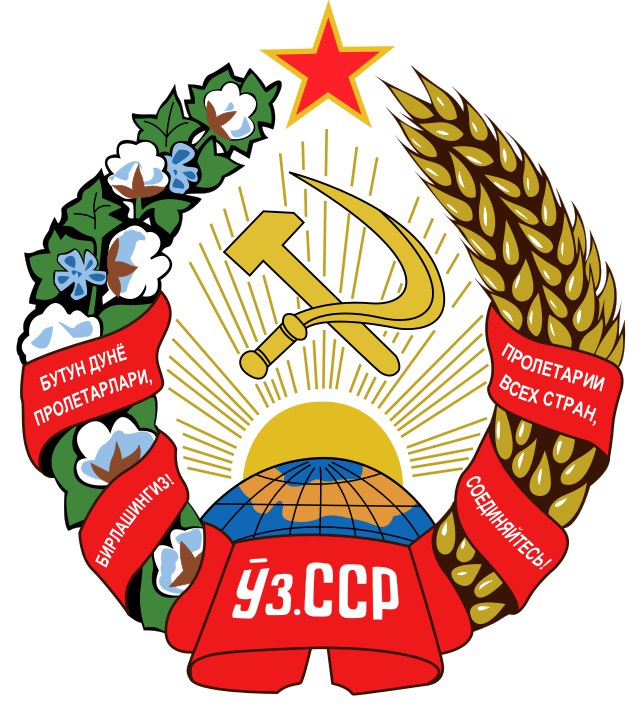
In Uzbekistan, 74-Year-Old Pensioner Convicted of Agitating for Return of USSR

Ergashkul Khasanov, a 74-year-old resident of Samarkand, was convicted of conducting propaganda aimed at the restoration of the USSR. Hasanov was actively engaged in disseminating material through the Telegram group, Uzbek SSR/USSR, in which he claimed the collapse of the Soviet Union was illegal and temporary and that the independence of the former republics, including Uzbekistan, was informal and temporary. The court found him guilty of encroaching on Uzbekistan's constitutional order. Khasanov's story dates back to 2021, when he began listening to speeches by Russian citizen, Oleg Turishkin, who argued that the collapse of the USSR was both illegal and unjust. Turishkin suggested that Khasanov register as a Citizen of the USSR, and the Uzbek pensioner duly obtained a certificate of Soviet citizenship through the post office. He subsequently joined a Telegram group where he participated in discussions and published materials arguing that the Soviet Union had not legally been dissolved and that the former Union republics should reunite again. In early 2023, Khasanov traveled to Moscow, where he met with activists who advocated the restoration of the Soviet Union and a return to the constitution and laws from Joseph Stalin's time. They argued that the Union “legally” continued to exist, and prepared for its restoration. After visiting Moscow, Khasanov continued to publish materials claiming that Uzbekistan's independence was superficial and that all former republics should return to the fold of the USSR. In his case, the court considered Khasanov's age, lack of previous convictions, and status as a pensioner. As a result, he was sentenced to three years of restricted freedom. Khasanov is forbidden from leaving his apartment from 22:00 to 6:00, changing his place of residence without the permission of the supervisory authority, and from leaving the Samarkand region. In 2022, the public movement, Citizens of the USSR was included in a list of organizations deemed by the authorities in Russia to be extremist. Believing that the Soviet Union still exists, some supporters of the movement refuse to abide by the laws of modern Russia, obey the current authorities, or use Russian passports.
Kyrgyzstan Proposes Amendment to Laws Regulating Religious Sphere

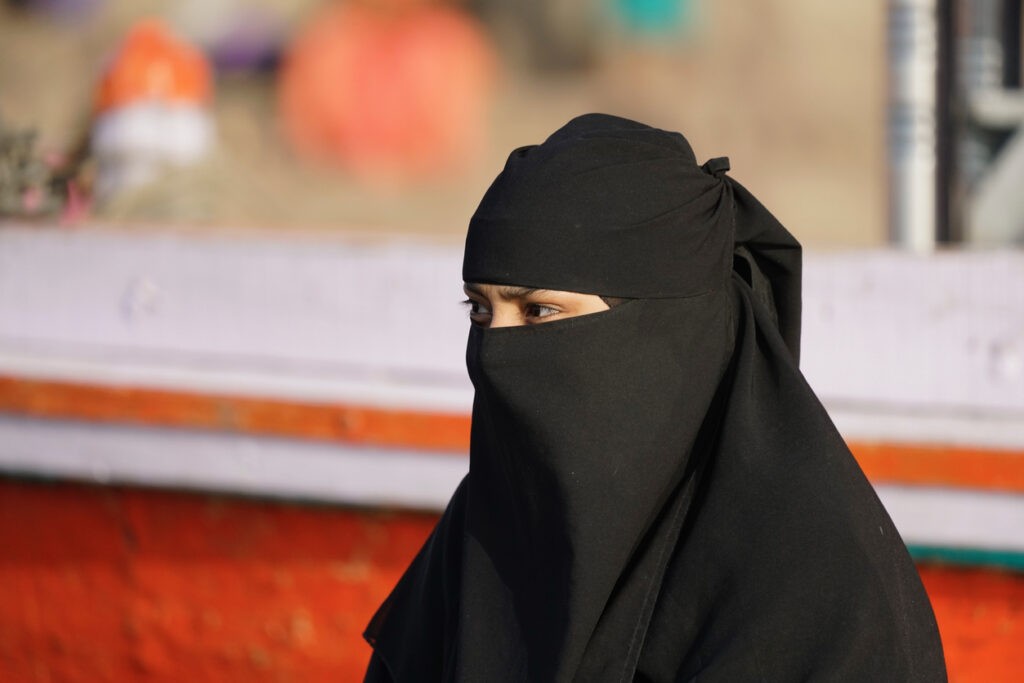
The authorities in Kyrgyzstan have moved to introduce stricter control of the religious sphere in the predominantly Muslim nation. The State Commission on Religious Affairs has submitted draft amendments to the laws regulating religion for public discussion. The Commission proposes banning the creation of political parties on a religious basis, and the participation of political organizations in spiritual activities. It also proposes banning the financing of political parties by religious activity and organizations. The proposed amendments prohibit deputies of the Jogorku Kenesh (national parliament) and local Keneshes (councils) from combining their parliamentary work with religious activities. They also ban religious figures from being elected as deputies of local Keneshes, and propose that the dissemination of religious information be prohibited in electoral campaigning. The amendments broach introducing a fine for wearing clothing that does not allow a person’s identification in government offices and public places, such as a niqab. The exceptions are clothing required for work, and clothing that covers the face for medical reasons. Authorities in neighboring Kazakhstan are also trying to restrict the wearing of religious clothing - hijabs (headscarves) and niqabs - in public places. Kazakhstan's parliament will consider a bill on the issue during the fall session. In the fall of 2023, President Shavkat Mirziyoyev of Uzbekistan signed a law prohibiting the wearing of the niqab in public places. In Tajikistan, authorities have encouraged wearing national dress and prohibited women from wearing black clothing and hijabs, considering them "alien" to Tajik culture and traditions. Earlier this year, the Tajik parliament passed a law regulating traditions and rites, banning the wearing of clothing considered to be "foreign to Tajik culture."

Uzbekistan Adopts Law to Protect Prisoners’ Rights

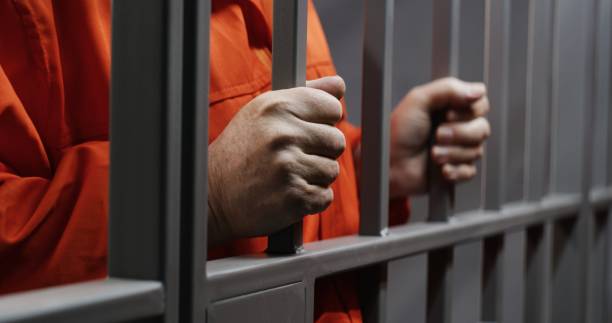
Uzbekistan has introduced a new law to protect prisoners' rights. The new piece of legislation is formally called the law “On amendments and supplements to the Criminal-Executive Code of Uzbekistan aimed at ensuring the rights and legal interests of prisoners.” The Criminal Executive Code defines prisoners' rights to appeal to the ombudsman through the appeals box. Appeal boxes to the ombudsman will be installed in each residential sector of the Uzbekistan penal institutions, industrial zones, and buildings intended for holding short- and long-term meetings, where it is convenient for prisoners to leave appeals. In addition, appeal boxes for the children's ombudsmen will be installed in the educational colonies. It is reported that the boxes are opened only by the ombudsman, the children’s ombudsman, or the staff of their secretariats.

Deadly Attacks in Russia Spark Fears of Extremism Amid Ethnic Tensions

On August 23 2024, four prison employees were killed after several prisoners staged a revolt in the remote IK-19 Surovikino penal colony in the southwestern Volgograd region of Russia. Special forces stormed the facility and “neutralized” the attackers, whom the Russian media named as Temur Khusinov, 29, and Ramzidin Toshev, 28, from Uzbekistan, and Nazirchon Toshov, 28, and Rustamchon Navruzi, 23, from Tajikistan. In a mobile phone video released by the perpetrators, the attackers identified themselves as members of Islamic State, claiming their actions were fueled by a desire to avenge the mistreatment of Muslims. The footage starkly depicted prison officials lying in pools of blood, while other clips showed the attackers moving freely through the prison courtyard. With the twentieth anniversary of the Beslan school massacre - perpetrated by members of a Chechen separatist group called the Riyad as-Saliheen Martyrs’ Brigade - drawing near, tensions in Russia are running high, with the perceived threat from extremism leading to a wave of xenophobia. The Crocus City Hall attack, which allegedly involved Tajiks, served to stoke ethnic tensions in Russia, leading to backlash by nationalists. Faced with such conditions and prejudice, an exodus of migrant workers during a time of war has left Russia with a dearth of human capital. Through the Collective Security Treaty Organization (CSTO), Russia is working with the C5 to detect and combat violent extremists, some of whom are illegally entering Central Asia before traveling to Russia. The Central Asian states, which are secular, are meanwhile trying to balance rights to religious freedom with blocking the malinfluence of oppressive and potentially violent ideologies. Three Central Asian countries border Afghanistan, and both the U.S. and the UNODC are working with Tajikistan to counter terrorism and violent extremism. While some extremist groups see Central Asia as a fertile recruiting ground, a UN report from 2023 noted that “Regional Member States estimated current ISIL-K strength at between 1,000 and 3,000 fighters, of whom approximately 200 were of Central Asian origin.” Despite these low numbers, however, the fact that some observers continue to link Islamic State Khorasan Province to the countries of Central Asia - even though the terrorist organization has purely Afghan roots - means that Central Asia once again finds itself at the center of a nexus of international security challenges.

Uzbekistan Brings Home Citizens Convicted Abroad

On August 13, Uzbekistan amended its Code of Criminal Procedure to compel Uzbekistan's citizens who have been imprisoned for crimes in certain foreign countries to serve the rest of their sentences in Uzbekistan. Uzbekistan has so far signed agreements with only 10 countries for imprisoned persons to be transferred to prisons in Uzbekistan to continue serving their sentences. According to Sherzod Tokhtashev, a politician from the government-aligned Miliy Tiklanish (National Revival) party, this law does not concern Uzbeks currently imprisoned in Russia. He did however mention that there are separate appeals in parliament to return Uzbek nationals convicted of crimes in Russia to domestic jails. At the same time, there are also calls for these prisoners' families to be brought home. “We receive requests to return children and relatives of Uzbeks from Russian prisons to Uzbekistan. Due to the lack of an agreement with Russia on the exchange of prisoners, everyone is helpless,” said Tokhtashev. According to Uzbek government, 20 citizens of Uzbekistan are currently serving terms in Italy, 250 in Turkey, and more than 450 in Kazakhstan.

The Fall and Fall of Salim Abduvaliev – Kyrgyz Authorities Place Uzbek “Kingpin” on Wanted List

The State Committee for National Security of Kyrgyzstan (GKNB) has issued an arrest warrant for the already imprisoned 73-year-old Salim Abduvaliev, who for decades was one of Uzbekistan's most prominent individuals. As part of the investigation, evidence was obtained that Abduvaliev had financed the activities of an organized criminal group led by Kamchybek Asanbekovich Kolbaev, an individual linked to heroin trafficking who was wanted by the U.S. Department of State and was a member of the international criminal group, the "Brothers’ Circle," or “Bratva”. Kolbaev was killed in Bishkek in a security operation in October 2023 at the age of 49. In a dramatic fall from grace, in March of this year, Abduvaliev was sentenced to six years in prison in Uzbekistan for “arms trafficking”. Initially a fan of President Mirziyoyev, even being photographed wearing a t-shirt proclaiming “My President” emblazoned with Mirziyoyev’s image, Abduvaliev eventually fell afoul of reforms and a crackdown on corruption. “Whether it is criminal groups… or officials mired in corruption, if someone flouts the law and causes harm to the state and society, we will never be able to stand by and watch it,” Mirziyoyev said in December 2023. “In ‘New Uzbekistan,’ the law must prevail, and punishment for crimes must be inevitable”. Having been hugely influential in CIS countries for decades, Abduvaliev now also stands accused in Kyrgyzstan of establishing illegal channels for transporting narcotics to Europe. According to the GKNB, Abduvaliev regularly provided material support to Kolbaev and helped him to become the leader of the Kyrgyz criminal world and rank among the most influential criminal figures in the region. In their indictment, the GKNB stated that Kolbaev and Abduvaliev had a close relationship; pictures showing Kolbaev’s visits to “celebrations and other events” organized by Abduvaliev in Uzbekistan number among the evidence. Based on the collected materials, Abduvaliev was placed on the interstate and Interpol databases by the Oktyabr District Court of Bishkek. Widely-known as "Salimboy-Boyvaccha" (which can be used to mean “grandfather”, “rich man”, or “dandy”), Abduvaliev previously held the position of Vice President of the National Olympic Committee and President of the Wrestling Association of Uzbekistan. He was also an associate of the mob boss, Gafur Rakhimov, considered to be one of the most prominent drug lords in the CIS. [caption id="attachment_21414" align="alignnone" width="700"] Image: GKNB of the Kyrgyz Republic[/caption] A mainstay of Central Asian crime circles, Abduvaliev was in the aluminum business with the notorious Michael Cherney – declared by the FBI to be an “organized crime figure” - sponsored the participation of Anatoly Bykov – since jailed for murder - in elections in Krasnoyarsk Krai in Russia. A 2012 article in Argumenty I fakty cites an “FBI Organized Crime” report as stating that in 1987, when Mikhail Cherney came to “conquer Moscow,” he came with “recommendation letters [from] respected” Tashkent businessmen known by their nicknames, Gafur and Salim.” A well-connected source who wishes to remain anonymous for their safety told TCA that “in Uzbekistan there was no single business...
