

• KGS/USD = 0.01143 0%
  • KZT/USD = 0.00205 0%
  • TJS/USD = 0.10433 0.1%
  • UZS/USD = 0.00008 0%
  • TMT/USD = 0.28577 0%
  • KGS/USD = 0.01143 0%
  • KZT/USD = 0.00205 0%
  • TJS/USD = 0.10433 0.1%
  • UZS/USD = 0.00008 0%
  • TMT/USD = 0.28577 0%
  • KGS/USD = 0.01143 0%
  • KZT/USD = 0.00205 0%
  • TJS/USD = 0.10433 0.1%
  • UZS/USD = 0.00008 0%
  • TMT/USD = 0.28577 0%
  • KGS/USD = 0.01143 0%
  • KZT/USD = 0.00205 0%
  • TJS/USD = 0.10433 0.1%
  • UZS/USD = 0.00008 0%
  • TMT/USD = 0.28577 0%
  • KGS/USD = 0.01143 0%
  • KZT/USD = 0.00205 0%
  • TJS/USD = 0.10433 0.1%
  • UZS/USD = 0.00008 0%
  • TMT/USD = 0.28577 0%
  • KGS/USD = 0.01143 0%
  • KZT/USD = 0.00205 0%
  • TJS/USD = 0.10433 0.1%
  • UZS/USD = 0.00008 0%
  • TMT/USD = 0.28577 0%
  • KGS/USD = 0.01143 0%
  • KZT/USD = 0.00205 0%
  • TJS/USD = 0.10433 0.1%
  • UZS/USD = 0.00008 0%
  • TMT/USD = 0.28577 0%
  • KGS/USD = 0.01143 0%
  • KZT/USD = 0.00205 0%
  • TJS/USD = 0.10433 0.1%
  • UZS/USD = 0.00008 0%
  • TMT/USD = 0.28577 0%

Viewing results 277 - 282 of 482

Another Uzbek Citizen Convicted of Insulting Mirziyoyev

A court in Uzbekistan has sentenced a 28-year-old Almalyk resident to correctional labor for insulting the country's president Shavkat Mirziyoyev. The man said he wrote insulting comments on the internet during a fit of anger because he had received several fines from the tax office. According to the case, the married father of two, an owner of a pharmacy, left insulting comments under four videos and photographs of Mirziyoyev between May 2 and August 31 last year, The defendant pleaded guilty and expressed regret for his actions. He said that while running his pharmacy, in the Tashkent region, tax inspection officers had fined him several times, and when he saw the photos and videos on Instagram he left derogatory comments in a fit of anger. Local media has reported that "The court took into account the man's admission of guilt and sentenced him to correctional work for two years and six months with the recovery of 20% of his salary to be given to the state. Also, the court imposed on the Ministry of Digital Technologies to restrict access to the account of the man on Instagram, and also decided to recover the phone Samsung Galaxy A53 in favor of the state". In March 2021 an article was added to Uzbekistan's Criminal Code establishing liability for public insult or slander against Mirziyoyev using telecommunications networks or the internet. This crime is punishable by corrective labor of up to three years, restriction of freedom from two to five years, or imprisonment of up to five years. In October 2023 a court sentenced a 19-year-old resident of Kattakurgan district (Samarkand region) to two years and six months in prison for insulting comments about Mirziyoyev on Instagram. In March this year a court sentenced a 27-year-old resident of Namangan, who had recently returned from Iran, to five years in prison for insulting and defamatory comments about Mirziyoyev on Facebook.
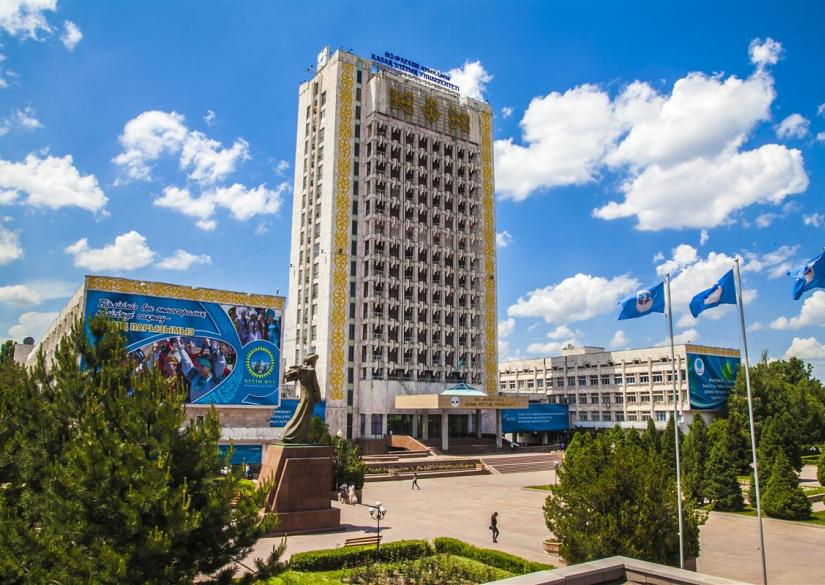

Higher Education in Central Asia: Leaders and Outsiders

In June, it will be three years since the signing of a declaration at a forum held in the city of Turkestan between the heads of the Ministries of Education of Kazakhstan, Uzbekistan, Tajikistan, Turkmenistan, and Kyrgyzstan. According to the document, the Central Asian states agreed to expand cooperation and unite the scientific, intellectual, and creative potential of higher education institutions throughout the region. However, only Kazakhstan and Uzbekistan have made progress in terms of synergy during this time. The reason for this is the serious gaps between the Central Asian states in the level of provision of higher education for their citizens.   The pace of reform In the 1990s, the reform of education in Central Asia occurred at different rates. Although the Central Asian republics had similar problems at the time of the collapse of the Soviet Union, they began to address them depending on the degree of influence of global trends. For example, Kazakhstan signed the Bologna Declaration and joined the European Higher Education Area in 2010, while Turkmenistan switched to two-stage higher education under the "Bachelor's - Master's" system only in 2013. Some started organizing English-language curricula at their universities as soon as the early 1990s, such as Kazakhstan's KIMEP University or the University of Central Asia in Kyrgyzstan. Uzbekistan, on the other hand, only came around to the idea of the need for English-language education in the noughties. In the 2000s, universities established jointly with foreign partners, such as the Kyrgyz-Russian Slavic University and the Kazakh-British Technical University, began to open in the region. Uzbekistan was again somewhat late to the trend, first opening the International Westminster University (a branch of the University of London) and a branch of Turin Polytechnic University. In 2014, the first university established jointly with foreign partners from South Korea - Inha University, specializing in the training of IT specialists - appeared. Kazakhstan, Kyrgyzstan, and Uzbekistan are currently implementing reforms in the recognition of diplomas and attracting foreign employees and students, while Tajikistan and Turkmenistan are experiencing problems of a different nature related to low levels of enrollment in higher education.   Kazakhstan Kazakhstan has been the most successful nation in reforming higher education. Degrees have been reduced to four years, and the Unified National Testing (UNT) and credit system of education appeared, creating favorable conditions for accession to the Bologna Process in 2010. By 2016, almost every second Kazakhstani was studying at a higher education institution. Now, Kazakhstan has more than 120 universities. There are more than 600,000 students, and about 40% of Kazakhstanis are certified specialists. Kazakhstan's supremacy in this arena is confirmed by international rankings. For example, the international organization, Times Higher Education included four Kazakhstani universities in its rating for 2024: the Eurasian National University named after L.N. Gumilev; Satpayev University; the Kazakh National University named after Al-Farabi; Nazarbayev University (NU). Participating in these rankings for the first time, the latter was recognized as the best in Central Asia. NU is the first university of its...

Uzbekistan to Build Central Asia’s First Solar Plant with Battery Energy Storage System

On 21 May, the Asian Development Bank (ADB) and Abu Dhabi Future Energy Company PJSC (Masdar) signed off a $46.5 million loan for the construction of greenfield solar power plant and battery energy storage system (BESS) in Uzbekistan’s Bukhara region. The Nur Bukhara plant will be Central Asia's first renewable power facility with  utility-scale battery storage. ADB reported that a further $26.5 million has been secured from the Japan International Cooperation Agency. Loans for the realization of the project have also been agreed by the International Finance Corporation, the Canada–IFC Blended Climate Finance Program and the Dutch Entrepreneurial Development Bank. The new facility, with a capacity to generate 250 megawatts and store 126 megawatt-hours of energy, will include the construction of a 20-kilovolt substation and a 3.1-kilometer transmission line to connect to the grid. Set to deliver 555 gigawatt-hours of clean energy per annum, the plant will provide power for some 55,000 households. By enabling electricity to be stored and delivered on demand, BESS  will reduce grid instability, and provide the flexibility to integrate intermittent solar resources. Generated power will be sold exclusively to the National Electric Grid of Uzbekistan. Commending the project, Masdar Director of Corporate Finance and Treasury Bruce Johnson commented: "Masdar is proud to be a key partner in Uzbekistan's clean energy journey. We are strong supporters of the country’s ambitious renewable energy targets, alongside key partners including ADB. Projects like Nur Bukhara will enhance the affordability and accessibility of reliable, clean energy for all Uzbek citizens and drive private sector growth." To meet the increasing demand for energy from Uzbekistan’s economy and growing population, the government aims to increase renewable energy generation by up to 25 GW, equivalent to 40 percent of the country’s overall electricity consumption, by 2030.  

Educating Uzbekistan: QR Codes, Quizzes and Some Critical Thought

The Times of Central Asia visited a school in Uzbekistan and talked to students and teachers for a report about the government's push to reform education. --- Break time at a school in Uzbekistan. Clusters of students in uniform – white shirt and dark trousers or skirts - chatter in a classroom. Two stand at the world map on the wall, figuring out where historical events happened. As soon as history teacher Dilobar Yodgorova enters, they form groups and sit at round tables. The students play “Zakovat,” a quiz designed to increase class participation. The game is based on a Russian show called “What? Where? When?” that later inspired a similar American show. “Catherine II, the Queen of Russia who lived in the 18th century, sentenced Nikolay Novikov, a famous Russian historian of that time, to 15 years in prison on August 1, 1792, for criticizing her,” Yodgorova says. She goes on: “But for a natural reason, Novikov was released after 4 years. What was the reason for that?” The students frantically debate the answer within their groups. They only have one minute to respond to the teacher in writing. The answer? Catherine II died in 1796. Pavel I, who succeeded her, freed Novikov. --- “Zakovat” is the Uzbek word for “ingenuity,” and the game reflects Uzbekistan’s ambitious plans to overhaul a public education system that was poorly equipped to sustain a growing number of children in Central Asia’s most populous country (about 35 million people). Transforming the education system is critical to shaping a nimble workforce and fostering economic prosperity. Many new school textbooks aim to get students to analyze and assess. The old ones were about memorizing lots of facts. Many Uzbeks can’t afford private schooling. For more than two decades, children in the state system, which is free of charge, studied at primary and secondary school for 9 years, and colleges or lyceums for the last 3 years of their undergraduate education. In 2019, the system changed. Now most students go through 11 years of streamlined education in the same school. The idea was to provide continuity for students by keeping them in the same environment in the critical last few years of undergraduate schooling. "In the upper grades, children are formed as individuals and as a team," Uzbek President Shavkat Mirziyoyev said in 2017. Uzbekistan is also improving teaching methods, renovating decrepit school buildings and introducing up-to-date technology and new textbooks that encourage critical thinking even if there are constraints on unfettered investigation and free expression in the wider society. In the last few years, a working group of more than 240 experts has been working on the plan. It has included representatives of international organizations such as the United Nations and USAID. UNESCO conducted a training program for dozens of Uzbek teachers last week. Higher education remains a weak point. If they have the resources, many Uzbeks go abroad for university. Uzbekistan is among countries with the highest number of students studying at tertiary institutions...

French ELLE to be published in Uzbekistan

The world-famous fashion, beauty, lifestyle, health and entertainment magazine, ELLE will now be published in Uzbekistan. Founded in 1945 by Ellen Gordon-Lazarev, ELLE is currently the world's largest fashion magazine, reaching 32 million readers and more than 90 million unique visitors per month on 56 local sites. When social media is taken into account, ELLE has an audience of over 200 million people worldwide. This is the first time a global magazine of this scale is entering the Uzbek market. The publishers have already started hiring workers for the Uzbek representative office. The peculiarity of this edition will be that for the first time an international media brand will be printed in the Uzbek language. The magazine's website and its local social networks will be launched in June, and in September readers will be able to receive the print version of the publication. "ELLE Oʻzbekiston will be the first international publication to produce content in Uzbek," the magazine's representatives said. In total, the publication will be published in three languages: Uzbek, Russian and English.      

Uzbekistan to Launch New International Bus Routes

Uzbekistan’s Transport Ministry has announced plans to launch ten new international bus routes during this year. The new routes will connect Samarkand and Bukhara with Kyrgyzstan’s capital Bishkek; Bukhara with Kazakhstan’s capital Astana; Samarkand, Bukhara and Shakhrisabz with Turkestan in Kazakhstan; Samarkand and Bukhara with in Tajikistan’s capital Dushanbe, and Tashkent with Ufa and Krasnodar in Russia. Uzbekistan currently runs 196 buses operated by 32 domestic and foreign companies,on 37 routes to Russia, Kazakhstan, Kyrgyzstan, and Tajikistan. From January-April 2024, 173 thousand passengers travelled on international bus routes, 15% more than during the same period in 2023.
