• KGS/USD = 0.01144 0%
  • KZT/USD = 0.00216 0%
  • TJS/USD = 0.10698 0%
  • UZS/USD = 0.00008 0%
  • TMT/USD = 0.28530 0%
  • KGS/USD = 0.01144 0%
  • KZT/USD = 0.00216 0%
  • TJS/USD = 0.10698 0%
  • UZS/USD = 0.00008 0%
  • TMT/USD = 0.28530 0%
  • KGS/USD = 0.01144 0%
  • KZT/USD = 0.00216 0%
  • TJS/USD = 0.10698 0%
  • UZS/USD = 0.00008 0%
  • TMT/USD = 0.28530 0%
  • KGS/USD = 0.01144 0%
  • KZT/USD = 0.00216 0%
  • TJS/USD = 0.10698 0%
  • UZS/USD = 0.00008 0%
  • TMT/USD = 0.28530 0%
  • KGS/USD = 0.01144 0%
  • KZT/USD = 0.00216 0%
  • TJS/USD = 0.10698 0%
  • UZS/USD = 0.00008 0%
  • TMT/USD = 0.28530 0%
  • KGS/USD = 0.01144 0%
  • KZT/USD = 0.00216 0%
  • TJS/USD = 0.10698 0%
  • UZS/USD = 0.00008 0%
  • TMT/USD = 0.28530 0%
  • KGS/USD = 0.01144 0%
  • KZT/USD = 0.00216 0%
  • TJS/USD = 0.10698 0%
  • UZS/USD = 0.00008 0%
  • TMT/USD = 0.28530 0%
  • KGS/USD = 0.01144 0%
  • KZT/USD = 0.00216 0%
  • TJS/USD = 0.10698 0%
  • UZS/USD = 0.00008 0%
  • TMT/USD = 0.28530 0%

Viewing results 337 - 342 of 563

Samarkand Replaces Paris as Host of UNESCO Conference

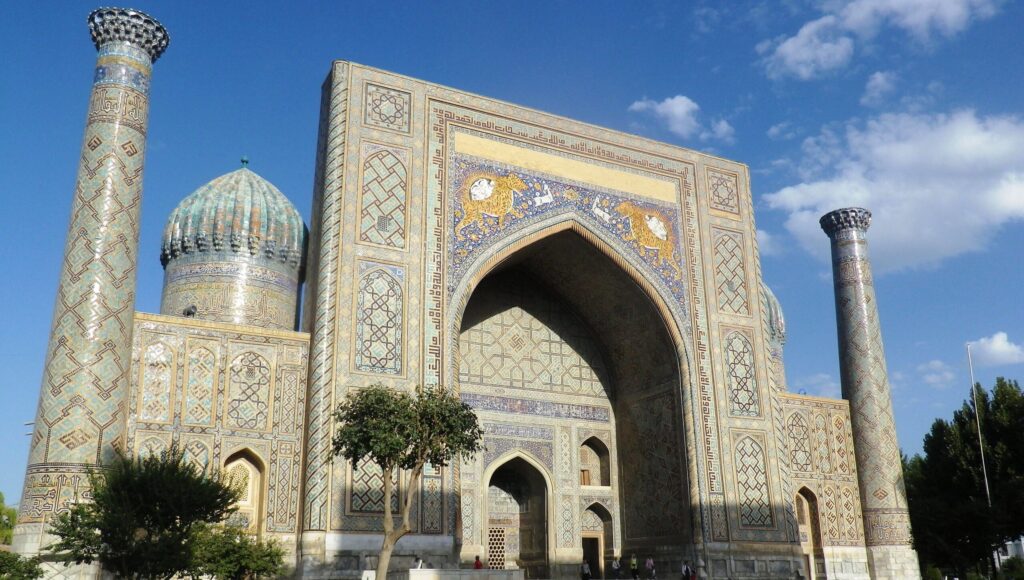
The Silk Road Samarkand tourism and convention complex will host the 43rd session of the UNESCO General Conference in 2025 -- the first time the globally significant event will be held outside of Paris since 1985. The conference will focus on discussions and decisions on UNESCO's activities. Besides Samarkand, conference events will also be held in the cities of Tashkent, Bukhara, Khiva and Shahrisabz. Samarkand was not chosen as the host venue by chance. Not only is it a great historical open-air museum city, but it has also managed to host a number of important international events over the past six months. At next year's UNESCO conference, officials plan to develop projects for establishing the State Museum of the Great Silk Road in Samarkand, restoring Amir Timur's gardens, restoring the Bibi-Khanum complex -- as well as a master plan for protecting the historical center of Bukhara, which is on the UNESCO World Heritage List. Samarkand, by the way, has recently become the subject of heated debate over the construction of the ethnographic tourist center Bokiy Bukhoro (Eternal Bukhara) on the borders with the historical center and buffer zone of Bukhara. The complex, which will occupy an area of 32.6 hectares, involves the demolition of 29 state facilities, including the buildings of the hokimiyats (municipal offices) of Bukhara region and Bukhara city, the regional prosecutor's office, school No. 2, Bukhara State Medical College, College of Culture, Bukhara Arena stadium and others. Since 2017, 14 unique examples of Uzbek national cultural heritage have been included in the UNESCO lists. Bukhara was included in the UNESCO Creative Cities Network, and last September, the 1,050th anniversary of the birth of the great polymath and scholar Abu Rayhon Beruni was widely celebrated at UNESCO headquarters.

Land Cleared for Tourism next to Old Bukhara; UNESCO Urges Pause

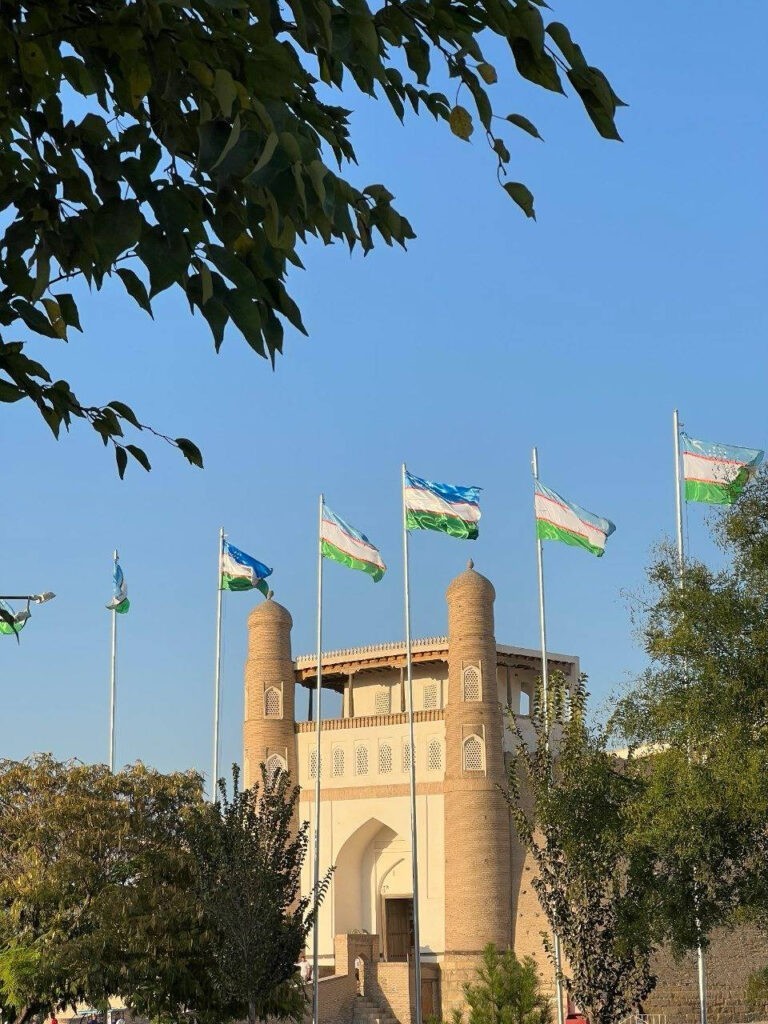
Despite UNESCO’s concerns, Uzbekistan is pushing ahead with plans for a big tourist complex next to the historical center of Bukhara, a jewel of medieval architecture in Central Asia. Workers are already clearing areas for “Eternal Bukhara,” a tourist facility that will boast a museum, teahouses and restaurants offering national cuisine, craft stalls and workshops for gold and blacksmithing, embroidery, wood carving, pottery, and painting. The design intends to evoke the urban layout of past centuries, with traditional drainage systems and ponds. All this construction would happen in part of the buffer zone surrounding the old city, potentially increasing the flow of tourists, but also putting more pressure on the integrity of the ancient site. Bukhara, a destination on the Silk Route that is more than 2,000 years old, contains the tomb of the ruler Ismail Samani, an emblem of 10th century Muslim architecture, as well as many ancient madrasas, or Islamic schools, according to UNESCO. [caption id="attachment_15561" align="aligncenter" width="843"] Traveler Veronika Karobitskaya looks toward the Kalyan Mosque in the ancient city of Bukhara, Uzbekistan. Karobitskaya, a Russian citizen, visited Bukhara in September 2022 and said she was “completely fascinated” by the city’s heritage. Photograph: Veronika Karobitskaya[/caption] [caption id="attachment_15562" align="aligncenter" width="960"] A view of the Kalon Minaret, a major landmark in Bukhara. Photograph: Veronika Karobitskaya[/caption] The historical center of Bukhara, registered on the world heritage list of the U.N. cultural agency in 1993, comprises 216 hectares and its buffer zone comprises 339 hectares. Some demolition has begun on the 32.6 hectares earmarked for the tourist complex, including at a sports stadium. Last year, some Bukharan residents appealed to the government not to dismantle the stadium, saying 1,200 children and 50 coaches use the stadium every day. A total of 29 buildings and facilities are slated for demolition. They include the Bukhara government building, designed by Uzbek architect Richard Blaise and built in 1980, as well as secondary and music schools, and social centers. Local authorities have tried to reassure residents who say they wish the tourist complex could be built further from the historical center. “It should be noted that on the basis of this project, it is planned to create a green park for residents and guests of Bukhara to walk in two-thirds of the area planned. In this regard, the trees in the area established earlier in accordance with the ´Green Bukhara´ program in the project area will be fully preserved and will be enriched as a new garden landscape,” the regional administration said in a report. According to UNESCO, however, there are laws and urban planning codes that “provide protection of monuments of cultural heritage and their buffer zones.” Sara Noshadi, director of UNESCO’s office in Uzbekistan, said on X, formerly Twitter, on March 2 that the U.N. agency is closely monitoring the Bukhara’s ancient site and was aware of local concerns about “potential construction plans” in the buffer zone. [caption id="attachment_15563" align="aligncenter" width="843"] Russian tourist Veronika Karobitskaya, who visited Bukhara in 2022, stands next to the...

Uzbekistan’s Poverty Rate Decreased by Half Over 20 Years, Says UN Report

The United Nations Development Program (UNDP) has published a report detailing Uzbekistan’s 2023 poverty index, and it indicates that roughly 4.2 million Uzbek citizens are estimated to be living in poverty. The UNDP used 34 indicators to serve as the statistical basis for the report. Factors include the socioeconomic standing and stratification of the population, as well as the capacity of citizens to exercise their rights, and the opportunities afforded to them. Information about education level (13.7%), food security (11.7%) and employment in the informal sector (11.5%) played an important roles in calculating the poverty index. The UN report states that the Republic of Karakalpakstan (29.9%), the Namangan region (27.5%), and the Tashkent region (26.5%) have the highest percentages of impoverished people. As measured by citizens' income, social security availability, and fuel resource scarcity, these regions perform somewhat worse than the other regions. Uzbekistan’s accomplishments in decreasing poverty and its plans for the future are also discussed. The UNDP claims that the nation’s reforms over the past 20 years have resulted in a drop in the poverty rate to 11.5 percent in 2022 from 24 percent in 2000. Due to government efforts, 2.2 million people have been lifted out of poverty in the first two decades of the 21st century. The report highlights Uzbekistan’s objectives of attaining a world-average income level by 2030, and cutting poverty by half by 2026. The report expresses confidence in the solid foundations of Uzbekistan’s plan to eradicate poverty by 2030. A key detail is that Uzbekistan is trying to make sure that development is moderate -- thereby keeping prices growing more slowly -- and this is thought to be one of the most important elements in the battle against poverty.

Great Women in the History of Uzbekistan

The history of Uzbekistan is awash with outstanding female personalities who played a key role in the formation of the nation. From defenders of rights to creative geniuses, they became pioneers, leaving their mark in various fields. To mark International Women’s Day, we remember some of the great women of Uzbekistan, revealing their influence on culture, politics and social movements.   Nozimahonim Uzbek Women, Tashkent, 1924; Photo: archive.is Born in the Jizzakh Region in 1870, Nozimahonim became the first woman journalist of the Jadidism-era, playing a key role in the struggle for the empowerment of women in Uzbekistan. In her poems, she raised questions about education for women and inequalities in familial relationships. Published in the newspaper, Tarakkiy, in her poem "Afsus" (translated from Uzbek as "Unfortunately"), Nozimahon wrote: "How wonderful that the night of tyranny has come to an end," reflecting her hope for the end of the long struggle for women's liberation and rights. In addition to her work as a journalist and poet, Nozimahonim worked to educate girls as an “Otin,” the traditional name for women who read and taught the Qur'an. Nozimahonim died in 1924; no known image of her exists.   Sobira Kholdarova Photo: qalampir.uz Upon being sent to an orphanage at age thirteen, Sobira Kholdarova completed a literacy course in just six months. At the age of just seventeen, she became one of the editors of the newspaper, Yangi yul (New Way). In 1924, at a rally against inequality in Tashkent, Kholdarova cast of her burqa and, shortly thereafter, joined the Communist Party of the Soviet Union. In 1926, despite having a two-year-old son, she was selected to study in Moscow, becoming the first woman from Uzbekistan to be trained as a professional journalist. Despite spending over fifteen years in exile in Siberia for allegedly “losing class consciousness,” both before and after her return to the press in the 1950s, Kholdarova made a hugely significant contribution to journalism.   Zulfiya Umidova Image: facebook.com/tashkentretrospective The first female physician and doctor of medical sciences in Uzbekistan, Zulfiya Ibragimovna Umidova made a profound impact on the medical field. Her noteworthy contributions lie primarily in her research on the prevalence of cardiovascular diseases in the Uzbek Soviet Socialist Republic. For her doctoral dissertation, she conducted an in-depth examination of how Tashkent's climate affects the human cardiovascular system and the specificities of myocardial infarction. Following the massive earthquake in Tashkent in 1966, she expanded her research to study the effects of earthquakes on hypertension. Her prolific academic journey is evidenced by her 80 scientific publications, and the supervision of 32 candidate and three doctoral theses. Umidova’s legacy continues to inspire future generations in the field of medicine.   Nelya Ataullayeva Photo: mytashkent.uz Nelya Ataullayeva initially embarked on her career as an actress, but she soon made history by becoming the first female documentary filmmaker in Uzbekistan. Her inaugural documentary paid tribute to eminent women in Uzbekistan, including the poet Zulfiya, scientist Professor Irina Raikova, medical doctor Zulfiya Umidova, and...

Pandemic Hangover Continues to Affect Mental Health

According to the latest Sapien Labs Mental State of the World Report, Uzbekistan ranked last among 71 countries, including all other Central Asian countries (Turkmenistan was not included in the ranking). The ranking is based on the mood of residents and their outlook on life in 2023. Kazakhstan, Uzbekistan, Tajikistan and Kyrgyzstan are included for the first time. The Dominican Republic tops the list, followed by Sri Lanka, Tanzania, Panama, and Malaysia. The United Kingdom occupies the penultimate place ahead of Uzbekistan. Some poor countries in Africa and Latin America have overtaken the developed countries of Europe and the Americas on a number of indicators. Researchers have noted a trend towards depressed moods since the Covid-19 pandemic - a trend which is still going strong after more than four years. They believe that low rates of mental wellbeing in rich countries are linked to multiple factors, including smartphone addiction, fast-food consumption, the breakdown of friendships and family relationships, and the rising isolation due to working from home. Furthermore, GDP per capita figures are inversely correlated with average mental wellbeing, once again confirming the old adage that "money can't buy happiness." In 2022, the results of a study on adolescent mental health were published in Uzbekistan for the first time. UNICEF, together with partner organizations, surveyed 22,854 students in 299 schools from all 14 regions to better understand the needs of adolescents and to identify school-related factors affecting their mental health and psycho-social wellbeing. The study found that more than 10% of students do not feel socially connected to their school and feel isolated. Also, a significant number of students - 15.4% - suffer from anxiety, and another 9.8% experienced depression. Based on this data, UNICEF experts recommended improving family and friendship connections, expanding social ties, and creating a comfortable school environment for adolescents. Scientists have noted that indicators of mental wellbeing have especially decreased among young people, who are most dependent on modern technology. Meanwhile, people aged 65 and older have not seen a strong deterioration in scores since 2010. Another conclusion reached was that the level of mental wellbeing depends on the frequency in which processed foods are consumed, which affects the onset of depression and reduced emotional wellbeing. An important factor was also the disruption of intra-family relationships. According to research, 10% of young people between the ages of 18 and 24 do not get along with anyone in their family and prefer not to see them, while the analogous figure among the older generation is only three%. Weak family ties, scientists say, quadruple the likelihood of mental-health problems in adulthood.

Uzbekistan: Disabled Citizens Still Face Host of Challenges

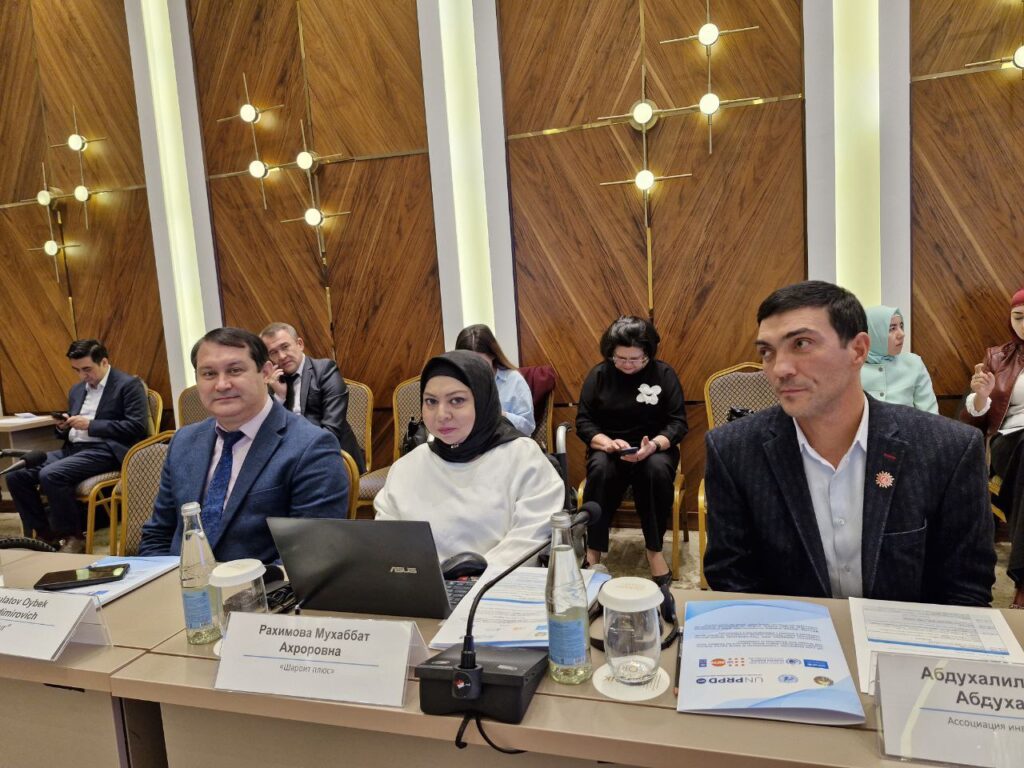
The Times of Central Asia spoke with Muhabbat Rakhimova, head of the Uzbek public association for disabled people, Sharoit Plus. We discussed the current situation with disability rights in Uzbekistan, and the country's entry to the international arena of advocates. TCA: In your opinion, what is the state of the educational system for people with disabilities in Uzbekistan, today? MR: In order to develop inclusive education, it is first necessary to make the infrastructure of buildings and educational equipment comfortable, to develop sufficient textbooks, and to provide educational materials that account for the possibility of persons with disabilities. Also, most of our schools were built a long time ago, the buildings have three to four floors, and they do not have elevators. In this case, not all people with disabilities have the opportunity to go and study. TCA: This month in Tashkent, USAID launched its five-year project called All Children Succeed. The project will be implemented as a pilot program in the regions of Namangan and Syr Darya, and hopes to make school education, teaching materials and teacher qualifications inclusive. Do you think schools in Uzbekistan are accessible for everyone? MR: According to the next reforms, construction of structures will be allowed only if the buildings are wheelchair accessible, but in many cases, we notice that ramps are inconveniently located. For example, on ramps near the wall, it is not possible to turn backwards or forwards in a wheelchair. In ordinary stores and pharmacies, it is difficult to climb due to the steepness of the ramp; even with the help of two or three people, it's impossible to climb them. But the presence of a ramp does not mean the infrastructure of the building fully meets the requirements of disabled people. The interior of buildings, rooms, toilets should also be adjusted. In order for persons with disabilities to study and work effectively, it's necessary to adapt the infrastructure of the buildings. TCA: What joint projects are currently being implemented in Central Asia to support disabled people? MR: Central Asian countries don't have joint projects on persons with disabilities. The Eurasia Foundation of Central Asia organizes educational seminars on this [topic] and invites organizations of the countries of the region dealing with disability issues to them. I think that this is actually a form of cooperation. In your opinion, are there any advanced international practices that can be implemented in Uzbekistan to help disabled people? MR: There is a system of independent living centers in the Philippines and Thailand, where a person with a disability learns independent living skills for five to six months. As a result, after returning home this person can live without the support of family members, can live separately from them is they so choose. In order for Uzbekistan to have the opportunity to create this, first of all, we need the desire. For this to happen, the active participation of people with disabilities is a necessity.