• KGS/USD = 0.01144 0%
  • KZT/USD = 0.00215 0%
  • TJS/USD = 0.10691 0.09%
  • UZS/USD = 0.00008 0%
  • TMT/USD = 0.28530 0%
  • KGS/USD = 0.01144 0%
  • KZT/USD = 0.00215 0%
  • TJS/USD = 0.10691 0.09%
  • UZS/USD = 0.00008 0%
  • TMT/USD = 0.28530 0%
  • KGS/USD = 0.01144 0%
  • KZT/USD = 0.00215 0%
  • TJS/USD = 0.10691 0.09%
  • UZS/USD = 0.00008 0%
  • TMT/USD = 0.28530 0%
  • KGS/USD = 0.01144 0%
  • KZT/USD = 0.00215 0%
  • TJS/USD = 0.10691 0.09%
  • UZS/USD = 0.00008 0%
  • TMT/USD = 0.28530 0%
  • KGS/USD = 0.01144 0%
  • KZT/USD = 0.00215 0%
  • TJS/USD = 0.10691 0.09%
  • UZS/USD = 0.00008 0%
  • TMT/USD = 0.28530 0%
  • KGS/USD = 0.01144 0%
  • KZT/USD = 0.00215 0%
  • TJS/USD = 0.10691 0.09%
  • UZS/USD = 0.00008 0%
  • TMT/USD = 0.28530 0%
  • KGS/USD = 0.01144 0%
  • KZT/USD = 0.00215 0%
  • TJS/USD = 0.10691 0.09%
  • UZS/USD = 0.00008 0%
  • TMT/USD = 0.28530 0%
  • KGS/USD = 0.01144 0%
  • KZT/USD = 0.00215 0%
  • TJS/USD = 0.10691 0.09%
  • UZS/USD = 0.00008 0%
  • TMT/USD = 0.28530 0%

Viewing results 349 - 354 of 563

Tashkent To Introduce Cable Car To Help Resolve Transport Problem

The Tashkent municipality and Chinese company Beijing North Bartholet Ropeway Technology Co., Ltd. have agreed on a project to introduce a cable car service to help in solving the Uzbek capital’s transport and environmental problems, the press service of the Tashkent municipality said.  The agreement was signed during the Tashkent mayor’s visit to the Chinese city of Shenzhen on January 23rd, where he met with the management of Beijing North Bartholet Ropeway Technology, a joint venture with the Swiss company Bartholet Maschinenbau AG, a world leader in ropeways production.  According to the agreement, the Chinese company is going to invest in a project to duplicate ground municipal transport in Tashkent with cable taxis. The project will first be presented to the public, whose recommendations and suggestions would be taken into account by the Chinese company’s designers, the municipality said.   The Uzbek Ministry of Ecology, Environmental Protection and Climate Change earlier this month stated that emissions from motor vehicles largely the cause for increasing levels of air pollution in Tashkent. On average 730,000 vehicles are on the move in Tashkent every day, with between 160,000 to 300,000 entering the capital from the regions. To resolve the problem, the Tashkent municipality intends to develop green public transport.

Violence Against Migrants: Uzbekistan and Kyrgyzstan Appeal to Russia

Regarding the mistreatment of labor migrants who were made to walk like ducks in Yekaterinburg, the ombudsman of Uzbekistan filed an appeal with the ombudsman of Russia. The number of them who were Uzbek citizens was not stated. A case was started “at the level of Russian federal authorities” by Kyrgyzstan’s Ministry of Foreign Affairs. On January 17, workers at a construction site in Yekaterinburg, Russia, were forced to walk like ducks during a raid by representatives of the Federal Security Service, the Ministry of Internal Affairs, the Rosguard, and the Prosecutor’s Office. Approximately 150 people’s documents were examined during the raid. Which country or countries they are citizens of is unclear. Ombudsman Feruza Eshmatova of Uzbekistan appealed to Ombudsman Tatyana Moskalkova of Russia about the unfair treatment of labor migrants in Yekaterinburg. The press office of the parliamentarian’s human rights representative released this information on January 22. In the petition, it was asked that the rights of Uzbek nationals employed in Russia be upheld. Online images and videos depict security personnel compelling migrant laborers to hide as they navigate a snow-covered construction site. The number of migrants who were Uzbek citizens was not stated. There were reportedly also citizens from other nations, including Kyrgyzstan. According to the Kyrgyz Ministry of Foreign Affairs, the republic’s general consulate in Yekaterinburg paid a visit to the police, the center for temporary detention of foreign nationals, and construction sites on January 20. “It was discovered that three construction sites in Yekaterinburg had 150 foreigners’ documents examined, among them were 40 Kyrgyz citizens. There are no known instances of Kyrgyzstani citizens breaking the immigration laws, according to the report. According to the information provided by Ministry of Foreign Affairs of Kyrgyzstan, three of the migrants who were forced to walk like ducks were Kyrgyz. According to the message from the neighboring country’s MFA, the Consulate General of Kyrgyzstan is taking action to “organize the verification of the legality of the use of methods that degrade the dignity of citizens engaged in labor by law enforcement officers”. The statement from the Kyrgyz Ministry of Foreign Affairs states, “In light of this, the Ministry of Foreign Affairs of the Kyrgyz Republic is initiating a case at the level of the federal authorities of the Russian Federation in order to prevent such actions against citizens working from Kyrgyzstan”.

The Last Emir of Bukhara – In the Shadow of Antiquity

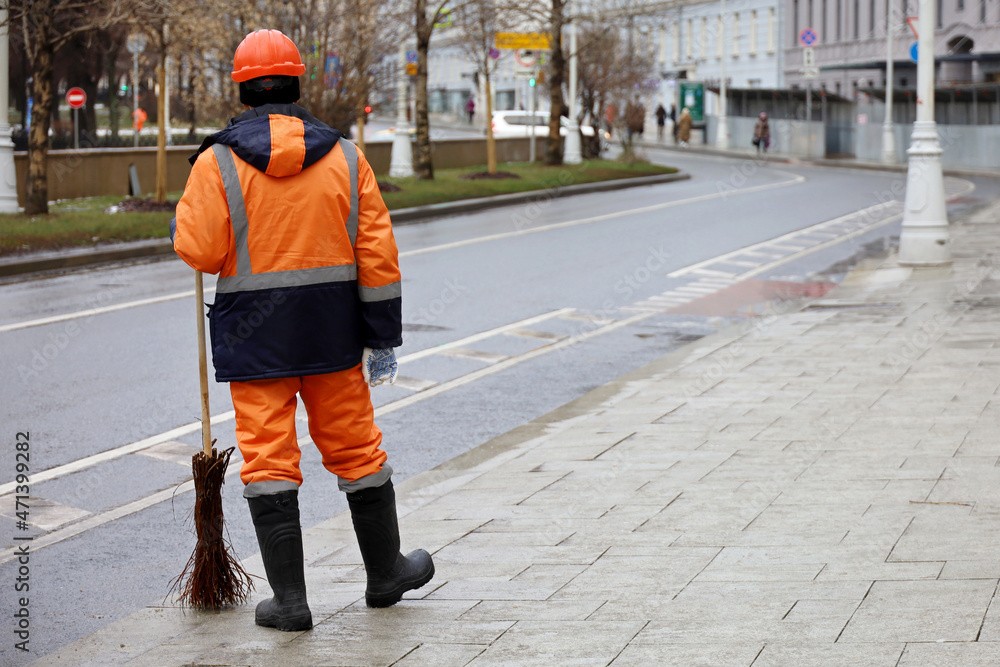
The seventh largest city in Uzbekistan, the history of Bukhara is swathed in legends which stretch back for millennia and can be traced to the period of Aryan immigration into the region. After passing through the hands of Alexander the Great, the Bactrians, the Kushan Empire and many others, Bukhara became an epicenter of Persian culture in medieval Asia. With the rise of the Caliphate, by the end of the ninth century Bukhara was one of the most significant Islamic and cultural sites in the region. Throughout its history, Bukhara has been nourished by merchants and travelers, establishing itself as a major hub of trade and crafts on the Silk Road. Today, in the orange early morning light, women holding parasols walk their children to school down gravel alleyways to the ever-present hum of air-con units. Broom-wielding figures in high-viz orange jackets cast bulbous shadows as they sweep the dust from side to side. As the sun arcs towards its zenith, a haze develops, the heat so overpowering that even the hawkers lose the will to sell. Weaving past scant pedestrians, infrequent marshrutkas head out of town towards the glittering Summer Palace of Bukhara’s last Emir, the outsized Sayyid Mir Muhammad Alim Khan. Beyond the imposing majolica tiled gateway of the Russian-built Sitora-I Mohi Khosa – Palace of the Stars and the Magnificent Moon - the banqueting hall contains an elaborate bronze chandelier from Poland weighing half a ton. To gasps of awe, Bukhara’s first electric light shone from it during the 1910s thanks to a fifty-watt generator.[/vc_column_text][vc_single_image image="12020" img_size="full" el_class="scond-image" parallax_scroll="no" woodmart_inline="no"][vc_column_text woodmart_inline="no" text_larger="no"]An avenue of quince trees leads to an ostentation of peacocks parading around a voluminous pool, where the Emir’s harem used to frolic. Raised on a platform high above them, the Emir would sit upon his gilded throne, bejeweled and decked in golden threads, choosing his lady for the night. Escaping the conflict between reformers and imams, and ever more dependent upon the overlords who would inevitably bring about his downfall, Amir Khan spent his last years as ruler cocooned in the Summer Palace, sating his gluttonous appetite from a glass-fronted Russian refrigerator.[/vc_column_text][vc_single_image image="13877" img_size="full" el_class="scond-image" parallax_scroll="no" woodmart_inline="no"][vc_column_text woodmart_inline="no" text_larger="no"]Putting his lot in with the reformers, then switching sides in the face of the mullah’s power, in his final years the last Emir was a leaf in the wind. These were the dark days of mass executions, book burnings, and an intellectual exodus from the Emirate. When the ripples from the Bolshevik Revolution reached his kingdom, Alim Khan declared a Holy War upon the Russians and their reformist allies, the Young Bukharans. With Russian gunners initially forced back by frenzied, knife-wielding true believers, tit-for-tat retributions took place before, with their inevitable victory sealed, the Red Army set about pillaging and murdering their vanquished foes. On September 2nd 1920, soldiers raised the Red Banner from the bombed-out lantern of the Kalon Minaret. From the ninth-century Pit of the Herbalists to the Ismail Samani Mausoleum, Bukhara isn’t about...

Uzbekistan’s senators amend legislation to improve environmental safety

During a meeting on January 20th, the Senate of the Oliy Majlis introduced amendments to legislation aimed at improving environmental safety. The amendments are aimed at reducing the negative impact on the environment. They will also contribute to increasing the responsibility of state bodies. The amendments establish clear mechanisms and procedures for responding to threats to the life and health of the population. According to the senators, the increase in construction, production and urbanization leads to increased emissions of pollutants into the environment. Urbanization is often accompanied by the expansion of production capacity, construction of factories, enterprises and infrastructure, which leads to an increase in emissions of harmful substances into the atmosphere. In Uzbekistan this takes place due to the active development of industry, construction of new infrastructure facilities, increase in motor traffic, and poor quality of waste treatment systems. In accordance with the proposed amendments, the legislation now provides for the possibility of limiting and temporarily suspending the operation of facilities that have a negative impact on the environment for a period of up to 10 working days, in order to prevent possible emergencies, epidemics and other threats to people’s health. According to the senators, these changes contribute to improving the environmental situation and protecting enterprises, as well as fighting corruption and increasing the responsibility of government agencies. However, Senate chairwoman Tanzila Narbayeva expressed doubts and noted that environmental laws should not contain ambiguous norms that can be interpreted and applied differently. "In practice, such a situation can cause various problems, misunderstandings, discontent and, worst of all, cases of corruption. From this point of view, these amendments are very important. Because the level of industrialization in our country is growing every year. Under such conditions, the scale of environmental impact will increase. Especially today, in our big cities, such as Tashkent, such clear legal norms are very important for prevention of exceeding the level of air pollution." Due to this, additional changes are possible in the future, which will more precisely justify the laws "On Nature Protection", "On Atmospheric Air Protection" and "On Environmental Control".

UAE Opens Borders to Tourists from Uzbekistan, Abolishes Visa-Regime

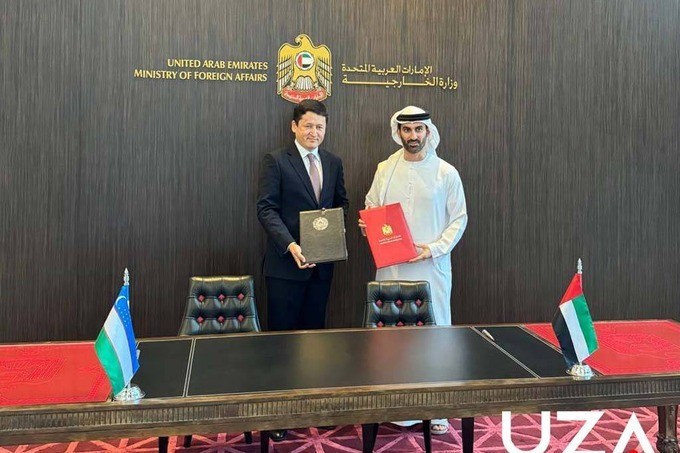
Uzbekistan's ambassador to the Emirates, Abdulaziz Akkulov, and the UAE Deputy Foreign Minister, Khalid Abdullah Belhoul have signed a protocol exempting citizens of both countries from visas requirements. As of February 16th, citizens from Uzbekistan will be able to enter the United Arab Emirates without the need to obtain a visa for up to 30 days, according to information reported on Podrobno.uz. The agreement follows an increase in the number of tourists from Uzbekistan visiting the UAE -119,500 in 2023. A considerable amount of money - $9.2 million was spent obtaining visas to the emirate. In this context, the agreement on increasing visa-free travel can be seen as an impetus for further development of tourism potential between the two countries. Citizens from Uzbekistan can now visit 29 countries without the need of a visa - significant progress for the power of the Uzbek passport. Thanks to this latest addition, Uzbekistan now holds 71st position in the Global Passport Power rankings.

Markets Should Attract More Foreign Tourists in Uzbekistan, Says President

On January 9th, the President Mirziyoyev attended a presentation of prospective designs for new tourism facilities. Mirziyoyev had earlier spoken about the need to effectively harness the country’s great tourism potential and increase the number of tourist sites and accommodations. At the presentation, the head of state examined projects developed in accordance with these objectives. It was stated that the picturesque mountain landscapes of the Shakhrisabz district of the Kashkadarya region and the Parkent district of the Tashkent region attract numerous tourists, especially in the spring and summer seasons. In order to expand amenities to attract tourists, it is planned to build modern recreation centers in Miraki, Shakhrisabz, Nurobod, and Kumushkon in the Parkent region, and to construct hostels on the Maydanak plateau in the Kashkadarya region. Markets, or bazaars, are one of the nation’s main attractions, but today some lack the national flavor necessary to entice foreign tourists, the President had earlier stated when instructing relevant departments to develop a project of complexes which reflect the national culture. The presentation reviewed draft proposals for transforming the markets of historical cities into complexes attractive to tourists. “Markets should be turned into a ‘calling card’ of the country, preserving their unique features. Food, clothing, jewelry stores, gastronomic and entertainment establishments should harmoniously complement each other and attract buyers and tourists,” Mirziyoyev said, noting the importance of studying the experience of Turkey and Arab countries and attracting foreign specialists to design markets. The presentation also provided information about the markets which are slated for construction in such tourist centers as Tashkent, Samarkand, Bukhara, and Khiva, with Mirziyoyev emphasizing that each should reflect the colors of its given region.