• KGS/USD = 0.01143 -0%
  • KZT/USD = 0.00192 -0%
  • TJS/USD = 0.10820 0.19%
  • UZS/USD = 0.00008 0%
  • TMT/USD = 0.28575 0%
  • KGS/USD = 0.01143 -0%
  • KZT/USD = 0.00192 -0%
  • TJS/USD = 0.10820 0.19%
  • UZS/USD = 0.00008 0%
  • TMT/USD = 0.28575 0%
  • KGS/USD = 0.01143 -0%
  • KZT/USD = 0.00192 -0%
  • TJS/USD = 0.10820 0.19%
  • UZS/USD = 0.00008 0%
  • TMT/USD = 0.28575 0%
  • KGS/USD = 0.01143 -0%
  • KZT/USD = 0.00192 -0%
  • TJS/USD = 0.10820 0.19%
  • UZS/USD = 0.00008 0%
  • TMT/USD = 0.28575 0%
  • KGS/USD = 0.01143 -0%
  • KZT/USD = 0.00192 -0%
  • TJS/USD = 0.10820 0.19%
  • UZS/USD = 0.00008 0%
  • TMT/USD = 0.28575 0%
  • KGS/USD = 0.01143 -0%
  • KZT/USD = 0.00192 -0%
  • TJS/USD = 0.10820 0.19%
  • UZS/USD = 0.00008 0%
  • TMT/USD = 0.28575 0%
  • KGS/USD = 0.01143 -0%
  • KZT/USD = 0.00192 -0%
  • TJS/USD = 0.10820 0.19%
  • UZS/USD = 0.00008 0%
  • TMT/USD = 0.28575 0%
  • KGS/USD = 0.01143 -0%
  • KZT/USD = 0.00192 -0%
  • TJS/USD = 0.10820 0.19%
  • UZS/USD = 0.00008 0%
  • TMT/USD = 0.28575 0%
14 December 2025

Viewing results 6907 - 6912 of 11538

Afghanistan: Government forces shrinking as Taliban regain territory – report

KABUL (TCA) — The size of the Afghan National Defense and Security Forces (ANDSF) has reached its lowest point in three years, insurgent control over territory in Afghanistan has increased, and the Afghan government’s influence inside the country’s borders continues to decline, Russia’s Sputnik news agency reported citing a US watchdog report. Continue reading

Tajikistan women get life sentences in Iraq for belonging to IS

DUSHANBE (TCA) — Five Tajik women have been sentenced to life in prison in Iraq after being found guilty of belonging to the extremist group Islamic State, RFE/RL's Tajik Service reported. Continue reading

Russian language losing its position in Kyrgyzstan — and Moscow may be as well

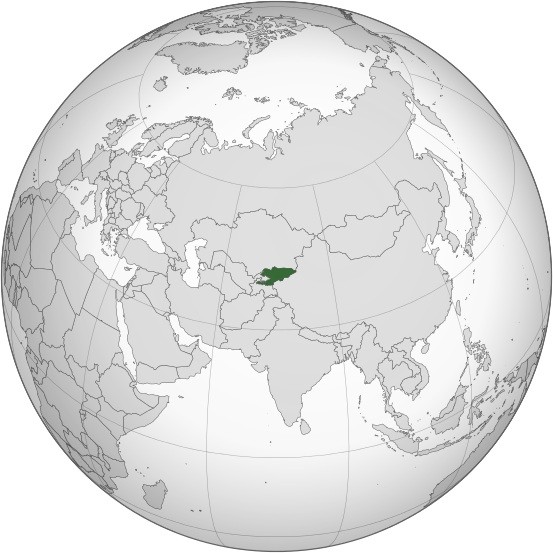
BISHKEK (TCA) — For a number of political and economic reasons, Kyrgyzstan remains the last bastion of the Russian language in Central Asia, but the situation may change in the years to come. We are republishing this article on the issue, written by Paul Goble: Moscow has long celebrated that Russian enjoys a higher official status and greater respect in Kyrgyzstan that in any other Central Asian country. That situation is symbolized by the fact that the current president, Sooronbay Zheenbekov, is a former Russian-language teacher. But it is reinforced by the reality that so many citizens of the Kyrgyz Republic move to the Russian Federation as guest workers and enjoy a competitive advantage in obtaining work if they know Russian. As a result, more than a generation after the demise of the Soviet Union, a higher percentage of Kyrgyz still speak Russian as a second language (if not as the first) than does any other titular nation in the region (Kyrgyzstan Statistical Service, 2013, accessed January 23, 2019). The Russian government hopes that the situation will continue in that way because the Kremlin equates Russian speaking with membership in the so-called “Russian World” (“Russkiy Mir”). But now there is a chance that the status quo in Kyrgyzstan may change. In the words of Viktoriya Panfilova of Nezavisimaya Gazeta, “The Russian language is losing its positions in Kyrgyzstan” and, along with the language, Russia as well. Participants at a November 2018 roundtable in Bishkek, on “Kyrgyzstan: Yesterday, Today and Tomorrow,” discussed what role Russian should have in the country (Nezavisimaya Gazeta, January 16, 2019). And recently, Azimbek Beknazarov, a Kyrgyzstani opposition politician, told journalists that he, along with representatives of 47 other opposition political groups, have drafted a law calling for a referendum to strip Russian of its status as an official language. If the measure is approved, he said, it would mean that Kyrgyzstan, like any normal country, would do all its official business in the language of the titular nationality, representatives of whom now form more than 75 percent of the population (Interfax, January 16, 2019). When Kyrgyzstan became independent in 1991, following the collapse of the Soviet Union, many officials there used Russian for almost all official business. Some did not speak Kyrgyz well enough to do otherwise; and consequently, the government decided to keep Russian as the second official language. That meant that much official business and nearly all post-secondary education has remained Russian-speaking, a pattern that put pressure on parents to have their children learn Russian earlier so that they could take advantage of higher education and obtain jobs within the government. But it has also been a source of irritation for many ethnic Kyrgyz, who are offended that the language of a foreign country and former occupier retains a de facto higher status than their own. Over the last decade, there have been numerous attacks on the status of Russian (Fondsk.ru, May 16, 2013; Forum-msk.org, March 24, 2015). But to date, all of these...

US investors to create intensive gardens, modern greenhouses in Uzbekistan

TASHKENT (TCA) — A delegation of Hosiyatli Bog Plus farm from Uzbekistan’s Jizzakh region, with the assistance of the Embassy of Uzbekistan in the United States, recently held a meeting and established partnership with the Overseas Private Investment Corporation (OPIC), the Jahon information agency reported with reference to the Ministry of Foreign Affairs of Uzbekistan. Continue reading

Kazakhstan and European Union review cooperation

ASTANA (TCA) — The European Union (EU) and Kazakhstan held their 17th meeting of the Cooperation Committee on January 30 in Brussels. The EU is Kazakhstan's first trade and investment partner, representing over one third of Kazakhstan's external trade and over a half of total foreign direct investment in Kazakhstan. Kazakhstan is the first Central Asian country with which the EU has signed in 2015 an Enhanced Cooperation and Partnership Agreement (EPCA), the Delegation of the European Union to Kazakhstan said. The Cooperation Committee confirmed the mutual commitment and interest in further strengthening cooperation. The EU and Kazakhstan reviewed their cooperation in the following fields covered by the EPCA: the rule of law, good governance, the protection of human rights, economic developments and reforms, energy, transport, environment, climate action, mobility and people-to-people cooperation, education, science, civil society and regional cooperation. The EU and Kazakhstan stressed the importance of an enabling environment for NGOs, lawyers and journalists and the need for progress to continue in this area. Although recent amendments to the Criminal and Criminal Procedure Legislation are positive developments, the EU reiterated the importance of an independent and impartial judiciary. Recent economic developments, in particular, efforts undertaken to improve the investment climate and the launch of a high-level Platform of dialogue on business were discussed. The EU recalled the importance of the rule of law, good governance, effectively fighting corruption and enforcing international arbitration decisions, at all institutional levels, as crucial for attracting further foreign investments. Kazakhstan has excellent participation in the EU Erasmus+ programme and demonstrates a strong commitment to the EU-Central Asia Education Platform, the EU said. Over the last four years, Kazakh universities have been involved in 40 higher education capacity building programmes and a total of 430 mobility projects have started between higher education institutions in the EU and Kazakhstan, sending over 2 000 Kazakh students and staff to Europe. The Cooperation Committee also discussed EU-Central Asia cooperation including in the field of security, counter-terrorism, fighting drug trafficking and border management. Participants stressed the importance of building on the momentum of good relations both between the EU and the region — as illustrated by the most recent EU-Central Asia Ministerial, held in Brussels on 23 November — and within the region itself. The EU will present later this year its new Central Asia strategy. The Cooperation Committee meeting contributed to the EU-Kazakhstan Cooperation Council, at ministerial level, to take place by the end of the year. Both the EU and Kazakhstan look forward to continuing the close cooperation in the framework of the EPCA and the new EU-Central Asia Strategy. The meeting was chaired by Deputy Foreign Minister of Kazakhstan, Roman Vassilenko, and Deputy Managing Director for Europe and Central Asia, European External Action Service, Luc Devigne.

Russia to host Afghanistan peace talks with Taliban participation — report

KABUL (TCA) — Senior Taliban leaders and Afghan politicians are expected to travel to Moscow next week for talks on Afghanistan peace. A US official called the move an attempt to “muddle” the US-backed peace process, Afghan broadcaster TOLOnews reported with reference to Reuters. Continue reading