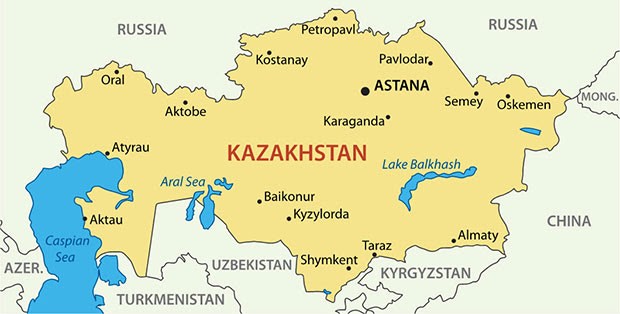
BISHKEK (TCA) — The Publisher’s note: Throughout the 19th and 20th centuries, Central Asia was the scene of intense geopolitical struggle and the Great Game between the British and Russian Empires, and later between the Soviet Union and the West, over Afghanistan and neighboring territories. Into the 21st century, Central Asia has become the area of a renewed geopolitical interest, dubbed the New Great Game, largely based on the region’s hydrocarbon and mineral wealth. On top of that, the region now is perhaps the most important node in the implementation of China’s One Belt, One Road initiative through which Beijing aims to get direct access to Western markets. Every week thousands of news appears in the world’s printed and online media and many of them may escape the attention of busy readers. At The Times of Central Asia, we strongly believe that more information can better contribute to peaceful development and better knowledge of this unique region. So we are presenting this Weekly Digest which compiles what other media have reported on Central Asia over the past week. KAZAKHSTAN Kazakhstan and the struggle over Central Asia Kazakhstan, an emerging regional player, is caught between two superpowers — Russia and China June 4 — “As the war in Afghanistan continues to disappear from the media, Central Asia once more becomes a black hole for news coverage. Sparsely populated and far-removed from the oceanic arteries of global commerce, it seems a region ripe for forgetting, once the Taliban are out of the headlines. But that would be a strategic mistake.” READ MORE: https://spectator.us/kazakhstan-struggle-central-asia/ What Is Nazarbayev’s Legacy in Kazakhstan? Kazakhstan’s first president resigned, but he remains fundamentally intertwined with the state June 5 — “The black Mercedes in which Nursultan Nazarbayev, Kazakhstan’s first president, once rode through his native village of Shamalgan in 2001 is now in a glass case welcoming visitors. Streets, universities, airports, funds, and prizes have been renamed after Nazarbayev for years, but since his surprising resignation in March, there has been a renaming spree across the country, starting with the renaming of the capital to Nur-Sultan.” READ MORE: https://thediplomat.com/2019/06/what-is-nazarbayevs-legacy-in-kazakhstan/ The Kazakhstan elections and the transition that wasn’t In March, Kazakhstan's long-term leader stepped down, making way for a "transition" of power. But everything about this change has been carefully orchestrated and highly controlled June 5 — “On 9 June, for the first time since independence in 1991, Kazakhstan will elect a present who is not Nursultan Nazarbayev. Nazarbayev, who was Kazakhstan’s leader for 30 years, voluntarily stepped down in March, saying it was time for a new generation of leaders. The handover of power has been relatively smooth so far – the senate leader, Qasym-Jomart Tokayev, was appointed interim president in accordance with the constitution.” READ MORE: https://www.opendemocracy.net/en/odr/the-kazakhstan-elections-and-the-transition-that-wasnt/ Kazakhstan election: Rare protests in a country that bans dissent Nazarbayev’s resignation sparked hopes for change, but many Kazakhs quickly became disillusioned June 7 — “Kazakhstan elects a new president on Sunday. For the first time since independence, long-serving Soviet-era...