• KGS/USD = 0.01143 0%
  • KZT/USD = 0.00213 0%
  • TJS/USD = 0.10593 0.47%
  • UZS/USD = 0.00008 0%
  • TMT/USD = 0.28571 0%
  • KGS/USD = 0.01143 0%
  • KZT/USD = 0.00213 0%
  • TJS/USD = 0.10593 0.47%
  • UZS/USD = 0.00008 0%
  • TMT/USD = 0.28571 0%
  • KGS/USD = 0.01143 0%
  • KZT/USD = 0.00213 0%
  • TJS/USD = 0.10593 0.47%
  • UZS/USD = 0.00008 0%
  • TMT/USD = 0.28571 0%
  • KGS/USD = 0.01143 0%
  • KZT/USD = 0.00213 0%
  • TJS/USD = 0.10593 0.47%
  • UZS/USD = 0.00008 0%
  • TMT/USD = 0.28571 0%
  • KGS/USD = 0.01143 0%
  • KZT/USD = 0.00213 0%
  • TJS/USD = 0.10593 0.47%
  • UZS/USD = 0.00008 0%
  • TMT/USD = 0.28571 0%
  • KGS/USD = 0.01143 0%
  • KZT/USD = 0.00213 0%
  • TJS/USD = 0.10593 0.47%
  • UZS/USD = 0.00008 0%
  • TMT/USD = 0.28571 0%
  • KGS/USD = 0.01143 0%
  • KZT/USD = 0.00213 0%
  • TJS/USD = 0.10593 0.47%
  • UZS/USD = 0.00008 0%
  • TMT/USD = 0.28571 0%
  • KGS/USD = 0.01143 0%
  • KZT/USD = 0.00213 0%
  • TJS/USD = 0.10593 0.47%
  • UZS/USD = 0.00008 0%
  • TMT/USD = 0.28571 0%

Viewing results 7825 - 7830 of 12488

Uzbekistan to host conference on interconnectedness in Central Asia

TASHKENT (TCA) — An international conference, “Interconnectedness in Central Asia: challenges and new opportunities,” will be held on February 19 and 20 in the Uzbek capital Tashkent, the Minister of Foreign Affairs of Uzbekistan Abdulaziz Kamilov told journalists on February 8, the Jahon information agency reported. Continue reading

Harsh Turkish condemnation of Xinjiang cracks Muslim wall of silence

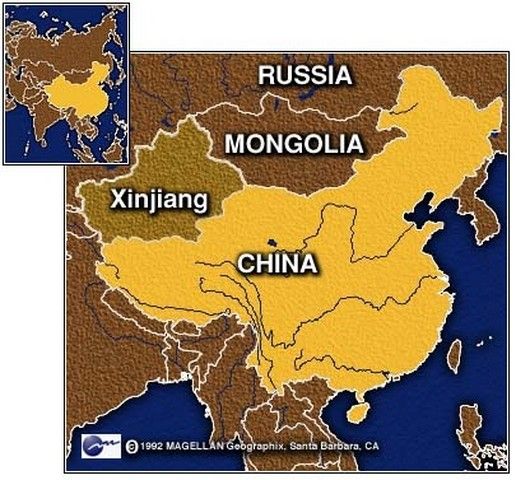
BISHKEK (TCA) — Turkey has called on Beijing to respect the rights of Uyghurs, a Turkic ethnic minority living in China’s northwestern Xinjiang Uyghur Autonomous Region, and to close the so-called re-education camps where up to a million Uyghurs are reportedly held. "We invite the Chinese authorities to respect the fundamental human rights of Uighur Turks and to close the internment camps. We call on the international community and the Secretary General of the United Nations to take effective measures in order to bring to an end this human tragedy in Xinjiang," spokesman for the Turkish Foreign Ministry Hami Aksoy said in a statement published on the ministry's website on February 9. We are republishing the following article on the issue, written by James M. Dorsey*: In perhaps the most significant condemnation to date of China’s brutal crackdown on Turkic Muslims in its north-western province of Xinjiang, Turkey’s foreign ministry demanded this weekend that Chinese authorities respect human rights of the Uighurs and close what it termed “concentration camps” in which up to one million people are believed to be imprisoned. Calling the crackdown an “embarrassment to humanity,” Turkish Foreign Ministry spokesman Hami Aksoy said the death of detained Uighur poet and musician Abdurehim Heyit had prompted the ministry to issue its statement. Known as the Rooster of Xinjiang, Mr. Heyit symbolized the Uighurs’ cultural links to the Turkic world, according to Adrian Zenz, a European School of Culture and Theology researcher who has done pioneering work on the crackdown. Turkish media asserted that Mr. Heyit, who was serving an eight-year prison sentence, had been tortured to death. Mr. Aksoy said Turkey was calling on other countries and United Nations Secretary-General Antonio Guterres to take steps to end the “humanitarian tragedy” in Xinjiang. The Chinese embassy in Ankara rejected the statement as a “violation of the facts,” insisting that China was fighting separatism, extremism and terrorism, not seeking to “eliminate” the Uighurs’ ethnic, religious or cultural identity. Mr. Aksoy’s statement contrasted starkly with President Recep Tayyip Erdogan’s declaration six months earlier that China was Turkey’s economic partner of the future. At the time, Turkey had just secured a US$3.6 billion loan for its energy and telecommunications sector from the Industrial and Commercial Bank of China (ICBC). The Turkish statement constitutes the first major crack in the Muslim wall of silence that has enabled the Chinese crackdown, the most frontal assault on Islam in recent memory. The statement’s significance goes beyond developments in Xinjiang. Like with Muslim condemnation of US President Donald J. Trump’s decision last year to recognize Jerusalem as the capital of Israel, Turkey appears to want to be seen as a spokesman of the Muslim world in its one-upmanship with Saudi Arabia and to a lesser degree Iran. While neither the [Saudi] kingdom or Iran are likely to follow Turkey’s example any time soon, the statement raises the stakes and puts other contenders for leadership on the defensive. The bulk of the Muslim world has remained conspicuously silent with...

Uzbekistan, EU start negotiations on enhanced partnership and cooperation agreement

TASHKENT (TCA) — The first round of negotiations on the Enhanced Partnership and Cooperation Agreement between Uzbekistan and the European Union was held in Tashkent last week. Through an Enhanced Partnership and Cooperation Agreement (EPCA), the European Union would be able to better support the ongoing ambitious reforms in Uzbekistan, in particular the recent steps towards democratisation and market economy, as well as the new dynamism in regional cooperation and people-to-people exchanges, the Delegation of the European Union to Uzbekistan said. Continue reading

Government ‘ready’ to open Taliban office in Afghanistan — President Ghani

KABUL (TCA) — Afghanistan President Ashraf Ghani, during a visit to the country’s Nangarhar province on February 10, said the Afghan government is ready to allow the Taliban to open an office in Kabul, Kandahar or Nangarhar, Afghan broadcaster TOLOnews reported. Continue reading

Kyrgyzstan: Government proposes to corporatize the state railways enterprise

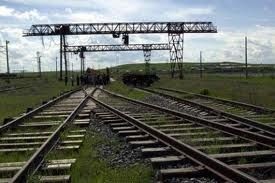
BISHKEK (TCA) — The Kyrgyz Government proposed to corporatize the Kyrgyz Temir Jolu State Enterprise (Kyrgyz Railways). The issue was discussed on February 5 at a meeting of the Parliamentary Committee on Transport, Communications, Architecture and Construction. “At the initial stage, we propose to create a joint venture with a potential investor in freight forwarding. We believe that this will allow us to attract additional financial resources for the development of the railway industry. It is also planned to introduce a mechanism of state and private participation in financing the railway transport modernization,” said Kyrgyz Temir Jolu General Director Kanatbek Abdykerimov, who was appointed to head the company three months ago. Former CEO Almazbek Nogoibaev was dismissed after being accused of corruption by MPs. Some deputies are skeptical about the idea of the enterprise’s transformation into a joint stock company. The Kyrgyz Temir Jolu had already been renamed into the national company, but it has not brought any results. In is necessary to develop the railway network and connect the north and south of the country by the railways, the MPs said. Timber, metal building materials from Russia and other cargoes that pass along the Bishkek—Osh highway have put this motor road in poor condition, MPs said. It is necessary to transport such cargoes through railways only, the MPs believe. They asked the Transport Ministry to make every effort to remedy the situation. The Kyrgyz Temir Jolu is now negotiating with banks on buying of new passenger and freight cars this year. The shortage of freight cars hinders the development of the country’s coal industry and creates difficulties for entrepreneurs, the MPs added. The purchase of freight cars in the near future would allow increasing the exports of goods from the southern regions of the country. Following the discussion, the parliamentary committee members suggested the Government to reduce by 50% the company’s net profit payment to the national budget and to allocate the released funds for modernization of the track infrastructure. Background The Kyrgyz Temir Jolu was established in 2005 as a successor to the Kyrgyz Railways, which, in turn, inherited the functions of the Frunze branch of the Alma-Ata Railways in 1992. The length of Kyrgyzstan’s railways was 470 kilometers in 2006, and it is 426 kilometers now. The track network is fragmented, and the rolling stock including coaches, locomotives and freight wagons, is outdated. Rail transport accounts for only 3% of the cargo turnover in the country. 4,812 people are now working in the state-owned enterprise. Rolling stock Over the 27 years of independence, Kyrgyzstan has bought only six locomotives. The rest have been exploited for 40 years, despite the expired usage period, Kyrgyz Temir Jolu General Director Abdykerimov said. More than 52.5% of freight cars and 51.6% of coaches are inoperative. From 2020, 94 coaches will be sent for scrap. To restore the freight car fleet and fully meet the needs of business entities until 2022, it is necessary to purchase 200 freight cars annually for more...

Weekly Digest of Central Asia

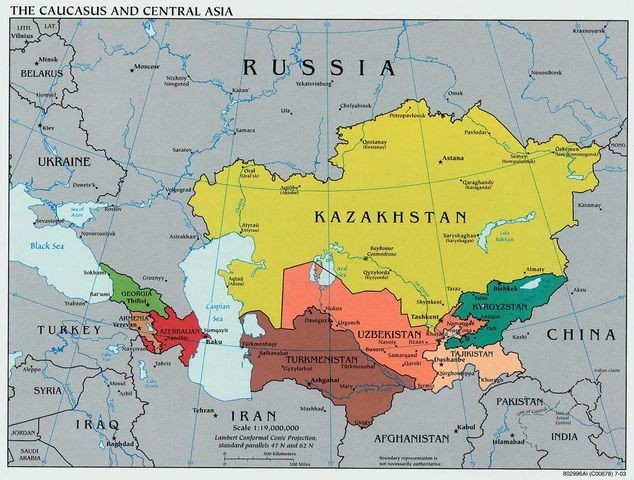
BISHKEK (TCA) — The Publisher’s note: Throughout the 19th and 20th centuries, Central Asia was the scene of intense geopolitical struggle and the Great Game between the British and Russian Empires, and later between the Soviet Union and the West, over Afghanistan and neighboring territories. Into the 21st century, Central Asia has become the area of a renewed geopolitical interest, dubbed the New Great Game, largely based on the region’s hydrocarbon and mineral wealth. On top of that, the region now is perhaps the most important node in the implementation of China’s One Belt, One Road initiative through which Beijing aims to get direct access to Western markets. Every week thousands of news appears in the world’s printed and online media and many of them may escape the attention of busy readers. At The Times of Central Asia, we strongly believe that more information can better contribute to peaceful development and better knowledge of this unique region. So we are presenting this Weekly Digest which compiles what other media have reported on Central Asia over the past week. KAZAKHSTAN Kazakhstan and its pungent oil: A curse and a blessing During more than two decades since independence, Kazakhstan and its economy remain largely dependent on crude oil production and the changing world prices of the “black gold” Feb 6 — “It was a hot July morning in 2000 when a helicopter carrying Kazakhstan’s President Nursultan Nazarbayev landed on a drilling barge on the Caspian Sea. An anxious-looking Nazarbayev emerged from the aircraft flanked by his customary coterie of flunkeys and security detail. The occasion would mark what seemed at the time like the finest birthday present he would ever receive. Nazarbayev was to turn 60 two days later, on July 6.” READ MORE: https://www.timesca2stg.wpenginepowered.com/index.php/news/26-opinion-head/20807-kazakhstan-and-its-pungent-oil-a-curse-and-a-blessing Kazakhstan Looks to Russian Rivers as Outlets to Global Markets Several of the navigable tributaries to Russia’s Siberian Ob-Irtysh basin rise or pass through Kazakhstan Feb 7 — “Last week (February 2), the influential Russian news and commentary portal IA Rex featured a story headlined, “Kazakhstan Is Seriously Discussing Becoming a Sea Power.” To most readers, the article must have seemed extremely improbable or even to be “fake news” given that Kazakhstan is a landlocked country, hundreds if not thousands of kilometers away from the nearest ocean.” READ MORE: https://jamestown.org/program/kazakhstan-looks-to-russian-rivers-as-outlets-to-global-markets/ Kazakhstan bites bullet and completes $3.4bn bailout of second largest lender Kazakhstan's banking sector was almost destroyed by the 2008 financial crisis and the later shock from the 2014 collapse of world oil prices Feb 7 — “Kazakhstan has finalised a $3.4bn bailout of its second largest lender Tsesnabank. The move involved state-run brokerage First Heartland Securities taking over the lender for an undisclosed amount, the Kazakh central bank said on February 5.” READ MORE: http://www.intellinews.com/kazakhstan-bites-bullet-and-completes-3-4bn-bailout-of-second-largest-lender-156012/ Year of The Youth 2019 Stirs Up Kazakhs The Year of the Youth in Kazakhstan aims at meeting young people’s needs, and recognizes their positive contributions as agents of change Feb 8 — “"Today, there are about 300 million young people...