• KGS/USD = 0.01144 0%
  • KZT/USD = 0.00213 0%
  • TJS/USD = 0.10456 0.19%
  • UZS/USD = 0.00008 0%
  • TMT/USD = 0.28490 0%
  • KGS/USD = 0.01144 0%
  • KZT/USD = 0.00213 0%
  • TJS/USD = 0.10456 0.19%
  • UZS/USD = 0.00008 0%
  • TMT/USD = 0.28490 0%
  • KGS/USD = 0.01144 0%
  • KZT/USD = 0.00213 0%
  • TJS/USD = 0.10456 0.19%
  • UZS/USD = 0.00008 0%
  • TMT/USD = 0.28490 0%
  • KGS/USD = 0.01144 0%
  • KZT/USD = 0.00213 0%
  • TJS/USD = 0.10456 0.19%
  • UZS/USD = 0.00008 0%
  • TMT/USD = 0.28490 0%
  • KGS/USD = 0.01144 0%
  • KZT/USD = 0.00213 0%
  • TJS/USD = 0.10456 0.19%
  • UZS/USD = 0.00008 0%
  • TMT/USD = 0.28490 0%
  • KGS/USD = 0.01144 0%
  • KZT/USD = 0.00213 0%
  • TJS/USD = 0.10456 0.19%
  • UZS/USD = 0.00008 0%
  • TMT/USD = 0.28490 0%
  • KGS/USD = 0.01144 0%
  • KZT/USD = 0.00213 0%
  • TJS/USD = 0.10456 0.19%
  • UZS/USD = 0.00008 0%
  • TMT/USD = 0.28490 0%
  • KGS/USD = 0.01144 0%
  • KZT/USD = 0.00213 0%
  • TJS/USD = 0.10456 0.19%
  • UZS/USD = 0.00008 0%
  • TMT/USD = 0.28490 0%

Viewing results 8137 - 8142 of 12375

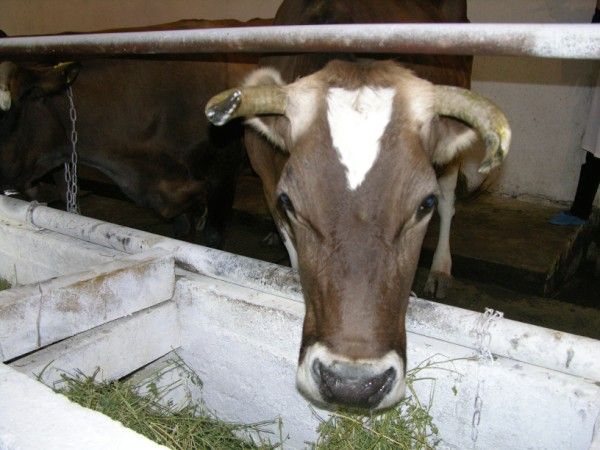
Belarus suggests joint milk-processing project to Kyrgyzstan

BISHKEK (TCA) — Belarus has suggested implementing a joint project to set up a milk-processing enterprise in Kyrgyzstan, Belarusian BelTA news agency reported with reference to Aleksei Bogdanov, head of the Central Office for Foreign Economic Activities of the Belarusian Agriculture and Food Ministry, after the eighth session of the Belarus-Kyrgyzstan intergovernmental commission on trade and economic cooperation held in Bishkek on October 19. Continue reading

EBRD provides funds to Kazakhstan’s food and beverages manufacturer

ASTANA (TCA) — Customers in Kazakhstan and neighbouring countries will benefit from a wider range of high-quality products manufactured and distributed by RG Brands, whose operations are supported by the European Bank for Reconstruction and Development (EBRD), the Bank said. Continue reading

In Kyrgyzstan, remembering the past can help mitigate disaster risks in the future

BISHKEK (TCA) — International donors have been supporting the government of Kyrgyzstan in strengthening the country’s resilience to climate and natural disaster risks. We are republishing this article on the issue, originally published on the World Bank website: The rugged, dynamic landscape of the Kyrgyz Republic is prone to a wide array of frequent and often devastating natural hazards, such as earthquakes, floods, mudflows, landslides, or droughts. On October 5, 2008, a 6.6 magnitude earthquake rocked Nura village in the Kyrgyz Republic’s Osh province. At least 75 lives were lost and more than 140 people were injured, amidst extensive damages to homes and critical infrastructure like hospitals and schools. Exactly 10 years later, on October 5, 2018, the Kyrgyz Republic commemorated National Disaster Risk Reduction Day to remind citizens about “dormant” disaster risks and ensure the country stands ready to anticipate the next one. Throughout the country, simulation drills were conducted in the weeks before the observance to familiarize the public with various emergency response mechanisms. Around 5,000 people representing fire and health services, school teachers and students, as well as emergency services, participated in simulation drills in Batken, Osh, Jalal-Abad, Talas, Chuy, Issyk-Kul regions, and the cities of Bishkek and Osh. Strengthening the country’s resilience to climate and disaster risks is one of the highest priorities of the Kyrgyz government. To help move this agenda forward, the Kyrgyz Republic has partnered with a number of international organizations. For example, the World Bank and Global Facility for Disaster Reduction and Recovery (GFDRR) have supported an overhaul of the country’s emergency management center, as well as important investment programs like “Enhancing Resilience in Kyrgyzstan”, all of which is bringing significant improvements to the country’s early warning systems. As part of the Japan-World Bank Program for Mainstreaming Disaster Risk Management in Developing Countries, Kyrgyz government officials also took part in an experts visit to Japan in 2016 to gain first-hand experience in how to integrate disaster risk management considerations into long-term planning, and to identify methods to involve the general public in this process. For almost 60 years, Japan has been conducting National Disaster Prevention Day, which commemorates the 1923 earthquake that claimed the lives of over 105,000 people. Recognized as one of the leading cultures of disaster prevention in the world, Japan has been working to exchange knowledge and learning with developing countries to help reduce impacts from natural hazards around the globe. Nurbolot Mirzahmedov, Minister of Emergency Situations of the Kyrgyz Republic, is confident that the Japanese experience will be instrumental in the Kyrgyz Republic. “The nation-wide simulation drills help improve knowledge, skills and preparedness of the people in case of a natural disaster. At the same time, the drills enable us to streamline coordination among key government institutions and agencies.” The observance was formalized at a high-level conference in Bishkek on “New Approaches in Disaster Risk Reduction,” led by Razakov Jenish, Deputy Prime Minister of the Kyrgyz Republic and attended by representatives from academia, non-governmental organizations and international partners....

Weekly Digest of Central Asia

BISHKEK (TCA) — The Publisher’s note: Throughout the 19th and 20th centuries, Central Asia was the scene of intense geopolitical struggle and the Great Game between the British and Russian Empires, and later between the Soviet Union and the West, over Afghanistan and neighboring territories. Into the 21st century, Central Asia has become the area of a renewed geopolitical interest, dubbed the New Great Game, largely based on the region’s hydrocarbon and mineral wealth. On top of that, the region now is perhaps the most important node in the implementation of China’s One Belt, One Road initiative through which Beijing aims to get direct access to Western markets. Every week thousands of news appears in the world’s printed and online media and many of them may escape the attention of busy readers. At The Times of Central Asia, we strongly believe that more information can better contribute to peaceful development and better knowledge of this unique region. So we are presenting this Weekly Digest which compiles what other media have reported on Central Asia over the past week. KAZAKHSTAN A Tough September for Kazakhstan's Banks Banks in Kazakhstan continue experiencing problems with liquidity and non-performing loans Oct 15 — “In mid-September, KASE, Kazakhstan’s Stock Exchange, halted trades for shares of Astana Banki, a mid-sized lender. The following week, on September 18, the Central Bank stripped Astana Banki’s license. The decision echoed actions taken against Eximbankand Qazaq Banki, which had their licenses revoked at the end of August.” READ MORE: https://thediplomat.com/2018/10/a-tough-september-for-kazakhstans-banks/ Kazakhstan’s uranium giant to list in London The Kazakh government has for years been talking about undertaking a broad privatization program aimed at reducing the state’s overwhelming involvement in the economy and encouraging local investors to buy into national companies Oct 15 — “Kazakhstan’s wholly state-owned uranium mining giant is capitalizing on high prices for its wares by announcing plans to list on the London Stock Exchange. The Financial Times reported on October 15 that Kazatomprom will sell off a 25 percent stake through an instrument called depository receipts. Rather than selling stock to investors directly, Kazatomprom will rely on a depositary bank that will hold the asset while selling certificates.” READ MORE: https://eurasianet.org/kazakhstans-uranium-giant-to-list-in-london Kazakhstan laborers head to South Korea for a better life Despite the government’s reports on economic growth in Kazakhstan, many Kazakh citizens that failed to find good job opportunities at home have moved abroad to earn their living Oct 17 — “Labor migration in Central Asia is most typically associated with the region’s economically weaker nations — Kyrgyzstan, Tajikistan and Uzbekistan. But as Kazakhstan has struggled in recent years amid a slump in global oil prices, its nationals too have looked overseas for employment prospects in low-skilled sectors. South Korea has been a particularly strong draw.” READ MORE: https://timesca.com/index.php/news/20381-kazakhstan-laborers-head-to-south-korea-for-a-better-life Kazakhstan building the Great Financial Silk Road: hub by hub Kazakhstan’s Astana International Financial Center (AIFC) has the potential to become an essential pillar on the new Silk Road and a financial bridge between China and Europe...

New York hosts exhibition of Kazakhstan art group

ASTANA (TCA) — A retrospective exhibition “Collection of Thoughts: Creating Stories” of the Kazakh art group Kyzyl Tractor, which is part of the Focus Kazakhstan project and the special program of Asia Contemporary Art Week, is taking place in New York between October 14 and November 30, the official website of the Prime Minister of Kazakhstan reports. Continue reading

Uzbekistan: Putin and Mirziyoev launch construction of nuclear power plant

TASHKENT (TCA) — Russian President Vladimir Putin and Uzbek President Shavkat Mirziyoev have launched the construction of a nuclear power plant in Uzbekistan's western region of Navoi, which Moscow estimates will cost $11 billion, RFE/RL's Uzbek Service reported. The two presidents pressed a symbolic button together at a ceremony in a conference hall in Tashkent on October 19 to mark the start of a geological survey to decide a location for what would be Uzbekistan's first nuclear power plant. Putin said earlier in the day after holding talks with Mirziyoev that the construction of the facility, the first concrete of which Uzbekistan plans to pour by 2020, will create "a new industry in Uzbekistan." "Two reactors with a capacity of 2.4-megawatts will produce cheap and clean electricity for customers in Uzbekistan and Central Asian countries, which will ensure energetic stability not only for Uzbekistan but for the whole region," Putin said. The plant is the first of its kind in Central Asia, where attitudes toward nuclear power were influenced by the dramatic consequences of the Soviet-era Semipalatinsk nuclear test site in Kazakhstan's northeast and the 1986 Chernobyl nuclear plant accident in Ukraine. The trip is Putin's first state visit to Uzbekistan since Mirziyoev took power following the death of his predecessor, Islam Karimov, in 2016. Mirziyoev said that he and Putin discussed bilateral military technical cooperation and regional security. "A detailed exchange of opinions has taken place on countering terrorism, extremism, and especially the radicalization of youth," Mirziyoev said. Putin said that Russia supports Uzbekistan's "active participation" in talks on Afghanistan. "We consider it important [for Uzbekistan to take part in peace talks in Afghanistan] to curb threats posed by that country linked to the spread of terrorism, drug trafficking, and organized crime," Putin said. Several documents, including a plan of Russian-Uzbek cooperation for 2019-2024, a memorandum on cooperation in oil and gas sectors, a program on cultural and humanitarian cooperation, and other agreements were signed during Putin's visit.