• KGS/USD = 0.01144 0%
  • KZT/USD = 0.00213 0%
  • TJS/USD = 0.10456 0.19%
  • UZS/USD = 0.00008 0%
  • TMT/USD = 0.28490 0%
  • KGS/USD = 0.01144 0%
  • KZT/USD = 0.00213 0%
  • TJS/USD = 0.10456 0.19%
  • UZS/USD = 0.00008 0%
  • TMT/USD = 0.28490 0%
  • KGS/USD = 0.01144 0%
  • KZT/USD = 0.00213 0%
  • TJS/USD = 0.10456 0.19%
  • UZS/USD = 0.00008 0%
  • TMT/USD = 0.28490 0%
  • KGS/USD = 0.01144 0%
  • KZT/USD = 0.00213 0%
  • TJS/USD = 0.10456 0.19%
  • UZS/USD = 0.00008 0%
  • TMT/USD = 0.28490 0%
  • KGS/USD = 0.01144 0%
  • KZT/USD = 0.00213 0%
  • TJS/USD = 0.10456 0.19%
  • UZS/USD = 0.00008 0%
  • TMT/USD = 0.28490 0%
  • KGS/USD = 0.01144 0%
  • KZT/USD = 0.00213 0%
  • TJS/USD = 0.10456 0.19%
  • UZS/USD = 0.00008 0%
  • TMT/USD = 0.28490 0%
  • KGS/USD = 0.01144 0%
  • KZT/USD = 0.00213 0%
  • TJS/USD = 0.10456 0.19%
  • UZS/USD = 0.00008 0%
  • TMT/USD = 0.28490 0%
  • KGS/USD = 0.01144 0%
  • KZT/USD = 0.00213 0%
  • TJS/USD = 0.10456 0.19%
  • UZS/USD = 0.00008 0%
  • TMT/USD = 0.28490 0%

Viewing results 8767 - 8772 of 12375

Kazakhstan: media watchdogs urge government to revise ‘false information’ law

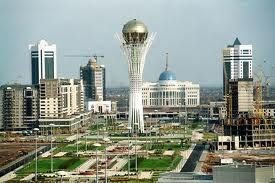
ASTANA (TCA) — A coalition of 26 international press freedom organizations has called on Kazakhstan authorities to review recent civil and criminal actions taken against two popular independent media outlets and revise legislation used to silence the media, RFE/RL reported. Continue reading

Kyrgyzstan: power plant blame game threatens political showdown

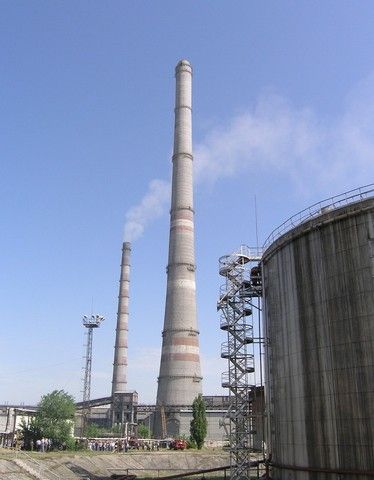
BISHKEK (TCA) — The modernization of Bishkek’s heat and power plant by a Chinese company has led to a scandal and a corruption case in Kyrgyzstan, which has involved several high-ranking officials. We are republishing this article on the issue, written by Nurjamal Djanibekova, originally published by Eurasianet: What should a pair of pliers cost? Questions like these are at the heart of an ongoing parliamentary inquiry in Kyrgyzstan on the recent contentious modernization of a power plant in the capital. The hearings, which were occasioned by a cataclysmic breakdown at the plant in January, have revived a political scandal that is threatening to engulf a raft of top officials from a previous ruling administration and are raising questions about the nation’s relations with China. Bishkek thermal power plants, or TETs, as it is known universally in its Russian-language acronym, keeps the city habitable. As well as providing electricity, it also pumps heated water into apartments. The Soviet-built facility dating to the 1960s had long been in need of a spruce-up, however. It was only in recent years that there was any firm progress on the renovation. China’s government would lend large sums of cash to fund it, but with one catch. Beijing would get to choose who would do the work. A precedent for this model was set by a project to build the Datka-Kemin high-voltage power line, which joined power grids in the north and south of Kyrgyzstan in 2015. The state-run Exim Bank of China lent $389 million — at 2 percent annual interest to be paid back within 20 years — and the work was done by a company called Tebian Electric Apparatus (TBEA). When the line was completed, TBEA began to look around for other contracts in Kyrgyzstan’s energy sector, which is how the TETs deal happened. Lobbying for China? The parliamentary inquiry on TETs that began on May 10 has a few broad goals. One is to understand specifically how the modernization contract was doled out. Another is whether shortcomings in the work are what caused the breakdown in January that left around 200,000 homes heatless for about five days just as temperatures outside had dropped to almost -30 degrees Celsius (-22 Fahrenheit). Among the people summoned to give testimony in parliament were the recently fired prime minister, Sapar Isakov, and two former occupants of that office, Jantoro Satybaldiyev and Temir Sariyev. All were somehow involved the TETs reconstruction initiative. Much of the indignation has centered on the fact that the government not only appears never to have considered alternative contractors to TBEA, but that it even rejected other options out of hand. The contract was not put out for tender. Lawmakers have heard how another Chinese company, China Machinery Engineering Company, or CMEC, had offered to do the same work for $30 million cheaper. Blame for this is being placed at the feet of Isakov, a 40-year-old whose rapid rise through the ranks ended with an even-more rapid fall last month, when he...

Weekly Digest of Central Asia

BISHKEK (TCA) — The Publisher’s note: Throughout the 19th and 20th centuries, Central Asia was the scene of intense geopolitical struggle and the Great Game between the British and Russian Empires, and later between the Soviet Union and the West, over Afghanistan and neighboring territories. Into the 21st century, Central Asia has become the area of a renewed geopolitical interest, dubbed the New Great Game, largely based on the region’s hydrocarbon and mineral wealth. On top of that, the region now is perhaps the most important node in the implementation of China’s One Belt, One Road initiative through which Beijing aims to get direct access to Western markets. Every week thousands of news appears in the world’s printed and online media and many of them may escape the attention of busy readers. At The Times of Central Asia, we strongly believe that more information can better contribute to peaceful development and better knowledge of this unique region. So we are presenting this Weekly Digest which compiles what other media have reported on Central Asia over the past week. KAZAKHSTAN Kazakhstan's Small Lenders Suffer Financial Crunch Kazakhstan’s troubled banking sector remains heavily reliant on state support May 11 — “Kazakhstan’s Single Pension Fund (ENPF) could lend cash again to bail out small banks faced with a liquidity crisis, another indication that the financial sector’s malaise can only be cured with state intervention.” READ MORE: https://thediplomat.com/2018/05/kazakhstans-small-lenders-suffer-financial-crunch/ Kazakhstan suggests connecting Black and Caspian seas by a ship canal Kazakhstan seeks to become a key transit country for transport flows between Europe and Asia May 14 — “Kazakhstan’s President Nursultan Nazarbayev has called the leaders of the Eurasian Economic Union to discuss a project of connecting the Black and Caspian seas by a navigable canal.” READ MORE: https://eadaily.com/en/news/2018/05/14/kazakhstan-suggests-connecting-black-and-caspian-seas-by-a-ship-canal Second Kazakhstan Competitiveness Forum focuses on Kazakh-US economic cooperation U.S. Ambassador to Kazakhstan says that since President Nazarbayev’s visit to Washington, DC, he witnessed a steady stream of American companies interested in doing business and investing in Kazakhstan May 17 — “Kazakh and U.S. government officials and business executives discussed May 16 the implementation of commercial agreements reached during President Nursultan Nazarbayev’s January 2018 official visit to the United States and increasing trade and investment cooperation during the Second Kazakhstan Competitiveness Forum.” READ MORE: https://astanatimes.com/2018/05/second-kazakhstan-competitiveness-forum-focuses-on-kazakh-us-economic-cooperation/ Kazakhstan Plans IPO of World’s Largest Uranium Miner The government of Kazakhstan has hired Wall Street banks, including JPMorgan Chase & Co., to offer shares in state-owned KazAtomProm in London or Hong Kong May 17 — “Kazakhstan plans to sell at least 25% of the world’s largest uranium miner this year, the centerpiece of an effort to open up the economy of the former Soviet republic sandwiched between China and Russia.” READ MORE: https://www.wsj.com/articles/kazakhstan-plans-ipo-of-worlds-largest-uranium-miner-1526567873 Kazakhstan's hunt for supporters of tycoon Ablyazov gets absurd and goes abroad Despite government persecution, the protest moods in Kazakhstan are gaining momentum May 18 — ““As usual, there were more police on the scene than protesters,” a journalist living in a provincial town recently told Global Voices...

Kyrgyzstan: labor migrants need social protection, investment incentives

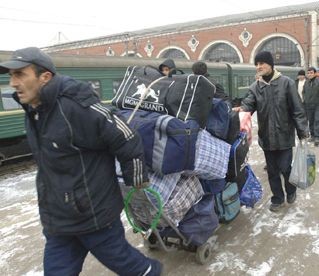
BISHKEK (TCA) — There are about 100 thousand Kyrgyz labor migrants in Kazakhstan, Kyrgyzstan’s State Migration Service says. Some of them work legally in the regions closer to Kyrgyzstan — the South-Kazakhstan, Karaganda and Almaty oblasts and Almaty city. Host state for migrants The problems faced by labor migrants in Kazakhstan including the absence of labor contracts and difficulties with the registration and obtaining of permits were discussed during a teleconference in Bishkek earlier this month. Citizens of Kyrgyzstan can stay in Kazakhstan for a month without registration. Within a pilot project, migration services of the two countries established a Migration Services Center in Astana which showed good results, and such centers will be created in all regional centers of Kazakhstan by the end of the year. When it comes to migration, Central Asian states are traditionally known as donor countries, whose migrants mainly look for jobs in Russia. The exception is Kazakhstan, which in recent years has become a host state for migrants, changing the economic balance in the region. In 2016, the influx of labor migrants to Kazakhstan doubled compared to 2000 and continues to grow. Many labor migrants from neighboring Central Asian states consider Kazakhstan more attractive than Russia. According to the International Organization for Migration in Almaty, the total amount of labor migrants in Kazakhstan in 2017 was two million people, mainly from neighboring countries. As a result, Kazakhstan is increasing its economic influence in the region. However, the situation may change when the Russian economy improves. At the same time, the economies of Kyrgyzstan and Tajikistan are dependent on remittances from labor migrants. According to the latest data, the amount of remittances from Russia is almost 37% of Tajikistan's GDP. Vulnerable migrants Women and children are still the most vulnerable migrants, says a report that monitored the implementation of the law of the Kyrgyz Republic on state support of compatriots abroad, which was recently discussed by the Kyrgyz Parliament. Women migrants experience serious difficulties with reproductive health. Women who have given birth to a child in a foreign state experience much more difficulties than their compatriots who gave birth to children in their homeland. Their children are also vulnerable, the report says. The legal status of migrants is important in obtaining access to medical services. If migrants have not entered into labor contracts with their employers and accordingly do not have social protection, they do not have access to medical services. Authorities of Kyrgyzstan should provide support to socially unprotected categories of compatriots on the basis of international treaties and in accordance with the legislation of the country. However, control over the implementation of the law showed that the Ministry of Labor and Social Development of Kyrgyzstan does not consider compatriots abroad to be beneficiaries of social protection services, the report says. Law execution The Law "On state policy to support compatriots abroad", adopted five years ago, remains valid but its legal regulation is outdated and requires improvement, MPs told a press conference in Bishkek....

UNDP holds event ‘Urban ratings of the quality of life in Kazakhstan’ at Global Challenges Summit in Astana

ASTANA (TCA) — The United Nations Development Programme (UNDP) in Kazakhstan in cooperation with the United Nations Economic Commission for Europe (UNECE) and with financial support from the Global Environment Facility (GEF) on May 18 organized a special session at the Global Challenges Summit (Astana Economic Forum) 2018 (AEF) called "Urban ratings of the quality of life in Kazakhstan". Continue reading

Tajikistan: better irrigation and water management to help farmers increase crop yield

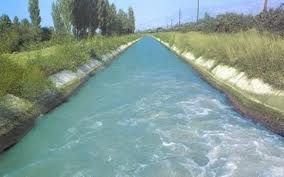
DUSHANBE (TCA) — Improved management of irrigation and water resources in the Zarafshon river basin of northern Tajikistan will help farmers increase their crop yields and provide greater food security for the local population, thanks to the Zarafshon Irrigation Rehabilitation and Management Improvement Project, launched by the Government of Tajikistan and the World Bank. The Project is being financed through a EUR 13.9 million grant from the Development Fund of the European Commission. Continue reading