• KGS/USD = 0.01143 0%
  • KZT/USD = 0.00216 0%
  • TJS/USD = 0.10633 -0.28%
  • UZS/USD = 0.00008 0%
  • TMT/USD = 0.28571 0%
  • KGS/USD = 0.01143 0%
  • KZT/USD = 0.00216 0%
  • TJS/USD = 0.10633 -0.28%
  • UZS/USD = 0.00008 0%
  • TMT/USD = 0.28571 0%
  • KGS/USD = 0.01143 0%
  • KZT/USD = 0.00216 0%
  • TJS/USD = 0.10633 -0.28%
  • UZS/USD = 0.00008 0%
  • TMT/USD = 0.28571 0%
  • KGS/USD = 0.01143 0%
  • KZT/USD = 0.00216 0%
  • TJS/USD = 0.10633 -0.28%
  • UZS/USD = 0.00008 0%
  • TMT/USD = 0.28571 0%
  • KGS/USD = 0.01143 0%
  • KZT/USD = 0.00216 0%
  • TJS/USD = 0.10633 -0.28%
  • UZS/USD = 0.00008 0%
  • TMT/USD = 0.28571 0%
  • KGS/USD = 0.01143 0%
  • KZT/USD = 0.00216 0%
  • TJS/USD = 0.10633 -0.28%
  • UZS/USD = 0.00008 0%
  • TMT/USD = 0.28571 0%
  • KGS/USD = 0.01143 0%
  • KZT/USD = 0.00216 0%
  • TJS/USD = 0.10633 -0.28%
  • UZS/USD = 0.00008 0%
  • TMT/USD = 0.28571 0%
  • KGS/USD = 0.01143 0%
  • KZT/USD = 0.00216 0%
  • TJS/USD = 0.10633 -0.28%
  • UZS/USD = 0.00008 0%
  • TMT/USD = 0.28571 0%

Our People > Anton Chipegin

Anton Chipegin's Avatar

Anton Chipegin

Anton was born and grew up in Bishkek, Kyrgyzstan. He worked as a television correspondent, editor and TV presenter on the main television channels of the republic, such as NTS and MIR 24, and also as an economic observer at international news agencies and other media resources of Kyrgyzstan.

Articles

Thousands of Liters of Illegally Sold Fuel Uncovered in Southern Kyrgyzstan

Tax authorities in Kyrgyzstan have uncovered thousands of liters of unmarked fuel during a recent raid in the southern cities of Batken and Osh, the State Tax Service has announced. According to the agency, inspectors discovered 950 liters of unmarked diesel fuel at a gas station in Batken region and an additional 35,547 liters at an oil depot in Osh. “The total volume of unmarked fuel amounted to 950 liters in Batken Region and 35,547 liters in Osh. The materials have been forwarded to supervisory authorities for appropriate legal action,” the service commented. Mandatory fuel labeling was introduced in Kyrgyzstan on October 1, 2024, under legislation requiring both imported and domestically produced fuels to be marked with a molecular identifier. This molecular marker, provided by the State Tax Service, is added to fuel to confirm its legal origin. The system aims to combat fuel smuggling and ensure tax compliance across the oil and gas sector. Kyrgyzstan receives most of its fuel and lubricants from Russia at domestic Russian prices and without export duties. This arrangement makes fuel in Kyrgyzstan considerably cheaper than in neighboring Uzbekistan and Tajikistan, a factor that has contributed to illicit fuel trade in the region. The government’s crackdown underscores its intent to enforce tighter regulatory oversight in a sector prone to tax evasion and smuggling.

1 year ago

Unvaccinated Children Barred from First Grade in Kyrgyzstan

Kyrgyzstan’s Ministry of Education has announced that children who are not vaccinated will not be admitted to first grade, amid a worsening measles outbreak in the country. Deputy Education Minister Lira Samykbayeva stated during a live national radio broadcast that the process of registering children for school has been significantly simplified. Parents no longer need to submit numerous documents such as passports, marriage or birth certificates, and proof of family composition. “This year, the Ministry of Education integrated its database with other government agencies, so there is no longer a need to collect certificates manually,” Samykbayeva explained. However, she emphasized that two medical certificates will remain mandatory: one confirming a general health examination, and another verifying that the child has received preventive vaccinations, including the measles vaccine. “The only thing that must be provided to the school is two medical certificates,” she said. “Including vaccination against measles.” A government decree enforcing the new requirement was adopted just a day earlier. In the future, the Ministries of Education and Health plan to fully integrate their systems, allowing medical records to be accessed automatically by schools. The stricter policy comes as Kyrgyzstan battles a growing measles outbreak. Since the beginning of the year, over 4,000 children have contracted the disease, and eight people have died. According to health officials, 95 percent of those infected were unvaccinated. Speaking to The Times of Central Asia, Gulbara Ishenapysova, Director of the Republican Center for Immunoprophylaxis, said the Ministry of Health is stepping up vaccination efforts. “By decision of the Kyrgyz Cabinet of Ministers, the ministry has revised the national vaccination calendar,” she noted. In an effort to improve public trust, Kyrgyz health authorities have also engaged religious leaders. Clergy across the country are being encouraged to speak with parents about the importance of vaccinating their children.

1 year ago

Bishkek Activists Demand Comeback for City’s Scrapped Trolleybuses

As Bishkek prepares to introduce its first fleet of electric buses, local activists are mounting a legal campaign to save the city’s trolleybus system from complete dismantlement. Municipality’s Modernization Push The first two electric buses from China’s Anhui Ankai Automobile Co. have already arrived in Bishkek and will soon begin operating on city routes. In total, the city has procured 120 electric buses, with the remaining 118 expected to be delivered by May, according to Daiyrbek Orunbekov, head of information policy at the President’s Office. Orunbekov said the new vehicles will replace outdated public transport and help improve the capital’s environmental conditions. “City streets used to be clogged with shuttle buses, and the roads were in disarray. Now modern buses are replacing minibuses. Last year, the roads were reconstructed and old trolleybus lines dismantled. Some residents were initially unhappy, but electric buses, more spacious and comfortable, are now on the routes,” he explained. A Contested Phase-Out Despite these upgrades, the decision to remove trolleybus lines has sparked a backlash. Bishkek residents and activists have sued the mayor’s office, arguing that officials acted without proper authorization in dismantling the network. All trolleybus lines in Bishkek were removed in a short period. Of the remaining fleet, 100 trolleybuses, many still under loan repayment, were transferred to Osh, six to Naryn, and 42 remain parked on the outskirts of the capital. Meanwhile, Kyrgyz MP Ulan Bishimbayev has announced that the authorities plan to retrofit some of the old trolleybuses with batteries to convert them into electric buses. One pilot project is already underway. “We invited specialists who confirmed it was possible. One trolleybus is being remodeled in pilot mode and should be launched within 10 days,” Bishimbayev said. Legal Battle and Environmental Concerns The next court hearing on the trolleybus issue is scheduled for April 9 at the Bishkek City Court. Activists argue that trolleybuses, powered by a network of 19 existing substations, remain one of the most sustainable forms of transport. “Trolleybus wires are a consumable material that needs replacement every 20 years. The challenge of restoring them is manageable. What matters are the substations, and they are still intact,” activist Bermet Borubayeva told The Times of Central Asia. She also questioned the narrative that the old system was outdated. “A representative from the president’s staff claimed the trolleybuses were outdated and would be replaced with electric buses. But that’s misleading. The trolleybuses bought with a €23.5 million European Bank for Reconstruction and Development (EBRD) loan just six years ago are still modern, with a service life of 20 years,” she said. Borubayeva also pointed out that the batteries used in electric buses typically last only 5-10 years and pose environmental risks when recycled. According to earlier electrification plans approved by European lenders, Bishkek was expected to combine trolleybus and electric bus networks. However, city authorities have opted for a different course.

1 year ago

Kyrgyzstan’s Gold Reserves Could Last a Century, Says Top Geologist

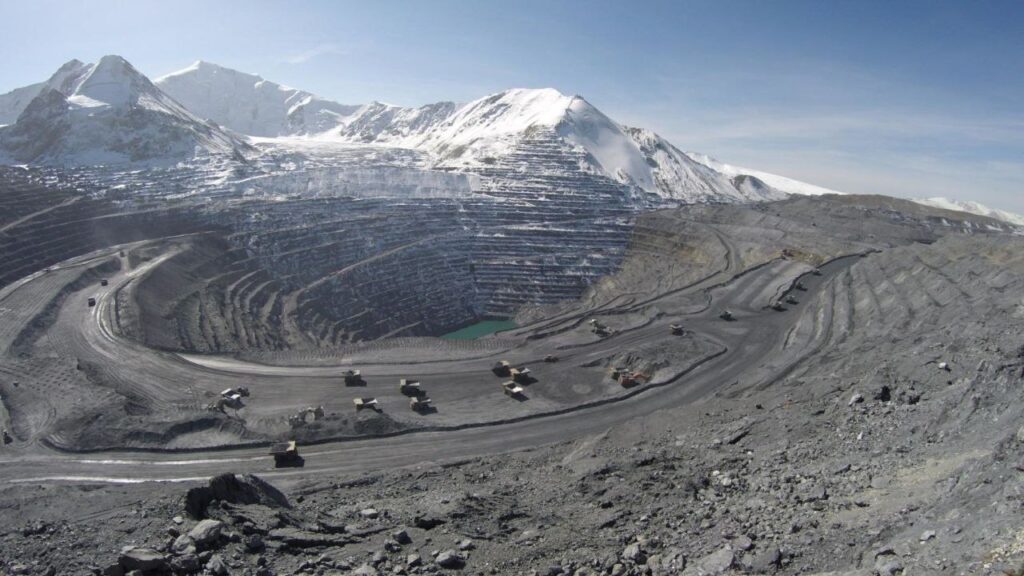
Kyrgyzstan’s largest gold mining operation, Kumtor Gold Company, has identified an additional 147 tons of gold through recent geological exploration. These reserves have now been officially added to the balance sheet of the state-run enterprise, reinforcing expert forecasts that gold extraction in the country can continue for decades to come. The announcement was made by Minister of Natural Resources Meder Mashiev during a press briefing in Bishkek. Mashiev noted that previously unexploited reserves at Kumtor, a key contributor to the national budget, were estimated at 127 tons. Following the new exploration, total reserves now stand at 261 tons. Kumtor Gold Company was nationalized in 2022 after Canadian firm Centerra Gold withdrew from the project. At the time, industry experts predicted the mine would cease operations by 2027 due to depleted reserves at the main open pit. The prospect of investing in new infrastructure at adjacent sites was deemed economically unfeasible. This view was partly supported by production data: in 2015, ore yielded about 5 grams of gold per ton; today, it yields less than one gram. Local experts, however, have described this decline as temporary. According to official figures, Kumtor produced 17.3 tons of gold in 2022, 13.5 tons in 2023, and was projected to produce 12.2 tons in 2024, numbers not seen since 2012, when output fell below 10 tons. Back then, the company cited falling global gold prices and the limited viability of high-volume production. Under the 2022 agreement with Centerra Gold, the Kyrgyz Cabinet of Ministers assumed full management of the Kumtor mine. The Canadian company also agreed to pay over $60 million for environmental protection and transferred control of a $53 million reclamation fund to the Kyrgyz side. In return, it was released from future mine reclamation obligations. In an interview with The Times of Central Asia, Rozalia Djenchuraeva, a geologist at the National Academy of Sciences, stated that with proper management, Kumtor could continue producing gold for another hundred years. “Gold is not running out. There’s still a substantial amount at Kumtor. In the 1980s and 1990s, we recalculated potential reserves in the area and identified over a thousand tons,” Djenchuraeva said. “The entire strip where Kumtor is located is gold-bearing. It stretches along the mountains beneath glaciers, and we have enough gold to last a century. The key is to avoid harming nature.” She emphasized that much of the remaining gold lies beneath glaciers, making extraction without environmental damage particularly challenging. “The high-altitude ecosystem is very sensitive to human interference,” she said. Nonetheless, Djenchuraeva believes that modern exploration and mining technologies offer a path forward. “If we proceed responsibly and with care, gold extraction can continue for many years to come,” she concluded.

1 year ago

Two Earthquakes Strike Kazakhstan and Kyrgyzstan, Causing Damage in Talas Region

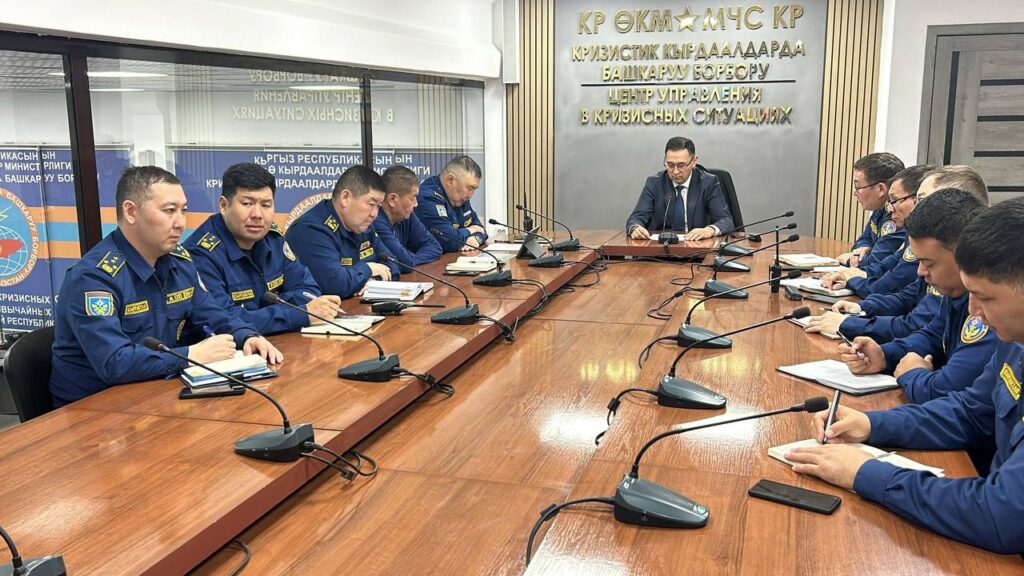
Two earthquakes struck Central Asia early on March 28, affecting parts of Kazakhstan and Kyrgyzstan. The first tremor, with a magnitude of 5.5, occurred in southern Kazakhstan, approximately 133 kilometers from Bishkek. The Kyrgyz capital felt the tremors at 4:42 a.m., according to the Institute of Seismology at the National Academy of Sciences of Kyrgyzstan. The quake registered a strength of four points in Bishkek and reached up to five points in parts of Kyrgyzstan’s Talas Region, which borders Kazakhstan. A second, less powerful earthquake was recorded at 7:00 a.m. on the Chatkal Ridge in southwestern Kyrgyzstan. It registered a magnitude of 3.5. According to the Kyrgyz Ministry of Emergency Situations, five residential buildings and one educational institution sustained damage in the Talas Region following the first quake. An operational team has been dispatched to assess the extent of the damage. “A state of emergency has been declared in connection with the earthquake recorded in Kazakhstan on March 28. An emergency meeting was held at 5 a.m. at the central office of the Ministry of Emergency Situations and the Crisis Management Center of Kyrgyzstan. First Deputy Minister of Internal Affairs Azamat Mambetov instructed officials to maintain a high alert regime,” the ministry's press service reported. No casualties have been reported. Authorities have stated that the situation remains under control. Kyrgyzstan’s Crisis Management Center is in direct communication with its counterpart in Kazakhstan, with both agencies exchanging real-time updates. Two major earthquakes were also recorded on March 28 in Southeast Asia. Seismologists from China and the United States reported tremors affecting Myanmar and Thailand. In Myanmar, the first quake registered a magnitude of 7.9 (with other sources citing 7.7), followed by a second at 6.4. The tremors were also felt in Bangladesh, India, Thailand, Laos, and China.

1 year ago