• KGS/USD = 0.01144 0%
  • KZT/USD = 0.00199 0%
  • TJS/USD = 0.10857 -0.18%
  • UZS/USD = 0.00008 0%
  • TMT/USD = 0.28571 0%
  • KGS/USD = 0.01144 0%
  • KZT/USD = 0.00199 0%
  • TJS/USD = 0.10857 -0.18%
  • UZS/USD = 0.00008 0%
  • TMT/USD = 0.28571 0%
  • KGS/USD = 0.01144 0%
  • KZT/USD = 0.00199 0%
  • TJS/USD = 0.10857 -0.18%
  • UZS/USD = 0.00008 0%
  • TMT/USD = 0.28571 0%
  • KGS/USD = 0.01144 0%
  • KZT/USD = 0.00199 0%
  • TJS/USD = 0.10857 -0.18%
  • UZS/USD = 0.00008 0%
  • TMT/USD = 0.28571 0%
  • KGS/USD = 0.01144 0%
  • KZT/USD = 0.00199 0%
  • TJS/USD = 0.10857 -0.18%
  • UZS/USD = 0.00008 0%
  • TMT/USD = 0.28571 0%
  • KGS/USD = 0.01144 0%
  • KZT/USD = 0.00199 0%
  • TJS/USD = 0.10857 -0.18%
  • UZS/USD = 0.00008 0%
  • TMT/USD = 0.28571 0%
  • KGS/USD = 0.01144 0%
  • KZT/USD = 0.00199 0%
  • TJS/USD = 0.10857 -0.18%
  • UZS/USD = 0.00008 0%
  • TMT/USD = 0.28571 0%
  • KGS/USD = 0.01144 0%
  • KZT/USD = 0.00199 0%
  • TJS/USD = 0.10857 -0.18%
  • UZS/USD = 0.00008 0%
  • TMT/USD = 0.28571 0%
05 December 2025

Our People > Askar Alimzhanov

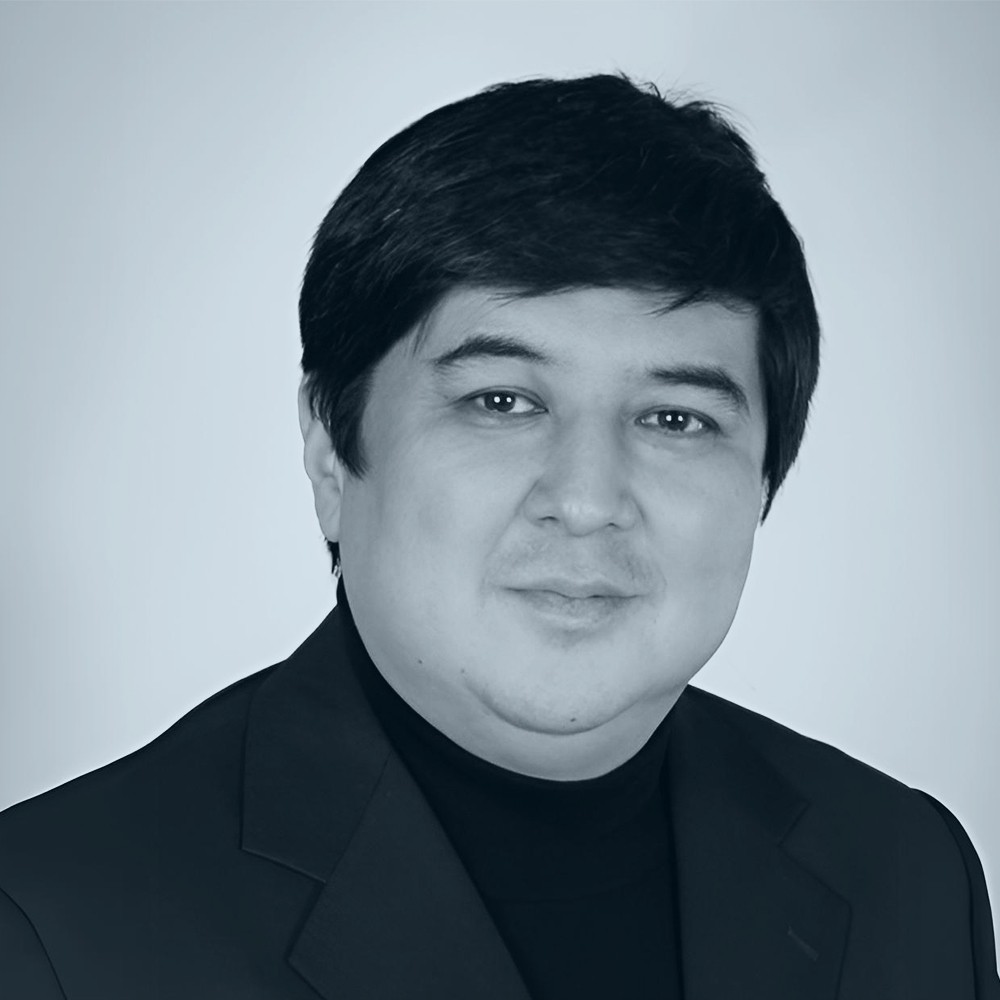
Askar Alimzhanov's Avatar

Askar Alimzhanov

Senior Editor

Askar Alimzhanov graduated from the journalism department of the Kazakh State University named after S. Kirov, then worked as a correspondent for the daily republican newspaper Leninskaya Smen. He then moved to the United States to be a reporter for the daily newspaper "Cape Cod Times" in Hyannis, Massachusetts, (USA) under the journalist exchange program between the Union of Journalists of the USSR and the New England Society of News Editors. Since then, he has helped build transparency and understanding of Central Asia region in various executive level positions at media organizations including "Akbar"(Alma-Ata) international center for journalism, the Khabar News agency, the Television and Radio Corporation "Kazakhstan" JSC, and MIR- Kazakhstan.

Articles

Gor and Landau Tour Central Asia Amid Rising Stakes

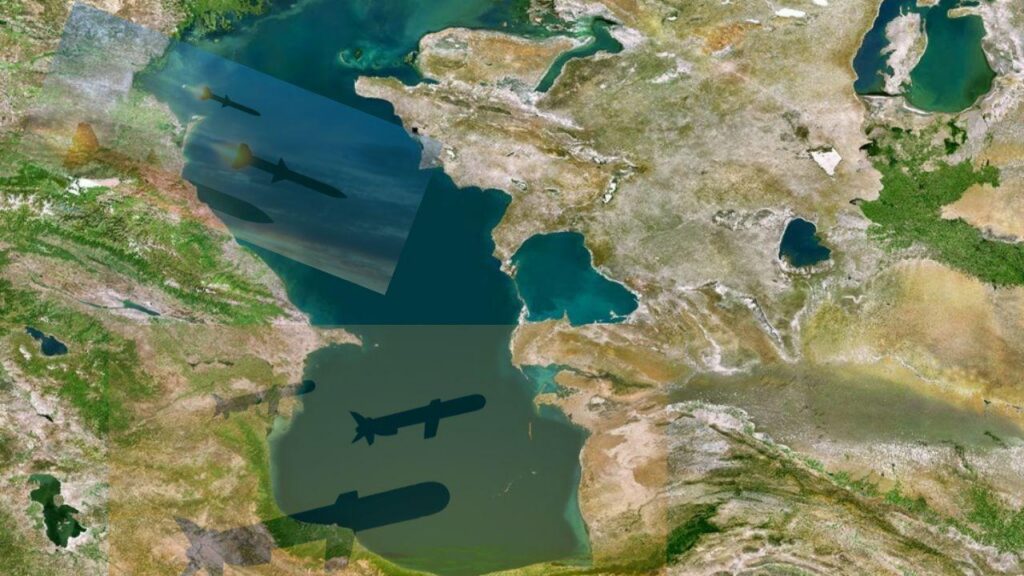
On October 25, U.S. Special Representative for South and Central Asia Sergio Gor and Deputy Secretary of State Christopher Landau arrived in Tashkent on an official visit. The visit to Central Asia was not publicly scheduled in advance, with news of the trip only emerging a few days beforehand. In Uzbekistan, the high-ranking visitors were received with full state honors. A motorcycle escort and blocked roads in the capital are typically reserved for visits by heads of state. Although the American delegation’s visit to Uzbekistan ended by Monday evening, local media coverage remained scant. Apart from posts on the U.S. Embassy in Uzbekistan’s Telegram channel, almost no media outlets covered the event. On the evening of October 25, Gor and Landau held productive talks with representatives of U.S. companies about numerous opportunities to strengthen mutual prosperity. Afterwards, they traveled to Samarkand, where they toured the city often referred to as the pearl of Central Asia. On October 26, the visitors held fruitful talks with Foreign Minister Saidov, thanking him for his leadership and hospitality throughout the visit. His efforts, they noted, are elevating the strategic partnership between the U.S. and Uzbekistan to a new level. The delegation also held “productive” talks with Ministers Bobir Islamov and Laziz Kudratov on expanding trade and investment ties. By Monday evening, Gor and Landau had arrived in Almaty, Kazakhstan. As the largest city in the country, Almaty is also one of Central Asia’s key business hubs. According to sources, the agenda in Kazakhstan includes meetings with business leaders and a cultural program. As in Uzbekistan, there was no official information about the visit released on Monday. This may, however, be because Monday was a national holiday - Republic Day – an event which President Donald Trump extended his congratulations to mark, stating that ““The United States values ​​our close economic and security ties with Kazakhstan and looks forward to further strengthening our expanded strategic partnership in the coming year.” Secretary of State Marco Rubio also sent his “congratulations to the people of Kazakhstan.” By all indications, the lightning-fast visit by the senior U.S. delegation is linked to the recently announced C5+1 summit in Washington on November 6. Beyond cultural sightseeing, the talks reportedly covered cooperation in rare earth mineral processing and other sensitive areas. Recently, U.S. interest in the countries of the region has expanded significantly. While China and, traditionally, Russia are considered the main players in the region, Europe and the U.S. are increasingly seeking a firmer foothold in Central Asia’s strategic landscape. Recent global conflicts have exposed major powers’ dependence on raw materials and logistics routes. The search for new corridors and suppliers now seems both logical and urgent. Sanctions on Russia have also had a direct impact on regional economies, requiring swift responses. The C5+1 format presents an ideal framework for launching coordinated political and business cooperation. Yet, it’s essential to recognize the significant disparities among Central Asian countries. Kazakhstan is the region’s financial heavyweight. According to the IMF, Kazakhstan’s GDP per capita...

1 month ago

South Caucasus Peace Push Faces Political and Regional Roadblocks

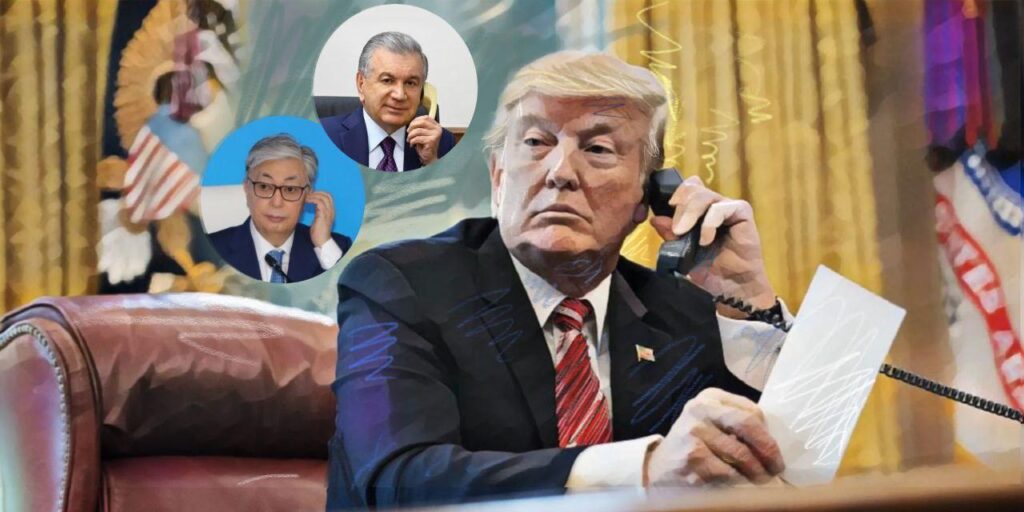
This past weekend, discussion of the “historic joint declaration for peace” was nearly impossible to avoid. Optimism ran high, with many expressing hope that peace and cooperation might finally take hold in the South Caucasus. But how realistic is that vision? What was signed in Washington on August 8, 2025, was not a binding treaty but a declaration of intent. That is a meaningful step, but for now it remains a symbolic document. Turning it into lasting peace will require a full treaty with specific commitments. One major hurdle is Armenia’s constitution, which still contains territorial claims to land recognized as part of Azerbaijan. Amending this will be politically difficult. The day after the signing, the opposition Armenian Revolutionary Federation (ARF) issued a sharply critical statement. It accused the declaration of harming Armenia’s sovereignty, legitimizing an Azerbaijani-favored corridor, and violating Armenia’s territory. The ARF demanded the withdrawal of Azerbaijani forces, the release of Artsakh’s political prisoners, and guarantees for the safe return of displaced Armenians. Of the 69 seats in Armenia’s parliament, 28 belong to the “Armenia” faction, 15 of them held by ARF members, giving the party significant influence over this debate. Azerbaijani President Ilham Aliyev has also said that the wording of Armenia’s constitution blocked the signing of a treaty in Washington. Alongside the declaration, the leaders of Armenia and Azerbaijan signed economic agreements with the United States to boost trade, transit, energy, infrastructure, and technology in the South Caucasus. Yet these too face obstacles. Iranian official Ali Akbar Velayati vowed to prevent the creation of an “American corridor” in the region and rejected reports of a US-Armenian lease deal for land along Iran’s border, warning it would become “a graveyard for the mercenaries of Donald Trump.” Proponents argue that if such a corridor opens, it could strengthen the Trans-Caspian International Transport Route. However, no study has yet confirmed whether the 43-kilometer stretch in question could handle a major traffic increase. After a weekend of high expectations, political realities have brought a more cautious mood. The week ahead promises further developments. President Trump has  announced a meeting with Russian President Vladimir Putin in Alaska. Some reports claim Putin has proposed a Ukraine ceasefire in exchange for significant territorial concessions and recognition of Russia’s claims. In response, European leaders issued a joint statement affirming Ukraine’s right to decide its own future, calling for robust security guarantees, and insisting that any peace process must begin with a ceasefire or reduced hostilities. Ukrainian President Zelensky reiterated that the constitution already answers the territorial question and that no land will be surrendered. Diplomatic exchanges have been intense. Kazakh President Kassym-Jomart Tokayev spoke with both Zelensky and Aliyev, urging a balanced approach and recalling the saying that “a bad peace is better than a good war.” Putin called the president of Tajikistan, and Zelensky spoke again with Aliyev. Behind the brief official readouts lies a broader search for ways forward. International politics is a delicate process, and disputes built over decades or centuries...

4 months ago

Opinion: Ghosts of the Gulag – A View From the Ground

Recently, The Times of Central Asia published an article titled Ghosts of the Gulag: Kazakhstan’s Uneasy Dance With Memory and Moscow. While it is essential to consider outside opinions, it is equally important to articulate how this perspective looks from within. In Kazakhstan, there are three large museums dedicated to the memory of the victims of the communist regime. These are the infamous ALZHIR (Akmolinsk Camp for Wives of Traitors to the Motherland), the museum dedicated to the memory of victims of political repression, KARLAG (Karaganda camp), and a smaller memorial complex to the victims of political repression at Zhanalyk, located about 40 kilometers from Almaty. Historians believe that around 2,500 people are buried there, including prominent members of the Kazakh intelligentsia, such as Akhmet Baitursynov, Mukhamedzhan Tynishpaev, Saken Seifullin, Ilyas Jansugurov, and Beimbet Maily. In addition to these museums, there are monuments to the victims of political repression and the famine of the 1920s–30s in many cities across the country. But it's not just about the number of museums and monuments. What matters most is that the memory of these events is preserved, and it is being carefully studied. In 2020, a state commission for the full rehabilitation of victims of political repression was established by the government. Over several years, 425 scholars, researchers, and experts have participated in its work. More than 2.6 million documents and materials have been declassified. Most importantly, this commission has rehabilitated more than 311,000 victims of political repression within the framework of existing legislation. The results of this work are documented in 72 volumes. There are no sections in these research materials divided by nationality. The approach is the same for everyone: justice and fairness for all. This calls into question the “collective amnesia that obstructs historical reckoning” referred to by Guillaume Tiberghien, a specialist in dark tourism at the University of Glasgow. Regarding any "emphasis on what the prison system ‘contributed’ to the nation” mentioned by Margaret Comer, a memory studies expert at the University of Warsaw, there are conflicts of interest and truths people would rather not face. One of the main purposes of Karlag was to serve as a major base of food supplies for Kazakhstan’s growing coal and metallurgical industries. In addition to industrial development, by 1941 the camp had 70 sheep farms, 45 cattle farms, one horse farm, and two pig farms. By 1950, 4,698 people worked on these farms, including 13 academic scientists. The communist system of corrective labor camps was an integral part of economic development, achieved through what was essentially slave labor. This is the full cynicism of the regime on display: prisoners were expected to “work off” their guilt. “The country is walking a tightrope,” Tiberghien suggests, pointing to President Tokayev’s speech on May 31, the official Day of Remembrance for Victims of Political Repression. “It wants to keep things calm, to avoid upsetting Russia.” In this speech, while calling for the rehabilitation of victims and greater access to archives, Tokayev also condemned the...

4 months ago

From Enemy Waves to Fading Signals: Radio Liberty’s Journey in Central Asia

I went to school in Almaty, Kazakhstan, in the 1970s. This period in the Soviet Union is now commonly referred to as the "Era of Stagnation." We felt its effects firsthand. We did not know what freedom of speech was. All media belonged to the state, and all were "party-affiliated." Since there was only one party in the USSR, the Communist Party, all information was exclusively communist. Naturally, the media spoke only of the incredible successes of the working class and the over-fulfillment of party and government plans. We found this completely uninteresting, so we searched for alternative sources of information. Radio broadcasting helped. Almost every home had a radio receiver capable of picking up various wave frequencies. That was when I first heard Voice of America, Radio Liberty, and the BBC. My father listened to these stations. Around the age of 14–15, I also began to listen to these "enemy voices," as they were called at the time. I was primarily interested in the news reports about events that the Soviet press did not cover. And, of course, music. Western radio stations were one of the few sources of information about Western music, which was largely ignored in the USSR. Yes, even music was under ideological pressure. Today, not everyone remembers, but back then, popular bands released new albums almost annually. It was an incredible time for the invention of new sounds — Pink Floyd, Deep Purple, Rainbow, Led Zeppelin, The Rolling Stones, The Beatles, Manfred Mann's Earth Band, 10cc, and many other artists who are now largely forgotten. But they were giants of their time. Thanks to musical radio programs, we were aware of what was happening. The first broadcasts of the Russian Service of Radio Liberty, originally called "Radio Liberation," went on air on March 1, 1953. On March 18 of the same year, the Turkestan editorial office was established, broadcasting in several languages, including Kazakh, Uzbek, Kyrgyz, Tajik, Turkmen, Karakalpak, and Uyghur. Initially, broadcasts in Kazakh, known as "Bostandyk Radiosy" (Radio Liberation), aired four times a week for five minutes each. In the 1960s, the volume of Kazakh-language broadcasting increased to one hour per week, with a four-person team working on its production. By the late 1960s, the Turkestan editorial office was reorganized into "Northern" and "Southern" departments, with the Kazakh program included in the "Northern" department. Khasen Oraltai headed the Kazakh service. In 1971, the Turkestan Editorial Office was further divided into three separate editorial teams: "Turkestan-1," "Turkestan-2," and "Turkestan-3," with Kazakh-language broadcasts conducted through "Turkestan-3." By 1975, broadcast time had increased to half an hour in the morning and evening. Broadcasts were transmitted on shortwave from Munich. Radio Liberty had no correspondents within the Kazakh SSR. In the USSR, the station's broadcasts were jammed until 1988. In the foothills of Almaty, towers that housed jamming equipment for these broadcasts still stand today. In 1993, a Radio Liberty bureau was opened in Almaty, followed by a branch in Astana. However, after President Trump signed an...

9 months ago

The First-Ever Audio Recording of Kazakh Music

It was long believed that the world's first audio recording of Kazakh music was made in 1925 during the performance of singer, Amre Kashaubaev, at the Exposition Internationale des Arts Decoratifs et Industriels Modernes in France. However, the Berlin Museum of Visual Anthropology and Ethnology has recordings of Kazakh folk music, voices, and ritual chants, which were made in western Kazakhstan twenty years earlier. These recordings were made during the Acoustic Era, when sound waves were still recorded through analog methods. In 1857, Frenchman, Édouard-Léon Scott de Martinville invented the so-called phonautograph. Three years later, the world's first song was recorded. It was a French folk song, “By the Light of the Moon”. In 1877, Thomas Edison invented the phonograph. This invention could both record and playback audio and marked the start of the Acoustic Era. Later, in 1900, Carl Stumpf, a professor of psychology at the University of Berlin, established a phonogram archive in Berlin, where, at the same time, an orchestra from Thailand was touring. Stumpf recorded the Thai music, which was considered exotic to Europeans at that time. This recording became the first in the rich Ethnomusicology collection of the Ethnological Museum of Berlin. These recordings were originally discovered at the Institute of Russian Literature, also known as Pushkin House, which is part of the network that is affiliated with the Russian Academy of Sciences. Dr. Efim Rezvan, a well-known scholar of Turkology, showed the TCA team the wax rollers - cylindrical wax containers that can be played using Edison's phonograph. The first-ever audio recordings of Kazakh music were made using these devices. The German scientist Richard Karutz recorded them in the early 20th century when he organized an expedition to the steppes of Turkestan. As a result of his expedition, he wrote a book called Among the Kirghiz and Turkmens in Mangyshlak. During his expedition, Karutz took many photos and collected audio recordings of the local peoples' art. In addition to his scientific research, Karutz pursued other goals; for instance, he wrote about the health benefits of tea, which the locals consumed in large quantities. He claimed that drinking tea in large quantities when the air temperature was over 40 degrees Celsius helped them to bear the heat. Karutz wrote that, “It is necessary for our troops to weigh the importance of tea consumption during summer maneuvers and campaigns.” Richard Karutz was born into a mercantile family. In 1886, he went to study medicine at the University of Jena 1891. Completing his studies and receiving his doctorate in 1891, he then worked as a doctor aboard a ship. Whilst on working as a surgeon on a ship, Karutz traveled to South America and West Africa. After these trips, Karutz became interested in ethnography. In 1896, he was appointed head of the ethnographic collection of the Museum of Ethnology in Lübeck. Karutz enriched the museum's collection with artifacts from his travels, and encouraged other merchants and travelers to bring items from other countries for the collection. The...

1 year ago