• KGS/USD = 0.01144 0%
  • KZT/USD = 0.00213 0%
  • TJS/USD = 0.10569 0.09%
  • UZS/USD = 0.00008 0%
  • TMT/USD = 0.28530 0%
  • KGS/USD = 0.01144 0%
  • KZT/USD = 0.00213 0%
  • TJS/USD = 0.10569 0.09%
  • UZS/USD = 0.00008 0%
  • TMT/USD = 0.28530 0%
  • KGS/USD = 0.01144 0%
  • KZT/USD = 0.00213 0%
  • TJS/USD = 0.10569 0.09%
  • UZS/USD = 0.00008 0%
  • TMT/USD = 0.28530 0%
  • KGS/USD = 0.01144 0%
  • KZT/USD = 0.00213 0%
  • TJS/USD = 0.10569 0.09%
  • UZS/USD = 0.00008 0%
  • TMT/USD = 0.28530 0%
  • KGS/USD = 0.01144 0%
  • KZT/USD = 0.00213 0%
  • TJS/USD = 0.10569 0.09%
  • UZS/USD = 0.00008 0%
  • TMT/USD = 0.28530 0%
  • KGS/USD = 0.01144 0%
  • KZT/USD = 0.00213 0%
  • TJS/USD = 0.10569 0.09%
  • UZS/USD = 0.00008 0%
  • TMT/USD = 0.28530 0%
  • KGS/USD = 0.01144 0%
  • KZT/USD = 0.00213 0%
  • TJS/USD = 0.10569 0.09%
  • UZS/USD = 0.00008 0%
  • TMT/USD = 0.28530 0%
  • KGS/USD = 0.01144 0%
  • KZT/USD = 0.00213 0%
  • TJS/USD = 0.10569 0.09%
  • UZS/USD = 0.00008 0%
  • TMT/USD = 0.28530 0%

Our People > Askar Kubaizhanov

Askar Kubaizhanov's Avatar

Regional Editor

Born in Almaty. He graduated from the Al-Farabi Kazakh National University with a degree in political science (advanced training at RANEPA - northwestern branch. Since 2002, he began working in the field of journalism. He headed the leading Kazakh and international media. He has awards in the field of mass media.

Articles

Kazakhstan on Europe’s Oil Podium, but for How Long?

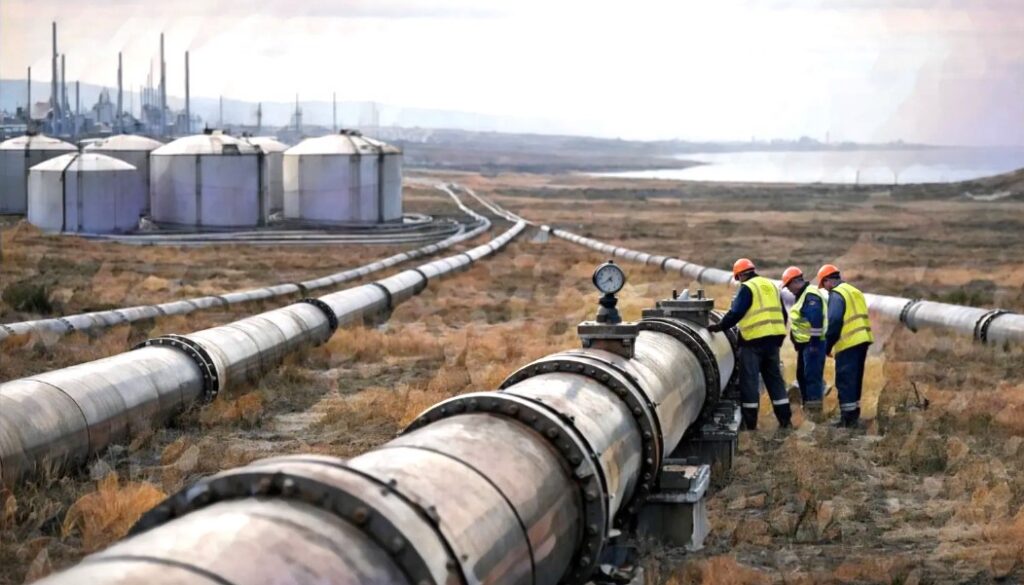
Kazakhstan has strengthened its position as one of the key suppliers of oil to the European Union, capitalizing on the redistribution of energy flows following the reduction of Russian crude imports. However, declining production and vulnerabilities in export infrastructure cast doubt on the country’s ability to maintain this position in the medium term. According to official EU data, the EU remains one of the world’s largest oil importers, meeting about 97% of its demand through external supplies. In 2025, EU countries imported approximately 435 million tonnes of crude oil worth more than €212 billion. The reduction in Russia’s share from 25.8% in 2021 to 2.2% in 2025 led to a significant redistribution of flows in favour of alternative suppliers, including the United States (14.6%), Norway (12.8%), and Kazakhstan (12.8%) by crude-oil import volume. Kazakhstan has been among the main beneficiaries of these changes. According to an Econovis Economic Research Laboratory report, the share of Kazakh supplies in European imports has increased for several consecutive years. This growth has been driven by strong demand from European refineries for light, low-sulfur CPC Blend crude. Alongside Kazakhstan, Azerbaijan has also strengthened its position, benefiting from Europe’s diversification efforts. A notable example is the Czech Republic, where, following the cessation of deliveries via the Druzhba pipeline, Azerbaijan accounted for more than 42% of oil imports in 2025, according to Czech import data. Kazakhstan ranked third in the Czech market with a share of around 18%, indicating the emergence of a new energy balance in the Caspian region. Despite this favorable external environment, Kazakhstan’s oil and gas sector has faced a significant downturn. According to government data, in the first quarter of 2026, oil and gas condensate production amounted to 19.7 million tonnes, 20% less than in the same period of 2025. Oil exports declined by approximately 22% to 15.3 million tonnes, while the annual export forecast stands at about 76 million tonnes. By mid-April, however, CPC exports had risen from February levels as Tengiz resumed production, suggesting that some of the early-year disruption had eased. The decline is linked to disruptions in the operations of the Caspian Pipeline Consortium (CPC) and temporary shutdowns at major fields, including Tengiz. The CPC remains the key export route for Kazakh oil to Europe, transporting most of the crude through the terminal in Novorossiysk. Economic analyst Olzhas Baidildinov said the consequences of attacks on the consortium’s infrastructure could have long-term implications. “Oil and gas condensate production in Kazakhstan fell by 20% in the first quarter compared to January-March 2025, 19.7 million tonnes versus 24.6 million tonnes. Oil exports decreased by approximately 22% to 15.3 million tonnes. The export forecast for this year is 76 million tonnes,” he wrote on his Telegram channel. According to his estimates, the country will once again fail to surpass the psychologically significant threshold of 100 million tonnes of annual production. “As a result of the attacks on the CPC, at least 6 million tonnes of oil worth no less than $3.4 billion were...

4 days ago

Iran War Redraws Air Routes, Boosting Kazakhstan and Azerbaijan

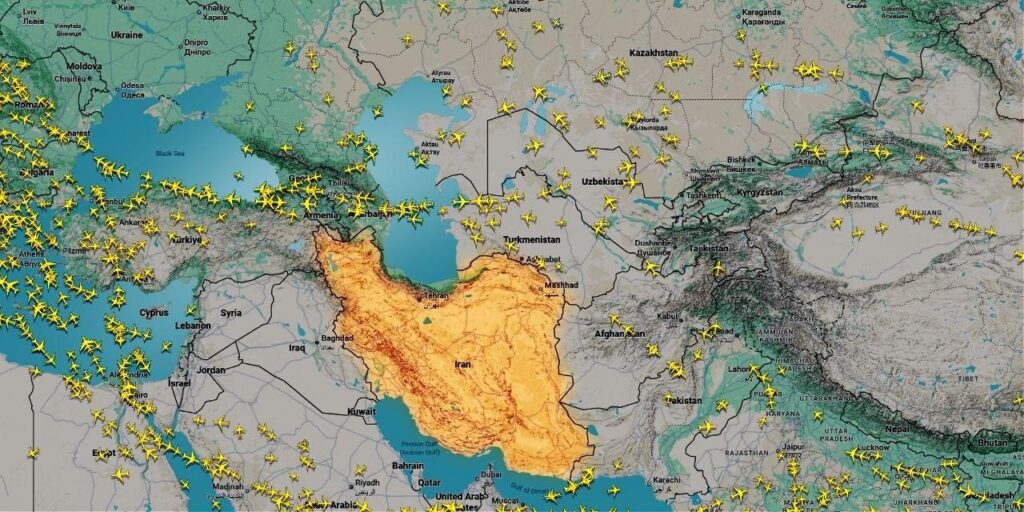
Kazakhstan and Azerbaijan are emerging as potential beneficiaries of disruptions in the global aviation fuel market as tensions around Iran force airlines to reroute flights and rethink transit hubs. The escalation of tensions in the Middle East, including heightened risks to shipping through the Strait of Hormuz, has led to sharp increases in energy prices and supply disruptions. Gas prices in the EU have risen by 70%, and oil by 60%, with additional costs reaching €14 billion. Roughly one-fifth of the world’s oil passes through the Strait of Hormuz, making any disruption critically significant for global markets. The aviation industry has been among the hardest hit sectors. According to industry sources cited by Bloomberg, Europe is expected to have sufficient jet fuel supplies in the short term, but stocks are under pressure, and supply risks could emerge if the conflict continues. The cost of jet fuel has risen from about $742 to more than $1,700 per ton in recent weeks in some markets. This increase is outpacing the rise in oil prices, intensifying pressure on airlines. As reported by The Telegraph, citing data from Cirium, around 7% of scheduled flights were canceled at the peak of recent disruptions, equivalent to more than 7,000 departures, compared with about 4.7% a year earlier. Airlines are responding by cutting flight schedules and revising their business models. Lufthansa, for example, is considering temporarily grounding part of its fleet. According to CEO Carsten Spohr, fuel shortages are likely to be felt first outside Europe, where supply chains are more vulnerable. At the same time, airfares have already risen by 15-20%, beginning to dampen demand. As passenger demand softens and costs rise, carriers are balancing route cuts with the need to maintain key markets. Fuel Costs Drive Route Shifts According to Sergey Agibalov, consulting director at Argus in the CIS, significant changes are also occurring in the geography of international air travel. Major Middle Eastern hubs, such as Dubai, Doha, and Abu Dhabi, have seen a decline in transit traffic amid safety concerns and are operating below normal capacity on key routes. Agibalov argues that this creates a window of opportunity for alternative routes between Europe and Asia, including Istanbul, Addis Ababa, and hubs in Central Asia and the South Caucasus. “Airports in Central Asia and the South Caucasus are now attractive not only to passengers, but also to airlines. Disruptions to Middle Eastern jet fuel exports linked to instability around the Strait of Hormuz have led to a sharp rise in fuel prices globally. This increase is outpacing the rise in oil prices, intensifying pressure on airlines. Recent industry data shows prices reaching as high as $1,600–1,800 per ton in some markets. Under these conditions, many airlines have begun optimizing their flight schedules; even if fuel is available, flying has become very expensive,” he noted. Against this backdrop, airports in Almaty, Astana, and Baku are seeing increased traffic and stronger airline interest. Argus estimates suggest volumes are already rising in Baku, as routes across Central...

3 weeks ago

Tennis Revolution in Kazakhstan: How Systemic Investment Is Creating Champions

Over the past decade, Kazakhstan has evolved from a promising tennis nation into a formidable contender on the global stage. Elena Rybakina’s Wimbledon triumph, Alexander Bublik’s steady rise, and a new wave of top-ranked juniors are no coincidence; they are the product of a long-term, meticulously executed strategy. In an interview with The Times of Central Asia, Yuriy Polskiy, President of the Asian Tennis Federation and Vice President of the Kazakhstan Tennis Federation (KTF), explains how strategic investment, public-private partnerships, and a grassroots approach have fundamentally reshaped the country's tennis landscape. TCA: Kazakhstani tennis players have recently made headlines at top international tournaments. How would you assess Kazakhstan’s current standing on the global tennis map? Are the successes of Elena Rybakina and Alexander Bublik, as well as the emergence of top juniors, the result of systemic work or just coincidence? Polskiy: Luck plays a role in any athlete’s career, but it's fleeting. Kazakhstan’s results, among both professionals and juniors, are consistent, which points to a system that delivers. Over the past decade, we’ve seen numerous players ranked in the world’s top 30: Shvedova, Voskoboeva, Kukushkin, Golubev, Korolev, Nedovyesov, and more recently, Diyas, Putintseva, Danilina, Bublik, and, of course, Rybakina. Together, they’ve secured four Grand Slam titles, reached multiple singles and doubles finals, and won WTA 1000, 500, and ATP/WTA 250 tournaments. Among the juniors, talents like Dastanbek Tashbulatov, Amir Omarkhanov, and Sonya Zhienbayeva have ranked in the ITF Top 5 and Top 20. Our Under-14 and Under-18 national teams have reached the world’s top four and consistently defeated traditional powerhouses such as Australia, France, Italy, and Argentina. These results underscore the strength of Kazakhstan’s national coaching program and the Federation’s long-term vision. In 2024, Kazakhstan had six players in the ITF junior Top 100, including three in the Top 50. Seven more under-14s were ranked in the Tennis Europe Top 100, more than Italy, currently the leader in that category. Notably, all 13 of these top-ranked juniors were born and raised in Kazakhstan, highlighting the success of a nationwide, structured development model that blends public support with private initiative. TCA: What is the Federation’s strategic outlook for the next five to ten years? How extensive is the infrastructure, and are there plans to expand into smaller cities? Polskiy: Since 2007, when businessman and philanthropist Bulat Utemuratov became the KTF president, Kazakhstan has built 38 major tennis centers, each with at least six courts, totaling 364 hard and clay courts nationwide. Over the past 17 years, more than $150 million has been invested in infrastructure. Hundreds of coaches have been trained, particularly for early childhood programs. The number of certified ITF coaches has nearly doubled in five years, now surpassing 400. Infrastructure growth has significantly reduced training costs: hourly court rental has dropped from $50 in 2007 to just $10 today. Facilities now exist in 16 of the 18 regional capitals and smaller cities like Lisakovsk. Major complexes in Astana, Almaty, Shymkent, Karaganda, Aktobe, and Ust-Kamenogorsk each include six indoor and...

9 months ago

How Kazakhstan Revives National Traditions Through Cinema

At a recent press screening of the Kazakhstani fantasy comedy All on Mosles: Battle of the Generations, the audience laughed, applauded and, perhaps most tellingly, relived childhood memories. Some even left wanting to play asyki again. The film’s creators achieved what seemed nearly impossible: they transformed an almost forgotten traditional game into a vibrant cinematic adventure appealing to both adults and children. The Times of Central Asia spoke with the film's authors, Yerken Gubashev, Yerkebulan Bekturov, and Mikhail Ulanov, about how the project came to life, the challenges they encountered, and why asyk atu is more than just a game. Now showing across Kazakhstan, the film centers on asyk atu, an ancient game where players aim to knock opponents’ asyk (ram’s knuckle bones) from a designated area using a special, often weighted and decorated, throwing asyk known as a sak. Popular across Soviet Kazakhstan until the 1990s, the game has since been revived by cultural activists. Today, asyk atu is included on UNESCO's Representative List of the Intangible Cultural Heritage of Humanity. [caption id="attachment_30806" align="aligncenter" width="797"] Image: TCA, Askar Kubaizhanov[/caption] TCA: Tell us about your film. How did the idea come about? Yerken Gubashev: I was really the initiator of the whole project. I co-wrote the script, co-produced the film, and played one of the lead roles. But more than that, it was my dream to bring asyki back and turn them into something grand. Watching my son and his friends sitting on the street, absorbed in their phones, was tough. When we were kids, asyki was real life. We played for hours, competing, learning dexterity, patience, and respect. I started imagining a world where asyki was the number one sport, with world championships and a whole culture surrounding it. I shared the idea with Yerkebulan and Mikhail, and we couldn’t stop. Mikhail Ulanov: We began to imagine: What if asyks could fly? What if each player had a unique technique? What if one could come to life or transform into a weapon? From this, a fantastical world emerged, rooted in tradition but filled with comedy, fantasy, and even superhero parody. Yerkebulan Bekturov: We shaped the film to resonate with modern youth: short, dynamic scenes, sharp transitions, and vivid visuals. Yet it tells a complete story. We believe it will appeal not just to Kazakhstani audiences but also internationally. There are lots of nods to Hollywood, The Gentlemen, Kill Bill, and others, which helps bridge cultures. TCA: The film isn’t just entertainment, is it? Is there a cultural mission here? Yerken Gubashev: Absolutely. Our goal is to bring asyki back to the playgrounds so kids share, compete, and step away from social media. More broadly, it's about reconnecting with our roots. Kazakh traditional culture is rich but underrepresented in cinemas. Importantly, asyki isn’t only Kazakh, it’s a Turkic game played by Uzbeks, Kyrgyz, Bashkirs, Tatars, Yakuts, and even in the Caucasus. It’s a vast cultural universe that unites Turkic peoples. Today, even the U.S., Norway, and Finland have national teams. A...

1 year ago

Trump’s Tariff Blitz Targets Global Imports, Kazakhstan Faces Harshest Impact in Central Asia

U.S. President Donald Trump has announced sweeping new tariffs on all goods imported into the United States, citing the need to protect American industry and jobs. Speaking at a White House press conference, Trump outlined a base tariff rate of 10% that will apply to 185 countries. However, several nations and blocs face significantly higher rates: China will see a 34% tariff, the European Union 20%, Switzerland 31%, and Israel 17%. The steepest tariffs were imposed on Vietnam (46%), Cambodia (49%), and Laos (48%). Notably absent from the list are Russia, Belarus, Mexico, Iran, Canada, and Belarus. Ukraine, however, will face the base 10% rate. Kazakhstan Hit with 27% Tariff The new U.S. duties also target Central Asian nations. According to a comparative chart published by the White House, Uzbekistan, Turkmenistan, Tajikistan, and Kyrgyzstan will face 10% tariffs on their exports to the U.S. Meanwhile, Kazakhstani goods will be subject to a much higher rate of 27%. The White House document notes that Kazakhstani imports currently face a 54% tariff in Kazakhstan, figures that surprised local analysts, who have questioned the methodology behind the calculations. The rationale for the elevated rate on Kazakhstan remains unclear. However, the country's Ministry of Trade and Integration has initiated consultations with his U.S. counterparts to explore options for exempting certain goods. According to a preliminary analysis, many of Kazakhstan’s key exports fall under exceptions outlined in U.S. regulations. “In 2024, trade turnover between Kazakhstan and the United States amounted to $4.2 billion,” the ministry stated. “Kazakhstan's primary exports to the U.S. - crude oil, uranium, silver, and ferroalloys - constitute 92% of total exports and are included in the exemption list under the U.S. President’s decree on reciprocal tariffs.” Turning Tariffs Into Opportunities Despite the steep new tariffs, some experts believe the impact on Kazakhstan will be limited. Financial analyst Rasul Rysmambetov argues that Kazakhstan’s marginal role in global trade dynamics shields it from major economic fallout. “The real battle is between the U.S. and the world’s largest economies, China and the EU,” Rysmambetov wrote on his Telegram channel. “Our trade with the U.S. accounts for less than 1% of Kazakhstan’s total foreign trade. Even with a 27% tariff, the effect will be negligible.” Rysmambetov noted that Kazakhstan exported over $2 billion worth of goods to the U.S. in 2024, while imports totaled $1 billion, maintaining a trade surplus for the tenth consecutive year. “We’re on the tariff list, but it’s mostly symbolic,” he added, emphasizing that Kazakhstan’s exports largely consist of strategic materials. Rysmambetov also sees potential upsides: countries facing new duties may seek alternative markets, possibly offering Kazakhstan better terms on imports such as equipment, metals, vehicles, and construction materials. “Global trade tensions can open windows of opportunity, for strategic borrowing, better equipment deals, and expanded exports. But quick action is key,” he concluded. International Backlash The U.S. move drew swift condemnation from European Commission President Ursula von der Leyen, who called the policy a “severe blow to the global economy.” “Uncertainty will...

1 year ago

Celebrating Global Family Day: Honoring Uzbek and Kazakh Traditions That Unite Generations

Every year, January 1 marks Global Family Day, an idea first introduced in 1997, when the United Nations launched the International Decade for the Culture of Peace and Non-Violence for the Children of the World. By 1999, the had UN invited its members to dedicate the first day of the year to developing strategies for peace, and since then this day has been observed annually as a reminder of the role families play in fostering a peaceful and compassionate world. This year, The Times of Central Asia takes a closer look at family customs in Uzbekistan and Kazakhstan, nations where family values are deeply woven into the fabric of life. In Uzbekistan, family is at the heart of society. Respect for elders and care for the young are not just taught — they are lived and celebrated daily. Parents and children share close relationships, turning to one another for advice and support. [caption id="attachment_27179" align="aligncenter" width="1217"] Chimildiq canopy; image: Facebook Discover Kashkadarya[/caption] Traditions add a rich layer to these connections, keeping families united. Weddings, for example, are deeply symbolic. One notable custom is the Chimildiq, a ceremonial canopy for newlyweds which marks the start of their life together and serves as a space for blessings and well-wishes for their future. Another beloved tradition is the Beshik tuyi, a joyous celebration of a baby’s first cradle wherein relatives and neighbors come together to share in the happiness of welcoming a new life, underscoring the communal nature of Uzbek culture. “As an Uzbek woman, I’ve always been fascinated by the beauty and meaning behind our customs,” Rohila Mullayeva told TCA. The mother-in-law to three brides, for more than 20 years Mullayeva has been serving as a kayvoni, one appointed by women to preside over table work at weddings and other ceremonies. “They’re not just rituals but expressions of love, respect, and hope for the future,” she said. “Take Chimildiq, for instance - a special moment for young couples starting their journey together. One of the rituals in the ceremony is when the bride and groom give each other honey on their fingers. This is a sweet symbol of the joyful moments they hope to share in their life ahead. Another part of the ceremony is both meaningful and playful — when the groom attaches boiled eggs his bride’s dress. This gesture is a heartfelt wish for the couple to have many children. “Then there’s the Beshik tuyi, the cradle ceremony, which is one of the most cherished traditions in our culture. When a bride gives birth to her first child, she is honored in a beautiful custom called Sallabandon, which is part of Beshik tuyi. An elderly grandmother, someone respected for having a big family, places a salla, a headdress wrapped in a special cloth, on the bride’s head,” Mullayeva explained. “During this ceremony, a kurpacha — a soft, colorful quilt — is placed under the bride’s feet, a gesture of respect and care. The meaning behind Sallabandon is deeply symbolic; it...

1 year ago