• KZT/USD = 0.00221
  • TJS/USD = 0.10860
  • UZS/USD = 0.00008
  • TMT/USD = 0.29760
  • KZT/USD = 0.00221
  • TJS/USD = 0.10860
  • UZS/USD = 0.00008
  • TMT/USD = 0.29760
  • KZT/USD = 0.00221
  • TJS/USD = 0.10860
  • UZS/USD = 0.00008
  • TMT/USD = 0.29760
  • KZT/USD = 0.00221
  • TJS/USD = 0.10860
  • UZS/USD = 0.00008
  • TMT/USD = 0.29760
  • KZT/USD = 0.00221
  • TJS/USD = 0.10860
  • UZS/USD = 0.00008
  • TMT/USD = 0.29760
  • KZT/USD = 0.00221
  • TJS/USD = 0.10860
  • UZS/USD = 0.00008
  • TMT/USD = 0.29760
  • KZT/USD = 0.00221
  • TJS/USD = 0.10860
  • UZS/USD = 0.00008
  • TMT/USD = 0.29760
  • KZT/USD = 0.00221
  • TJS/USD = 0.10860
  • UZS/USD = 0.00008
  • TMT/USD = 0.29760
04 November 2026

Our People > Galiya Baizhanova

Galiya Baizhanova's Avatar

Journalist

Galiya Baizhanova is a Kazakhstani journalist, interviewer, and film critic whose work spans leading Kazakhstani and international media outlets. A member of the International Federation of Film Critics (FIPRESCI), she explores cinema, culture, and the people and ideas shaping contemporary society. She has covered major international film festivals, including Cannes, Venice, and Tokyo, bringing a Kazakhstani perspective to the global conversation about cinema.

Articles

How OYU Fest Became a Portrait of Kazakhstan’s New Music Scene

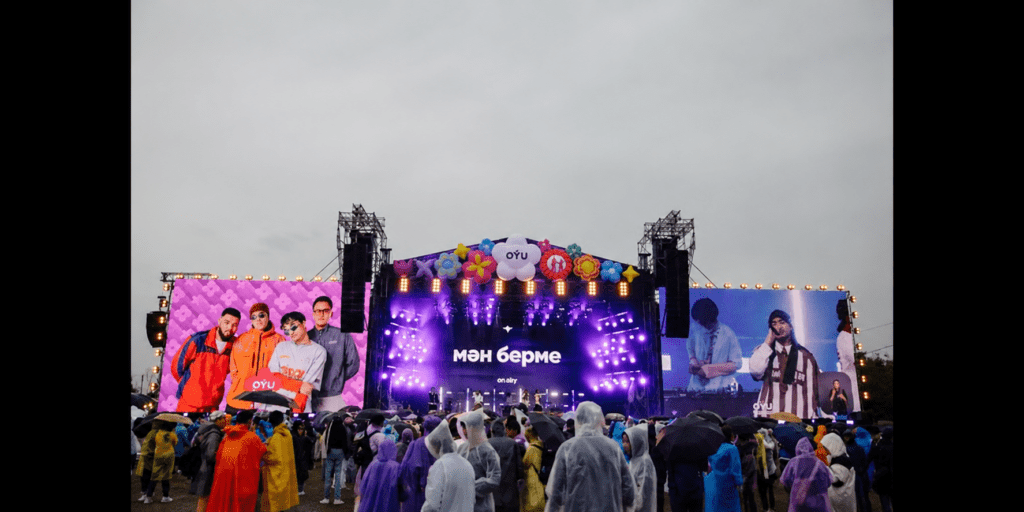
OYU Fest returned to Almaty’s Pervomaysky Ponds for its fifth-anniversary edition, marking another step in its rise as one of Kazakhstan’s leading contemporary music festivals. Since its launch in 2022, OYU has grown from a local initiative into an important platform for Kazakhstan’s music scene, drawing a wider audience across Central Asia. Kazakhstan has welcomed more international performers in recent years, including Jennifer Lopez, the Backstreet Boys, and Enrique Iglesias. OYU has taken a different approach. It has remained a festival without foreign headliners, keeping contemporary Kazakh music at the center of its program. Instead of competing with large international shows, the festival connects local artists with audiences of different generations and reflects the range and confidence of Kazakhstan’s music scene today. The first OYU Fest took place in the summer of 2022, after the COVID-19 pandemic and the outbreak of the war in Ukraine. Although the festival has never made political statements, it emerged during a period of growing public interest in Kazakhstan’s cultural identity, national language, and domestic music scene. Artists who 15 to 20 years ago were often seen as niche or local performers now draw audiences of tens of thousands across Kazakhstan, including listeners outside ethnic Kazakh communities. OYU 2026 Brings Glastonbury Weather to Kazakhstan’s Coachella This year, OYU expanded to a two-day format for the first time and welcomed several thousand visitors. The lineup brought together emerging artists, Kazakh-language pop performers, indie musicians, rappers, R&B acts, K-pop groups, and long-established singers known to several generations in Kazakhstan. The range of performers showed how far Kazakhstan’s contemporary music scene has developed, from newcomers to established names. The festival opened with torrential rain, recalling OYU’s first edition. At that first festival, strong winds tore down tents. Performers sang on a soaked stage, and audiences danced through the downpour to songs by Zoloto and hits from Kairat Nurtas, one of Kazakhstan’s best-known pop stars. The weather became part of the festival’s identity. This year, forecasts predicted only light showers. Shortly before the festival began, however, Almaty was hit by what felt like a tropical downpour. Visitors arrived at the festival grounds completely soaked, although organizers distributed free rain ponchos at the entrance. People sheltered beneath temporary canopies and joked that OYU, once dubbed Kazakhstan’s Coachella, had unexpectedly become Kazakhstan’s Glastonbury, where rain and muddy ground are part of the experience. The mostly young audience was undeterred. By evening, the rain had eased, and by the time ARO, the fourth performer on the lineup, took the stage, it had stopped. The festival hosts jokingly called him a “rain whisperer,” noting that showers had ended just as he began performing more than once before. On the first day, audiences saw performances by On Alty, Almás, Zakryty Klub, Sadraddin, Kunzharyq, ALPHA, Yenlik, Berkut & Aisha, and others. The second day featured dosm., Ken Dala, abdr., Dequine, Ringo, Orynkhan Rakhimbekov, Roza Rymbaeva, and the independent music association Qazaq Indie. The lineup showed the range of Kazakhstan’s contemporary music scene. Festivalgoers heard Kazakh-language...

4 months ago
Kanybek Kalmatov Interview: Kyrgyz Director Takes on Chinghiz Aitmatov

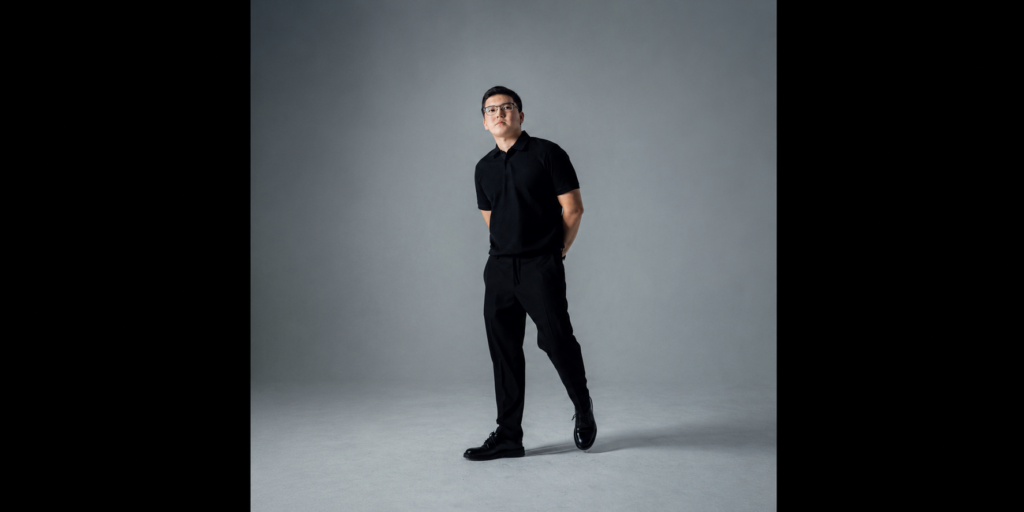
At 25, Kanybek Kalmatov is taking on a subject many older directors might have avoided: Chinghiz Aitmatov, Kyrgyzstan’s most internationally recognized writer and a figure deeply embedded in the country’s cultural identity. Kalmatov, a cinematographer and graduate of VGIK, the prestigious Moscow film school, is making his directorial debut with Aitmatov, billed as Kyrgyzstan’s first full-length feature film about the writer’s life and career. The project has already drawn attention beyond Kyrgyzstan, not least because Russian actor Sergey Bezrukov has joined the cast. For Kalmatov, the film is also personal. He first encountered Aitmatov as a schoolboy through The Little Soldier, and later found that even at film school in Moscow, Kyrgyzstan was often viewed through the writer’s name. Now, after months of research and nearly a year spent developing the screenplay, he says he is ready to take on a life that one film can only partly contain. The Times of Central Asia spoke with Kalmatov about why he chose a biopic rather than an adaptation, how he approached Aitmatov’s life at such a young age, and why he hopes the film will send younger viewers back to the writer’s books.   TCA: You have chosen an ambitious project for your directorial debut. How did the film come about? Kanybek Kalmatov: Since childhood, there have been two stories I always dreamed of filming. The first is about my parents, because they have an incredible love story. The second is about Aitmatov. It wasn’t only his works that fascinated me. It was the scale of his personality, how determined he was and how many different things he managed to do at the same time. I fell in love with Aitmatov when I was about 12, after reading The Little Soldier.  It’s about a boy whose father died in the war. Since then, Aitmatov’s works have always stayed with me. Even at VGIK, where I studied, people often saw me through that lens: “You’re from Kyrgyzstan? The homeland of Aitmatov?” For us, he’s not just a writer; he’s part of our cultural code. So I felt that, sooner or later, this film was bound to enter my life. TCA: Were you afraid the project might not work? Kanybek Kalmatov: No. Probably because I believe strongly in intention. Any big undertaking starts with that. If your motivation is right and you understand why you’re doing it, things begin to fall into place. From the start, my intention was pure. I never saw this film as a way to gain fame or prove something to anyone. I wanted to tell the story honestly of someone who means so much to our culture. TCA: Don’t you think one has to “grow into” Aitmatov first? Kanybek Kalmatov: There are topics you need to mature into. But if you wait for the perfect moment, you may never make anything at all. Maybe if I waited another 15 years, I would approach this story differently. Or maybe I’d never dare. Personally, I respect people who aren’t afraid...

4 months ago

TCA Interview: Director Yernar Nurgaliyev: “It’s Time for Kazakh Cinema to Make Its Mark on the World”

Yernar Nurgaliyev still describes painting as his first love. Only now, instead of a brush, he uses a camera, and instead of a canvas, a screen. Today he shoots comedies, and dreams of a Kazakh multiverse where heroes never die. He is certain of one thing: Kazakh culture will be eternal, and he is doing everything possible to make it so. The Times of Central Asia spoke with the director about how he entered film, what he plans to shoot next, and why he believes it is time for Kazakhstan to make itself known to the world. TCA: Your films are always visually striking. Is this because you were originally trained as an artist? Nurgaliyev: Yes. I graduated from art college, then enrolled at the Zhurgenov Academy of Arts to study set design. I thought I would deepen my craft, but the first courses turned out to be a repeat of the college programme. I was very bored, so I decided to go to work. I didn’t start with music videos, but as an assistant propmaster. At that time, senior students recruited assistants from among firstyear students. An energetic girl, a production designer, asked me to help her with her diploma. Before that, I wasn’t interested in cinema at all, I lived for painting: I painted from life and did portraits. But when I saw the filmset, it was “wow.” I realised I wanted to work there. And I stopped going to the academy. I wanted to quit, but they wouldn’t let me. TCA: But you still got your diploma? Nurgaliyev: Yes, although it was difficult. I had nothing to do at the academy, still life, portraits, I had already done all that in college. There, they didn’t break us but helped us find our own style. At the academy, it was the opposite: the teacher said, “Draw like me.” But I can’t draw like someone else. I can only draw in my own way. TCA: Do you paint now? Nurgaliyev: I hardly have any time, but I recently picked up a brush again, and my hand remembers everything. Oil, watercolour, gouache, it’s as if there was no break. I am grateful to my hand; it remembers everything it was taught. TCA: Which is more important, talent or perseverance? Nurgaliyev: There are people who are gifted by God. But a gift is only the beginning. If you slack off and don’t develop, nothing will come of it. The worst thing is when a person is gifted but does nothing with it. I don’t sit still. If I have one day without work, it feels like I haven’t filmed for a year. I always need to be on the move. If the pause drags on, I start calling my friends myself: “Let’s come up with something.” [caption id="attachment_39639" align="aligncenter" width="300"] @Galiya Baizhanova[/caption] TCA: This year, you turned down many projects, choosing instead to focus on another film. Is this a new stage? Nurgaliyev: I’ve matured. Next year, I plan to shoot three of...

12 months ago
