
• KGS/USD = 0.01144 0%
  • KZT/USD = 0.00192 -0%
  • TJS/USD = 0.10895 -0%
  • UZS/USD = 0.00008 0%
  • TMT/USD = 0.28490 0%
  • KGS/USD = 0.01144 0%
  • KZT/USD = 0.00192 -0%
  • TJS/USD = 0.10895 -0%
  • UZS/USD = 0.00008 0%
  • TMT/USD = 0.28490 0%
  • KGS/USD = 0.01144 0%
  • KZT/USD = 0.00192 -0%
  • TJS/USD = 0.10895 -0%
  • UZS/USD = 0.00008 0%
  • TMT/USD = 0.28490 0%
  • KGS/USD = 0.01144 0%
  • KZT/USD = 0.00192 -0%
  • TJS/USD = 0.10895 -0%
  • UZS/USD = 0.00008 0%
  • TMT/USD = 0.28490 0%
  • KGS/USD = 0.01144 0%
  • KZT/USD = 0.00192 -0%
  • TJS/USD = 0.10895 -0%
  • UZS/USD = 0.00008 0%
  • TMT/USD = 0.28490 0%
  • KGS/USD = 0.01144 0%
  • KZT/USD = 0.00192 -0%
  • TJS/USD = 0.10895 -0%
  • UZS/USD = 0.00008 0%
  • TMT/USD = 0.28490 0%
  • KGS/USD = 0.01144 0%
  • KZT/USD = 0.00192 -0%
  • TJS/USD = 0.10895 -0%
  • UZS/USD = 0.00008 0%
  • TMT/USD = 0.28490 0%
  • KGS/USD = 0.01144 0%
  • KZT/USD = 0.00192 -0%
  • TJS/USD = 0.10895 -0%
  • UZS/USD = 0.00008 0%
  • TMT/USD = 0.28490 0%
15 December 2025

Our People > Jonathan Campion

Jonathan Campion's Avatar

Jonathan Campion

Senior Editor

Jonathan Campion has worked in the Eurasia region since 2007. After leaving Exeter University with a degree in Russian Language, he worked as a writer, editor, analyst and translator for international law firms, market research firms and business forums serving the CIS region's major industries.

With a passion for Central Asia, he has covered the region in esteemed publications such as the Lonely Planet, Open Central Asia magazine, and National Geographic Traveler.

Jonathan's first book, about a sports team from the Eurasia region, was shortlisted at the Charles Tyrwhitt Sports Book Awards in 2025.

Articles

Tokayev Backs Azerbaijan to Join Central Asia-U.S. Summit

Kazakhstan’s President Kassym-Jomart Tokayev has said he would welcome Azerbaijan’s participation in the upcoming Central Asia-U.S. Summit in Washington. In an exclusive comment to Azerbaijani outlet Minval Politika, Tokayev praised Azerbaijan’s regional role and even called the country a “natural part of Greater Central Asia.” “I consider Azerbaijan’s participation in such an important forum desirable. Given its energy resources, favorable geographic location, strategic vision, and the political will of President Ilham Aliyev, this country plays a crucial role in the South Caucasus and beyond, essentially becoming a regional transport, logistics, and energy powerhouse,” Tokayev said. “Azerbaijan can be considered a natural part of Greater Central Asia. I also consider President Donald Trump’s initiative to hold a summit in Washington in the very near future to be very timely and worthy of support. I am confident this event will be productive and mutually beneficial,” the Kazakh leader noted.  The planned summit on November 6 falls under the C5+1 format that brings together the U.S. and the five countries of Central Asia. It will mark the first such gathering held in Washington, after an initial presidential meeting took place on the sidelines of the UN General Assembly in 2023. Donald Trump has formally invited the leaders of Kazakhstan, Kyrgyzstan, Tajikistan, Turkmenistan, and Uzbekistan to attend. The meeting will coincide with the tenth anniversary of the C5+1 diplomatic platform, which was launched in 2015 to deepen cooperation between Central Asia and the U.S. on security, economic and other issues. Tokayev’s remarks about Azerbaijan reflect a growing view that Azerbaijan is increasingly integrated with Central Asia. In recent years, Baku has been invited to Central Asian heads-of-state consultative summits as a special participant, underscoring what analysts call the “growing importance of the South Caucasus as a gateway for Central Asia to European markets”. During the most recent Central Asia leaders’ meeting in Astana in August, Azerbaijan was designated a key partner in regional initiatives, and Aliyev stressed that Azerbaijan and the Central Asian countries “represent a single historical, cultural, and geopolitical space” with deep-rooted ties. That brotherly affinity is reinforced by Turkic cultural links and mutual strategic interests. Tokayev himself, in talks with Aliyev, has called Azerbaijan “a regional power” and “a fraternal state” for Kazakhstan. Azerbaijan indeed wields significant influence as an energy and transport hub connecting Eurasia. The country is a major oil and gas producer that has steadily expanded exports to Europe, and it anchors the Trans-Caspian trade routes linking China and Central Asia to the West via the Caucasus. Since Russia’s 2022 invasion of Ukraine disrupted traditional east–west corridors, the so-called Middle Corridor -- running from Central Asia across the Caspian Sea through Azerbaijan -- has taken on greater importance. Kazakhstan and Azerbaijan have positioned themselves as “key actors” in this reconfigured Eurasian logistics network that bypasses Russian territory. The United States is also paying close attention to these routes: officials have indicated that the Washington summit will spotlight development of the Trans-Caspian corridor, with the U.S. “keen to promote logistics...

2 months ago

Open for Business: New Reforms Accelerate Investment in Uzbek Companies

Uzbekistan’s business sector is in a period of rapid transformation. The catalyst for this is the government's newest set of economic reforms, through which it is seeking to attract long-term investment. New legislation, targeted incentives for enterprises, and an influx of international partnerships are changing the way that companies operate and invest. A key part of this transformation is the government’s effort to create a more predictable and transparent regulatory environment. The World Bank has noted that Uzbekistan’s reform strategy is centered on expanding trade integration and accelerating the long-planned privatization of state assets. The country’s priorities include accession to the World Trade Organization, which has brought about legal adjustments designed to align Uzbek standards with global norms. Investor confidence has been encouraged by new policies that now make it easier to live and work in Uzbekistan. A five-year “golden visa” now makes it possible for foreign nationals who invest at least $250,000 to receive residency. This simplifies procedures for those developing long-term projects. Another focus for the government is financial liberalization. The International Monetary Fund recently noted that state ownership of banks is expected to fall to around 40 percent next year, which creates space for potential private lenders and foreign capital. Recent data suggests that these reforms are beginning to bear fruit. In the first quarter of 2025, Uzbekistan attracted about $8.7 billion in new foreign investment, according to figures published by UzDaily, with the total inflow this year projected to reach $42 billion. The Times of Central Asia has reported that over the past eight years, the country has absorbed more than $113 billion in foreign capital. These numbers highlight the nation's growing appeal to international investors. Alongside the surge in foreign activity, the authorities are developing policies to encourage domestic entrepreneurs. There are now more than 370,000 registered small and medium-sized businesses in Uzbekistan, which now receive more support from the government through simpler registration rules and targeted tax incentives. Private industrial parks in Tashkent and Samarkand are driving innovation in the textiles, IT and construction sectors, and creating prospective local jobs. The business community has taken notice of these reforms. At the Tashkent International Investment Forum in June, European delegates described Uzbekistan as a country “undergoing large-scale transformation”, with a growing array of opportunities for international investors. Guests in Tashkent praised efforts to increase transparency in business and cut back on beaurocracy. At the same time, they stressed the need to be consistent in their implementation across regions. Despite tangible progress, challenges remain. Inflation has remained high, and analysts continue to point to structural issues hampering growth. These include an underdeveloped financial system and a large informal economy. Foreign businesses operating in Uzbekistan are also advised to pay close attention to compliance and labor law as the legal environment evolves. Two of the government's priorities stand out in the short term. The first is the privatization of major state assets in the energy, transport and telecommunications industries -- part of the 2025 national economic program...

2 months ago

Uzbekistan’s Akbar Juraev Takes Three Golds at World Weightlifting Championships

Uzbek weightlifter Akbar Juraev delivered one of the standout performances of the 2025 World Weightlifting Championships by claiming three gold medals in the men’s 110 kg class, breaking world records and asserting his dominance in the sport. The championships, held October 2–11 in Førde, Norway, drew nearly 500 athletes from 87 countries to compete under the auspices of the International Weightlifting Federation (IWF). On Day 9, the 110 kg division was one of the marquee finals, especially as two Uzbek Olympic champions – Juraev and Ruslan Nuridinov – faced off in the same category.  Juraev, 25, came in with a formidable résumé: already a world champion in 2021 and 2023, and an Olympic gold medalist from Tokyo 2020. After a near-miss at the 2024 Paris Games, where he took silver in the 102 kg class, Juraev said he was “back at my right weight” and hungry for redemption.  In Norway, Juraev delivered a flawless sequence. On his third snatch attempt he lifted 196 kg, setting a new world record in the snatch. He followed that with a 232 kg clean and jerk, reaching a combined total of 428 kg, also a world record. He even attempted 245 kg in the clean and jerk, later joking that he was “just messing around.” After the victory, Juraev said, “I am back at my right weight. I can eat properly, train properly. I feel good, very happy.” He added that last year’s Olympic disappointment still drives him: “That’s why I have silver and not gold.”  Juraev’s sweep of snatch, clean & jerk, and total golds made him a three-time world champion. Meanwhile, his compatriot Nuridinov, the 33-year-old veteran and Rio 2016 Olympic champion, also shone in Førde. He lifted 186 kg in the snatch and 228 kg in the clean and jerk, earning two bronzes (in clean & jerk and total) with a combined 414 kg. His performance underscored not only his own resilience but also Uzbekistan’s continuing dominance in the world of weightlifting.

2 months ago

Once Lost from Kyrgyzstan, Little Bustard Population Soars in Northern Valleys

The Little Bustard, a pheasant-sized bird native to Asia and southern Europe, has reached a nesting population of around 1,900 individuals in Kyrgyzstan this year. This marks a remarkable recovery, as the species was nationally extinct in the country less than 20 years ago. The Little Bustard was listed as extinct in the Red Book of Kyrgyzstan in 2006. However, recent ornithological surveys have discovered breeding populations in the Chuy and Talas valleys in the north of the country, thought to be between 1,400 and 1,900 individuals. Signs of a wider recovery first appeared in 2009, with the discovery of four nests in the Talas valley. In 2019 a nest outside Bishkek suggested that Little Bustards were returning to the Chuy valley. Once common throughout the country, the species' decline was caused by the industrialization of Soviet Kyrgyzstan's agriculture industry in the 1950s, which destroyed the birds’ natural habitat. By the 1970s only a few residual groups remained, in the non-cultivated steppe areas near the Kazakh border. In recent years, surveys by the Ornithological Society of the Middle East (OSME) each spring have tracked their breeding activity, using listening points spaced through known and potential habitats. While Little Bustards' migratory and wintering patterns eastwards remain mostly unknown, recent observations suggest numbers in wintering areas may also be rising. Despite the strong growth of its population, the bird remains vulnerable in Central Asia. Current threats to their habitats are a consequence of modern changes in farming, including increased use of pesticides, and the turning of traditional steppe into irrigated crops. Illegal hunting of Little Bustards is also a problem. The species is currently classified in the national Red Book as Near Threatened. The Little Bustard is also considered Near Threatened by the International Union for Conservation of Nature (IUCN).  

2 months ago

Silk Road Shipwrecks: Virtual Museum Opens Maritime Section

One of Central Asia’s most engaging new cultural projects took on a new dimension last month. The Silk Road Virtual Museum, an online collection of over 20 exhibitions of pre-16th-century Eurasian life and art, has recently opened a section for the ancient trade route’s maritime history. An initiative by the Institute of Asian Studies at Leiden University in the Netherlands, the site allows visitors to move through themed rooms, just as they would wander through a physical museum. Beginning on a map of the world on the museum’s homepage, visitors click on the Silk Road locations that they wish to discover. Each pin on the map takes them to a video replicating a guided tour of art and artefacts from that place at a certain historical era. Just as in a real museum, each exhibit has an information panel explaining what the object is. Life on the Central Asian parts of the Silk Road is shown in exhibitions to Sogdian traders in Samarkand (6th-8th centuries), with camels often featuring in their ceramic art, and a room dedicated to ancient caravanserais (inns that provided lodging for travellers), including at Tash Rabat in Kyrgyzstan. Launched in 2024, the Silk Road Virtual Museum already displays over 1,300 objects in total. Their geographical reach mainly stretches from Venice to China, as the Silk Road is often imagined today – but there are collections from places as unexpected as Sweden and Indonesia.  With the launch of the maritime section on 16 September, their scope now spans seas as well as deserts. Virtual visitors can travel along the coasts of the Indian Ocean, where there are already seven shipwreck exhibitions, each with its own unique story. The project is managed by VirtualMuseum360 and supported by an international network of scholars, who aim to make the Silk Road’s many eras and strands accessible to people wherever they are in the world. The web pages have two advantages over traditional museums, in that they are free to access and open 24/7.  Leading the Silk Road Virtual Museum (SRVM) is Professor Richard Griffiths, the director of Leiden University’s ‘New Silk Roads’ programme. A distinguished economic historian who has specialised in the history of trade, during a spell teaching in the Chinese city of Chengdu, Griffiths took an interest in China’s Belt and Road Initiative. When he began to trace the policy’s history, he realised that the origins of China’s modern trade with the West can be found in the myths and realities of the ancient Silk Roads. The key to making SRVM work, he says, is collaboration. Griffiths tells The Times of Central Asia: “We’re not replacing real museums – we’re working alongside them. Everything we do depends on the knowledge of academics, archaeologists, and conservators. Together we can make heritage accessible to anyone, anywhere, without losing its depth or integrity.” “Our visitors are a real mix,” he adds. “Often people tell me they use SRVM before a trip, so that when they see objects in a real museum,...

2 months ago

Bishkek’s Iconic Elm and Poplar Trees Suffering From Beetle Infestation

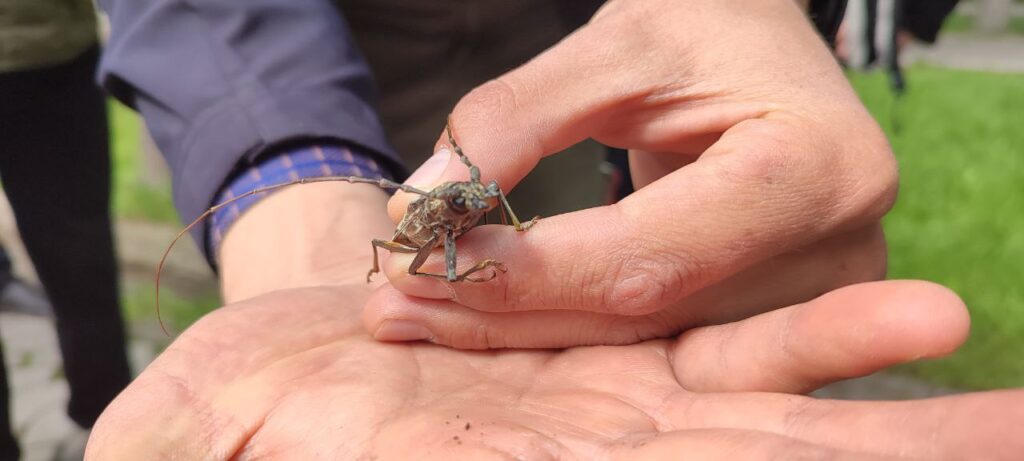
The larvae of the longhorn beetle (Aeolesthes sarta), commonly known as the woodcutter beetle, are destroying green spaces in Kyrgyzstan's capital Bishkek. The beetle appeared in the city ten years ago, but biologists have explained that its population has recently increased to worrying levels. The situation is being aggravated by the shortage of irrigation water in Bishkek, a result of faulty irrigation facilities. Trees in the capital are beginning to dry out, and their immunity to the effects of larvae infestation is weakening. The longhorn beetle lays its larvae in the bark of a tree, and as it matures, it eats the tree from the inside. The larvae's favorite trees, the elm and poplar, are the most common trees in Bishkek. Unlike other pests, the beetle cannot be irradicated with chemical treatments. Infested spaces must be destroyed completely. The Bishkek Zelenkhoz municipal enterprise, responsible for maintaining the city's green spaces, has reported that 90% of all adult elm trees and half of all poplars in the capital have become infected with longhorn beetle larvae. "Trees with signs of infestation remain green, and do not die immediately. After a while, the top dries up, and then the entire trunk follows. The death process takes about five years," Yuri Borvinok, head of the laboratory for woody and bush plants at the Kyrgyz Academy of Sciences, told The Times of Central Asia. Kyrgyz authorities are having difficulty controlling pests because of current laws. In Kyrgyzstan's populated areas, chemical treatment of greenery is prohibited to prevent harm to people, and burning plant debris such as leaves and branches is also forbidden. "When we used to burn plants and foliage, these measures deterred the miner moth, woodcutter beetles, and other pests; today, nothing prevents the mass spread of beetles," Borvinok said. Municipal officials are looking for an effective method to control the beetles. "Some trees we cut down, take out of town, and burn there. In addition to the elm trees, the woodcutter attacks poplars. There is a danger that it will move to other trees. This beetle can not be taken down by anything. That's why we are planting new species, linden, maple, and acacia," said Zhanybek Zhumaliyev, head of the Zelenkhoz enterprise's planning department.

1 year ago