• KGS/USD = 0.01144 0%
  • KZT/USD = 0.00204 0%
  • TJS/USD = 0.10422 -0.1%
  • UZS/USD = 0.00008 0%
  • TMT/USD = 0.28571 0%
  • KGS/USD = 0.01144 0%
  • KZT/USD = 0.00204 0%
  • TJS/USD = 0.10422 -0.1%
  • UZS/USD = 0.00008 0%
  • TMT/USD = 0.28571 0%
  • KGS/USD = 0.01144 0%
  • KZT/USD = 0.00204 0%
  • TJS/USD = 0.10422 -0.1%
  • UZS/USD = 0.00008 0%
  • TMT/USD = 0.28571 0%
  • KGS/USD = 0.01144 0%
  • KZT/USD = 0.00204 0%
  • TJS/USD = 0.10422 -0.1%
  • UZS/USD = 0.00008 0%
  • TMT/USD = 0.28571 0%
  • KGS/USD = 0.01144 0%
  • KZT/USD = 0.00204 0%
  • TJS/USD = 0.10422 -0.1%
  • UZS/USD = 0.00008 0%
  • TMT/USD = 0.28571 0%
  • KGS/USD = 0.01144 0%
  • KZT/USD = 0.00204 0%
  • TJS/USD = 0.10422 -0.1%
  • UZS/USD = 0.00008 0%
  • TMT/USD = 0.28571 0%
  • KGS/USD = 0.01144 0%
  • KZT/USD = 0.00204 0%
  • TJS/USD = 0.10422 -0.1%
  • UZS/USD = 0.00008 0%
  • TMT/USD = 0.28571 0%
  • KGS/USD = 0.01144 0%
  • KZT/USD = 0.00204 0%
  • TJS/USD = 0.10422 -0.1%
  • UZS/USD = 0.00008 0%
  • TMT/USD = 0.28571 0%

Our People > Laura Hamilton

Laura Hamilton's Avatar

Laura Hamilton

Contributor

Laura Hamilton MA, is the former Director of the Collins Gallery at the University of Strathclyde. She first visited Kyrgyzstan in 2011 to research and curate a major exhibition of contemporary textiles and fashion. Since 2012, she has worked as an editor on over thirty translations of Central Asian novels and collections of short stories. In more recent years, her work has focused on editing translations of Kyrgyzstan's great epics -'Ak Moor', Saiykal', Janysh Baiysh', 'Oljobai and Kishimjan', 'Dariyka', 'Semetey' and 'Er Toshtuk' for The Institute of Kyrgyz Language and Literature, and the Kyrgyz-Turkish Manas University.

Articles

From Kyrgyzstan to Scotland: Shahsanem Murray’s Naked Nimbus Explores Love, Loss, and Belonging

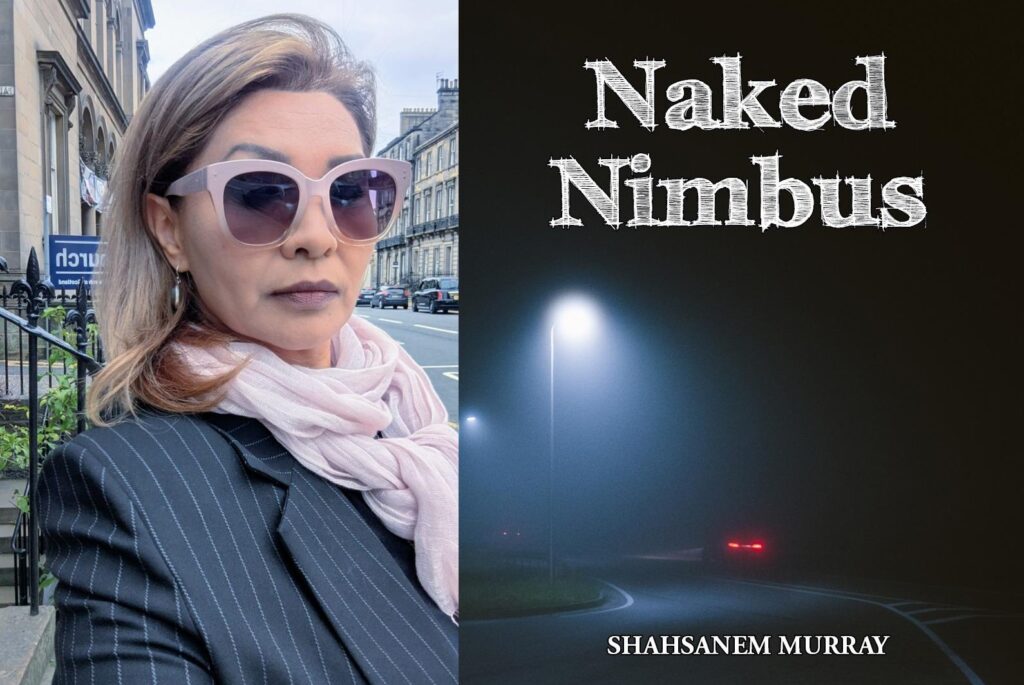
In the wake of Finding the Holy Path, published in 2014, and Cold Shadows in 2016, Naked Nimbus is Shahsanem Murray’s long-awaited third novel. Once again, Murray’s multifaceted plot is woven with intrigue and mysticism, referencing the stark cultural contrasts between life in Central Asia under the Soviet regime and that in the West. The story focuses on Arthur, a young, ambitious artist struggling to find his way in the world and recognition for his craft. Haunted by his role in a fatal accident, he searches for atonement whilst battling to maintain his moral, personal, and professional integrity. Faced by numerous challenges, Arthur experiences a storm of emotions from despair to euphoria, and, highly sensitive to his surroundings and everyone he meets, the thin line between reality and fantasy blurs as he continues to hold out hope for true love. Friendships are put to a test, and he must muster the strength to forgive both himself and those closest to him for acts of disloyalty. Arthur’s journey takes him across the globe, from his Soviet homeland to Scotland, France, and finally, the wilds of Siberia. Often feeling dislocated, he finds himself questioning his identity and self-worth both as a man and an artist; a situation compounded by supernatural encounters. Murray further explores the human condition and the problems faced by society at large by introducing parallel stories of other characters’ lives, including Arthur’s acquaintances and his friend Alik’s father, Turdubek, as he searches for a soulmate under the Soviet regime. Like the Surrealist paintings which inspired it, this novel is filled with poignant visual imagery and symbolism, which, open to interpretation, lead the reader to ponder the outcome of events. Editor Laura Hamilton caught up with Shahsanem Murray to discuss the author’s new novel: LH: What is the meaning or inspiration behind the book’s title? SM: I wanted the title to be both poetic and to act as a key for the reader’s attention. After writing the first two chapters, I realized that the original title wouldn’t work. Then, one Sunday morning, my business partner Gordon Murray mentioned the word ‘nimbus.’ Unfamiliar with the term, I began searching for images and decided that ‘Naked Nimbus’ would be a perfect description of Arthur’s plight. As a man without wings, he is unable to fly, and so, if he is to soar in his life’s journey, he must explore, harness, and embrace the moral and cultural tenets of the society in which he lives and works. LH: The video trailer recreates the opening violent murder scene, but unlike typical crime fiction, the book focuses on its prolonged mental impact on the protagonist. Was it your intention that readers view crime from a different perspective? SM: The video trailer was carefully created as a marketing tool to entice readers. It sets the scene for the impact the accidental murder has on the protagonist’s life. I hope it doesn’t disappoint! [video width="1080" height="1920" mp4="https://timesca.com/wp-content/uploads/2025/10/WhatsApp-Video-2025-10-06-at-18.28.58.mp4"][/video] LH:  In common with your previous novels, the new book...

5 months ago

Rejuvenating Kyrgyzstan’s Traditional Performing Arts: Razia Syrdybaeva on the Ustatshakirt Ensemble

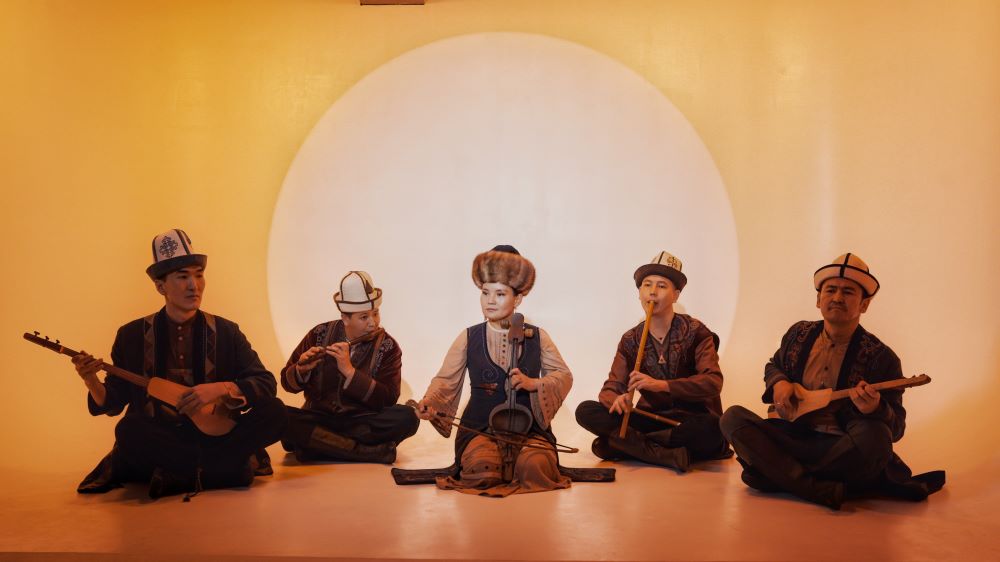
On August 13, Kyrgyzstan’s Ustatshakirt Ensemble, a five-piece group of traditional musicians, gave its first ever performance at Edinburgh’s International Festival. Following a mesmerizing, sell- out concert, Kyrgyz author Shahsanem Murray spoke on behalf of TCA, to musicologist Razia Syrdybaeva about Ustatshakirt , its origins, aims and future plans. [caption id="attachment_23314" align="aligncenter" width="1665"] Photo: TCA Razia Syrdybaeva and the Ustatshakirt Ensemble[/caption]   TCA:  Razia, please tell us a little about yourself and the Ustatshakirt Ensemble. I am a musicologist, producer, and researcher of Kyrgyz culture, and hold a PhD in Philology. Twenty years ago, I established Ustatshakirt; an NGO educational organization with a mission to preserve Kyrgyzstan’s centuries-old musical heritage. The name Ustatshakrit - Ustat meaning master, and shakirt, student - embodies our aim to serve as a bridge between old masters and young musicians. Founded in 2003, with support from the Aga Khan Music Programme (AKA) the Ustatshakrit Center now has branches offering tuition in music, literature, and theatre to pupils in 41 primary & secondary schools across Kyrgyzstan. Over the past twenty years, through the development of faster and more effective methodology, we have taught over 10,000 children to play traditional Kyrgyz instruments such as the komuz and temir ooz komuz. We also provide tuition in other performing art forms including basic theater skills in our ‘dramalab’, and singing epics. The key goal of our work is to introduce children to their native music and help them appreciate and fall in love with their ancient culture. This is very important, especially in the present climate where exposed to external influences and technology, young people are increasingly moving away from their roots, their native language, and music. Attracted by modern rhythms and gadgets, they have little time and few opportunities to listen to their ancestral music. To more effectively engage both our pupils and audiences, we are constantly implementing the development of special methodological textbooks, music notation programs, etc. Authored by our teachers, musicians and prominent figures in the Arts, our now comprehensive collection of publications is used by Kyrgyzstan’s music educational institutions, from children's art schools to universities and conservatories. TCA: Concerts of traditional Kyrgyz music accompanied by excerpts from the great Manas epic are rarely performed in the UK, and especially, Scotland. What challenges did you face in securing a venue at the Edinburgh Festival? We heard about the festival several years ago. Getting to Edinburgh involved a lot of planning and expense and was only made possible thanks to the generous support of the Aga Khan Trust for Culture, the Aga Khan Music Program and its director Fairouz Nishanova, and our sponsors Sir Ewan & Lady Brown together with Flure Gossart. Work on repertoires for international audiences has now been ongoing for two years, and over many months prior to playing at Edinburgh, we focused on creating a program that would embrace the rich traditions of Kyrgyzstan’s music and culture. TCA: What were your impressions of the Edinburgh audience? We were all delighted by the high...

1 year ago

Silk Road Treasures: A Few of My Favorite Things

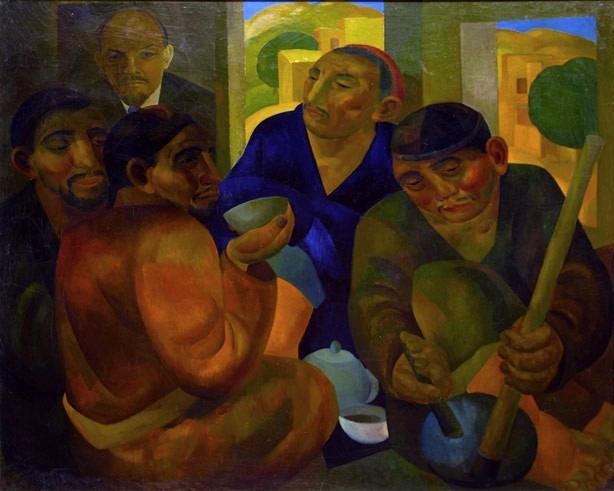
Under the banner of "Silk Road Treasures", TCA’s people – journalists, editors, authors – share their personal experiences of Central Asia and her people, and by listing their favorite places, literature, films, art, architecture and archaeological sites, alongside encounters with customs and traditions, provide pointers for readers wishing to visit the region. Stephen M. Bland - Senior Editor and Head of Investigations Architecture: Bukhara - The Kalon Trinity [caption id="attachment_21936" align="aligncenter" width="2560"] The Kalon Mosque, Bukhara; image: TCA, Stephen M. Bland[/caption]   From the ninth century Pit of the Herbalists to the Ismail Samani Mausoleum and the bird market, the old town in Bukhara isn’t really about its separate sights, it’s the sum of its parts, the timeless city permeated by an air of antiquity like a window into the past. That having been said, however, the jewel in the crown of Bukhara is the trinity of the Kalon Mosque, Minaret, and the Mir-i-Arab Madrasah. Built as an inland lighthouse for desert caravans, the Kalon Minaret - “great” in Tajik - was probably the tallest building in Central Asia upon its completion in 1127. The third minaret to have been built on this site, previous incarnations had caught fire and collapsed onto the mosque below, officially because of the “evil eye.” Also known as the “Tower of Death,” over the centuries the minaret has seen countless bodies sewn into entrail catching sacks and tossed from its 47-meter-tall lantern. Particularly popular during Manjit times, this practice survived until the 1920s. [caption id="attachment_21937" align="aligncenter" width="2560"] The lantern of the Kalon Minaret, Bukhara; image: TCA, Stephen M. Bland[/caption]   Home of the first recorded use of the now ubiquitous blue tile in Central Asia, the 14 distinct bands of the minaret are majestic in the pink evening light, its scale and intricacy remarkable. While the sense of history lingers, everyday life continues unabated at its stout base, and when the heat of the day abates, head-scarfed babushkas sat chit-chatting on the cool stone steps of the Madrassa, while kids kick soccer balls against the ancient stones.   Art: The State Art Museum of the Republic of Karakalpakstan, Nukus [caption id="attachment_21939" align="aligncenter" width="500"] Lev Galperin - "On his Knees"[/caption]   Once a thriving agricultural center, Karakalpakstan is now one of the sickest places on Earth. Respiratory illness, typhoid, tuberculosis and cancers are rife, birth defects and infant mortality rates amongst the highest in the world. The deliberate destruction of the Aral Sea for irrigation purposes has caused toxic dust storms so vast they are visible from space, ravaging a 1.5-million-kilometre square area. Spreading nitrates and carcinogens, these storms used to hit once every five years, but now come ten times a year. Yet it is in the capital of Karakalpakstan, Nukus, that a remarkable collection of art has survived in part because of its inhospitable location. Risking denouncement as an “enemy of the people,” obsessive Ukrainian-born painter, archaeologist and art collector, Igor Savitsky spirited away thousands of avant-garde pieces banned in the Soviet Union....

2 years ago