• KGS/USD = 0.01144 0%
  • KZT/USD = 0.00214 0%
  • TJS/USD = 0.10508 0.48%
  • UZS/USD = 0.00008 0%
  • TMT/USD = 0.28490 -0.28%
  • KGS/USD = 0.01144 0%
  • KZT/USD = 0.00214 0%
  • TJS/USD = 0.10508 0.48%
  • UZS/USD = 0.00008 0%
  • TMT/USD = 0.28490 -0.28%
  • KGS/USD = 0.01144 0%
  • KZT/USD = 0.00214 0%
  • TJS/USD = 0.10508 0.48%
  • UZS/USD = 0.00008 0%
  • TMT/USD = 0.28490 -0.28%
  • KGS/USD = 0.01144 0%
  • KZT/USD = 0.00214 0%
  • TJS/USD = 0.10508 0.48%
  • UZS/USD = 0.00008 0%
  • TMT/USD = 0.28490 -0.28%
  • KGS/USD = 0.01144 0%
  • KZT/USD = 0.00214 0%
  • TJS/USD = 0.10508 0.48%
  • UZS/USD = 0.00008 0%
  • TMT/USD = 0.28490 -0.28%
  • KGS/USD = 0.01144 0%
  • KZT/USD = 0.00214 0%
  • TJS/USD = 0.10508 0.48%
  • UZS/USD = 0.00008 0%
  • TMT/USD = 0.28490 -0.28%
  • KGS/USD = 0.01144 0%
  • KZT/USD = 0.00214 0%
  • TJS/USD = 0.10508 0.48%
  • UZS/USD = 0.00008 0%
  • TMT/USD = 0.28490 -0.28%
  • KGS/USD = 0.01144 0%
  • KZT/USD = 0.00214 0%
  • TJS/USD = 0.10508 0.48%
  • UZS/USD = 0.00008 0%
  • TMT/USD = 0.28490 -0.28%

Our People > Tamila Olzhbaekova

Tamila Olzhbaekova's Avatar

Tamila Olzhbaekova

Journalist

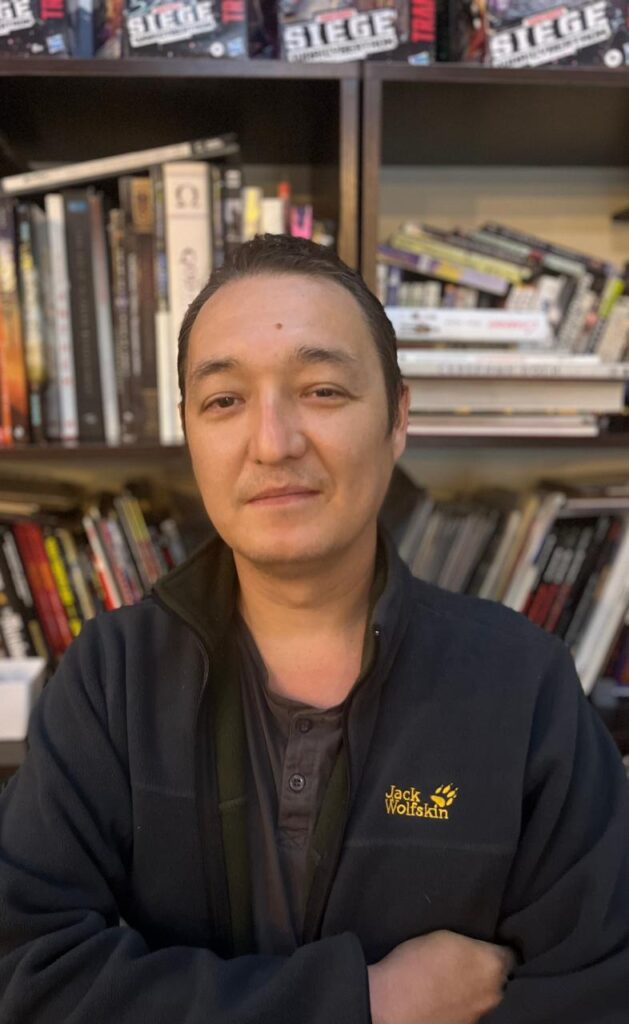
Tamila Olzhabekova is a journalist, award-winning illustrator, and a volunteer, curator and event organizer in the DOSTAR diaspora of Kazakhstan organization.
Prior to working for The Times of Central Asia, she has written for Peter Tv, First Line, Five Corners, Sport.Kz, and numerous other publications. A campaigner for interethnic harmony and the protection of stray animals, she studied at St. Petersburg State University.

Articles

 Astana Prepares to Welcome Visitors in Run-Up to the 5th World Nomad Games

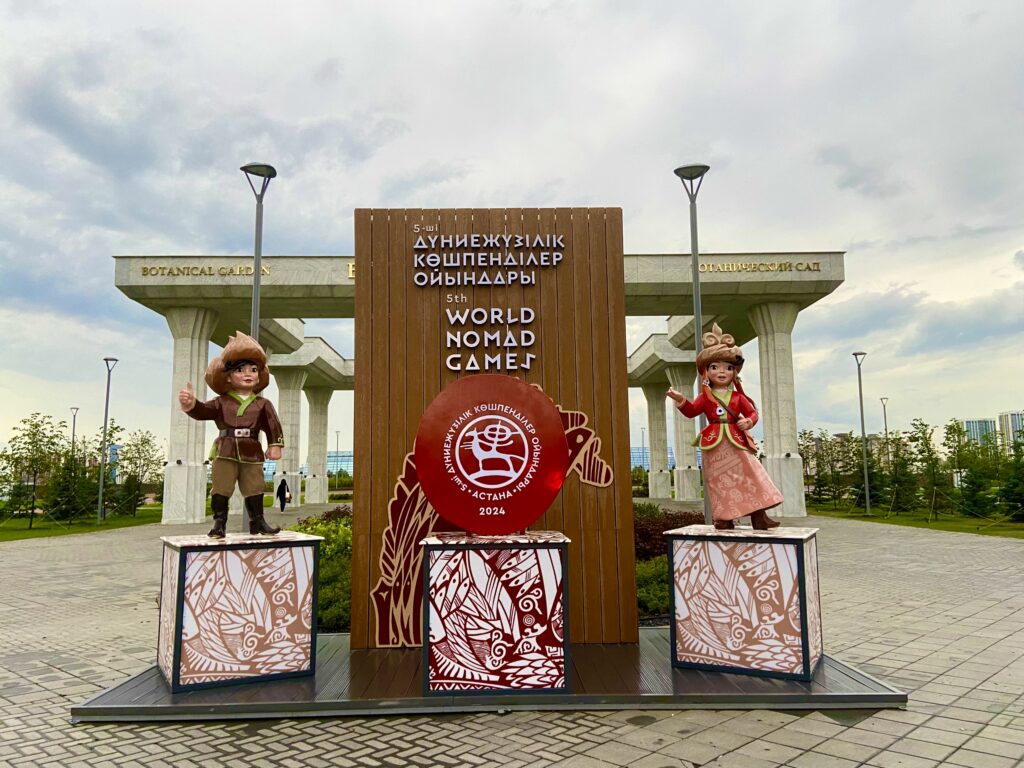
There is a distinctive festive fizz about Astana as the city prepares to host the 5th World Nomad Games. In celebration and in readiness to welcome visitors, the streets, shopping centers, public spaces and even buses, are already festooned with flags and colorful decorations in keeping with this year’s theme “The Gathering of the Great Steppe.” Amid banners bearing the Games' mascots and logo of a solar horseman against a background of Carnelian red, symbolizing energy and vitality, traditionally attired locals, some on horseback and others carrying hunting eagles, proudly roam the streets to promote both the event and their country’s cultural heritage. Taking place from 8 -13 September, the much-anticipated Games will include 21 sports with some 3000 participants from over 85 countries competing in six venues spread across the city: the Astana Arena Stadium, Kazanat Hippodrome Racetrack, Zhaksylyk Ushkempirov Wrestling Palace, Alau Ice Palace, Qazaqstan Athletic Sports Complex, and Duman Complex. [caption id="attachment_21497" align="aligncenter" width="2560"] photo TCA: Games banner [/caption] Not exclusive to sport, the Games also include Cultural and Science programs. On a ten- hectare site close to the Kazanat race course, an Ethno-Aul has been erected to  house an expansive array of exhibitions, performances and activities related to local customs and cuisine, theater and dance, and traditional craft and music. The equally comprehensive science program, hosted by the National Museum, offers a series of events with a focus on the development of ethno-sports. With the passing years, the Games have become ever-more popular and thanks to the success of a long and concentrated marketing and publicity drive, tours organized by many international travel companies sold-out months ago. As a result, over 100,000 foreign tourists, many of whom have never visited Central Asia, are expected to descend on the city in September. As the Nomad Games approaches, TCA has prepared a list of six must-see sites to encourage visitors to better acquaint themselves with the city, enjoy Astana’s unique atmosphere, and gain a deeper understanding of her cultural and historic heritage as they travel from venue to venue. [caption id="attachment_21472" align="alignnone" width="960"] Photo TCA: Bayterek Tower[/caption] Bayterek Tower Situated on Nurjol Boulevard and erected in August 2002, this 105-metre-high observation tower is a symbol of post-independence Kazakhstan. Its distinctive design was inspired by an ancient Turkic myth in which every year, a sacred bird named Samruk laid an egg (the sun) in the branches of a sacred poplar tree. Once inside, visitors can learn more about the concept behind the tower and its cultural significance, and from the top platform, enjoy breath-taking panoramic views of the city. [caption id="attachment_21474" align="alignnone" width="978"] Photo TCA: Independence Square[/caption] Independence Square At the heart of the city lies Independence Square, surrounded by iconic buildings and monuments. Especially notable is the Kazak Yeli Memorial, a symbol of Kazakhstan’s destiny. Atop its 91- meter tower stands a golden eagle, and around its base, images related to the country’s past and present, from heroic ‘batyrs’ or clan leaders from the Golden Horde and dombra...

2 years ago

Agribusiness Park to be Launched in Kazakhstan’s Akmola Region

The Hungarian company Globalia Ltd is creating agricultural facilities in Kazakhstan’s Akmola region. The new agribusiness park will use industrial technologies developed in Hungary. The eight agribusinesses located at the park will implement sustainable and environmentally friendly technologies, and will allow for products to be traced between the producer and the end consumer. Projects will not require any special funding. The agribusiness park plans to start producing fish farming projects within three years. It will also open a research and development station for growing varieties of various plants. Kazakhstani companies located at the park will have access to new technologies and tools, including the Carbon Farming system, which helps to capture and accumulate CO2 from the soil.

2 years ago

Teacher Alua Zhanatova Outlines the Growing Popularity of the Kazakh Language Amongst Young People

Despite the country gaining independence from the Soviet Union back on 16 December 1991, the predominant language in Kazakhstan has long remained Russian. To address the issue, the government set a somewhat ambitious target that by 2020, 95% of the population would be fluent in Kazakh, and more recently, in late 2023, mooted a “Concept for the Development of Language Policy for 2023-2029". Meanwhile, there are encouraging signs of an increasing interest in the Kazakh language among young people in Kazakhstan. TCA talked to Alua Zhanatova, a teacher and bachelor of TARGU University, about the rejuvenation of the country’s native tongue and its importance for society. TCA: What are your thoughts on the current popularity of studying the Kazakh language? In recent years I have observed significant changes in our young people's attitude towards their native language. For a long time, the Kazakh language was generally perceived as formal and cumbersome but nowadays, young people are becoming more interested in learning and using it in everyday life. TCA: What factors have contributed to the revival of interest in the language? There are several key factors. First, is the noticeable, growth in cultural patriotism, which has led to young people embracing their roots, culture and ancestral language. Second, is the significant impact of contemporary media and social networks on popularizing the Kazakh language. The emergence of bloggers using the Kazakh language, the creation of Kazakh content platforms and active discussion in Kazakh in social networks all contribute to making the language more accessible and appealing. TCA: What role do educational institutions and teachers play in this process? I think educational institutions play a major role. It is important that schools and universities provide good tuition in both the Kazakh language and culture. Many educational institutions have started to develop new curricula that make learning the language more exciting and practical, and the expansion of classes taught in Kazakh in schools and universities is facilitating and spurring students’ desire to learn in their mother tongue. TCA: What is the reaction among young people to new initiatives regarding the use of the Kazakh language? Reactions are mostly positive. Young people who previously dismissed Kazakh, are now showing an interest in learning the language, encouraged by the availability of better resources and new teaching methods. I receive a lot of feedback on how useful and enjoyable it is to learn the language through more engaging activities such as games, quests or even social activities. TCA: How do you see the further development of the Kazakh language among young people? I am optimistic about prospective developments. If existing initiatives continue to develop and new forms and methods of teaching emerge, I am confident that the Kazakh language will become not only an important part of cultural identity, but also an active element of modern life. It is important that efforts continue to keep the Kazakh language alive and engaging for young people.   In addition to Alua, TCA also talked to young people from different...

2 years ago

An Overview of Kazakhstan’s Comic Industry by Oraskhan Zhakup, CEO Khan Comics

TCA: What inspired you to create comics and get involved in the industry?  My entry into the comic book industry was intuitive as opposed to a conscious decision.  I just followed my passion. It all started when aged 10-12 years old, my friends and I drew comic strips in school notebooks and sketchpads and then stapled them together to create homemade comic books. Over time, this childhood hobby became more serious and we formed a club with several members. In 2003, Pavel Shein, Stas Misyurin and I decided to launch a newspaper titled ‘Comics’ which included three comic strips, each spanning around eight pages. The newspaper was black and white, with a circulation of about a thousand copies. Several issues were printed, providing our entry point into the industry. We then started a comic book magazine. After a long hiatus, we organized a comic book exhibition in 2010, and with work amassed from the show, published our first anthology in 2011. Named ‘KZ Comics’ the 112-page publication, again in black and white, had a print run of 500 copies. It was in this magazine that the Khan Comics logo first appeared. TCA: Tell us more about the Khan Comics Art Studio. The Khan Comics Art Studio in Almaty was originally a place where a few people gathered to create comics and then, a couple of years ago, we extended our practice to include cartoons and animation. Over the last 5-6 years, I have also been experimenting with making toys based on our comics. All of this naturally requires considerable financial and human resources as well as time. But we keep working, making comics and everything related to them. TCA: How has the comics culture developed in Kazakhstan since you entered the industry? Unfortunately, there is no market for Kazakh comics in our country. Regular players are needed for such a market to exist, but there are none. Our studio has been publishing 5-6 books annually for 13 years. Occasionally new players enter the field, but after a year or two, disappear. The popularity of comics in Kazakhstan is not related to the local market, but to global trends spurred by the release of Hollywood movies based on comics, such as ‘The Avengers’ and ‘Spider-Man.’ The popularity of comic books in post-Soviet countries (CIS) is now in its third wave and we are its pioneers. The first began in the early 2000s with the arrival of comics from IDK Publishing, and the second, was associated with manga. TCA: What key events or projects would you single out as the most significant for the development of Kazakh comics? I would cite the ‘Erketay’ and ‘Jetysu’ comic series as our studio’s key projects. ‘Erketay,’ currently being adapted, is an ethno-fantasy based on Kazakh mythology, whilst ‘Jetysu’ is an urban fantasy. Both of these projects are important for us. Although I love 90% of what we produce, ‘Erketay’ stands out as number one.     [caption id="attachment_20321" align="aligncenter" width="589"] Jetysu[/caption] [caption id="attachment_20319" align="aligncenter" width="568"]...

2 years ago

Kazakh Art Abroad: Interview with Saida Sheikhova

Saida Sheikhova  is a well-established artist from Kazakhstan, now living in Prague, whose work has garnered an international following. In conversation with TCA, Saida shares her creative path, sources of inspiration, and the challenges and opportunities faced in promoting her art abroad. TCA: What inspired you to take up painting? I started drawing at the age of three. There was an art class at day-care and I spent all my time there. My drawing teacher, Elvira Saparbayevna, noticed something unique in me. By way of encouragement, she introduced me to different materials, techniques, as well as work by famous artists, and I became more and more immersed in the art world. Hearing stories about what inspired people in the past to create art, I found it strange that most were motivated by religious or historical subject matter and determined to follow a different path. TCA: How did your career develop? I enrolled in the Art School Vivat, opened by my kindergarten teacher, where I gained a basic knowledge of art history and gathered together a huge portfolio. During that period, I participated in several exhibitions, including ‘Friendship of the Peoples of the World’ at the Museum of the President of Kazakhstan in 2019, as well as auctions and UN projects. I devoted my summer vacations to drawing, which led to my winning the International Festival ‘Children Draw the World Asia’ in 2017, organized by UNESCO. During the pandemic, I entered and won awards in online competitions on themes of ecology and animal protection within the framework of the UNESCO’s 'Children Draw the World' project. After graduating, I wanted to study in Europe and then if possible, move on elsewhere.  Prague was the most affordable option and getting a visa was relatively straightforward. On arriving in the Czech Republic, I participated in exhibitions and competitions at the university. Thanks to the Erasmus+ exchange program, I spent a semester in Italy, where I discovered new techniques and approaches to creativity which helped define both my style and how I wanted to showcase my work.   [caption id="attachment_19993" align="aligncenter" width="447"] @ssayashh[/caption] TCA: What inspires your art? Inspiration comes unintentionally. It can be a beautiful shot from a movie, stories of friends, a vivid emotion, or current problems. When an idea pops into my head, I try to sketch it out or write it down so that I always have something to draw in the future. TCA: How does Kazakh culture influence your practice? Kazakh culture influences my perception and interpretation of things in many ways. I often hide or insert traditional Kazakh objects and ornament in my art and use their symbolism to enhance the concept behind the work. I also raise social issues related to contemporary problems in Kazakh society.   TCA: What are the challenges in representing your art abroad and how do you overcome them? The main challenges relate to cultural differences and language barriers. Certain topics, relevant in Kazakhstan, may not be understood in Europe. For example, body positivity...

2 years ago