• KGS/USD = 0.01144 0%
  • KZT/USD = 0.00202 0%
  • TJS/USD = 0.10704 0%
  • UZS/USD = 0.00008 0%
  • TMT/USD = 0.28530 0%
  • KGS/USD = 0.01144 0%
  • KZT/USD = 0.00202 0%
  • TJS/USD = 0.10704 0%
  • UZS/USD = 0.00008 0%
  • TMT/USD = 0.28530 0%
  • KGS/USD = 0.01144 0%
  • KZT/USD = 0.00202 0%
  • TJS/USD = 0.10704 0%
  • UZS/USD = 0.00008 0%
  • TMT/USD = 0.28530 0%
  • KGS/USD = 0.01144 0%
  • KZT/USD = 0.00202 0%
  • TJS/USD = 0.10704 0%
  • UZS/USD = 0.00008 0%
  • TMT/USD = 0.28530 0%
  • KGS/USD = 0.01144 0%
  • KZT/USD = 0.00202 0%
  • TJS/USD = 0.10704 0%
  • UZS/USD = 0.00008 0%
  • TMT/USD = 0.28530 0%
  • KGS/USD = 0.01144 0%
  • KZT/USD = 0.00202 0%
  • TJS/USD = 0.10704 0%
  • UZS/USD = 0.00008 0%
  • TMT/USD = 0.28530 0%
  • KGS/USD = 0.01144 0%
  • KZT/USD = 0.00202 0%
  • TJS/USD = 0.10704 0%
  • UZS/USD = 0.00008 0%
  • TMT/USD = 0.28530 0%
  • KGS/USD = 0.01144 0%
  • KZT/USD = 0.00202 0%
  • TJS/USD = 0.10704 0%
  • UZS/USD = 0.00008 0%
  • TMT/USD = 0.28530 0%
09 February 2026

Our People > Vagit Ismailov

Vagit Ismailov's Avatar

Vagit Ismailov

Journalist

Vagit Ismailov is a Kazakhstani journalist. He has worked in leading regional and national publications.

Articles

Tajikistan’s Acute Hunger Issue

Tajikistan has been recognized as the hungriest country among the former Soviet republics. According to the Global Hunger Index prepared by the International Food Policy Institute, 8.7% of the country's population faces food shortages, and ranked 65th out of 127 countries in the world, is on par with countries such as Nicaragua and Ghana. Lower index scores equal less food problems. Assessments of hunger are based on child mortality, stunting, and wasting and in recent years, Tajikistan has consistently ranked lowest among post-Soviet countries in the Global Hunger Index. Despite attempts to improve the situation, the country remains one of the most vulnerable in the region. Today, 18.4% of children under five are stunted due to malnutrition, 5.1% are wasted, and 3% of children do not survive to the age of five; all indicative of  serious food security problems in the country. According to the Global Hunger Index, malnutrition varies widely across the former Soviet Union. The best results are demonstrated by Uzbekistan, which ranks first among countries with minimal hunger issues. In the republic, less than 2.5% of the population faces food shortages. Stunting affects 6.5% of children; wasting ,2.4% of children, and infant mortality does not exceed 3.1%. Uzbekistan was the only Central Asian country to rank highly among the 22 former Soviet republics with the lowest hunger rates, including Belarus, Estonia, Latvia, Lithuania, Russia, and Georgia. Belarus and Lithuania consistently demonstrate a high level of food security, making them among the leaders of the former Soviet republics. Armenia and Kazakhstan, in contrast, rank 23rd and 25th, respectively, demonstrating moderate nutritional problems among the population. Moldova, ranked 26th, has a similar situation: malnutrition remains relatively low but requires attention. Kyrgyzstan ranks 36th and Ukraine 46th, indicating average hunger levels. Turkmenistan was ranked 50th. The situation is particularly dire in Africa, which tops the list of countries with the most significant hunger problems. South Sudan, Burundi, Somalia, Yemen, and Chad, recognized as the hungriest countries in the world, experience extremely high rates of child mortality and malnutrition among their populations.

1 year ago
Accelerating Growth: Uzbekistan’s Automotive Industry Continues to Expand

Uzbek-Singaporean company Technologies of Real-Time plans to start producing components for such famous brands as BYD, Chery, Changan, Geely, and Dongfeng, it was announced during President Mirziyoyev's visit to the Tashkent region. The project will cost $115 million and is planned to be realized by 2025. As a result, 43 new jobs will be created, and production capacity will increase from 180,000 to 280,000 units annually. The automobile industry is a critical component of the Uzbek economy, with car production growing almost threefold in recent years. By the end of this year, production volume is expected to reach 460,000 units, and by 2030, it is planned to increase this figure to 1 million. Two new private enterprises and international brands have been brought in to eliminate monopolies and promote competition in the industry, with more than 20 plants in the country producing a wide range of cars and trucks. In response to the growing demand for spare parts, more than 300 enterprises have joined a cooperative network, including Technologies of Real-Time in Zangiat. In November 2019, the President familiarized himself with the products of this enterprise at an international industrial fair, and recommended its further expansion. As a result, extensive modernization has been carried out, and new equipment from China, Russia, South Korea, Japan, and the United States has been installed in 12 workshops. Currently, more than 750 types of spare parts for 118 car models are produced here. The enterprise has created 220 jobs. Products are supplied to the domestic market, including to the Uzavto Motors plant in the Khorezm region, where 773,000 spare parts for Damas and Labo were shipped. Spare parts are also in demand abroad: last year, exports amounted to $3 million, including deliveries to Kazakhstan, Kyrgyzstan, Tajikistan, and Turkmenistan.

1 year ago

Thousands of Red-listed Birds Released in Uzbekistan

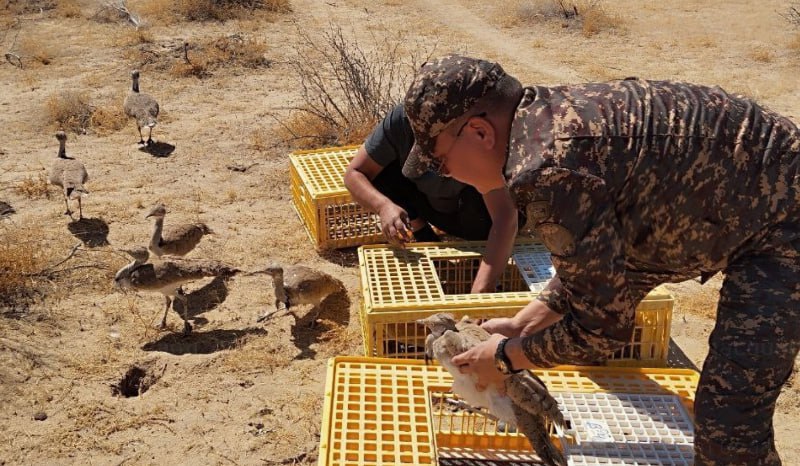
In Uzbekistan's Karakalpakstan, 2,680 Wigglers (Chlamydotis macqueenii), have been released in the wild. The rare birds, on the verge of extinction and listed in the Red Data Book of Uzbekistan and the International Union for Conservation of Nature, were released on October 11 on the Ustyurt Plain in the Kungrad District. Authorities are now planning the annual release of 2,000 and 3,000 birds to support the population and promote the recovery of one of the rarest bird species in Central Asia. The Wiggler, a member of the bustard family, is so-called on account of the way it darts from side to side. Males grow to a length of 65-75 cm and weigh between 1.8 and 3.2 kg, while females are slightly smaller at 55-65 cm and 1.2-1.7 kg, respectively. Their upper plumage is sand-coloured, and white below, with a distinctive gray crest and elongated white feathers with black tips on the sides. During the mating season, the bird shows off its decorative feathers by raising its collar and making an “hrrrr” sound.

1 year ago

Moscow’s MOEX No Longer a Stakeholder in Kazakhstan’s Stock Exchange

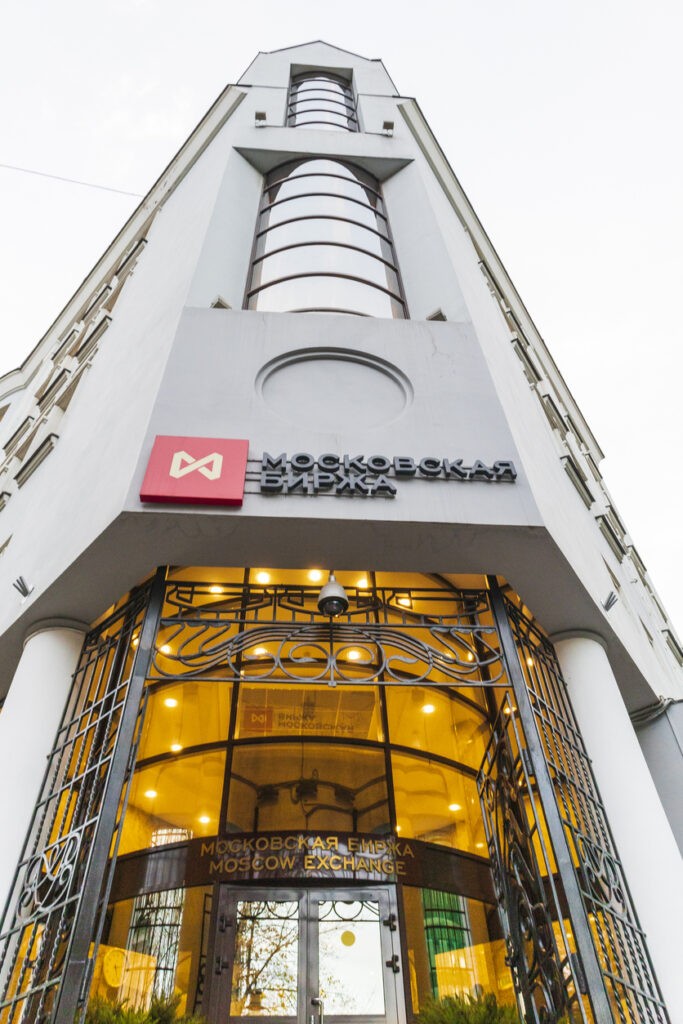
Marking a significant move for the country's financial market, Kazakhstan Stock Exchange (KASE) has announced the withdrawal of Moscow Exchange PJSC (MOEX) from its shareholders. An updated list of shareholders, available on the official site of the Exchange, shows that as of October 11, 2024, the main shareholder of KASE remains the National Bank of the Republic of Kazakhstan, with a 47% stake. . According to reports, the conclusion of its cooperation with MOEX, KASE marks the end of a collaborative phase that began on October 10, 2018, following the signing of a Strategic Partnership Agreement between the exchanges. During this period, several key projects implemented to advance Kazakhstan's exchange market included modernizing trading and clearing systems, introducing central counterparty services across all trading segments, and launching new financial instruments, such as repo transactions with clearing certificates of participation. On September 30, 2024, Vladimir Krekoten, representative of MOEX, resigned from the KASE Board of Directors, having applied for early termination of his position. The Exchange expressed gratitude to MOEX for its contribution in realizing strategic tasks to expand the exchange market opportunities and create new products. KASE remains the leading exchange in Central Asia, providing universal opportunities for trading in corporate and government securities, currency transactions, derivatives, and bonds of international organizations. The Exchange is a member of the International Federation of Exchanges (WFE) and the Federation of Euro-Asian Stock Exchanges (FEAS) and actively participates in the UN Sustainable Stock Exchanges Initiative. In June, the US Department of the Treasury's Office of Foreign Assets Control (OFAC) imposed sanctions against the Moscow Exchange (MOEX), the National Settlement Depository, and the National Clearing Center of the Russian Federation, after which, representatives of the exchange said they would consider continuing business relations with the Moscow Exchange (MOEX), subject to the restrictions on sanctions. On July 15, 2024, KASE Chairman of the Board Alina Aldambergen spoke out about the buyout of the Kazakh exchange's stake from the Moscow Exchange (MOEX).

1 year ago

Uzbek Blogger Prosecuted for Post about Daughter’s Birth

A criminal case has been opened against Kashkadarya-based blogger Sardor Safarboyev, aka 'Sardor Gangster', on account of his statement on TikTok that he does not want to have a daughter. “I'm not having a daughter. If a daughter is born, I'll throw my wife out. I don't need a daughter... if it's a girl, I'll throw it straight into the dustbin. I don't need a daughter. Even if I go to hell, I will [have] a son,” Safarboyev said on air. Following heavy criticism from social media users and activists, the blogger apologized, saying that his words had been provoked by live comments on air. A girl who participated in the broadcast also spoke in Safarboyev's defense, stating that users of the site had deliberately provoked him. Iroda Rasulova, head of the press service of the Kashkadarya Oblast Department of Internal Affairs, announced that the Nishan District Department of Internal Affairs had opened a case under Article 140, Part 2 of the Uzbek Criminal Code. This article deals with insults published in the media or on the internet and provides for punishments such as a fine, community service, or correctional labor.  Investigative work into the case is ongoing. Prior to TikTok being blocked in Uzbekistan, Safarboyev had over 700,000 followers on the platform and over 500,000 on Instagram. This recent incident is not the first time the blogger has been condemned. As recently as February, Safarboyev was arrested for ten days after being found guilty of petty hooliganism and manufacturing, possession, or distribution of materials propagandizing national, racial, ethnic, or religious hatred. In Uzbekistan, the preference for the birth of sons persists due to traditional attitudes and gender stereotypes. This problem, characteristic of many Asian countries, is deeply rooted in cultural and social norms. According to reports by international organizations such as UNFPA, the preference for sons leads to gender imbalance, limits women's rights, and is an issue frequently raised in international forums concerning the combating of gender discrimination.

1 year ago