• KGS/USD = 0.01144 0%
  • KZT/USD = 0.00196 -0%
  • TJS/USD = 0.10899 -0%
  • UZS/USD = 0.00008 -0%
  • TMT/USD = 0.28490 0%
  • KGS/USD = 0.01144 0%
  • KZT/USD = 0.00196 -0%
  • TJS/USD = 0.10899 -0%
  • UZS/USD = 0.00008 -0%
  • TMT/USD = 0.28490 0%
  • KGS/USD = 0.01144 0%
  • KZT/USD = 0.00196 -0%
  • TJS/USD = 0.10899 -0%
  • UZS/USD = 0.00008 -0%
  • TMT/USD = 0.28490 0%
  • KGS/USD = 0.01144 0%
  • KZT/USD = 0.00196 -0%
  • TJS/USD = 0.10899 -0%
  • UZS/USD = 0.00008 -0%
  • TMT/USD = 0.28490 0%
  • KGS/USD = 0.01144 0%
  • KZT/USD = 0.00196 -0%
  • TJS/USD = 0.10899 -0%
  • UZS/USD = 0.00008 -0%
  • TMT/USD = 0.28490 0%
  • KGS/USD = 0.01144 0%
  • KZT/USD = 0.00196 -0%
  • TJS/USD = 0.10899 -0%
  • UZS/USD = 0.00008 -0%
  • TMT/USD = 0.28490 0%
  • KGS/USD = 0.01144 0%
  • KZT/USD = 0.00196 -0%
  • TJS/USD = 0.10899 -0%
  • UZS/USD = 0.00008 -0%
  • TMT/USD = 0.28490 0%
  • KGS/USD = 0.01144 0%
  • KZT/USD = 0.00196 -0%
  • TJS/USD = 0.10899 -0%
  • UZS/USD = 0.00008 -0%
  • TMT/USD = 0.28490 0%
08 December 2025

Afghanistan and Turkmenistan sign strategic partnership agreement

ASHGABAT (TCA) — Turkmenistan President Gurbanguly Berdymukhammedov and Afghanistan President Ashraf Ghani have signed an agreement on strategic partnership between their countries.

Turkmenistan’s State Information Agency said the two leaders signed the document in Ashgabat on February 21 after discussing bilateral trade, energy, and cultural ties.

The Strategic Partnership Agreement will help both countries expand bilateral relations on a number of key areas including economy, trade, transit and joint efforts in fighting terrorism.

According to a statement by the Afghan Presidential Palace, the signing of Afghanistan-Turkmenistan Strategic Partnership Agreement will help the two countries to further expand their political, economic and security cooperation, Afghan broadcaster TOLOnews reported.

Currently, Afghanistan and Turkmenistan are cooperating in a number of areas including energy and commerce and in the ongoing construction of the Turkmenistan-Afghanistan-Pakistan-India (TAPI) natural-gas pipeline.

The Turkmen leader said that the implementation of TAPI project will create over 12,000 jobs in Afghanistan and that the country will gain $1 billion in benefits from the project annually.

Afghanistan officials earlier said the country expects to earn more than $400 million USD in transit duties annually from the project.

Berdymukhammedov reportedly said that Turkmenistan was ready to try to help bring Taliban negotiators together with Afghan officials for peace talks.

Agreements also were signed to boost cooperation in the energy and transports sectors, including an accord on customs cooperation and construction of a railroad connecting Turkmenistan with Tajikistan via Afghanistan.

Tajikistan: Opposition figure arrested after return from self-imposed exile

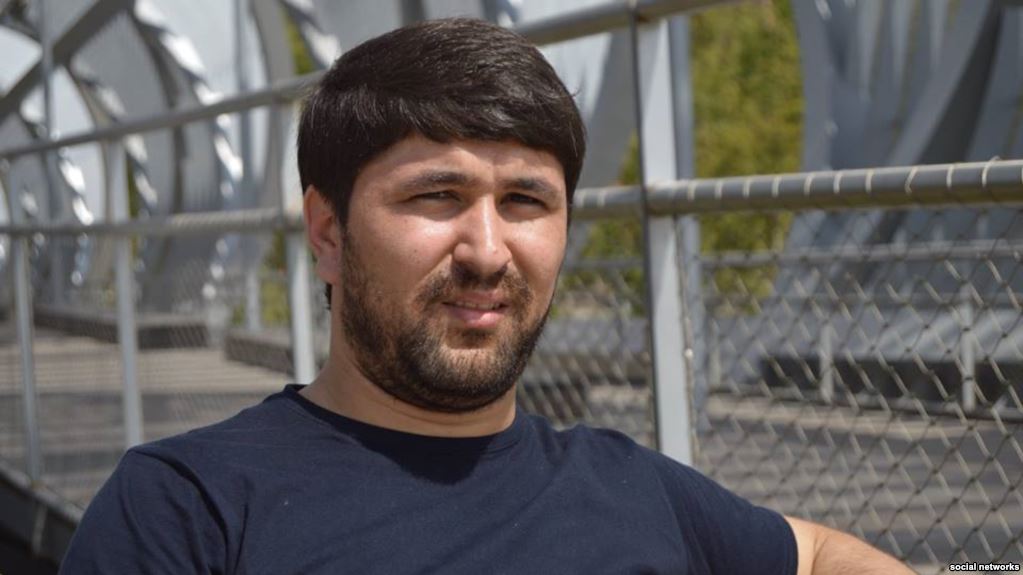
DUSHANBE (TCA) — The Netherlands’ Foreign Ministry says Tajik authorities have confirmed that an opposition activist who resurfaced in Dushanbe last week from self-imposed exile was arrested, and that he is accused of “criminal activities,” RFE/RL reported.

“At this time the Dutch [Foreign Ministry] investigates whether and how it can assist [Sharofiddin] Gadoev. We are following the case closely,” ministry spokeswoman Willemien Veldman said in a statement sent to RFE/RL on February 21.

A legal representative for Gadoev said earlier that authorities in the Netherlands, where the activist is said to have a residency permit, had launched an investigation into the situation after concerns were raised by Tajik opposition and rights activists about his fate.

Gadoev’s mother told RFE/RL that her son had been “taken away at 8 p.m. on February 20” after spending one night at his family home, adding that she didn’t know where he was.

Oishamoh Abdulloeva said Tajik authorities told her that Gadoev would be released soon. But she said she was “very concerned about” her son.

According to her, Gadoev arrived at his family home in the southern district of Farkhor on February 19, “along with several people” that Abdulloeva said she didn’t know.

She said the men accompanying Gadoev stayed in her house and spent the night there, before taking him away the following evening.

Gadoev’s sudden return to Dushanbe sparked conflicting information about whether Gadoev had willingly traveled to Tajikistan or was forcibly returned.

Viktoria Nadezhdina, a legal representative for Gadoev, said that the activist was detained by the authorities in Russia before he reappeared in Tajikistan’s capital.

“According to an official response from the Russian Foreign Ministry, Sharofiddin Gadoev was arrested in the Russian Federation based on two Interpol red notices,” Nadezhdina told RFE/RL on February 20.

A “red notice” is a request through Interpol for the authorities in other countries to locate and provisionally arrest an individual pending extradition.

Asked whether Gadoev was extradited to Tajikistan by Russia, Nadezhdina said the ministry’s response did not include further “details.”

Nadezhdina said authorities in the Netherlands, where Gadoev has a residency permit, have also launched an investigation into the situation after concerns were raised by Tajik opposition and rights activists about his sudden reappearance in Dushanbe.

Abdusattor Boboev, a member of the National Alliance of Tajikistan, says the Europe-based opposition association is concerned about Gadoev’s fate.

“We are worried that the government could create all kinds of problems for Sharofiddin, including eliminating him physically,” Boboev said on February 21.

Tajik authorities claim Gadoev, co-founder of the opposition Group-24, returned to Tajikistan voluntarily and surrendered to police at Dushanbe International Airport on February 15.

The same day, the Interior Ministry shared a video in which Gadoev said that he had returned “willingly.” In that video, Gadoev also criticized the opposition and urged other activists to do the same.

However, on February 19 the National Alliance posted a contradictory video message from Gadoev that the group says was recorded ahead of his trip to Russia.

“I am recording this video [to warn] that if I suddenly appear on Tajik television or some YouTube channel, saying that I have returned of my own accord — you must not believe it,” he said in the undated footage.

“I am not planning to go to Tajikistan willingly. Never. I’m not going to Tajikistan and surrender to [President] Emomali Rahmon’s government,” he said.

But Gadoev said he might be kidnapped and forced “under torture and pressure” to publicly speak against “certain movements, groups, and persons.”

He noted that some other Tajik opposition figures had been killed, kidnapped, or disappeared during visits to Russia and that he might face a similar fate.

“I’m travelling to Russia on the 14th to meet with officials from the Security Council of Russia…to discuss some problems that have occurred in Tajikistan, also to discuss the situation of Tajik labor migrants,” Gadoev said in the video.

The government of President Rahmon, who has ruled Tajikistan since 1992, has long been criticized for its crackdowns on dissent.

Kazakhstan: President Nazarbayev sacks Government over economic failures

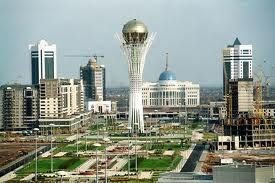
ASTANA (TCA) — Kazakhstan President Nursultan Nazarbayev late on February 21 dismissed the country’s Government, citing its failure to raise living standards of the population and diversify the economy away from the energy sector.

“In many areas of the economy, despite the adoption of many laws and government decisions, positive changes have not been achieved,” Nazarbayev said in a statement on the presidential website.

The long-ruling president cited the Government’s failure to raise real incomes for Kazakhs, to boost employment opportunities, or to improve living standards in a country that enjoys vast energy resources.

He also said small- and medium-sized businesses have not become a driving force for the Central Asian country’s economic growth as had been hoped.

The move comes amid growing protests across the country about living conditions for Kazakhs that were sparked by the deaths of five children of a single family when their home in Astana burned down, RFE/RL’s Kazakh Service reported.

The tragedy occurred while both parents were working overnight shifts to make ends meet.

The decision to sack the Government marks the end of 55-year-old Bakytzhan Sagintaev’s premiership, which started in 2016.

An order on the presidential website said Deputy Prime Minister Askar Mamin, 53, had been appointed as acting prime minister until a new Government can be formed.

Ahead of Nazarbayev’s address, Mamin called in a statement for a “more aggressive and proactive” policy to help the country boost its exports.

Nazarbayev said he would propose “a number of measures to strengthen social welfare and people’s quality of life” at a conference of his Nur Otan party on February 27, adding that “considerable funds” would be allocated to pay for the measures.

The 78-year-old president has been in power in energy-rich Kazakhstan since before the 1991 collapse of the Soviet Union.

Uzbekistan: Acquittal in Telia trial dismays transparency advocates

TASHKENT (TCA) — Sweden’s weak anti-bribery laws have led to the acquittal of a former top executive at a Swedish telecommunications giant engaged in corrupt practices in Uzbekistan. We are republishing the following article on the issue, written by Richard Orange*, originally published by Eurasianet:

A former top executive at a telecommunications giant in Sweden has been cleared of charges that he engaged in corrupt practices in Uzbekistan.

It is not that Stockholm-based Telia, where Lars Nyberg was formerly chief executive, denies doling out cash sweeteners to ease its dealings in the Central Asian nation. That is something it readily admits doing.

But the judge at Stockholm District Court argued that the recipient of these huge payments – the daughter of Uzbekistan’s late president – was not “amenable to bribery” as she did not formally hold a position that could advance Telia’s interests. A former lawyer for Telia, Olli Tuohimaa, and Tero Kivisaari, the company’s one-time head of Eurasian operations, were also cleared by the court.

The verdict, passed on February 15, is bound to be greeted with dismay by anti-graft activists who decry the ways in which Western companies and banks enable and exacerbate a chronic problem across the developing world.

Nyberg resigned as head of what was then called TeliaSonera in February 2013, following a series of media exposés revealing shady dealings in Uzbekistan.

Allegations aired in Swedish media at the time indicated that TeliaSonera had paid money in 2007 to an individual in the Uzbek elite to secure 3G licenses. In the wake of that resignation, Nyberg was combative, although he conceded that TeliaSonera had failed to do proper due diligence into its local Uzbek partner.

Nyberg later admitted that the company he led had made payments of more than $330 million to Takilant, although he has always denied knowing that the company ultimately controlled by Gulnara Karimova, the notorious and high-profile daughter of Uzbekistan’s late president. In a U.S. State Department cable composed in 2005, Karimova was described as being widely perceived in Uzbekistan as “a robber baron” with extensive involvement in the nation’s telecommunications industry.

Stockholm District Court judge Tomas Zander argued, however, that the prosecutors lined up against Nyberg had failed to convincingly join the dots.

“It has not been demonstrated that the alleged bribes were received by someone who belonged to that circle of people who, according to the applicable law, could be amenable to bribery,” Zander’s judgement read.

Cristina Bergner, Nyberg’s defense lawyer, said her client was “relieved.”

During the trial, Nyberg insisted he had never learned the identity of the partner in Telia’s Uzbek business, even after meeting Karimova while embarking on a tour of the company’s Central Asian businesses in 2008. He said he only learned that she was the partner through an investigation aired on Swedish television in 2012.

Zander told Eurasianet that the prosecution had been “vague” and had “gaps in their investigation.” Crucially, prosecutors failed to demonstrate that Karimova held “any sort of position within the telecoms sector” or that she had any power over it through her position as an official in the Uzbek Foreign Ministry, Zander said.

When Swedish television news program Uppdrag Granskning reported on this case in December 2012, they cited two unnamed executives at TeliaSonera as saying representatives with the company had traveled to Uzbekistan in 2007 to meet with Karimova.

“To reach a deal with Gulnara was a prerequisite to the whole deal. And the negotiations with her started in earnest around February-March 2007,” one executive was quoted as saying.

The same source identified a man called Bekhzod Akhmedov, an executive at a rival mobile telecommunications company in Uzbekistan, as having acted as a go-between for Karimova.

The Stockholm court, however, was unconvinced by the prosecution’s efforts to draw a connection between Karimova, Akhmedov and senior telecommunications sector regulators.

“When it comes to the accusation of bribery of public officials at the telecoms authority … there hasn’t been any link proven between such public officials and the payment made to Takilant, and this is a requirement under Swedish law,” Zander said.

Rather than acting in an official government capacity, the judge argued, Karimova may have been operating on her own accord as a businesswoman, “even though undue methods and pressure may have occurred.”

Gunnar Stetler, the prosecutor, told Eurasianet he was considering an appeal.

“I don’t think that’s a reasonable explanation, because you don’t pay 3 billion Swedish kronor to a businesswoman to help you get a telecoms license,” he said.

Telia’s rivals in Uzbekistan’s telecoms market, Vimpelcom and MTS, he said, had all also made payments to companies linked to Karimova to get their licenses, which indicated that Karimova had de facto control of the sector.

“The telecoms companies didn’t address the telecoms authorities if they wanted a license. They addressed Gulnara Karimova, and then the person in charge of telecoms gave them a license,” he said.

Telia has faced less forgiving treatment in other jurisdictions.

In 2017, Telia, which rebranded to its current shortened name three years ago, agreed to pay a fine of $965 million as part of a deferred prosecution agreement reached in coordination with the authorities in the United States and the Netherlands.

In a statement announcing the deal, the U.S. Justice Department said Telia had admitted to paying $330 million to “an Uzbek government official, who was a close relative of a high-ranking government official and had influence over the Uzbek governmental body that regulated the telecom industry.”

But Zander said the fact that the company had acknowledged that Karimova “had influence” over the telecoms sector was not relevant in Sweden.

“That’s not any proof in this individual criminal case in Sweden,” he said. “Telia might have had reasons to go into that negotiation and make that agreement with a U.S. authority. There could be a commercial reason for that.”

Sven Bergman, one of the three Uppdrag Granskning reporters who broke the story in 2012, said that he had already predicted how difficult it would be to prosecute the executives in a follow-up program five years ago.

“We saw it coming, we expected it, and sadly I think that this is just another example of how Sweden as a society fails to deal with these huge corruption affairs which many of our export companies have been involved in,” Bergman said.

Sweden, he noted, had come under frequent criticism for its weak anti-bribery laws, with the Organization for Economic Cooperation and Development calling for urgent reforms as recently as 2017.

“Swedish law is written for a stable democracy, it’s not written for a dictatorship like Uzbekistan,” he said. “It’s extremely naive.”

David Lewis, a Central Asia expert at the University of Exeter, who in 2016 wrote a white paper on tackling corruption in Uzbekistan, said that the ruling was “clearly disappointing.”

“There is rightly significant international pressure on Uzbekistan to improve its governance and business environment, but if we are going to tackle transnational corruption effectively, EU states such as Sweden also need to get much more effective at prosecuting individuals involved in such deals.”

* Richard Orange is a freelance journalist based in Malmö, Sweden