• KGS/USD = 0.01144 0%
  • KZT/USD = 0.00191 0%
  • TJS/USD = 0.10798 0%
  • UZS/USD = 0.00008 0%
  • TMT/USD = 0.28571 0%
  • KGS/USD = 0.01144 0%
  • KZT/USD = 0.00191 0%
  • TJS/USD = 0.10798 0%
  • UZS/USD = 0.00008 0%
  • TMT/USD = 0.28571 0%
  • KGS/USD = 0.01144 0%
  • KZT/USD = 0.00191 0%
  • TJS/USD = 0.10798 0%
  • UZS/USD = 0.00008 0%
  • TMT/USD = 0.28571 0%
  • KGS/USD = 0.01144 0%
  • KZT/USD = 0.00191 0%
  • TJS/USD = 0.10798 0%
  • UZS/USD = 0.00008 0%
  • TMT/USD = 0.28571 0%
  • KGS/USD = 0.01144 0%
  • KZT/USD = 0.00191 0%
  • TJS/USD = 0.10798 0%
  • UZS/USD = 0.00008 0%
  • TMT/USD = 0.28571 0%
  • KGS/USD = 0.01144 0%
  • KZT/USD = 0.00191 0%
  • TJS/USD = 0.10798 0%
  • UZS/USD = 0.00008 0%
  • TMT/USD = 0.28571 0%
  • KGS/USD = 0.01144 0%
  • KZT/USD = 0.00191 0%
  • TJS/USD = 0.10798 0%
  • UZS/USD = 0.00008 0%
  • TMT/USD = 0.28571 0%
  • KGS/USD = 0.01144 0%
  • KZT/USD = 0.00191 0%
  • TJS/USD = 0.10798 0%
  • UZS/USD = 0.00008 0%
  • TMT/USD = 0.28571 0%
13 November 2025

Our People > Sergey Kwan

Sergey Kwan's Avatar

Sergey Kwan

Journalist

Sergey Kwan has worked for The Times of Central Asia as a journalist, translator and editor since its foundation in March 1999. Prior to this, from 1996-1997, he worked as a translator at The Kyrgyzstan Chronicle, and from 1997-1999, as a translator at The Central Asian Post.
divider
Kwan studied at the Bishkek Polytechnic Institute from 1990-1994, before completing his training in print journalism in Denmark.

Articles

Kazakhstan and Israel Strengthen Cooperation on Water Resource Management

On November 11, Kazakhstan’s Minister of Water Resources and Irrigation Nurzhan Nurzhigitov and Israel’s Minister of Regional Cooperation David Amsalem signed a memorandum of cooperation to deepen bilateral ties in the field of water resource management. The agreement outlines joint efforts in modernizing Kazakhstan’s water management infrastructure, improving water use efficiency, implementing water-saving and reuse technologies, and exchanging expertise in innovation and technology, particularly in the collection, management, and processing of remote sensing data. The memorandum also covers cooperation in the digitalization of water resource monitoring, flood and drought risk management, scientific and technical collaboration, and specialist training programs. As part of the visit, the ministers held talks with representatives of leading Israeli companies to explore partnerships on introducing water-saving technologies in Kazakh agriculture and training Kazakh specialists at Israeli enterprises. “Israel has extensive experience in water resource management under challenging climatic conditions and offers advanced technologies,” said Minister Nurzhigitov. “We are interested in long-term, mutually beneficial cooperation to modernize Kazakhstan’s water sector across the board, including the digitalization of water metering and distribution, deployment of cutting-edge water-saving systems, use of modern data collection methods, and professional development of our specialists.” Israeli firms have previously expressed interest in participating in the construction and reconstruction of reservoirs in Kazakhstan, and in supplying the country with modern flood forecasting and protection systems. Kazakhstan’s Ministry of Water Resources and Irrigation plans to build 20 new reservoirs by 2030, with a combined capacity of 2.5 billion cubic meters. The project is expected to reduce the country’s reliance on upstream water sources from Kyrgyzstan and China by 25%, mitigate drought in southern regions, and lower flood risks for 70 rural settlements with a combined population of nearly 140,000. Additionally, irrigation will be expanded to cover another 250,000 hectares of farmland. The ministry also plans to reconstruct 15 existing reservoirs, adding another 1.9 billion cubic meters in water storage capacity.

24 hours ago

New Flight to Link Almaty and Kyrgyzstan’s Karakol Ski Resort

As the winter tourism season approaches, Kyrgyzstan’s state-owned Asman Airlines has announced the launch of a new regular flight connecting Almaty, Kazakhstan’s largest city, with the Kyrgyz town of Karakol, home to the country’s most popular ski resort. The Karakol-Almaty-Karakol route is set to begin operations on December 5, with flights scheduled every Friday and Sunday. The flight time is approximately 35 minutes. Asman Airlines will operate the Dash 8 Q400, a Canadian-made short-haul turboprop aircraft that can carry up to 80 passengers and has a range of up to 2,000 kilometers. Karakol is the highest ski resort in Central Asia, located at an altitude of 3,040 meters in the Tien Shan Mountains. The resort offers panoramic views of the surrounding peaks and nearby Lake Issyk-Kul. Situated just 7 kilometers from Karakol and 400 kilometers from Bishkek, it features ski trails suitable for both professional athletes and beginners. The ski season runs from December to March. The new air route is expected to significantly improve access to Karakol for weekend travelers from Kazakhstan’s commercial capital. In a related development, Kazakhstan and Kyrgyzstan have further enhanced air connectivity with the launch of a direct flight linking their capitals, Astana and Bishkek. On November 10, Kazakhstan’s Vietjet Qazaqstan operated its inaugural flight on the Astana-Bishkek route. The service runs twice a week, on Mondays and Thursdays. Officials anticipate that the new flights will promote tourism, business, and cultural exchange between the two neighboring countries.

2 days ago

InnoTech University to Launch in Almaty with Arizona State University Support

Kazakhstan’s Ministry of Science and Higher Education and Q Group have signed an agreement with Arizona State University (U.S.) to establish the University of Innovation and Technology powered by Arizona State University (InnoTech) in Almaty. According to the ministry, the creation of InnoTech aligns with Kazakhstan’s broader strategy to enhance international educational partnerships and foster the development of innovative technologies. The university is set to become a world-class platform offering academic mobility, scientific collaboration, and practice-oriented training in engineering, IT, entrepreneurship, artificial intelligence, and sustainable development. A distinctive feature of InnoTech will be its dual-degree offering: graduates will receive both a Kazakh diploma and an American degree from Arizona State University. This model is intended to boost the global competitiveness of Kazakh students in the international job market. Undergraduate and graduate programs are expected to begin in 2026, with preparations already underway for the construction of a modern campus in Almaty. [caption id="attachment_39097" align="aligncenter" width="960"] Image: gov.kz[/caption] In related news, the Ministry of Science and Higher Education, Arizona State University, and Mukhtar Auezov South Kazakhstan University have signed a memorandum of cooperation to promote academic collaboration. The agreement covers the implementation of internationally recognized educational programs, joint research initiatives, and expanded academic mobility for students and faculty of the Kazakh university. As part of the new collaboration, students enrolled in a dual-degree program will study for three years in Kazakhstan and one year at Arizona State University in the U.S., earning degrees in Computer Science/Informatics from both institutions. Additionally, for the first time in Kazakhstan, an Honors College will be established with Arizona State University’s support. The college will offer enriched academic programs for high-achieving students, including research opportunities and leadership development.

2 days ago

Kyrgyz Authorities Reject Proposal to Let Wealthy Pay for Unlimited Electricity Amid Winter Deficit

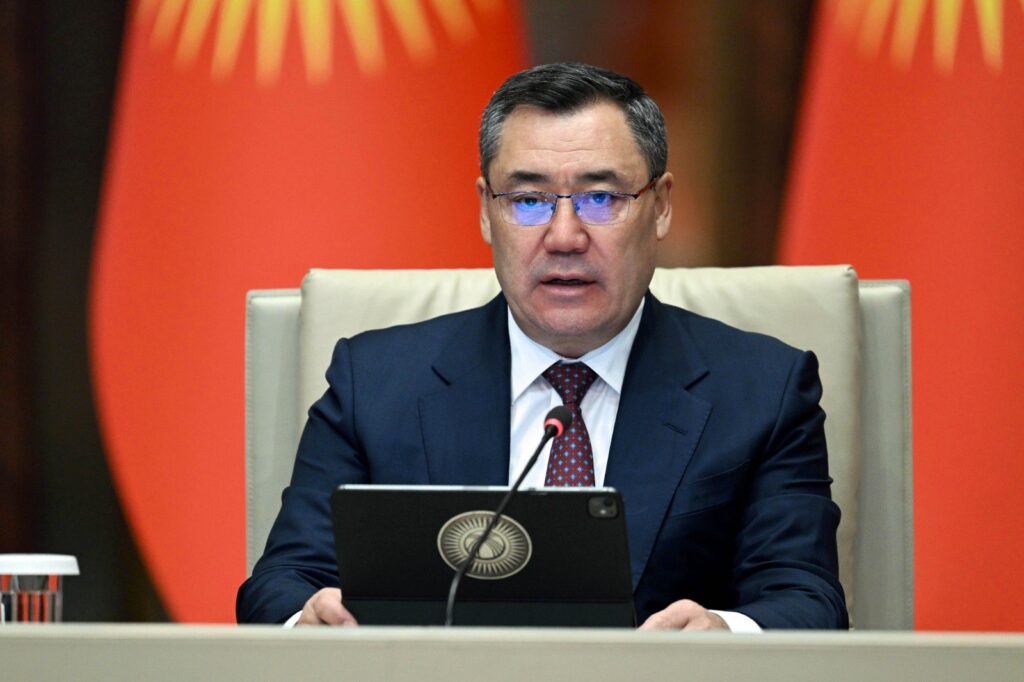
As winter nears, the National Electric Grid of Kyrgyzstan introduced new electricity consumption limits for households, cutting the cap from 5 kilowatts to 3 kilowatts during peak morning and evening hours. At the same time, the company proposed allowing citizens to pay a higher tariff for unlimited electricity usage. The proposal sparked immediate backlash amid Kyrgyzstan’s chronic autumn-winter energy shortages, when many households depend on electric heating. President Sadyr Japarov swiftly condemned the initiative, calling it “unacceptable” during a period of scarcity. He warned that such a measure risked deepening social inequality and ordered the immediate cancellation of the unlimited-use tariff. Japarov also directed officials to implement equitable policies to ensure fair access to electricity for all citizens during the winter. Following the president’s intervention, the Ministry of Energy stated that the proposal had been introduced without its approval. The ministry also announced disciplinary action against the leadership of the National Electric Grid of Kyrgyzstan. On November 6, the Cabinet of Ministers introduced a series of emergency measures aimed at promoting responsible energy consumption. These include restrictions on the use of indoor and outdoor lighting and electrical equipment in government institutions between 6:00 p.m. and 6:00 a.m. Exemptions apply to strategic facilities and institutions that provide defense, security, healthcare, and social services, as well as those operating 24/7. The Cabinet estimates that the new measures could save up to 40 million kilowatt-hours of electricity per month. Government data shows that in the first nine months of 2025, electricity consumption increased by nearly 1 billion kilowatt-hours, largely due to the launch of new industrial sites, schools, and residential developments. Energy Minister Taalaibek Ibraev recently warned that the upcoming winter could be among the most challenging in years, citing critically low water levels at the Toktogul reservoir, which supplies approximately 40% of Kyrgyzstan’s electricity. In 2024, the country consumed 18.3 billion kilowatt-hours of electricity, up 1.1 billion kWh from the previous year. To cover the shortfall, Kyrgyzstan imported 3.6 billion kWh from Kazakhstan, Turkmenistan, Uzbekistan, and Russia. Additional imports have already been secured for the 2025-2026 winter. President Japarov has pledged that Kyrgyzstan will achieve energy self-sufficiency during winter months within two and a half years. “In two and a half years, we will no longer import electricity during winter. We will have enough domestically produced power,” Japarov said, urging citizens to remain patient as the government works to address the crisis. The country’s long-term energy security hinges on the construction of the Kambarata-1 Hydropower Plant, which is expected to be the largest in Kyrgyzstan and Central Asia. Once completed, it will have an installed capacity of 1,860 MW and generate 5.6 billion kilowatt-hours annually. The project is being developed in partnership with Kazakhstan and Uzbekistan.

6 days ago

Kazakh Food Exports to China Grow After CIIE 2025 Deal

At the China International Import Expo (CIIE 2025) in Shanghai, Kazakhstan’s Trade Policy Development Center, QazTrade, signed a partnership agreement with Optimize Integration Group (OIG), one of China’s leading food importers responsible for 18% of all frozen meat imports into the country. The agreement aims to promote digital trade and create online platforms that will facilitate the entry of Kazakhstani food products into the Chinese market. Under the terms of the agreement, both sides will jointly promote Kazakh agricultural and food products, improve logistics infrastructure, and develop digital trade technologies and payment systems. “This partnership with OIG, one of the most technologically advanced and influential trading platforms in China, opens up significant opportunities,” said QazTrade CEO Aitmukhamed Aldazharov. “Kazakhstani producers will not only increase their exports to China but will also integrate into advanced digital supply chains. This is a major step forward for e-commerce and mutual trust between our countries.” At CIIE 2025, QazTrade also showcased the growing potential of Kazakhstan’s agricultural cooperatives. In collaboration with the National Association of Cooperatives of Kazakhstan and China Coop, China’s largest cooperative retail network, Kazakh products such as honey, kumis, and confectionery are set to enter the Chinese retail market. China Coop encompasses over 340,000 retail outlets with annual turnover exceeding 7 trillion yuan. Aldazharov expressed confidence in the cooperatives' prospects, noting that joint market research has been conducted, trial shipments arranged, and priority export categories identified. These include vegetable oil, meat, honey, dairy beverages, and confectionery. In parallel, QazTrade is launching an acceleration and training program aimed at Chinese companies seeking to expand their operations in Kazakhstan and across Central Asia.

7 days ago