BISHKEK (TCA) — Russia has for years been exaggerating the threat coming from Afghanistan to Central Asia in an effort to maintain, and increase, its influence on countries of this region. We are republishing the following article on the issue, written by Paul Goble:
Over the last month, Russian officials have suggested that militant groups in Afghanistan so threaten the countries of Central Asia that the latter should cooperate more closely with Russia in order to defend themselves. But in contrast to such campaigns in the past, Moscow is facing difficulties in convincing anyone. Russian commentators are questioning whether Russia’s new military efforts in Central Asia will be worth the cost—be it a new base in Kyrgyzstan, the expansion of Russia’s military presence in Tajikistan, or a new level of cooperation with Turkmenistan. Whereas, officials and experts in the region are openly challenging Moscow’s premise that their countries are so threatened by Afghan militants that they have no choice but to accept an expanded Russian presence.
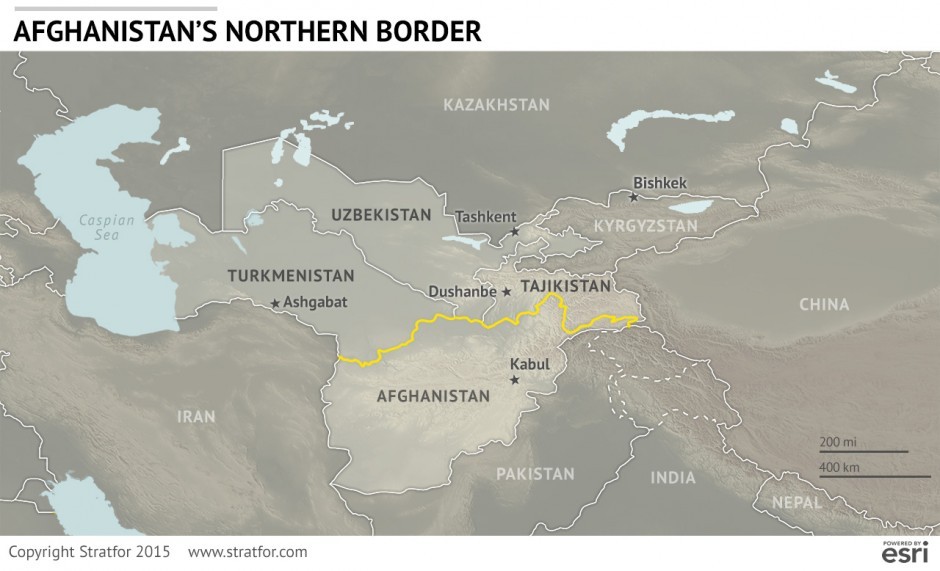
On February 5, Russian Foreign Minister Sergei Lavrov traveled to Tajikistan, where he offered additional “security assistance” to Dushanbe (TASS, News.tj, February 5). But several days prior to the top Russian diplomat’s visit, his deputy, Igor Zubov, warned, “ISIS [Islamic State—IS] militants [were] massing with helicopters” to advance to the border of Tajikistan, thus threatening that country, Central Asia as a whole and Russia itself (Sputnik News, January 28). Zubov and Lavrov’s apparently coordinated diplomacy was nothing new for Central Asians. Rather, it has been a longstanding element of Russian policy to seek to propagate local regional concerns about the ostensible threats coming out of neighboring Afghanistan (EurasiaNet, February 12).
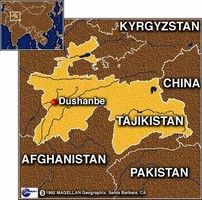
But this time, Central Asian reaction to these attempts was hardly what Moscow expected and wanted. Following Zubov’s remarks, the Border Guards Service of Tajikistan took the unusual step of directly contradicting the Russian official, saying that it did not have any information about the presence on its borders of any IS militants, that the border region remained under control, and that there was no need for any outside assistance (Avesta.tj, January 29). While Tajikistani officials apparently were more polite in their meetings with Lavrov, they too appeared to be less-than-fully persuaded by Russian suggestions that their country faced such a great threat from the south that it had no choice but to expand Moscow’s involvement there.
Following the meeting, Komrod Khidoyatzoda, a Tajik who directs the Central Asian Experts Club, told Russia’s Regnum news agency that even in Tajikistan’s Gorno-Badakhshan Autonomous Oblast, where there have been internal security problems (see EDM, October 18, 2018), it is long past time to blame everything on Afghanistan. “The situation in the oblast, as far as security is concerned, remains stable,” he said, adding “the Tajik-Afghan border remains under the full control of Tajikistan’s border guards” (Regnum, February 12, 2019).
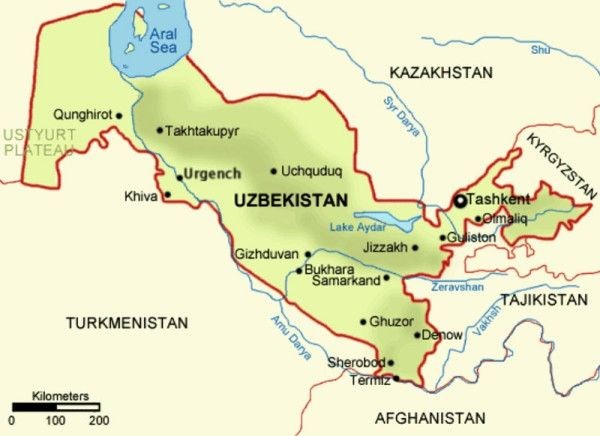
Khidoyatzoda then suggested that Dushanbe was receiving all the international cooperation it needed […] from Uzbekistan, with which Tajikistan has conducted, “for the first time in many years,” joint military maneuvers (Regnum, February 12). It is safe to assume that this must have been perceived in Moscow as a slap in the face of Russia, which has a base in Tajikistan but was not asked to take part in this program designed to promote “regional security.”
He further pointed out that “there exist regional institutions which also are making a contribution to the struggle with terrorism, extremism, illegal drug flows and other challenges and threats arising as a result of the activity of transnational criminal groups.” As a result, Khidoyatzoda said, it is essential to reject “the stereotype” Lavrov and others have promoted that “Afghanistan is the source of all misfortunes in the region.” That does not benefit Tajikistan or anyone else in Central Asia: it only serves the purposes of outside powers (Regnum, February 12).
Other Central Asian commentators and experts are making similar arguments, albeit in a less dramatic way than the aforementioned Tajik author (Isca.kz, January 15). But what is most important is that the response of Tajikistan to Russia’s invocation of the Afghan threat is no longer working as effectively as it did in the recent past.
Kyrgyzstan, for example has said it would be willing to consider a second Russian base but only if Moscow provided massive new aid. Bishkek’s demand appears to have slowed down if not outright killed off that idea because of Moscow’s reluctance or inability to make such payments— something it could have avoided had Russia been able to scare Kyrgyzstan as in the past and if Russia did not find itself cash-strapped because of the economic crisis (TASS, February 1; Centrasia.org, Rambler.ru, February 4).
Turkmenistan, the other “frontline” state in Central Asia, appears committed—some shifts in official rhetoric notwithstanding—to maintaining its policy of neutrality and isolation, which necessarily precludes acceptance of any massive Russian assistance. Ashgabat is steadfastly holding to this posture despite Turkmenistan facing food shortages and reportedly having to declare partial mobilization to ensure border security (Ozodi.org, January 15).
Meanwhile, although Uzbekistan shares a short frontier with Afghanistan, neither it nor Kazakhstan has ever been as susceptible to Russian arguments about an Afghan threat. And both appear likely to remain that way.
None of this means that there is no threat to Central Asia from Afghanistan, whether in the form of the Islamic State, Taliban fighters or drug traffickers, for instance. Such threats do exist and are likely to persist for a long time. And Russia will almost certainly continue to insistently invoke this danger to the Central Asian states, especially in the event of a militant incursion into the region or some other provocation spilling out of Afghanistan. Nevertheless, the regional situation has clearly changed to the point that Moscow’s scare-mongering does not easily overawe the Central Asians. These countries increasingly believe they can provide for their own border security—possibly with help from others who will not insist on the same forms of political compensation that Russia would.
This article was originally published by The Jamestown Foundation’s Eurasia Daily Monitor




 TCA
TCA