• KGS/USD = 0.01144 0%
  • KZT/USD = 0.00196 -0%
  • TJS/USD = 0.10904 0%
  • UZS/USD = 0.00008 0%
  • TMT/USD = 0.28490 0%
  • KGS/USD = 0.01144 0%
  • KZT/USD = 0.00196 -0%
  • TJS/USD = 0.10904 0%
  • UZS/USD = 0.00008 0%
  • TMT/USD = 0.28490 0%
  • KGS/USD = 0.01144 0%
  • KZT/USD = 0.00196 -0%
  • TJS/USD = 0.10904 0%
  • UZS/USD = 0.00008 0%
  • TMT/USD = 0.28490 0%
  • KGS/USD = 0.01144 0%
  • KZT/USD = 0.00196 -0%
  • TJS/USD = 0.10904 0%
  • UZS/USD = 0.00008 0%
  • TMT/USD = 0.28490 0%
  • KGS/USD = 0.01144 0%
  • KZT/USD = 0.00196 -0%
  • TJS/USD = 0.10904 0%
  • UZS/USD = 0.00008 0%
  • TMT/USD = 0.28490 0%
  • KGS/USD = 0.01144 0%
  • KZT/USD = 0.00196 -0%
  • TJS/USD = 0.10904 0%
  • UZS/USD = 0.00008 0%
  • TMT/USD = 0.28490 0%
  • KGS/USD = 0.01144 0%
  • KZT/USD = 0.00196 -0%
  • TJS/USD = 0.10904 0%
  • UZS/USD = 0.00008 0%
  • TMT/USD = 0.28490 0%
  • KGS/USD = 0.01144 0%
  • KZT/USD = 0.00196 -0%
  • TJS/USD = 0.10904 0%
  • UZS/USD = 0.00008 0%
  • TMT/USD = 0.28490 0%
08 December 2025

Russian language losing its position in Kyrgyzstan — and Moscow may be as well

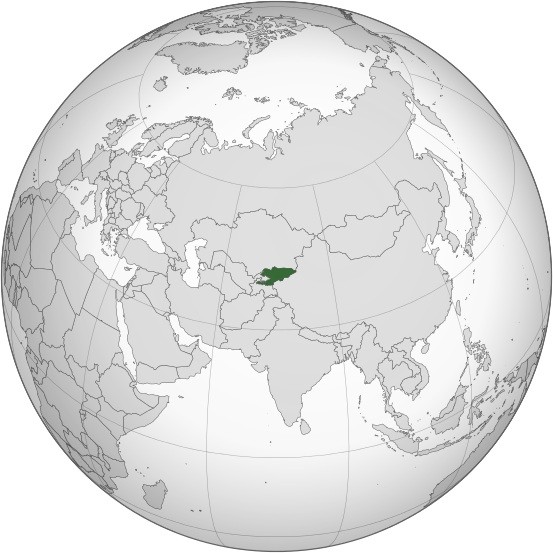
BISHKEK (TCA) — For a number of political and economic reasons, Kyrgyzstan remains the last bastion of the Russian language in Central Asia, but the situation may change in the years to come. We are republishing this article on the issue, written by Paul Goble:

Moscow has long celebrated that Russian enjoys a higher official status and greater respect in Kyrgyzstan that in any other Central Asian country. That situation is symbolized by the fact that the current president, Sooronbay Zheenbekov, is a former Russian-language teacher. But it is reinforced by the reality that so many citizens of the Kyrgyz Republic move to the Russian Federation as guest workers and enjoy a competitive advantage in obtaining work if they know Russian. As a result, more than a generation after the demise of the Soviet Union, a higher percentage of Kyrgyz still speak Russian as a second language (if not as the first) than does any other titular nation in the region (Kyrgyzstan Statistical Service, 2013, accessed January 23, 2019). The Russian government hopes that the situation will continue in that way because the Kremlin equates Russian speaking with membership in the so-called “Russian World” (“Russkiy Mir”).

But now there is a chance that the status quo in Kyrgyzstan may change. In the words of Viktoriya Panfilova of Nezavisimaya Gazeta, “The Russian language is losing its positions in Kyrgyzstan” and, along with the language, Russia as well. Participants at a November 2018 roundtable in Bishkek, on “Kyrgyzstan: Yesterday, Today and Tomorrow,” discussed what role Russian should have in the country (Nezavisimaya Gazeta, January 16, 2019). And recently, Azimbek Beknazarov, a Kyrgyzstani opposition politician, told journalists that he, along with representatives of 47 other opposition political groups, have drafted a law calling for a referendum to strip Russian of its status as an official language. If the measure is approved, he said, it would mean that Kyrgyzstan, like any normal country, would do all its official business in the language of the titular nationality, representatives of whom now form more than 75 percent of the population (Interfax, January 16, 2019).

When Kyrgyzstan became independent in 1991, following the collapse of the Soviet Union, many officials there used Russian for almost all official business. Some did not speak Kyrgyz well enough to do otherwise; and consequently, the government decided to keep Russian as the second official language. That meant that much official business and nearly all post-secondary education has remained Russian-speaking, a pattern that put pressure on parents to have their children learn Russian earlier so that they could take advantage of higher education and obtain jobs within the government. But it has also been a source of irritation for many ethnic Kyrgyz, who are offended that the language of a foreign country and former occupier retains a de facto higher status than their own.

Over the last decade, there have been numerous attacks on the status of Russian (Fondsk.ru, May 16, 2013; Forum-msk.org, March 24, 2015). But to date, all of these have fallen short. Part of the reason stems from fears that an end to the language’s official status will lead many of the nearly 500,000 Kyrgyzstanis who speak Russian to leave, thus stripping the country of some of its most highly trained specialists. Additionally, an administrative phasing out of Russian would eventually make it more difficult for residents of Kyrgyzstan not fluent in the language to go to Russia to earn money as guest workers—a revenue stream the impoverished country depends on. Hampered access to the Russian market for Kyrgyzstani labor could also open the way for the growth of greater Chinese influence in the Central Asian republic, something many Kyrgyzstanis are worried about. Moreover, it might trigger a sharp deterioration in Bishkek’s ties with Moscow. Or it could destabilize Kyrgyzstan’s perpetually unsettled domestic situation, especially in the southern regions of the country. Panfilova points to all of these factors. But she also raises the suspicion that the Kyrgyzstani opposition is simply using language as a wedge issue to bring down the current government (Nezavisimaya Gazeta, January 16, 2019).

Nevertheless, evidence is now available that support for reducing the status of Russian inside Kyrgyzstan is growing—or, at least, that the government has concluded it must take steps in that direction or face an even more radical outcome. A few days ago, the Ministry of Education published a decree specifying that post-secondary schools will give preference to those students who have a tested proficiency in Kyrgyz. From a Russian perspective, that is the beginning of the end because it means that the next generation of Kyrgyzstani officials will be Kyrgyz speakers. Whereas, those who do not know Kyrgyz almost certainly will be frozen out of the elite. It appears certain that this move, rather than the opposition’s call for a referendum, is what has prompted Panfilova’s article in a central Russian newspaper.

The opposition would like to hold the referendum this coming November, but the prospects for victory in such a vote are uncertain. A similar move in 2011 by former president Roza Otunbayeva failed; and according to local independent political analyst Kubat Rakhimov, there is reason to think this one will as well, especially if the current authorities in Bishkek come to view the move as one directed more against them than in favor of the Kyrgyz language. Rakhimov added that there is support for boosting the status of Kyrgyz but not for lowering the status of Russian, and concerns persist that a language referendum could “trigger” events in Kyrgyzstan like those in Ukraine or Moldova, which could lead to a Chinese intervention (Nezavisimaya Gazeta, January 16, 2019).

The opposition has clearly thrown down the gauntlet by its call for a referendum, and the next few months in Kyrgyzstan are likely to be defined by this debate. And throughout, Moscow can be expected to play up fears about Russian flight, guest worker restrictions, and China’s role in Kyrgyzstan to try to preserve the last bastion of Russian in Central Asia (see EDM, October 12, 2017 and January 11, 2018; see Commentaries, May 5, 2018) from falling.

This article was originally published by The Jamestown Foundation’s Eurasia Daily Monitor
US investors to create intensive gardens, modern greenhouses in Uzbekistan

TASHKENT (TCA) — A delegation of Hosiyatli Bog Plus farm from Uzbekistan’s Jizzakh region, with the assistance of the Embassy of Uzbekistan in the United States, recently held a meeting and established partnership with the Overseas Private Investment Corporation (OPIC), the Jahon information agency reported with reference to the Ministry of Foreign Affairs of Uzbekistan.

Continue reading

Kazakhstan and European Union review cooperation

ASTANA (TCA) — The European Union (EU) and Kazakhstan held their 17th meeting of the Cooperation Committee on January 30 in Brussels.

The EU is Kazakhstan’s first trade and investment partner, representing over one third of Kazakhstan’s external trade and over a half of total foreign direct investment in Kazakhstan. Kazakhstan is the first Central Asian country with which the EU has signed in 2015 an Enhanced Cooperation and Partnership Agreement (EPCA), the Delegation of the European Union to Kazakhstan said.

The Cooperation Committee confirmed the mutual commitment and interest in further strengthening cooperation. The EU and Kazakhstan reviewed their cooperation in the following fields covered by the EPCA: the rule of law, good governance, the protection of human rights, economic developments and reforms, energy, transport, environment, climate action, mobility and people-to-people cooperation, education, science, civil society and regional cooperation.

The EU and Kazakhstan stressed the importance of an enabling environment for NGOs, lawyers and journalists and the need for progress to continue in this area. Although recent amendments to the Criminal and Criminal Procedure Legislation are positive developments, the EU reiterated the importance of an independent and impartial judiciary.

Recent economic developments, in particular, efforts undertaken to improve the investment climate and the launch of a high-level Platform of dialogue on business were discussed. The EU recalled the importance of the rule of law, good governance, effectively fighting corruption and enforcing international arbitration decisions, at all institutional levels, as crucial for attracting further foreign investments.

Kazakhstan has excellent participation in the EU Erasmus+ programme and demonstrates a strong commitment to the EU-Central Asia Education Platform, the EU said. Over the last four years, Kazakh universities have been involved in 40 higher education capacity building programmes and a total of 430 mobility projects have started between higher education institutions in the EU and Kazakhstan, sending over 2 000 Kazakh students and staff to Europe.

The Cooperation Committee also discussed EU-Central Asia cooperation including in the field of security, counter-terrorism, fighting drug trafficking and border management. Participants stressed the importance of building on the momentum of good relations both between the EU and the region — as illustrated by the most recent EU-Central Asia Ministerial, held in Brussels on 23 November — and within the region itself. The EU will present later this year its new Central Asia strategy.

The Cooperation Committee meeting contributed to the EU-Kazakhstan Cooperation Council, at ministerial level, to take place by the end of the year. Both the EU and Kazakhstan look forward to continuing the close cooperation in the framework of the EPCA and the new EU-Central Asia Strategy.

The meeting was chaired by Deputy Foreign Minister of Kazakhstan, Roman Vassilenko, and Deputy Managing Director for Europe and Central Asia, European External Action Service, Luc Devigne.

Kyrgyzstan: Deterring corruption could improve governance in energy sector

BISHKEK (TCA) — Kyrgyzstan’s energy management system is inefficient and bureaucratic, experts say. The National Energy Holding has been operating for three years but no significant changes have been in the sector so far.

Ineffective management

A lot of criticism has been expressed regarding the management of the energy sector and the effectiveness of the National Energy Holding Company OJSC, Prime Minister of Kyrgyzstan Mukhammedkaly Abylgaziyev said at the Government meeting to discuss reforms in the energy sector.

There is no significant progress in solving the problems related to the maintenance of the previously received credit funds, commissioning of new generating capacities, renewal of fixed assets of energy companies, as well as drafting strategic documents for the sector’s development, Abylgaziyev added.

Commissioning of new production facilities requires significant energy capacity.

“We should restore the citizens’ confidence in the energy sector and ensure openness and transparency of the industry, eliminating corruption risks. This will be possible with the introduction of new automated systems according to uniform high-quality standards,” Abylgaziyev said.

Kyrgyzstan now purchases most of the components for the energy sector abroad. To develop the domestic economy and create new jobs, the Prime Minister suggested producing “smart meters”, cables, transformers and other equipment within the country.

Kyrgyz President Sooronbai Jeenbekov criticized the National Energy Holding at the Security Council’s meeting in December. “Losses have not been reduced, and there is no progress in the sector,” he said.

Kyrgyzstan improved its Doing Business rating from the 77th place to the 70th, but the country has been at 160th place among 190 countries in terms of the connecting electricity index over the last three years.

Background

In December 2015, the Ministry of Industry and Energy drafted a law on establishment of the National Energy Holding which should not be accountable to the Parliament and Government, and the Audit Chamber was not entitled to check this company. The Parliament did not support the bill.

In January 2016, the National Energy Holding Company was established by the Government Resolution as part of the reform of the energy sector to reduce losses by introduction of automated electricity metering system.

The current Energy Holding Chairman, Azamat Abdykadyrov, has repeatedly stated that the holding is a private company.

The law “On the National Energy Holding” has not been drafted so far. The MPs rejected the first bill, and no one created a new one. It turns out that the holding is working illegally.

Holding’s maintenance

The holding exists due to payments of power companies — at the expense of their profits. Since many energy enterprises are unprofitable, payments for the Energy Holding’s maintenance were made at the expense of the state budget.

The Parliament members have repeatedly raised the issue of the Energy Holding. In fact, the state assets were transferred to a private company, they said. In the end, the costs of this holding are included in the electricity tariffs.

To finance the Energy Holding, distribution companies paid a certain amount to the holding each year. In 2017, Electric Power Stations transferred 18.1 million soms to the holding, Severelectro — 14.3 million, National Electric Network of Kyrgyzstan — 11.6 million, Oshelectro — 9.7 million, Vostokelectro and Jalal-Abadelectro — 7.3 million each, and Bishkek Heating Network — 4.4 million soms.

The Parliament’s Committee on Fuel and Energy Sector ordered the Government to consider the feasibility of the Holding’s existence, as well as the legality of the funds transferred by energy companies to the holding’s account.

Electricity losses

The National Energy Holding is not engaged in reducing commercial and technical electricity losses, which exceeded the expected figures last year, First Deputy Prime Minister Kubatbek Boronov said.

According to the State Committee for Industry, Energy and Subsoil Use, electricity losses amounted to 12.7% last year that is 1.54 million kWh.

To hide the loss of electricity, power companies used to submit overestimated electricity consumption data in November and December, energy expert Rasul Umbetaliyev told Vesti.kg news agency. As a result, the fictitious increase in accounts reduced indicators for electricity losses.

Last fall, the Government promised that there would be no blackouts during this winter heating season but in fact they occur regularly, but now they call them “interruptions in the electricity supply”. In Bishkek and Osh, entire areas are disconnected every day “for repair works” because the substations cannot withstand the load in the heating season, Umbetaliyev said.

There were violations in electricity accounting and theft, when large bills were written off for bribes, he added.

Many experts believe the Government should liquidate the National Energy Holding and restore the Energy Ministry.

The liquidation of the Ministry of Energy and Industry was a failure in the government policy, expert Valentina Kasymova said. The Energy Holding was established hastily without approval of the bill on holdings and announcement of the tender for a management company.

As a result, the electric power sector has fallen into a debt trap. Market reforms and formation of a legal framework were negated and investors do not come to the energy market. This threatens the energy security of the country, the expert concluded.

Limited consumption

More than 90% of electricity in Kyrgyzstan is generated by hydroelectric power plants (HPPs), and their production depends on water inflow which is unpredictable.

The increase in electricity output does not meet the increasing demand for energy. According to the Economy Ministry, electricity consumption has been growing by 10% annually since 2012 in Bishkek, but no new generation facilities have been built. Entrepreneurs are willing to pay for electricity, they are asking for permission to construct new buildings, but the Energy Holding limits their power consumption.

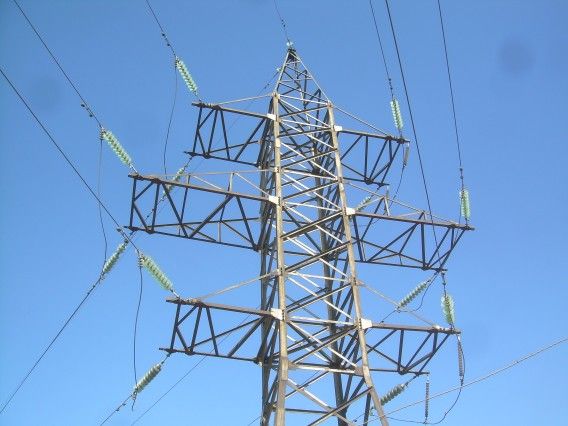
The Electric Stations OJSC, which includes seven HPPs and two thermal power plants, annually generates from 12 to 14 billion kWh of electricity. This electricity is transmitted to the National Electric Network of Kyrgyzstan OJSC, which transfers electricity through high-voltage networks to distribution companies.

A new 500kV power transmission line was launched in August 2015, joining the north and south of the country. With its construction, Kyrgyzstan’s own internal power ring was created to ensure the country’s energy independence. Now Kyrgyzstan is not dependent on the transit of electricity through Kazakhstan.

At each stage, there are risks of loss of electricity, but most of the losses occur when electricity goes from distribution companies to consumers. The electricity losses directly affect the state budget, since financial losses result in billions soms.

About 60% of equipment in Kyrgyzstan’s energy sector is worn out, the State Committee for Industry, Energy and Subsoil Use said. The basis of the country’s energy sector is 21 power plants. Many hydroelectric power plants require rehabilitation, and first of all the Uch-Kurgan HPP.

For 27 years of independence, the state has invested more than 200 billion soms in the energy sector, and attracted about $1.5 billion in external borrowings.

Russian plant to manufacture energy-saving tractors in Kazakhstan

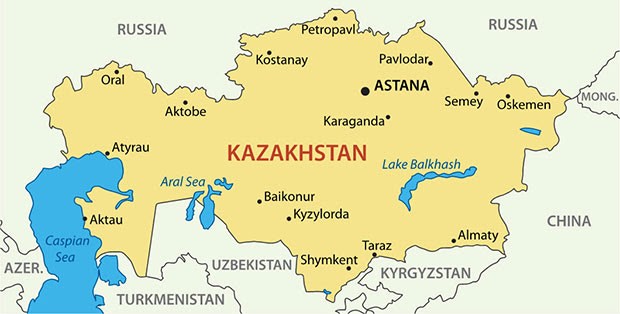
ASTANA (TCA) — Russia’s Peterburgsky Tractorny Zavod (Petersburg Tractor Plant) plans to start production of Kirovets energy-saving tractors in Kostanay (Kazakhstan). This was said at the meeting between First Deputy Prime Minister of Kazakhstan Askar Mamin and General Director of JSC Peterburgsky Tractorny Zavod Sergey Serebryakov on January 29 in Astana, the official website of the Prime Minister of Kazakhstan reported.

Continue reading