BISHKEK (TCA) — Kyrgyzstan’s energy management system is inefficient and bureaucratic, experts say. The National Energy Holding has been operating for three years but no significant changes have been in the sector so far.
Ineffective management
A lot of criticism has been expressed regarding the management of the energy sector and the effectiveness of the National Energy Holding Company OJSC, Prime Minister of Kyrgyzstan Mukhammedkaly Abylgaziyev said at the Government meeting to discuss reforms in the energy sector.
There is no significant progress in solving the problems related to the maintenance of the previously received credit funds, commissioning of new generating capacities, renewal of fixed assets of energy companies, as well as drafting strategic documents for the sector’s development, Abylgaziyev added.
Commissioning of new production facilities requires significant energy capacity.
“We should restore the citizens’ confidence in the energy sector and ensure openness and transparency of the industry, eliminating corruption risks. This will be possible with the introduction of new automated systems according to uniform high-quality standards,” Abylgaziyev said.
Kyrgyzstan now purchases most of the components for the energy sector abroad. To develop the domestic economy and create new jobs, the Prime Minister suggested producing “smart meters”, cables, transformers and other equipment within the country.
Kyrgyz President Sooronbai Jeenbekov criticized the National Energy Holding at the Security Council’s meeting in December. “Losses have not been reduced, and there is no progress in the sector,” he said.
Kyrgyzstan improved its Doing Business rating from the 77th place to the 70th, but the country has been at 160th place among 190 countries in terms of the connecting electricity index over the last three years.
Background
In December 2015, the Ministry of Industry and Energy drafted a law on establishment of the National Energy Holding which should not be accountable to the Parliament and Government, and the Audit Chamber was not entitled to check this company. The Parliament did not support the bill.
In January 2016, the National Energy Holding Company was established by the Government Resolution as part of the reform of the energy sector to reduce losses by introduction of automated electricity metering system.
The current Energy Holding Chairman, Azamat Abdykadyrov, has repeatedly stated that the holding is a private company.
The law “On the National Energy Holding” has not been drafted so far. The MPs rejected the first bill, and no one created a new one. It turns out that the holding is working illegally.
Holding’s maintenance
The holding exists due to payments of power companies — at the expense of their profits. Since many energy enterprises are unprofitable, payments for the Energy Holding’s maintenance were made at the expense of the state budget.
The Parliament members have repeatedly raised the issue of the Energy Holding. In fact, the state assets were transferred to a private company, they said. In the end, the costs of this holding are included in the electricity tariffs.
To finance the Energy Holding, distribution companies paid a certain amount to the holding each year. In 2017, Electric Power Stations transferred 18.1 million soms to the holding, Severelectro — 14.3 million, National Electric Network of Kyrgyzstan — 11.6 million, Oshelectro — 9.7 million, Vostokelectro and Jalal-Abadelectro — 7.3 million each, and Bishkek Heating Network — 4.4 million soms.
The Parliament’s Committee on Fuel and Energy Sector ordered the Government to consider the feasibility of the Holding’s existence, as well as the legality of the funds transferred by energy companies to the holding’s account.
Electricity losses
The National Energy Holding is not engaged in reducing commercial and technical electricity losses, which exceeded the expected figures last year, First Deputy Prime Minister Kubatbek Boronov said.
According to the State Committee for Industry, Energy and Subsoil Use, electricity losses amounted to 12.7% last year that is 1.54 million kWh.
To hide the loss of electricity, power companies used to submit overestimated electricity consumption data in November and December, energy expert Rasul Umbetaliyev told Vesti.kg news agency. As a result, the fictitious increase in accounts reduced indicators for electricity losses.
Last fall, the Government promised that there would be no blackouts during this winter heating season but in fact they occur regularly, but now they call them “interruptions in the electricity supply”. In Bishkek and Osh, entire areas are disconnected every day “for repair works” because the substations cannot withstand the load in the heating season, Umbetaliyev said.
There were violations in electricity accounting and theft, when large bills were written off for bribes, he added.
Many experts believe the Government should liquidate the National Energy Holding and restore the Energy Ministry.
The liquidation of the Ministry of Energy and Industry was a failure in the government policy, expert Valentina Kasymova said. The Energy Holding was established hastily without approval of the bill on holdings and announcement of the tender for a management company.
As a result, the electric power sector has fallen into a debt trap. Market reforms and formation of a legal framework were negated and investors do not come to the energy market. This threatens the energy security of the country, the expert concluded.
Limited consumption
More than 90% of electricity in Kyrgyzstan is generated by hydroelectric power plants (HPPs), and their production depends on water inflow which is unpredictable.
The increase in electricity output does not meet the increasing demand for energy. According to the Economy Ministry, electricity consumption has been growing by 10% annually since 2012 in Bishkek, but no new generation facilities have been built. Entrepreneurs are willing to pay for electricity, they are asking for permission to construct new buildings, but the Energy Holding limits their power consumption.
The Electric Stations OJSC, which includes seven HPPs and two thermal power plants, annually generates from 12 to 14 billion kWh of electricity. This electricity is transmitted to the National Electric Network of Kyrgyzstan OJSC, which transfers electricity through high-voltage networks to distribution companies.
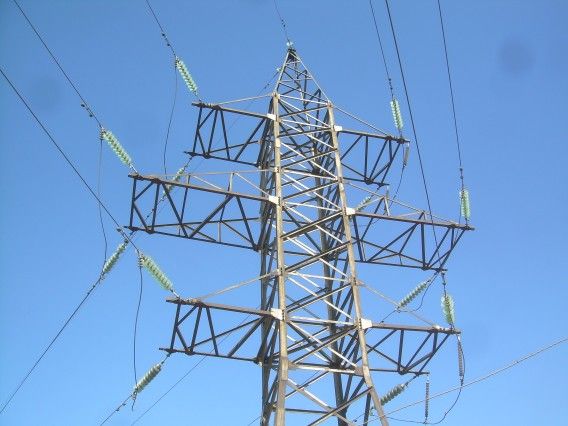
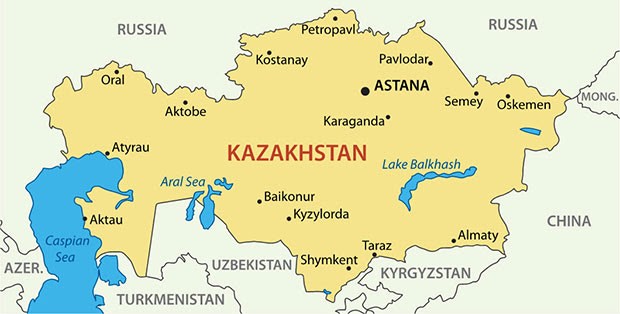
A new 500kV power transmission line was launched in August 2015, joining the north and south of the country. With its construction, Kyrgyzstan’s own internal power ring was created to ensure the country’s energy independence. Now Kyrgyzstan is not dependent on the transit of electricity through Kazakhstan.
At each stage, there are risks of loss of electricity, but most of the losses occur when electricity goes from distribution companies to consumers. The electricity losses directly affect the state budget, since financial losses result in billions soms.
About 60% of equipment in Kyrgyzstan’s energy sector is worn out, the State Committee for Industry, Energy and Subsoil Use said. The basis of the country’s energy sector is 21 power plants. Many hydroelectric power plants require rehabilitation, and first of all the Uch-Kurgan HPP.
For 27 years of independence, the state has invested more than 200 billion soms in the energy sector, and attracted about $1.5 billion in external borrowings.




 TCA
TCA