• KGS/USD = 0.01144 0%
  • KZT/USD = 0.00214 0%
  • TJS/USD = 0.10508 0.48%
  • UZS/USD = 0.00008 0%
  • TMT/USD = 0.28571 0%
  • KGS/USD = 0.01144 0%
  • KZT/USD = 0.00214 0%
  • TJS/USD = 0.10508 0.48%
  • UZS/USD = 0.00008 0%
  • TMT/USD = 0.28571 0%
  • KGS/USD = 0.01144 0%
  • KZT/USD = 0.00214 0%
  • TJS/USD = 0.10508 0.48%
  • UZS/USD = 0.00008 0%
  • TMT/USD = 0.28571 0%
  • KGS/USD = 0.01144 0%
  • KZT/USD = 0.00214 0%
  • TJS/USD = 0.10508 0.48%
  • UZS/USD = 0.00008 0%
  • TMT/USD = 0.28571 0%
  • KGS/USD = 0.01144 0%
  • KZT/USD = 0.00214 0%
  • TJS/USD = 0.10508 0.48%
  • UZS/USD = 0.00008 0%
  • TMT/USD = 0.28571 0%
  • KGS/USD = 0.01144 0%
  • KZT/USD = 0.00214 0%
  • TJS/USD = 0.10508 0.48%
  • UZS/USD = 0.00008 0%
  • TMT/USD = 0.28571 0%
  • KGS/USD = 0.01144 0%
  • KZT/USD = 0.00214 0%
  • TJS/USD = 0.10508 0.48%
  • UZS/USD = 0.00008 0%
  • TMT/USD = 0.28571 0%
  • KGS/USD = 0.01144 0%
  • KZT/USD = 0.00214 0%
  • TJS/USD = 0.10508 0.48%
  • UZS/USD = 0.00008 0%
  • TMT/USD = 0.28571 0%

ADB to help modernize Uzbekistan’s railway fleet

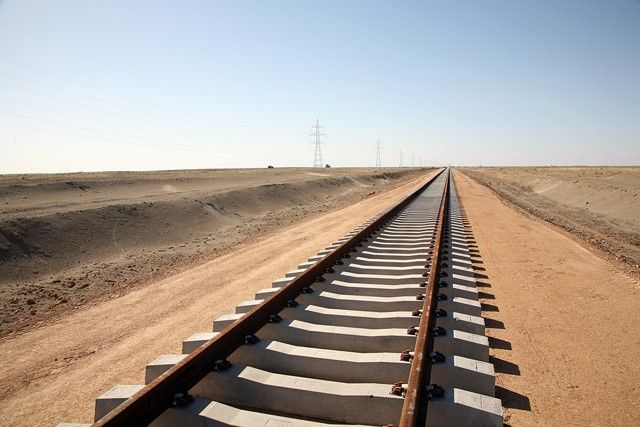
TASHKENT (TCA) — The Asian Development Bank (ADB) has approved a $170 million loan to help improve Uzbekistan’s railway fleet through the procurement of 24 state-of-the-art electric locomotives. The new locomotives will enhance the performance of the railway system by offering cleaner, more reliable, and efficient passenger and freight transport services, ADB’s country office in Uzbekistan said.

“Transport and connectivity are crucial for the growth and development of a double landlocked country like Uzbekistan, and remains a high priority for our support to Uzbekistan,” said ADB Country Director for Uzbekistan Ms. Cindy Malvicini.

Rail transport plays a significant part in Uzbekistan’s economy, particularly in moving large amount of freight in long distances as well as in moving passengers between the country’s densely populated cities. The 4,669-kilometer (km) rail network in Uzbekistan carries about 40% of total freight volume and about 4% of total passenger volume of the country’s land transport needs. In terms of electrification rate, more than 50%, or 2,350 km, of the country’s railway network is currently electrified.

“Having a cleaner, more efficient, and reliable transport network, in the form of electrified railways, will help boost Uzbekistan’s growth and maximize the country’s potential as a transport hub at the heart of Central Asia,” said ADB Senior Transport Specialist for Central and West Asia Mr. Ko Sakamoto.

The project will provide 24 electric locomotives, 16 of which are optimized for freight trains and 8 for passenger trains. These locomotives will help cut greenhouse gas emissions by 900,000 tons per year, while also reducing local air pollution. The locomotive depot in Tashkent, called O’zbekiston, will also be upgraded to effectively cater to service and maintenance needs of the new electric fleet. O’zbekiston Temir Yo’llari, the publicly owned railway company, will implement a long-term development strategy to equip itself for the emerging transport needs of the country.

The project will help reduce travel times on Uzbekistan’s railway network, improve service quality and reliability in the Central Asia Regional Economic Cooperation (CAREC) transport network, and strengthen the conditions for the private sector in the country to grow. It is also aligned with the goals under the CAREC Railway Strategy 2017–2030, which notes railways’ role as an engine for economic growth in Central Asia.

Total cost of the project is $218.3 million, with the Government of Uzbekistan contributing $48.3 million. The project is expected to be completed by June 2025.

ADB’s $170 million assistance directly complements other projects in Uzbekistan for the electrification of the country’s railway network, two of which are supported by ADB. In September 2011, ADB approved a $100 million loan for the electrification of 140 km of railway between Marakand and Karshi, while an $80 million loan was approved in April 2017 for the electrification of 145 km of railway linking the cities of Pap, Namangan, and Andijan in the Fergana Valley.
EBRD and Kyrgyzstan launch Climate Finance Centre

BISHKEK (TCA) — The European Bank for Reconstruction and Development (EBRD) and the Kyrgyz Republic are addressing climate related risks in the country by launching a Climate Finance Centre (CFC), which will help bridge financial assistance available through the national and international climate funds such as the Green Climate Fund. It will attract necessary investment for climate projects in various sectors ranging from energy and water to agriculture and health in Kyrgyzstan, the EBRD said.

The CFC was launched on May 23 in a ceremony attended by Muhamedkalyi Abylgaziev, Prime Minister of the Kyrgyz Republic, Alain Pilloux, EBRD Vice President, other senior officials and IFI representatives.

The establishment of the Climate Finance Centre was supported by Climate Investment Fund’s Pilot Programme for Climate Resilience.

The CFC’s objective will be to mobilise and coordinate investments and associated donor funding aimed at the improvement of climate resilience in sectors like water supply and treatment, power supply, health and food security, disaster risk management and many others.

Its activity will be of strategic importance for the Kyrgyz Republic, which is highly vulnerable to climate risks due to the high frequency of climate-related disasters, its dependency on climate-sensitive economic sectors and its ageing infrastructure.

EBRD Vice President Alain Pilloux said: “With the establishment of a well-functioning and effective climate finance coordination mechanism managed by the Climate Finance Centre, we can secure and streamline necessary funding for priority climate investments in the Kyrgyz Republic. The country’s climate impact mitigation strategy will now be supported the largest multilateral financing mechanisms for climate action”.

The EBRD is a major investor in climate finance in many of the 38 emerging economies where it works, a driving force in energy efficiency projects, a pioneer in the development of renewable energy sources and an increasingly important player in adaptation to climate change, having signed almost 180 climate resilience investments since 2011. Under its Green Economy Transition (GET) approach, the EBRD aims to dedicate 40 per cent of its annual investment to green finance by 2020 and is well on the way to achieving this objective.

Since 2011 the EBRD financed 74 climate resilience investments in Central Asia with total amount of EUR 441 million.