• KGS/USD = 0.01143 -0%
  • KZT/USD = 0.00192 -0%
  • TJS/USD = 0.10820 0.19%
  • UZS/USD = 0.00008 0%
  • TMT/USD = 0.28575 0%
  • KGS/USD = 0.01143 -0%
  • KZT/USD = 0.00192 -0%
  • TJS/USD = 0.10820 0.19%
  • UZS/USD = 0.00008 0%
  • TMT/USD = 0.28575 0%
  • KGS/USD = 0.01143 -0%
  • KZT/USD = 0.00192 -0%
  • TJS/USD = 0.10820 0.19%
  • UZS/USD = 0.00008 0%
  • TMT/USD = 0.28575 0%
  • KGS/USD = 0.01143 -0%
  • KZT/USD = 0.00192 -0%
  • TJS/USD = 0.10820 0.19%
  • UZS/USD = 0.00008 0%
  • TMT/USD = 0.28575 0%
  • KGS/USD = 0.01143 -0%
  • KZT/USD = 0.00192 -0%
  • TJS/USD = 0.10820 0.19%
  • UZS/USD = 0.00008 0%
  • TMT/USD = 0.28575 0%
  • KGS/USD = 0.01143 -0%
  • KZT/USD = 0.00192 -0%
  • TJS/USD = 0.10820 0.19%
  • UZS/USD = 0.00008 0%
  • TMT/USD = 0.28575 0%
  • KGS/USD = 0.01143 -0%
  • KZT/USD = 0.00192 -0%
  • TJS/USD = 0.10820 0.19%
  • UZS/USD = 0.00008 0%
  • TMT/USD = 0.28575 0%
  • KGS/USD = 0.01143 -0%
  • KZT/USD = 0.00192 -0%
  • TJS/USD = 0.10820 0.19%
  • UZS/USD = 0.00008 0%
  • TMT/USD = 0.28575 0%
14 December 2025

ADB ups growth forecast for Kazakhstan, downs for Kyrgyzstan, Turkmenistan, Uzbekistan

BISHKEK (TCA) — Growth remains stable across most of developing Asia due to robust domestic demand, buoyant oil and gas prices, and a consolidation of India’s growth rebound. But escalating trade tensions will test the region’s resilience, underscoring the importance of efforts to bolster trade ties among its countries, says a new Asian Development Bank (ADB) report.

Continue reading

Kazakhstan and Chinese companies sign new cooperation agreements

ASTANA (TCA) — On September 25-26, the First Deputy Prime Minister of Kazakhstan Askar Mamin paid a working visit to Beijing, China where he held talks with the First Vice Premier of the State Council of the PRC, co-chairman of the Kazakhstan-China Cooperation Committee Han Zheng, and also held a number of bilateral meetings with the heads of major Chinese investment, financial, industrial, construction, transport and logistics corporations on the implementation of joint investment projects, the official website of the Prime Minister of Kazakhstan reported.

“Thanks to the leaders of the two states — President Nursultan Nazarbayev and Chairman of the People’s Republic of China Xi Jinping, Kazakhstan and China have achieved a high level of cooperation across the spectrum of bilateral relations. The conjugation of the programs Nurly Zhol and Economic Belt of the Great Silk Road ensure a high level of investment cooperation between the two countries,” Mamin emphasized at the meeting.

According to the First Deputy Prime Minister of Kazakhstan, China is one of the main trade partners of Kazakhstan. Trade turnover between the countries in 2017 increased by more than 30%. High dynamics, which is typical for 2018, will help achieve the task set by the heads of the two states — to bring the volume of trade up to $20 billion.

During the meeting, Mamin noted the important role of the Kazakhstan-China Cooperation Committee in strengthening the comprehensive strategic partnership between the two countries.

To date, Kazakhstan and China are implementing 51 joint projects in the field of industry, transport and logistics worth about $28 billion. Successful implementation of these projects will create a number of large-scale productions, whose products will be delivered to the world’s leading markets. An agreement was reached on the joint implementation of new 11 projects worth $1.9 billion.

During his working trip to Beijing, Mamin held talks with the management of the companies CITIC Group, China Xin Xing Group Co., YTO Group Corp., Jiangxi Copper Company, Jiaxin Investment Resources, China Energy Engineering, CSI Solar Power Group, China CAMC Engineering Co ., LOVOL HEAVY INDUSTRY, China Energy Engineering Corporation, and China General Nuclear Power Group.

At the meeting with Head of COSCO Shipping Corporation Huang Xiaowen and Chairman of the Port of Lianyungang, issues of development of transcontinental transportation and further development of the joint terminal and FEZ Khorgos – East Gate were discussed.

With Head of China Construction Bank Wang Zuji, Mamin discussed cooperation in the financial sector. Mamin expressed the desirability of participation in the Astana International Financial Center (AIFC) of the “Big Six” of Chinese banks in financing projects under the One Belt, One Road initiative.

In Beijing, Askar Mamin also met with the leaders of the provinces of Henan, Sichuan and Chongqing.

A number of documents were signed during the working trip to China.

Akimat (administration) of Kazakhstan’s Kostanay region, JSC NC Kazakh Invest and HKC Corporation Limited signed a Roadmap for the implementation of the project “Construction of a TV production plant in the territory of Kostanay Industrial Zone for 2018-2019.” The construction of a plant to produce TV sets in Kostanay will begin in 2018. The planned capacity is 3 million units per year. The planned investments at the initial stage are $50 million. The target market for the products is the CIS countries.

National railways company Kazakhstan Temir Zholy (KTZ), Huawei International Co. Ltd. and Ili Baitexing Commercial Trading Co. Ltd. signed an Agreement on the development of e-commerce.

JSC Agromash Holding KZ, Lovol Heavy Industry, NC Kazakh Invest and YTO signed a Roadmap for the implementation of the project “Production of agricultural and road construction equipment.”

First ‘clean zone’ for female convicts constructed in Kyrgyzstan with EU support

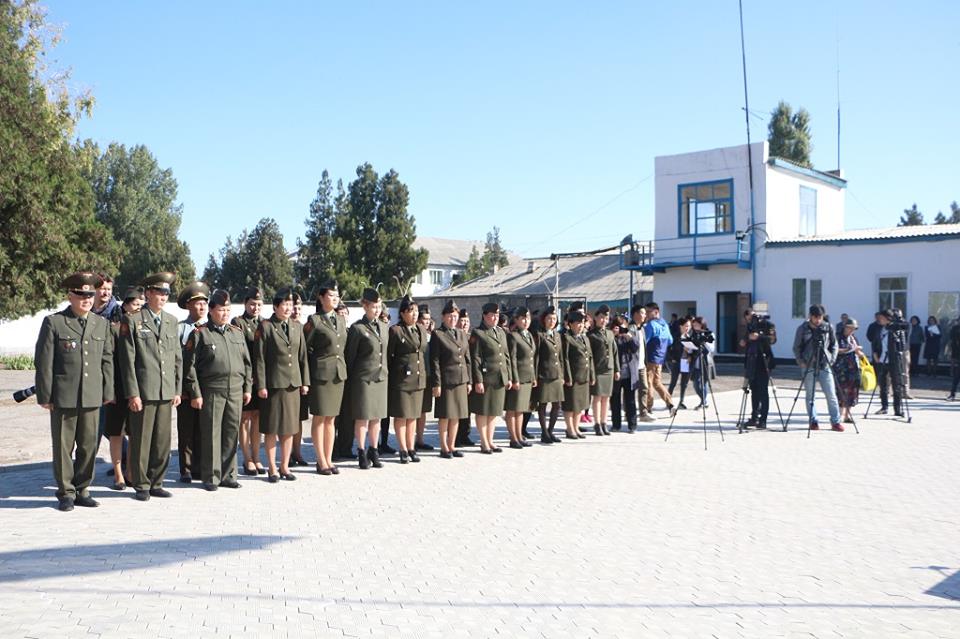
BISHKEK (TCA) — The Central Asia Drug Action Programme (CADAP) on September 26 officially handed over the building of the Rehabilitation and Social Adaptation Centre “Clean zone” based at the correctional institution #2. In the only female correctional institution in Kyrgyzstan located in Stepnoye village, the construction of the “Clean zone” for convicted women who made a choice to quit using psychoactive substances, has been completed.

Continue reading

ADB approves new partnership strategy for Kyrgyzstan

BISHKEK (TCA) — The Asian Development Bank’s (ADB) Board of Directors has endorsed a new 5-year country partnership strategy (CPS) to promote sustainable economic growth, leverage regional cooperation to reap the benefits of access to larger markets, and improve the quality of life in Kyrgyzstan.

The 2018–2022 strategy is expected to provide $641 million in grants and sovereign loans to the Kyrgyz Republic, which joined ADB in 1994. Sovereign operations will focus on energy, transport, education, public sector management, water supply and sanitation, and agriculture. Private sector support will explore opportunities in agribusiness, energy, and telecommunications. To date, ADB has provided about $1.7 billion in loans and grants to the country. ADB is the Kyrgyz Republic’s largest multilateral development partner.

“We are committed to helping the government achieve its development plans,” said ADB Country Director for the Kyrgyz Republic Ms. Candice McDeigan. “Our new CPS is focused on achieving higher and broader-based economic growth, creating jobs, and reducing poverty levels, especially in rural areas.”

The Kyrgyz Republic, a landlocked country with a small population of just over 6 million, needs to attract investments and diversify its economy. Economic growth has been driven largely by one commodity, gold, and remittances from workers in Kazakhstan and Russia. The economy faces constraints to create adequate jobs in the formal sectors, and about 25% of the population lives below the poverty line, with many of those living in rural areas and in the south of the country, the ADB said in a press release on September 25.

A priority for the government is to identify and invest in new areas of economic growth in select regional centers and towns. It is also focused on increasing the effectiveness of public spending, managing debt levels and trade imbalances, and strengthening the investment environment.

Given the wide-ranging needs of the country, ADB’s strategy builds upon its previous operations and aligns with evolving government priorities. The CPS supports economic diversification through investments in transport and energy, particularly improving the country’s aging hydropower plants to increase supply and boost power exports to neighboring countries. To improve the investment climate for private enterprise, ADB will provide policy-based support for reforms that make it easier to trade and do business.

The CPS will improve access to public and social services. ADB will reengage in the agriculture sector through project financing to improve services, increase productivity and the sector’s resilience to climate change and natural disasters, as well as improve supply chains to enable improved access to regional markets. ADB will continue its support for policies and programs to help students and workers acquire the training and skills they need to find work in a modern economy. A priority will be placed on reforms to secondary and tertiary education to help produce more science and technology graduates. The new CPS will also deliver safe drinking water and provide better sanitation systems in select urban and rural areas where infant mortality rates almost double that of the cities.

A key obstacle to further economic development has been the Kyrgyz Republic’s lack of advanced business facilities, including poor internet connectivity. To address this issue, the government has launched the Taza Koom digital transformation program, which aims to increase access to the internet, improve government services, and attract more private sector investment to the ICT industry. ADB will assist in the planning and management of this ambitious program.

The CPS will also leverage regional cooperation and integration initiatives to assist economic diversification and improve competitiveness. ADB will continue to support the government’s push to strengthen regional ties through the Central Asia Regional Economic Cooperation (CAREC) Program, under which the improvement of transport and trade corridors will continue to be important. The CPS will also provide multisector support to horticultural trade and tourism services, especially in the country’s north and south, to increase competitiveness and open up new markets outside of the country.