• KGS/USD = 0.01144 0%
  • KZT/USD = 0.00193 -0%
  • TJS/USD = 0.10811 -0.28%
  • UZS/USD = 0.00008 0%
  • TMT/USD = 0.28490 0%
  • KGS/USD = 0.01144 0%
  • KZT/USD = 0.00193 -0%
  • TJS/USD = 0.10811 -0.28%
  • UZS/USD = 0.00008 0%
  • TMT/USD = 0.28490 0%
  • KGS/USD = 0.01144 0%
  • KZT/USD = 0.00193 -0%
  • TJS/USD = 0.10811 -0.28%
  • UZS/USD = 0.00008 0%
  • TMT/USD = 0.28490 0%
  • KGS/USD = 0.01144 0%
  • KZT/USD = 0.00193 -0%
  • TJS/USD = 0.10811 -0.28%
  • UZS/USD = 0.00008 0%
  • TMT/USD = 0.28490 0%
  • KGS/USD = 0.01144 0%
  • KZT/USD = 0.00193 -0%
  • TJS/USD = 0.10811 -0.28%
  • UZS/USD = 0.00008 0%
  • TMT/USD = 0.28490 0%
  • KGS/USD = 0.01144 0%
  • KZT/USD = 0.00193 -0%
  • TJS/USD = 0.10811 -0.28%
  • UZS/USD = 0.00008 0%
  • TMT/USD = 0.28490 0%
  • KGS/USD = 0.01144 0%
  • KZT/USD = 0.00193 -0%
  • TJS/USD = 0.10811 -0.28%
  • UZS/USD = 0.00008 0%
  • TMT/USD = 0.28490 0%
  • KGS/USD = 0.01144 0%
  • KZT/USD = 0.00193 -0%
  • TJS/USD = 0.10811 -0.28%
  • UZS/USD = 0.00008 0%
  • TMT/USD = 0.28490 0%
10 December 2025

First Kazakhstan-France Investment Forum held in Paris

ASTANA (TCA) — The Kazakhstan-France Investment Forum was held in Paris on May 28, with the support of the Embassy of Kazakhstan in France and Kazakh Invest National Company for Investment Support and Promotion. The forum featured a discussion of Kazakhstan’s investment opportunities and signing of a number of cooperation documents, Kazakh Invest said.

The Forum was attended by the Minister of State attached to the Minister for Europe and Foreign Affairs Jean-Baptiste Lemoyne, Chairman of the Investment Committee of the Kazakh Ministry of Investment and Development Yerlan Khairov, Ambassador of Kazakhstan to France Zhan Galiyev, Ambassador of France to Kazakhstan Philippe Martine, Chairman of the Board of Kazakh Invest Saparbek Tuyakbayev and representatives of the French and Kazakh business communities.

At the opening of the forum, the participants noted that French companies are interested in investing in Kazakhstan, which is a strategic corridor linking the Eurasian continent.

The Chairman of the Investment Committee Yerlan Khairov said that last year about 25% of foreign investments in Kazakhstan were allocated to the manufacturing industry. “This shows that Kazakhstan is becoming attractive not only in the oil industry. We comply with the international standards, and last year Kazakhstan joined the OECD Investment Committee,” Khairov said.

Mr. Lemoyne also stressed the importance of strategic partnership with Kazakhstan, “I can say that strategic partnership with Kazakhstan is a great reality. We need to breathe a new life into this partnership and strengthen it, taking into account the economic and political peculiarities. Kazakhstan’s privatization program is very interesting. I think France has the expertise and competence to contribute to establishment of the proposed cooperation with Kazakhstan.”

The Chairman of the Board of Kazakh Invest Saparbek Tuyakbayev noted that about 2/3 of GDP investments of the Central Asian countries are in Kazakhstan, which ranks first among the CIS countries in terms of attracted investments per capita.

Tuyakbayev also spoke about the current support measures for foreign investors in Kazakhstan.

According to Kazakh Invest, world companies operating in Kazakhstan have access to a market of more than 500 million people. The multi-modal Eurasian transport corridor passes through Kazakhstan, including 5 railway and 6 automobile international routes, as well as the modern transcontinental motor road “Western Europe – Western China”.

“Our transport corridors allow delivering cargo from Asia (Lianyungang port, China) to Europe (Duisburg port, Germany) or back in 10-15 days, which is 2-3 times faster than by sea. I can say that container transportation volume has grown 2-fold,” Tyuakbayev said.

50 niche projects in priority sectors of economy in accordance with the Kazakh National Investment Strategy were presented to French businessmen. These investment proposals were developed jointly with Deloitte.

The forum also included discussions at such sessions as “Kazakhstan as a platform for investment and export on the New Silk Road”, “Tools for attracting foreign investment in Kazakhstan” and “Digitization of the economy”.

Toxic Aral Sea salt storm hits Uzbekistan, Turkmenistan

TASHKENT (TCA) — Large parts of western Uzbekistan and northern Turkmenistan are recovering from a severe salt storm that has damaged agriculture and livestock herds, RFE/RL’s Uzbek Service reported.

The three-day storm hit Uzbekistan’s Karakalpakstan and Khorezm regions, as well as Turkmenistan’s Dashoguz Province, beginning on May 26.

The salt — lifted from dried-out former parts of the Aral Sea — left a white dust on farmers’ fields and fruit trees that is expected to ruin many crops.

The storm also caused flights at the Urgench airport to be canceled, made driving hazardous, and caused breathing difficulties for many people.

Particularly hard hit by the storm, which reached speeds of more than 20 meters per second, were the Uzbek regions of Khorezm, Navoi, and Bukhara.

Remnants of the storm were also reported as far south as Ashgabat, the capital of Turkmenistan.

Temirbek Bobo, 80, told RFE/RL’s Uzbek Service that it was the first time he had seen such a harsh storm.

“I’ve seen the wind bring sand before, but this was the first time I saw salt. This event can be called a catastrophe,” said Bobo, who lives in the Takhiatash district of Karakalpakstan. “The whole day there was nothing but salt rain [coming down]. The sun was not visible.”

He added: “Nature began to take revenge on us for [what we have done] to the Aral Sea.”

A representative of the Karakalpakstan’s Council of Ministers, who spoke on condition of anonymity, said the council had not received any instructions regarding the situation, but suggested that the region’s Agricultural Ministry may have.

Salt storms are common in areas near the Aral Sea, but this one carried salt over a much wider area.

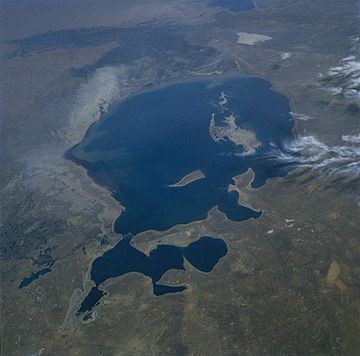
The Aral Sea once was one of the four largest seas on Earth, but intensive irrigation projects set up by the Soviet Union in the 1960s led to its desiccation.

The runoff from nearby agricultural fields has polluted the remaining parts of the Aral Sea with pesticides and fertilizers, which have crystallized with the salt.

Inhalation of the salt can cause severe throat and lung problems. The salt also can poison farmers’ produce and cause chemical damage to buildings.

Kyrgyzstan: green activists sound alarm over air pollution in Bishkek

BISHKEK (TCA) — Environmentalists are asking the President of Kyrgyzstan to declare 2019 the year of ecology. This was announced at the recent roundtable on air pollution problems in the capital Bishkek. Parliament members, representatives of the Achyk Asman (Clean Air) youth environmental movement, civil society, and the media took part in the discussions.

It is encouraging that industrial production is developing in the country, mainly at small enterprises, but they often do not take into account environmental aspects. The State usually draws attention to the environment only when problems arise, Achyk Asman head Ermek Adylbekov said.

Kyrgyzstan remains among the seldom countries in the world where nature is still relatively well preserved. It would be a big mistake of the Government and an irreparable loss for the nation if the environment deteriorates as a result of human negligence and mismanagement, MP Dastan Bekeshev said.

Kyrgyzstan is an agrarian country. But even the development of agriculture leads to a deterioration of the ecological situation in the country. Incorrect cultivation of arable land, introduction of pesticides, outdated irrigation and drainage systems, which have not been updated since Soviet times – all this negatively affects the ecological situation in Kyrgyzstan, Bekeshev said.

The MP also expressed outrage at the way the country uses clean water. “We mindlessly use drinking water spending it for washing cars and other things,” he said.

Cutting trees

The Bishkek authorities are massively cutting trees, which leads to environmental degradation in the city, said the head of the Green Party movement Erkin Bulekbaev.

In 2017, about three thousand trees were cut down for the expansion of roads, which caused discontent from environmentalists and local residents. Bishkek authorities explained that the firewood was given to poor families, as well as the felled trees were sold and the money has been spent for the city’s needs. Last year, 2,938 trees were felled in Bishkek, of which 840 trees were in emergency, the city administration clarified.

However, residents and activists suspected city officials of corrupt sales of timber for their own benefit.

Environmentalists believe that mass tree cutting will affect the ecology and health of Bishkek residents.

According to the city administration, instead of cut down trees they planted more than 10,000 seedlings. However, most of those seedlings did not take root.

No matter how many trees are planted, this will not change anything, because the problem is in the competence and professionalism of the city officials, well-known environmental scientist Emil Shukurov said. Landscapers kill the environment, primarily by their incompetence, he added. Many of the imported seedlings could not accommodate to local natural conditions, because they are designed for another environment, he explained.

The trees bought by the city administration are dozens of times more expensive than local trees, so they cannot afford to landscape the whole city, but some specific areas only.

All trees in the city grew out of ordinary seedlings. This means that previous landscapers knew how to grow them, while the current ones do not cope with their work, Shukurov said. The officials say that 50-year-old trees have outlived their time, and they need to be demolished. Meanwhile, the life expectancy of a tree with proper care reaches almost 100 years. Shukurov blamed the city authorities “who turn our Bishkek into a sawmill”.

Transport

Transport is the main cause of air pollution, followed by heating in the private sector and construction, Daniyar Sulaimanov, head of the Sanitary and Environmental Inspection of the Bishkek administration, said.

According to the State Agency for Environmental Protection and Forestry of Kyrgyzstan, 25 percent of owners of motor vehicles in the city use cheap fuel without catalysts. There are about 400,000 cars in Bishkek, and in certain seasons their number reaches 600,000. The city is not designed for such a quantity of vehicles.

At the beginning of the year, the State Agency established an interdepartmental commission which developed a plan for the protection of atmospheric air which includes establishing of environmental posts to measure the emission of harmful substances by cars and to bring to justice the violators in Bishkek.

Currently, developed countries are switching to a more environmentally friendly fuel, Euro-6, but in Kyrgyzstan there are discussions about switching to Euro-4 or Euro-5. The Economy Ministry and the local Junda refinery are against the transition to environmental fuel from January 1, 2019. “Money won the ecology,” MP Bekeshev concluded. The Junda refinery processes crude oil imported by rail from Kazakhstan.

84% of cars are old in Bishkek, the MP said. An increase of the tax for old motor vehicles will help solve the problem of atmospheric pollution, he believes. But local population is not ready for this, a survey conducted in social networks showed.

Heating

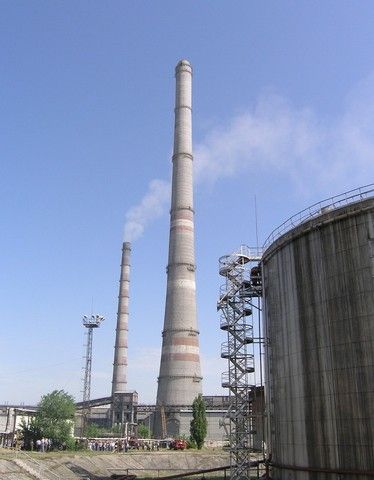
There are 65 boiler houses in Bishkek, and only 10 of them have been modernized. This year the city administration plans to continue their modernization and transfer to natural gas. Solar collectors were installed at two boiler plants, which reduced the consumption of coal by 1,400 tons and the emission of greenhouse gases.

Russia’s Gazprom gasifies the residential areas of Bishkek, which will help reduce harmful emissions into the atmosphere. There are 49 residential areas in Bishkek, which mainly use coal and synthetic substances as fuel in the cold season.

To solve the problem, MP Bekeshev suggested applying a differentiated electricity tariff. If the State increases the cost of electricity, people will burn any garbage, poisoning the environment. “In five years the Government will have to spend a lot of money on the fight against the consequences of emissions from coal combustion,” he concluded.

At the same time, the city administration is actively subsidizing free coal to low-income families. More than 4.5 thousand families in Bishkek annually receive free coal worth 20 million soms. The MP advised to spend this amount for subsidizing the electricity tariffs.