• KGS/USD = 0.01144 0%
  • KZT/USD = 0.00194 -0%
  • TJS/USD = 0.10883 0%
  • UZS/USD = 0.00008 0%
  • TMT/USD = 0.28490 0%
  • KGS/USD = 0.01144 0%
  • KZT/USD = 0.00194 -0%
  • TJS/USD = 0.10883 0%
  • UZS/USD = 0.00008 0%
  • TMT/USD = 0.28490 0%
  • KGS/USD = 0.01144 0%
  • KZT/USD = 0.00194 -0%
  • TJS/USD = 0.10883 0%
  • UZS/USD = 0.00008 0%
  • TMT/USD = 0.28490 0%
  • KGS/USD = 0.01144 0%
  • KZT/USD = 0.00194 -0%
  • TJS/USD = 0.10883 0%
  • UZS/USD = 0.00008 0%
  • TMT/USD = 0.28490 0%
  • KGS/USD = 0.01144 0%
  • KZT/USD = 0.00194 -0%
  • TJS/USD = 0.10883 0%
  • UZS/USD = 0.00008 0%
  • TMT/USD = 0.28490 0%
  • KGS/USD = 0.01144 0%
  • KZT/USD = 0.00194 -0%
  • TJS/USD = 0.10883 0%
  • UZS/USD = 0.00008 0%
  • TMT/USD = 0.28490 0%
  • KGS/USD = 0.01144 0%
  • KZT/USD = 0.00194 -0%
  • TJS/USD = 0.10883 0%
  • UZS/USD = 0.00008 0%
  • TMT/USD = 0.28490 0%
  • KGS/USD = 0.01144 0%
  • KZT/USD = 0.00194 -0%
  • TJS/USD = 0.10883 0%
  • UZS/USD = 0.00008 0%
  • TMT/USD = 0.28490 0%
16 December 2025

India and Kyrgyzstan deepen their military cooperation

BISHKEK (TCA) — India is making inroads to Central Asia to counterbalance the growing influence of China in the region. India’s military cooperation with Kyrgyzstan can therefore be considered as part of such efforts. We are republishing this article on the issue, written by John C. K. Daly, originally published by The Jamestown Foundation’s Eurasia Daily Monitor:

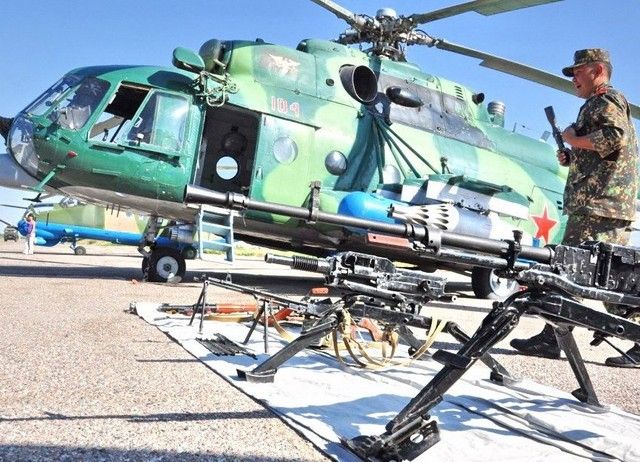
On May 14, Indian and Kyrgyzstani alpine special forces troops began a two-week joint training exercise at Kyrgyzstan’s Military Base 20636. The exercise included both lectures and practical classes on tactical, mountain and fire training, as well as survival techniques in mountainous conditions (AKIPress, May 21). The exercise is the second joint Indian-Kyrgyzstani military drill of 2018 and the latest in a series of discrete increasing bilateral military contacts over the past seven years. A core concern of both militaries is the development of military capabilities to battle terrorist groups in mountainous regions.

The recent joint training followed in the wake of the bilateral Khanjar-V (“Blade”) exercise, the fifth iteration of joint training between the two countries’ militaries. The two-week long Khanjar-V drill began on March 16, at the Indian Army’s Counter Insurgency Jungle Warfare School, in Vairengte, Mizoram (India Blooms News Service, March 29). The scenarios included inserting airborne troops from helicopters to destroy a terrorist encampment.

The first Khanjar exercise was conducted in December 2011, in Nahan, India. The scope of the operation was extremely modest, with only 20 Kyrgyzstani service members participating (Kant.kg, March 18, 2015). Three years later, the two-week long Khanjar-II joint operation was held at Tokmok, in Kyrgyzstan, on March 10–25, 2015 (Embassyofindia.kg, accessed May 31, 2018). The exercise took place in the Shamsi Gorge region, just outside the Kyrgyz Republic’s capital city of Bishkek. The participants included members of the Kyrgyzstani “Scorpion” special forces alongside servicemen of military unit number 01525 and 50 Indian special-purpose fighters, for a total of roughly 100 service members (K-News, March 11, 2015).

Three months after the bilateral exercise in Shamsi Gorge, Indian Prime Minister Narendra Modi visited Kyrgyzstan, on July 11–12, 2015, at the end of an eight-day six-country tour of Central Asia, on his way back from Russia after the BRICS/Shanghai Cooperation Organization (SCO) summits. Speaking to journalists following his talks with then-president of Kyrgyzstan Almazbek Atambayev, Modi emphasized the two countries’ shared concerns about terrorism and extremism, remarking, “We both seek a peaceful and secure neighborhood at a time of challenges in our region. And, we have [a] shared interest in combating extremism and terrorism that has become a threat without borders.” Noting that bilateral defense ties were strong, he continued, “The special forces of the armed forces of the two countries held the ‘Khanjar 2015’ joint exercise in Kyrgyzstan in March, which reflected continuity in exercises held in India in 2011” (Press Trust of India, July 12, 2015).

During Modi’s 2015 visit, New Delhi and Bishkek signed four key agreements on cooperation in defense and cultural fields. Modi said that during his discussions with the Kyrgyzstani government, “We have decided to hold joint military exercises on an annual basis” (IANS, July 13, 2015).

Khanjar-III was subsequently held in March–April 2016, in Gwalior, India, which was followed eight months later by a state visit of then-president Atambayev to India. The topics under discussion pointedly included further military cooperation (Mea.gov.in, December 20, 2016).

Following the reciprocal visits by Modi and Atambayev, military cooperation between the two countries was regularized and expanded. By the end of 2016, bilateral collaboration included the construction of the Kyrgyz-Indian Mountain Training Center, in Balykchi, in Kyrgyzstan’s Issyk-Kul district. The Center’s mission is to provide instruction and training to personnel of the Armed Forces of the Kyrgyz Republic and also host joint mountain training exercises (Oneindia News, March 2, 2017). India additionally built a military hospital and IT centers at a number of Kyrgyzstani military institutions (For.kg, December 20, 2016).

The core of bilateral Indian-Kyrgyzstani military cooperation remains the annual Khanjar bilateral exercises. The 2017 Khanjar-IV two-week joint exercise began on February 19, at Kyrgyzstan’s Kok Jhangak military base, roughly 100 miles from Osh (Embassyofindia.kg, February 17, 2017).

The primary impetus for the bilateral military cooperation remains the joint training of special forces troops for operations in remote mountainous regions, a problem that both countries share: India in the Himalayas and Kyrgyzstan along its borders with Tajikistan and Uzbekistan. A second shared underlying premise is to broaden international contacts while lessening diplomatic isolation: India is seeking to check both China and Pakistan, while Kyrgyzstan wishes to blunt the influence of its giant neighbor to the east. Both countries also have close ties to Russia, into which they might wish to let a little sunlight; India is Russia’s largest arms export market, while Kyrgyzstan is sensitive to issues with Russia regarding state sovereignty. Notably, Russia maintains bases in the country, from a naval facility on Lake Issyk-Kul to an airbase at Kant—with a third military facility apparently being planned (see EDM, May 24, 2018).

The symbolic implications of Kyrgyzstan and India’s cooperation extend well beyond their relatively modest military commitments. Specifically, both countries are preparing to confront the vexing issues of rising Eurasian transnational terrorism, seeking, in the words of Prime Minister Modi, “a peaceful and secure neighborhood” at a time of regional “challenges.”
Kyrgyzstan: agriculture forum to explore trade and investment opportunities

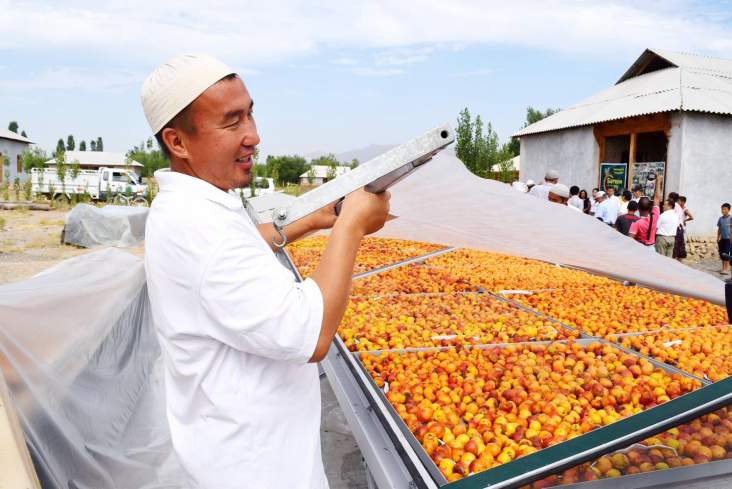
BISHKEK (TCA) — On June 5 and 6, the U.S. Agency for International Development (USAID) will host an Agriculture Trade and Investment Forum in Bishkek, Kyrgyzstan to bring together 200 agricultural producers, entrepreneurs, government officials, and investors to help them build market linkages, explore investment opportunities and learn new ways to finance agricultural production, the US Embassy in Kyrgyzstan said.

Continue reading

Kazakhstan’s geographic society completes expedition to Aral Sea

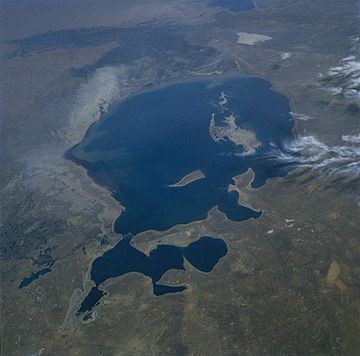
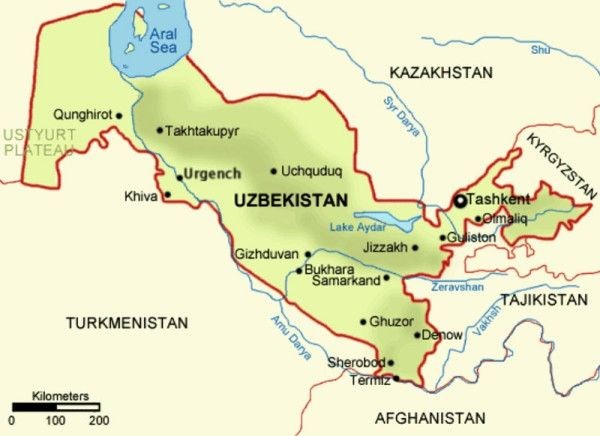
ASTANA (TCA) — The 20-day expedition of Kazakhstan’s National Geographic Society QazaqGeography around the North and South Aral Sea finished last week. The trip covered more than 7,000 km across Kazakhstan and Uzbekistan and included nine regions of Kazakhstan, seven regions of Uzbekistan, and the Republic of Karakalpakstan (Uzbekistan), the official website of the Prime Minister of Kazakhstan reported.

Continue reading

Top manager of major mining company under house arrest in Kyrgyzstan

BISHKEK (TCA) — “We appreciate all investors who conduct their business in Kyrgyzstan, but often problems arise from the work of companies’ top managers who sometimes carry out illegal activities,” Secretary of the Security Council of Kyrgyzstan Damir Sagynbaev said at a press conference in Bishkek on May 31.

He was commenting on the situation around the detention of Ilyas Tulekeyev, General Director of KAZ Minerals Bozymchak, which caused great resonance in the country and abroad.

Last week, Ilyas Tulekeyev was arrested and later put under house arrest in Bishkek.

About the company

KAZ Minerals Bozymchak belongs to the KAZ Minerals PLC group of companies, the largest copper producer in Kazakhstan. More than 33% of KAZ Minerals PLC shares belong to Vladimir Kim, who has a fortune Forbes estimated at $3.1 billion.

KAZ Minerals Bozymchak has been operating in Kyrgyzstan since 2007. It holds licenses for exploration and development of the Bozymchak copper and gold deposit in the Ala-Buka district of the Jalal-Abad province. The explored reserves of copper are 140.78 thousand tons, gold — 22.96 tons, and silver — 144.2 tons.

In 2015, the Bozymchak ore mining and processing enterprise was launched which now employs about a thousand people, and 97% of them are locals.

For the operating period, the company has paid 2.8 billion soms of taxes to the state budget. Last year, KAZ Minerals Bozymchak was ranked among the top three taxpayers of the country, and paid about 768 million soms to the state budget of Kyrgyzstan. The company has invested about $500 million in the country.

Official version

The criminal case against KAZ Minerals Bozymchak was initiated in 2017 and was later suspended, Security Council Secretary Sagynbaev said.

During a second inspection, the suspended criminal case was resumed, and Ilyas Tulekeyev, General Director of KAZ Minerals Bozymchak, was charged. On May 25, 2018, he was detained and charged for “abuse of powers by employees of commercial or other organizations”.

After Tulekeyev was detained, many other companies that are in arrears with the Social Fund and the Tax Service reimbursed their tax debts. In three days, six large companies transferred tax arrears worth 33 million soms, Sagynbaev said.

Kyrgyzstan does not intend to scare away investors who have nothing to do with law violations, he added.

On May 27, the Pervomaisky District Court of Bishkek released Tulekeyev from custody, but the charge was not withdrawn.

KAZ Minerals’s position

KAZ Minerals Bozymchak expressed its concern about the unreasonable initiation of the criminal case, violation of the law and legal interests of the investor.

On May 29, the KAZ Minerals Board of Directors held a press conference in Bishkek to clarify the situation.

The company sued an administrative action to appeal the decision of Kyrgyzstan’s tax authorities due to the additional taxation according to the Government provision adopted in September 2017. The court session on this suit is scheduled for July 2018. According to the law, the investigation into the case of the General Director was to be suspended until the court’s decision.

Nevertheless, on May 25, the Financial Police detained Tulekeyev, who was charged with the non-payment of an additional amount of taxes in the amount of 55.6 million soms. The tax was added to the company retrospectively, that is, in hindsight.

The company disputes this additional charge in court, therefore, it is not yet legal.

Nevertheless, the company showed its loyalty and on May 28, 2018 transferred a disputable amount of 55.6 million soms to the deposit account of the Financial Police until the court decision. After the trial, the disputable amount will either be returned to the company or go to the state, depending on the court’s decision.

The tax inspection began in January 2017 to check the investor’s activities for 2014, 2015 and 2016. As a result, the State Tax Service added additional 55.6 million soms as an income tax, despite the fact that the Government amended the Regulation on the procedure for determining the value of gold in gold ore and gold concentrate in September 2017. According to the Constitution of the Kyrgyz Republic, the laws are not retroactive.

The company believes that it should pay tax from September 2017, when the amendments were adopted according to which any concentrate containing even a minimum percentage of gold is considered gold-bearing.

The concentrate the company operates with consists of copper, silver and gold, and copper predominates in the concentrate.

Until 2007, when KAZ Minerals Bozymchak entered Kyrgyzstan’s market, there was no copper industry in the country. Accordingly, Kyrgyzstan’s legislation did not take into account this specificity. This is a matter of production technology. “Therefore, the taxation applied to gold mining and gold processing companies was automatically applied to us as well,” Tulekeev explained.

“We are ready to meet and pay taxes, but within the legal framework,” Board Chairman Eldar Mammadov concluded.

Business community’s opinion

As of May 25, 2018, shares of KAZ Minerals PLC on the London Stock Exchange fell -10.80 points and lost 1.07% of their price.

Kyrgyzstan should think about the conditions it creates for investors, said Askar Sydykov, Executive Director of the International Business Council (IBC) based in Bishkek.

Last autumn, when the license of KAZ Minerals Bozymchak was suspended due to environmental claims, the company’s share prices fell on the London Stock Exchange. The damage was incurred not only to the KAZ Minerals PLC Group, but also to Kyrgyzstan. Kyrgyzstan’s rating after that began to fall, affecting the investment image of the country.

Kyrgyzstan badly needs foreign investment. Investors follow up the situation in the country and assess the investment climate and risks. The situation around one of the largest investors in Kyrgyzstan’s mining industry may be disappointing, and potential investors can change their decision and invest in another country with fewer risks.

The position of state structures is not clear in this situation because it is the State that should strongly support investors and business, the business community believes.

IBC believes that KAZ Minerals Bozymchak was forced to transfer 55.6 million soms to the account of the Finance Police. “It looks like raiding because the court has not yet ordered that this amount should be paid,” Sydykov said.

There is one more nuance. According to the Kyrgyz Government’s decree on stimulating the activities of law enforcement agencies, 30% of the money received as compensation for damage to the state by persons guilty for economic and official crimes can be transferred to accounts of law enforcement agencies for their own needs, including bonuses for employees.