• KGS/USD = 0.01144 0%
  • KZT/USD = 0.00196 -0%
  • TJS/USD = 0.10899 -0%
  • UZS/USD = 0.00008 -0%
  • TMT/USD = 0.28490 0%
  • KGS/USD = 0.01144 0%
  • KZT/USD = 0.00196 -0%
  • TJS/USD = 0.10899 -0%
  • UZS/USD = 0.00008 -0%
  • TMT/USD = 0.28490 0%
  • KGS/USD = 0.01144 0%
  • KZT/USD = 0.00196 -0%
  • TJS/USD = 0.10899 -0%
  • UZS/USD = 0.00008 -0%
  • TMT/USD = 0.28490 0%
  • KGS/USD = 0.01144 0%
  • KZT/USD = 0.00196 -0%
  • TJS/USD = 0.10899 -0%
  • UZS/USD = 0.00008 -0%
  • TMT/USD = 0.28490 0%
  • KGS/USD = 0.01144 0%
  • KZT/USD = 0.00196 -0%
  • TJS/USD = 0.10899 -0%
  • UZS/USD = 0.00008 -0%
  • TMT/USD = 0.28490 0%
  • KGS/USD = 0.01144 0%
  • KZT/USD = 0.00196 -0%
  • TJS/USD = 0.10899 -0%
  • UZS/USD = 0.00008 -0%
  • TMT/USD = 0.28490 0%
  • KGS/USD = 0.01144 0%
  • KZT/USD = 0.00196 -0%
  • TJS/USD = 0.10899 -0%
  • UZS/USD = 0.00008 -0%
  • TMT/USD = 0.28490 0%
  • KGS/USD = 0.01144 0%
  • KZT/USD = 0.00196 -0%
  • TJS/USD = 0.10899 -0%
  • UZS/USD = 0.00008 -0%
  • TMT/USD = 0.28490 0%
08 December 2025

Faced with Chinese expansion, Kazakhstan seeks alternative energy markets

ASTANA (TCA) — As China remains the major export destination for Kazakh oil and gas, Kazakhstan is seeking to diversify its hydrocarbon export routes. We are republishing this article on the issue by Farkhad Sharip, originally published by The Jamestown Foundation’s Eurasia Daily Monitor:

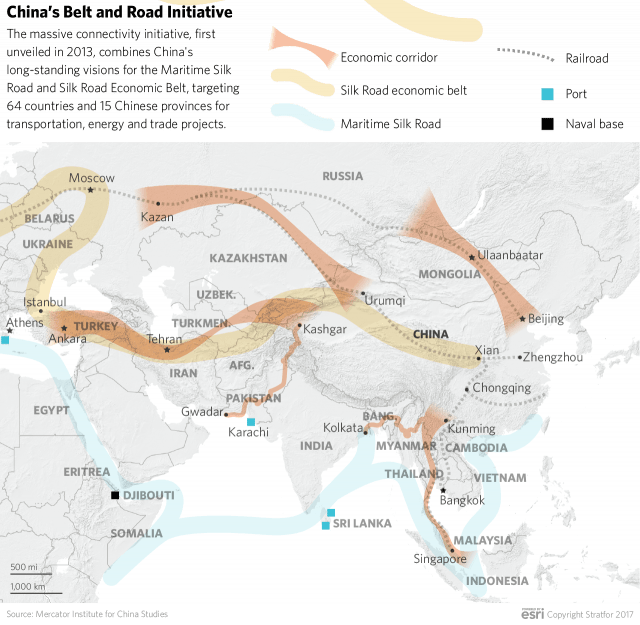
It could be assumed that the intensifying trade war between the United States and China would cause economic slowdown in China and result, in the long run, in the drastic reduction of Chinese imports of energy resources from Kazakhstan. But in his recent interview to Kazakhstani media outlets, Chinese ambassador to Astana, Zhang Hanhui, dispelled these fears. Rather, Beijing’s emissary announced that his country intends to increase imports of oil, natural gas and metals, as well as agricultural produce and raw materials from Kazakhstan. In his words, the trade war with the US will not affect in any way import volumes. He stressed the importance of the speedy implementation of the Chinese-proposed project of economic integration of states around the Altay Mountains (including Kazakhstan, China, Russia and Mongolia), as he put it, “to build a new international economic corridor” (Kursiv.kz, April 13). Such integration may arguably boost Kazakhstan’s agricultural, transport and industrial sectors. However, given Astana’s and Beijing’s substantial divergence of interests and differing export strategies, this project seems hardly feasible for the oil and gas sector.

Kazakhstan’s state-owned energy company KazMunayGaz announced its plans to export 7 billion cubic meters (bcm) of gas this year and to increase the shipment volume to 10 bcm by the year 2019. But to achieve that target, KazMunayGaz will have to increase the capacity of the Beyneu–Bozoi–Shymkent pipeline by building additional compressor stations. Apart from technical problems, KazMunayGaz is likely to face severe competition from Russian Gazprom, which is currently building its Sila Sibiri (Siberian Power) gas pipeline, from Far Eastern Yakutia to China, to ship its first annual gas supply of 38 bcm by 2019. Although, construction work on Sila Sibiri has already fallen behind schedule (Abctv.kz, January 15).

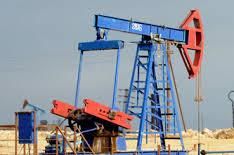
Riddled with financial and technical problems, Kazakhstan is currently unable to develop its oil infrastructure. The three pre-existing refineries, in Atyrau, Shymkent and Pavlodar, need substantial modernization. Over the last five years, the value of China’s oil and gas imports from Kazakhstan has fallen from $8.7 billion, in 2013, to $853.4 million, in 2017. Partly, this drop can be explained by the September 2013 suspension of oil output at the Kashagan oilfield, Kazakhstan’s largest oil and gas deposit, due to gas leaks in the pipeline, which took three years to replace. But a more plausible explanation evidently lies in the fact that, from 2014 on, China started importing more Russian oil through the Atasu–Alashankou pipeline, which had been used by Kazakhstan below capacity (365info.kz, February 12).

Kazakhstan is seeking to diversify its hydrocarbon export routes as an alternative to the unpredictable and politically volatile Chinese energy market. On the one hand, current political tensions between Europe and Russia as well as the sporadic threats from Gazprom to cut gas supplies to Europe encourages Kazakhstan’s KazMunayGaz in its endeavor to export its gas from Karachaganak, Tengiz and Kashagan westward via Azerbaijan. In December 2017, Kazakhstani Energy Minister Kanat Bozumbayev revealed plans of Baku and Astana to set up two working groups to implement this project (Kapital.kz, March 5).

With a European route only a hypothetical project at this point, China remains the major export destination for Kazakhstan’s oil and gas. Predictably, by the year 2020, China’s annual gas consumption will grow to 347 bcm. Kazakhstan’s hydrocarbon production has risen steeply since 2017, after the relaunch of the Kashagan oilfield, boosting its export potential. Beijing joined the Kashagan project in September, 2013, after signing an agreement between KazMunaiGaz and China National Petroleum Corporation (CNPC). According to data from the Kazakhstani Ministry of Energy, in 2018 the Central Asian republic will increase its oil output by 29 percent and gas production will grow by 33.3 percent, which will allow this year’s exports to reach 17.4 billion cubic meters. But still, the planned output of 10.8 million tons of Kashagan oil is 2 million tons less than the initially targeted volume (Oilcapital.ru, February 27).

Hydrocarbon exports are of existential importance for an oil-dependent economy like Kazakhstan’s. Deputy Energy Minister Magzum Mirzagaliev said recently, at a cabinet meeting, that calls from the Organization of the Petroleum Exporting Countries (OPEC) to cut oil production should not extend to Kashagan, the vital source of export revenue for the government. Kazakhstan intends to increase oil production at Kashagan from the current 215,000 barrels per day to 300,000 barrels (Kursiv.kz, April 20).

Yet, despite Kazakhstan’s need to boost exports, China is apparently finding it increasingly difficult to remain the top destination for this Central Asian country’s oil and gas as Astana looks to diversify. Meanwhile, mounting anti-Chinese sentiments in Kazakhstan following reports of political persecution of ethnic Kazakh and Uygur minorities in China further undermine closer economic ties (see EDM, January 8). At a recent government meeting, Kazakhstani foreign ministry officials, usually tight-lipped on this issue so as not to displease Beijing, promised to travel to China to familiarize themselves with the inter-ethnic situation there (Abai.kz, April 17).

Obviously, problems are not limited to growing public discontent over China’s alleged mistreatment of its Central Asian ethnic minorities. Kazakh nationalists often criticize their government for failing to limit the number of Chinese workers brought into Kazakhstan by Chinese oil companies operating in the country, which, they claim, poses a security threat. So far, Astana officials have largely ignored those calls—but for how long?
Central Asia: CAREC and BRI seek broader collaboration

BISHKEK (TCA) — Central Asia Regional Economic Cooperation (CAREC) member countries can capitalize on new regional and international development dynamics, including the Belt and Road Initiative (BRI), to strengthen regional infrastructure, boost trade, and reduce poverty, according to participants at a high-level Asian Development Bank (ADB) seminar held in Manila on May 3.

Continue reading

Energy, transportation dominate Turkmenistan president’s visit to Tashkent

TASHKENT (TCA) — In terms of cooperation in energy, transportation and transit spheres, Turkmenistan and Uzbekistan are perhaps the most interdependent countries in Central Asia. We are republishing this article on the issue by Umida Hashimova, originally published by The Jamestown Foundation’s Eurasia Daily Monitor:

Uzbekistani President Shavkat Mirziyoyev’s first foreign trip, in March 2017, nearly seven months after coming to power, took him to Turkmenistan. The salient point of the visit was the opening of a mile-long rail-and-car bridge connecting both countries over the Amudarya river and the signing of a strategic agreement, one of only two Uzbekistan ever signed with its Central Asian neighbors (President.uz, March 7, 2017; Gazeta.uz, March 6, 2017). Mirziyoyev visited Turkmenistan two more times following his first visit. And on April 23–24, 2018, a little more than a year since the first official bilateral summit, he hosted President of Turkmenistan Gurbanguly Berdimuhamedov in Uzbekistan.

The latest meeting between both leaders did not deliver the same political and economic milestones as the first. Nevertheless, the abundance of cultural events tailored for President Berdimuhamedov seemingly made him the most culturally entertained foreign leader to ever visit Uzbekistan (President.uz, April 24; BBC News—Uzbek service, April 23). Talks on trade and transportation dominated the official part of the meeting. The two sides underlined that bilateral trade reached $177.3 million in 2017 and set a target of tripling this amount by 2020. Already in the first quarter of 2018, trade turnover increased by 55 percent year-on-year (Gazeta.uz, April 25; Kun.uz, April 24). Additionally, within the framework of the official visit, business leaders of both countries met at special events and signed agreements cumulatively worth $250 million (Gazeta.uz, April 25).

During Berdimuhamedov’s visit, the government of Uzbekistan reconfirmed its participation in the Turkmenistan–Afghanistan–Pakistan–India (TAPI) natural gas pipeline project (Kun.uz, April 24). Tashkent first expressed its desire to partner with Turkmenistan on the project in the middle of 2017, when Mirziyoyev paid a follow-up meeting to Turkmenistan (Kun.uz, May 22, 2017). In turn, Turkmenistan offered Uzbekistan use of its territory to access Middle Eastern and European markets via the planned Uzbekistan–Turkmenistan–Iran–Oman and Uzbekistan–Turkmenistan–Caspian Sea transportation corridors (Kun.uz, April 24; Uzbekistan 24 TV, April 23).

For Uzbekistan’s government, Turkmenistan indeed offers unique opportunities that no other bordering country can match. In particular, Turkmenistan (and transit through this state) can offer Uzbekistan’s growing industrial base quick access to world ports and markets (BBC News—Uzbek service, April 25). Tashkent is presently explicitly pursuing international transit corridors traversing Turkmenistan. And to this end, Berdimuhamedov expressed his support for the Uzbekistan–Turkmenistan–Iran–Oman corridor, which Uzbekistan’s government had focused on last year in its negotiations with Iran and Oman (Kun.uz, April 23, 2018; Gazeta.uz, April 20, 2017; UzA, March 14, 2017).

Neutral Turkmenistan also offered to host Uzbekistani-led negotiations among rival belligerent Afghan factions (Kun.uz, April 23). Uzbekistan’s recent attempt to hold peace talks in its capital between Afghans and world leaders was the latest example of Tashkent’s endeavors to influence the situation in the bordering country (UzA, March 28). Besides, Ashgabat is well aware that stabilizing the situation in Afghanistan is not merely important to Uzbekistan, but to Turkmenistan as well. Both Central Asian republics have strong economic and political interests in a peaceful and stable Afghanistan as a prerequisite for building the TAPI pipeline and other major projects.

Meanwhile, Turkmenistan’s economic stake in Uzbekistan’s ongoing development continues to grow. Turkmenistan has been shipping natural gas to China via Uzbekistani territory since 2009, when Ashgabat broke its decades-long unfavorable dependency on Russia as consumer and transit country. Additionally, Turkmenistan recently announced an interregional project to sell electricity produced on its territory to South Asia that will pass through Uzbekistan’s power grid (Kun.uz, March 6, 2017).

Despite the reactivated diplomacy and major economic projects that increasingly link both countries, Turkmenistan remains the only neighboring state (except for Afghanistan) with which Uzbekistan maintains a visa regime. Five years have passed since their shared border was closed, and the situation remains unchanged today (BBC Uzbek, April 27). Although negotiations were reopened in March 2017, there has been little progress on bilateral border delimitation and demarcation to date; and the issue was apparently not raised at the latest summit, according to the official agenda of Berdimuhamedov’s visit to Tashkent (Kun.uz, March 31, 2017). This omission exists in stark contrast with Uzbekistan’s recent active border negotiation rounds with Kazakhstan, Tajikistan, Kyrgyzstan as well as the abolishment of visa requirements with Tajikistan and Kyrgyzstan. Nevertheless, Mirziyoyev’s statement that “there is no single issue [Uzbekistan and Turkmenistan] have not discussed… Mutual understanding has been reached in all areas” implies a strong wish and desire to solve these border issues with Ashgabat as well (Kyn.uz, April 24).

President Berdimuhamedov’s first visit to Uzbekistan since President Mirziyoyev’s election did not result in any true breakthrough developments. On the contrary, the expected easing of border and visa issues—similar to those Uzbekistan reached earlier with Tajikistan and Kyrgyzstan—actually failed to materialize. Turkmenistan’s isolation and strong inherent cautiousness in foreign affairs might be the restraining factor for Ashgabat in this area. Nonetheless, the Berdimuhamedov visit to Tashkent still confirmed that the two countries are willing to work together on issues of utmost national interest, such as transportation corridors for Uzbekistan and the energy sector for Turkmenistan.