BISHKEK (TCA) — The Publisher’s note: Throughout the 19th and 20th centuries, Central Asia was the scene of intense geopolitical struggle and the Great Game between the British and Russian Empires, and later between the Soviet Union and the West, over Afghanistan and neighboring territories. Into the 21st century, Central Asia has become the area of a renewed geopolitical interest, dubbed the New Great Game, largely based on the region’s hydrocarbon and mineral wealth. On top of that, the region now is perhaps the most important node in the implementation of China’s One Belt, One Road initiative through which Beijing aims to get direct access to Western markets. Every week thousands of news appears in the world’s printed and online media and many of them may escape the attention of busy readers. At The Times of Central Asia, we strongly believe that more information can better contribute to peaceful development and better knowledge of this unique region. So we are presenting this Weekly Digest which compiles what other media have reported on Central Asia over the past week.
KAZAKHSTAN
Book review | Dispelling the myths and caricatures that haunt Kazakhstan
Eurasianet’s reviewer describes Joanna Lillis’s Dark Shadows as the first serious book about modern Kazakhstan for a general reader
Jan 15 — “For all that Kazakhstan is widely touted as an up-and-coming economy, its history, culture and politics remain poorly understood in the English-speaking world. Popular accounts are few and far between, and generally consist either of oily hagiographies of Nursultan Nazarbayev, or well-meaning, self-consciously quirky travelogues by writers who have spent at most a couple of months in the country, and who do not speak a word of Kazakh, or even Russian.” READ MORE: https://eurasianet.org/book-review-dispelling-the-myths-and-caricatures-that-haunt-kazakhstan
Kazakhstan: People vs. Police
The reputation of Kazakhstan’s police is low and the police force badly needs reform
Jan 16 — “A graceful star on the ice and a model citizen away from it, figure skater and Olympic bronze medalist Denis Ten was the antithesis of the streak of rottenness running through Kazakhstan’s law enforcement system. When Ten was fatally stabbed in central Almaty last July while confronting men trying to steal his car mirrors, public opinion turned bitterly against a police force whose standing has long been in the doldrums.” READ MORE: https://eurasianet.org/kazakhstan-people-vs-police
Kazakhstan advocates closer ties between EU and Eurasian Economic Union
Kazakhstan’s deputy foreign minister says that greater cooperation between the EEU and the EU will allow for the entire Eurasian region’s potential to be fully realized, including Central Asia
Jan 17 — “A senior official from Kazakhstan, one of the five members of the Russia-led Eurasian Economic Union (EAEU), has called for greater cooperation between EEAU and the EU, ultimately aiming to create a single economic space from the Atlantic to Pacific. A Commission spokesperson, however, was much more cautious and said such relations remain a long-term goal but depend on “political decisions of EU members” and the implementation of the Minsk peace agreement (for Eastern Ukraine).” READ MORE: https://www.euractiv.com/section/central-asia/news/kazakhstan-advocates-closer-ties-between-eu-and-eurasian-economic-union/
Killers of Star Kazakh Skater Get 18 Years in Prison
The family of the slain skater is unhappy with the investigation and claims the murder was pre-arranged
Jan 17 — “Kazakhstan sentenced two men accused of killing celebrated Olympic figure skater Denis Ten to 18 years in a penal colony Thursday but his family was unhappy, claiming his murder was ordered and there were “other figures involved.” Last July’s murder of 25-year-old Ten, the first Kazakh skater to win an Olympic medal, caused an outpouring of grief in the former Soviet country where he was feted as a national hero.” READ MORE: https://www.voanews.com/a/killers-of-star-kazakh-skater-get-18-years-in-prison/4747234.html
KYRGYZSTAN
Sinclair: Visiting Kyrgyzstan, a place of turbulent history
Kyrgyzstan attracts western visitors with its natural beauty and nomadic traditions
Jan 13 — “I arrived in Kyrgyzstan for the World Nomad Games during the first week of September and stayed for the entire month. Kyrgyzstan was one of the USSR’s satellite Soviet socialist republics, but gained its independence in 1991, as the USSR was dissolving after the fall of the Berlin Wall in 1989. Kyrgyzstan has been inhabited for millennia, mainly around Issyk-Kul, but written history is found only through references in Chinese, Greek and Roman histories, rather than any Kyrgyz writings.” READ MORE: https://auburnpub.com/lifestyles/sinclair-visiting-kyrgyzstan-a-place-of-turbulent-history/article_b07ebbd7-e7b8-57fc-b089-2d298c1d1767.html
Kyrgyzstan: Business Ombudsman to protect the rights of entrepreneurs
The Business Ombudsman and his staff will not be a state body and will therefore not be accountable to the government. Its activities will be funded by international development partners
Jan 13 — “2019 began with good news for Kyrgyzstan’s business community. Kyrgyz Prime Minister Muhammedkaly Abylgaziyev has signed a Government Resolution on the establishment of a Business Ombudsman to protect the rights, freedoms and legitimate interests of entrepreneurs.” READ MORE: https://timesca.com/index.php/news/26-opinion-head/20716-kyrgyzstan-business-ombudsman-to-protect-the-rights-of-entrepreneurs
Has Kyrgyzstan’s new fine for spitting violated the country’s ‘social contract’?
If the country’s six million citizens spit three times each, the government will have enough money from fines to pay off Kyrgyzstan’s billion-dollar plus debt to China, local social-media users joke
Jan 17 — “Kyrgyzstan began 2019 with uproar over controversial amendments to the Criminal Code that introduced steep fines for new administrative offences and increased charges for pre-existing misdemeanours. One new stricture that really seems to have stuck in the throat is the newly devised Article 71, which officially bans public spitting with a fine worth a third of an average monthly salary in the Central Asian country.” READ MORE: https://globalvoices.org/2019/01/17/has-kyrgyzstans-new-fine-for-spitting-violated-the-countrys-social-contract/
Anti-Chinese protesters arrested as police break up rally in Kyrgyzstan, where fear and anger at Beijing’s influence grow
Protesters in Bishkek demanded curbs on work permits for Chinese, a reduction in Kyrgyzstan’s debt to Beijing, and a ban on Kyrgyz-Chinese marriages
Jan 18 — “Kyrgyz police detained more than a dozen people on Thursday as they dispersed a hundreds-strong anti-Chinese rally in the capital, Bishkek, the biggest public protest to date in Central Asia against Beijing’s growing influence in the region.” READ MORE: https://www.scmp.com/news/world/russia-central-asia/article/2182604/anti-chinese-protesters-arrested-police-break-rally
TAJIKISTAN
No Country For Bearded Young Men: Only ‘Well-Groomed’ Tajiks Getting Passports
In addition to their more recent clear discouragement of long beards for men, Tajik authorities have imposed strict dress codes against “imported” styles including the Muslim head scarf, known as the hijab, for women
Jan 11 — “Authorities in Tajikistan are being accused of stepping up a yearslong campaign against full beards by denying international passports to men who turn up shaggy for their photos. President Emomali Rahmon has publicly discouraged beards, which are regarded by many officials in this impoverished Central Asian state as a foreign intrusion on local culture or a telltale sign of religious or other extremism.” READ MORE: https://www.rferl.org/a/no-country-for-bearded-young-men-only-well-groomed-tajiks-getting-passports/29705257.html
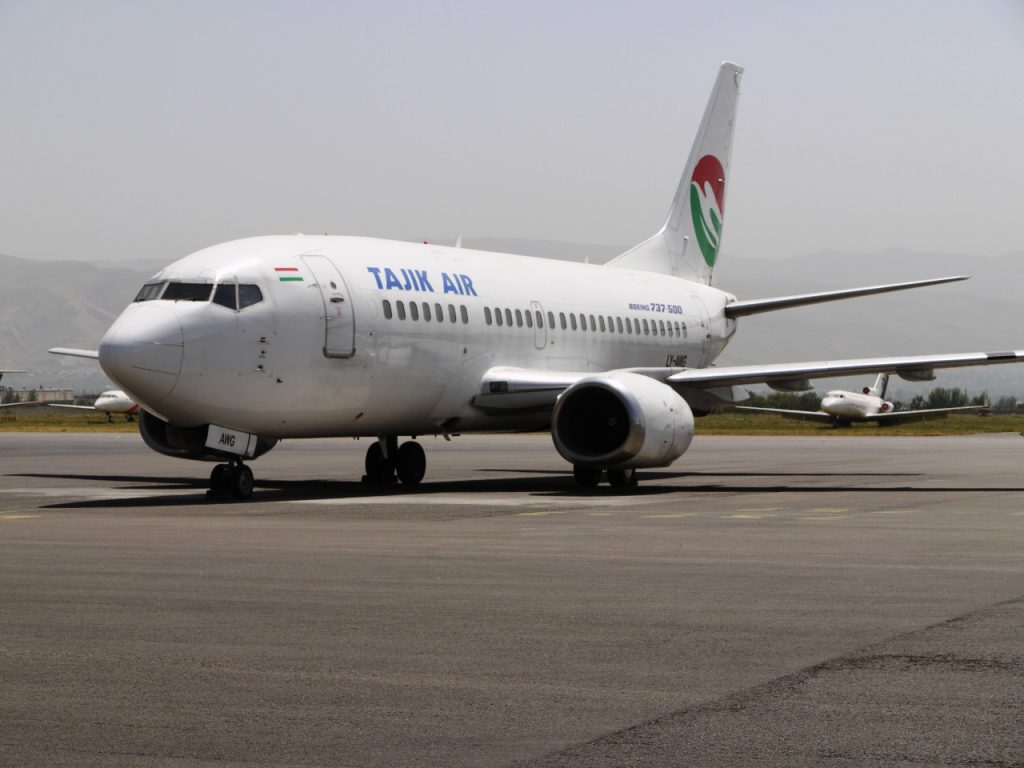
Tajikistan’s troubled national carrier ceases operations
The main problem is that Tajik Air is the only provider of domestic air services in a mountainous country with a population of 8.9 million people
Jan 14 — “Tajik Air, the national air carrier of Tajikistan, which is one of the weakest economies within the CIS, has ceased operations after failing to cope with financial difficulties. The collapse of the state-run airline, which has a direct negative effect on the country’s domestic air connections, may compel Somon Air, a more successful private Tajik airline, to review its fleet strategy.” READ MORE: http://www.rusaviainsider.com/tajikistan-tajik-air-ceases-operations/
Little Blue Fatwa: Tajik Religious Leaders Give Blessing To Viagra
Although erectile dysfunction is not openly discussed in Tajikistan, imported drugs for the condition were readily available without prescription
Jan 16 — “Tajikistan’s Council of Ulema has given its blessing to anti-impotence drugs such as Viagra, arguing that the pills could help prevent marriages from falling apart. But the blessing does come with a caveat. Abduvohid Homidov, the chief specialist at the council’s Department of Fatwas, told RFE/RL on January 16 that this week’s decision pertains to “married men only.” READ MORE: https://www.rferl.org/a/tajikistan-viagra-religious-leaders-blessing-fatwa/29714003.html
TURKMENISTAN
Turkmenistan: Foal play is suspected
In its ‘Akhal-Teke: A Turkmenistan Bulletin’, Eurasianet reviews the main news and events in the Central Asian country for the previous week
Jan 15 — “President Gurbanguly Berdymukhamedov is very fond of pointing. There is no counting the number of meetings at which he has been seen forcefully expanding on an argument with his favorite golden-handled and golden-tipped pointing cane. This week, he pointed at some pictures of proposed urban developments in Turkmenistan’s capital, Ashgabat.” READ MORE: https://eurasianet.org/turkmenistan-foal-play-is-suspected
Lines, price rises and expensive booze – the cost of happiness in Turkmenistan
Gas-rich Turkmenistan is experiencing an economic downturn largely caused by decreasing hard-currency revenues from natural-gas exports, and ordinary Turkmen citizens are the first ones who feel the pinch of the crisis
Jan 15 — “Only on the 10th day of the new year did municipal workers in Turkmenistan’s capital take down the rich array of festive trees laden with blazing fairy lights. The holiday euphoria, meanwhile, faded faster as people began to come to terms with the new reality of utility bills and continue to cope with the ever-present strain of price rises and shortages. In 1993, soon after the Soviet experiment collapsed, the government in newly independent Turkmenistan reverted to state largesse as the heart of an unspoken compact.” READ MORE: https://timesca.com/index.php/news/20725-lines-price-rises-and-expensive-booze-the-cost-of-happiness-in-turkmenistan
Is Turkmenistan Being Pulled Into Russia’s Orbit?
The Turkmen-Russian rapprochement is not necessarily the result of any mutual desire to improve relations — it is being initiated almost entirely by Moscow’s carrot-and-stick approach towards Turkmenistan
Jan 16 — “April will mark 10 years since a mysterious explosion at a gas pipeline leading from Turkmenistan to Russia. It was arguably the low point in already uneasy relations between Ashgabat and Moscow. In the years that followed the blast, Turkmen-Russian ties were maintained at a bare minimum.” READ MORE: https://www.rferl.org/a/iqshloq-ovozi-turkmenistan-pulled-into-russia-s-orbit/29713898.html
UZBEKISTAN
5 reasons why you need to visit Uzbekistan in 2019
For many, Uzbekistan is an offbeat travel destination at the heart of the fabled Silk Road
Jan 11 — “As one of the most fascinating countries in Central Asia, Uzbekistan captivates visitors with its glittering legacy of the Silk Road, illustrated by its majestic mosques, minarets and bustling bazaars. A crossroads on the historic path of the legendary Silk Route, the country is an up-and-coming holiday destination that offers you the chance to go truly off the beaten path in a culturally, ethnically and geographically diverse part of the world.” READ MORE: https://www.goodhousekeeping.com/uk/lifestyle/travel/a25844630/uzbekistan-holidays-reasons-to-visit/
Uzbekistan turns to nuclear energy to power economy
Tashkent’s decision to build Uzbekistan’s first nuclear power plant is the latest move to develop the Uzbek economy
Jan 14 — “When you run a large landlocked central Asian state rich in uranium and with big economic ambitions, what do you do? You build a nuclear power plant. That has been the thinking in Uzbekistan, central Asia’s most populous country with about 33m people, and with the population and energy demand both forecast to grow.” READ MORE: https://www.ft.com/content/a99c1b58-0466-11e9-99df-6183d3002ee1
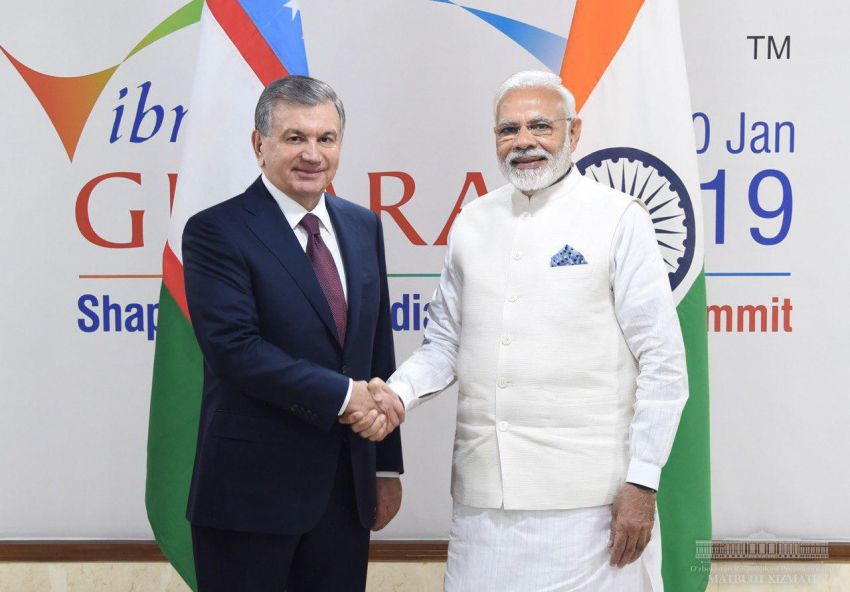
Uzbekistan’s president considers giving up some executive powers
As Uzbekistan’s president pursues political reform and liberalization in his country, he has, for the first time, revealed plans to decentralize the presidential power
Jan 16 — “Uzbekistan’s President Shavkat Mirziyoyev delivered his annual State of the Nation address on December 28, 2018. One area of focus in his speech was the decentralization of presidential power. Mirziyoyev’s true views on the issue surfaced when he went off script and revealed his frustrations with the extremely centralized system of executive power in Uzbekistan. According to him, this works against his efforts to liberalize the country’s government. His corrective proposals were far from drastic, offering only slightly more powers to the parliament, governors and regional councils then they currently have.” READ MORE: https://timesca.com/index.php/news/20728-uzbekistan-s-president-considers-giving-up-some-executive-powers
INTERVIEW: Uzbekneftegaz remaking Uzbekistan’s energy sector
First deputy chairman of the board at Uzbekistan’s national oil company Uzbekneftegaz on the prospects for the development of the country’s energy sector
Jan 17 — “A big Uzbek delegation travelled to Berlin for the Uzbek-German investment summit that kicked off on January 14 and managed to sign off on €4bn worth of deals on the first day.” READ MORE: http://www.intellinews.com/interview-uzbekneftegaz-remaking-uzbekistan-s-energy-sector-154813/?source=uzbekistan
AFGHANISTAN
Agonizing Over Afghanistan
The United States should avoid a rapid, unconditional exit from Afghanistan but also minimize the costs of staying, the President of the Council on Foreign Relations believes
Jan 14 — “After more than 17 years, the time has come to accept two important truths about the war in Afghanistan. The first is that there will be no military victory by the government and its American and NATO partners. Afghan forces, while better than they were, are not good enough and are unlikely ever to be capable of defeating the Taliban.” READ MORE: https://www.cfr.org/article/agonizing-over-afghanistan
The deeply unserious thinking of the Afghanistan hawks
America has lost the Afghanistan war, something that was obvious by 2009 at the latest, a correspondent at TheWeek.com writes in his opinion piece
Jan 16 — “It’s time once again to check in on the good old Afghanistan occupation. America was losing badly in 2015 and had made no progress as of 2017. Maybe 2019 will be the year we turn it around? Haha, of course not. It’s probably worse now than it was four years ago. But while even creatures from the foreign policy “Blob,” like President of the Council on Foreign Relations Richard Haass, are all but admitting the war cannot be won, they still resist the idea America should cut its losses and get out. Instead of “a strategy for winning … one for not losing,” should be found, he writes.” READ MORE: https://theweek.com/articles/817747/deeply-unserious-thinking-afghanistan-hawks
Afghanistan: ‘Naive, Reckless’ Tourists Couchsurfing In War-Torn Nation
While visiting Afghanistan, some westerners prefer staying with Afghan strangers they find through the Couchsurfing network, rather than paying for a room in a hotel protected by armed guards
Jan 16 — “Seeking an “authentic” experience as he backpacked through war-torn Afghanistan, Dutch tourist Ciaran Barr searched the Couchsurfing website for locals to stay with. He found an astonishing number of potential hosts. Despite the country’s decaying security nearly 2,000 Afghans — the vast majority of them men — have signed up to host guests on the social networking platform, which connects travellers around the world with locals who are willing to put them up for free.” READ MORE: https://www.ndtv.com/world-news/afghanistan-naive-reckless-tourists-couchsurf-in-war-torn-nation-1978356
The Cost And Economic Consequences Of The War In Afghanistan – Analysis
The consequences of war have been significant — both in terms of human suffering as well as the economy, Professor of Economics at Kabul University believes
Jan 18 — “When NATO and an international coalition became engaged in the Afghanistan War, the hope was that the intervention would lead to a quick cessation of conflict. Unfortunately, that did not occur. Since 2001, the war with the Taliban and Al-Qaeda has cost Afghanistan millions of dollars and thousands of lives. The conflict kills more than one hundred soldiers, police officers, and civilians every day.” READ MORE: https://www.eurasiareview.com/18012019-the-cost-and-economic-consequences-of-the-war-in-afghanistan-analysis/
WORLD
Can a ‘Silk Visa’ Boost Tourism in Central Asia?
The new Silk Visa program is part of a broader trend in the region, as over the last several years Central Asian countries have significantly liberalized their visa regimes with the rest of the world to attract more tourists
Jan 15 — “Kazakhstan and Uzbekistan plan to introduce a common visa. The new visa, dubbed the “Silk Visa” is in the final stages of preparation and will enable foreigners with a valid visa from either country to travel in both countries.” READ MORE: https://thediplomat.com/2019/01/can-a-silk-visa-boost-tourism-in-central-asia/
U.S. Senate revives bill that could sanction China over treatment of its Muslims
The introduction of the Uyghur Human Rights Policy Act comes at a time when sentiment toward Beijing in Washington is hardening over issues ranging from trade disputes and technology theft to geopolitical competition and human rights
Jan 18 — “U.S. lawmakers revived a bill Thursday that could pave the way for sanctions against China over its mass internment of Muslim ethnic minorities in the western region of Xinjiang. The Senate bill, which would create new positions within the State Department, FBI and U.S. intelligence agencies to study issues related to the ongoing internment program, represents a steady escalation of pressure from Washington over a Chinese campaign that has held as many as 1 million people, mostly ethnic Uighur Muslims, in extrajudicial indoctrination centers.” READ MORE: https://www.washingtonpost.com/world/africa/us-senate-revives-bill-that-could-sanction-china-over-treatment-of-its-muslims/2019/01/18/9c3ee14c-1af6-11e9-a804-c35766b9f234_story.html?utm_term=.1ac662f5a0c7



 Maria Levina