Afghanistan: Islamic State a deadly force in Kabul

BISHKEK (TCA) — The Islamic State terrorist group is gaining ground in the war-torn Afghanistan and, if not effectively countered, may pose a serious threat to the Kabul government. We are republishing this article on the issue by Mukhtar A. Khan, originally published by The Jamestown Foundation’s Terrorism Monitor:
Afghanistan is no stranger to brutal terrorist attacks, but this year began with a series of particularly vicious deadly attacks in Kabul, the only secured and highly fortified city in the country. Even more worryingly, most of these attacks were claimed by the local franchise of Islamic State (IS), known as IS-Khorasan. Over the first three months of the year, the group carried out more than six attacks, targeting a military hospital, the Supreme Court, police officers, the military and Afghanistan’s Shia minority. Last year, between October and December, IS-Khorasan carried out over half a dozen bombings in Kabul and killed over 130 people.
IS formally launched its Afghanistan operations on January 10, 2015, when Pakistani and Afghan militants pledged their allegiance to its so-called caliphate in Syria and Iraq (Lomritob, February 8). Since then, IS-Khorasan has proved itself to be one of group’s most brutal iterations, attacking soft targets, targeting Shia populations, killing Sufis and destroying shrines, as well as beheading its own dissidents, kidnapping their children and marrying off their widows.
Tactical Decisions and Strategic Targets
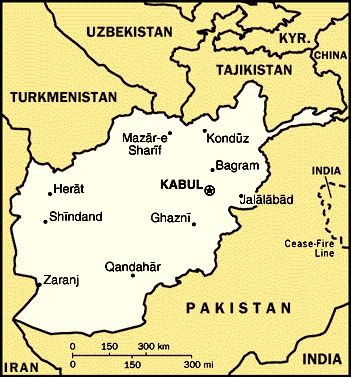
IS-Khorasan chose to base itself in Afghanistan’s Nangarhar Province, a strategic location bordering Pakistan’s tribal areas. Its recruits came from both sides of the porous border and could easily escape a surgical strike or military operation by fleeing to either side of the Durand line. It took them only a few weeks to expand their outreach from their Nangarhar base to at least four other provinces in the east, south and west, namely Logar, Zabul, Helmand and Farah provinces (BBC Pashto, February 25, 2017).
The presence of IS-Khorasan in these five provinces was important from a strategic point of view. Nangarhar is, no doubt, a safe place for staging militant activities and recruitment due to its geographical proximity to Pakistan, while Logar is considered a gateway into Kabul and is frequently used as a staging ground for attacks in the capital. During the war against the Soviets, it was referred to as Bab-ul-Jihad (the Gate to Jihad). Zabul is equally important, being a transit route for insurgents and also for U.S./NATO supplies and convoys. Helmand, despite a large presence of international troops, has its own importance as a home to the Taliban and a hub for the drugs trade, a lifeline for insurgents, including IS-Khorasan. Finally, the eastern province of Farah, into which the group infiltrated within the first few weeks of its existence, borders Iran and has a sizable Shia majority population (Mashriq TV, January 6).
From the very beginning, IS-Khorasan identified its targets—Shia communities, foreign troops, the security forces, the Afghan central government and the Taliban, who had not previously been challenged by an insurgent group.
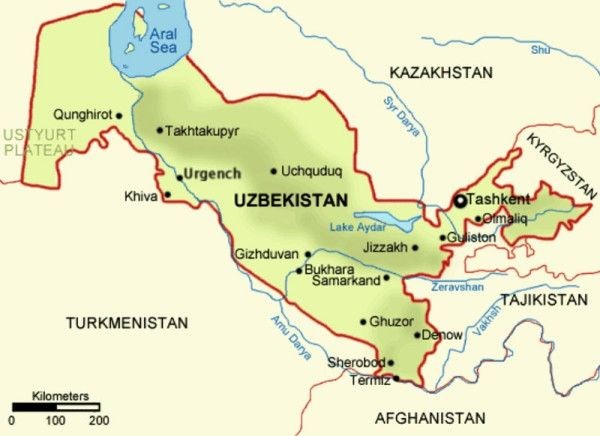
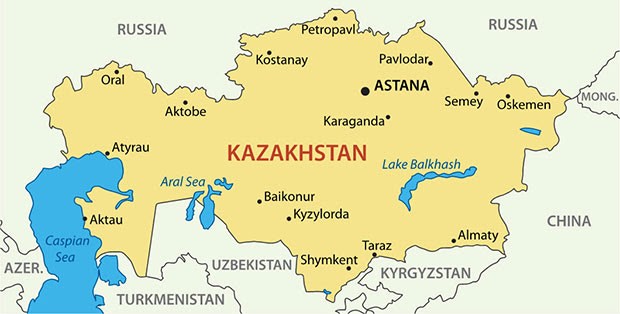
Despite rigorous bombing and military operations against IS-Khorasan—including the deployment of the largest conventional bomb, the GBU-43 Massive Ordnance Air Blast, in April last year—the group has maintained its presence in almost 30 districts across the country. In the north, the group has made bases in Kohistanat, Sar-e-Pol province, Khanabad, Kunduz province and Darzab, Jowzjan province. Its penetration and influence in the north has worried the Central Asian Republics and Russia (Shamshad TV, January 22). IS has attracted and recruited militants from terrorist outfits like the Islamic Movement of Uzbekistan (IMU). However, it is the Kabul Cells of IS-Khorasan that has most concerned the Afghan government and the international community.
Attacks by Kabul Cells
Kabul became the first target on the IS-Khorasan agenda after the group established a base in neighboring Logar province in early 2015. From the beginning, it carried out small-scale attacks and targeted killings, but most of these went unnoticed by the international media.
It received more attention when it carried out at least four targeted attacks against Shia Muslims in Kabul late in 2016. The first attack was in July that year when two suicide bombers struck a peaceful rally of Shia minority and killed about 80 people and wounded more than 230, the deadliest attack in Kabul since 2001. The Taliban condemned these attacks, which marked a shift in the 40-year long war in Afghanistan along more sectarian lines.
Since then, the group has expanded its operations, with at least three IS-Khorasan cells in operation in Kabul. These are unconventionally structured terrorist cells in comparison to others in Afghanistan, which goes some way to explaining how they have remained undetected. Many of those involved are middle-class, educated people, including professors, doctors, engineers and young university students. They go about their work and in the evenings meet to plan, before returning to their homes. They change and adapt their tactics to the changing needs and situations.
Afghan security forces claim to have busted several such cells recently. One such cell, IS-Khorasan’s coordination and planning center, which had been used for storing weapons and ammunition, was uncovered and busted in January. Another 13-member IS cell in Kabul was busted in January, and had allegedly been planning a series of major terror attacks in the city (Tolo News, January 3).
Over time, these cells have become increasingly active, sophisticated and barbaric. Despite tight security, IS-Khorasan was able to attack a Shia crowed near Kart-e-Sakhi shrine in Kabul on March 21, while worshipers were celebrating Nowruz, the New Year festival. The suicide bomber killed at least 33 people and injured 65 (Shamshad TV, March 22). On March 9, an IS-affiliated suicide bomber attacked a Shia crowd in Kabul and killed at least nine people who had gathered to mark the anniversary of the death of their leader, Abdul Ali Mazari (BBC Pashto, March 9). Only a day before, fighters from IS-Khorasan stormed Sardar Daud Hospital, the largest military hospital in Kabul, and killed more than 30 people. The gunmen had dressed as doctors. In February, the group attacked the Afghan Supreme Court, killing 22 people in the immediate vicinity (Radio Azadi, February 8). IS-Khorasan called those they attacked “apostates” and “tyrant judges with blasphemous judgments.”
The group also took responsibility for the January 4 suicide attack in Kabul, which claimed the lives of more than 20 people, including a number of police officers (Tolo News, January 5). Just a week before, it claimed responsibility for a suicide attack on a Shia cultural center in Kabul, in which more than 41 people were killed and another 84 were wounded (Tolo News, December 28, 2017). On Christmas Day, IS struck near the building of the Afghan intelligence service and killed six people. And just a week before Christmas, IS attacked another intelligence center in the capital.
Brutal and Resilient
IS-Khorasan has modeled its brutal tactics on those of its parent operation in Iraq and Syria. It considers itself to be the only pure Islamic group, rejecting the radical but more traditional Deobandi Sunni Taliban and the Salafist beliefs of al-Qaeda. IS-Khorasan promotes an ideology that classifies Shias as apostates, although Afghanistan had been largely unfamiliar with sectarian violence, and their methods have often been found unacceptable in Afghanistan’s traditional society (Daily Wahdat, January 18).
This has, however, left IS-Khorasan isolated. Not only are the Afghan government and its U.S. allies seeking to combat it, but neighboring countries including Pakistan, Iran, the Central Asian states and Russia have showed serious concerns at its growing influence. Furthermore, while there are some 20 terrorist outfits operating in Afghanistan, none are friendly to IS.
Over the last three years, the Taliban has fought the group. The Afghan government is conducting operations to uproot them. U.S. and NATO forces continue to bomb their bases. General John Nicholson, commander of NATO-led forces in Afghanistan, has said that since March 2017, they conducted some 1,400 operations against IS-Khorasan and killed half of their fighters, estimating that about 1,500 remain (1TV News, February 25).
The reality on the ground, however, is that IS influence and attacks are becoming more pervasive and more deadly. Dozens of IS-Khorasan senior leaders, including its four emirs, were killed in air strikes and operations leaving IS-Khorasan as a somewhat leaderless group, but it has not lost its strength to strike back in Kabul or been forced from its stronghold in Nangarhar. Indeed, the Afghan media claims that in recent months the group has been able to attract disgruntled Taliban members and foreign fighters, including militants from China, Uzbekistan, Tajikistan, Chechnya, France, Algeria and Pakistan (Lemar TV, February 18).
Implications for Afghanistan
IS-Khorasan remains unpopular among the deeply traditional society of Afghanistan, but it has proven itself able to lure Taliban defectors and disgruntled youth to its cause. The group’s propaganda is more sophisticated than that of the country’s other militant group, with dedicated teams for social media platforms—a major concern for many Afghans because of social media’s popularity among the Afghan youth (Shamshad TV, January 20; Pajhwok News,December 5, 2017).
There are fears that if IS-Khorasan continues to gain ground and influence, fleeing jihadists from Syria and Iraq will make Afghanistan a new base for their efforts to form an Islamic caliphate (Daily Hewad, March 10). With Afghanistan struggling to reach political settlements with its insurgent groups, a strengthened IS-Khorasan could deepen the sectarian rifts the group has established in the country, and this would make it harder to bring about the social cohesion necessary for this kind of dialogue. If IS-Khorasan cannot be effectively countered, then the political landscape of an already complex society stands to become even more complicated.