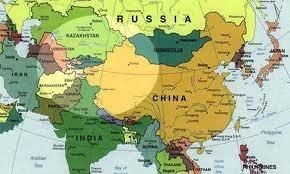
BISHKEK (TCA) — The Publisher’s note: Throughout the 19th and 20th centuries, Central Asia was the scene of intense geopolitical struggle and the Great Game between the British and Russian Empires, and later between the Soviet Union and the West, over Afghanistan and neighboring territories. Into the 21st century, Central Asia has become the area of a renewed geopolitical interest, dubbed the New Great Game, largely based on the region’s hydrocarbon and mineral wealth. On top of that, the region now is perhaps the most important node in the implementation of China’s One Belt, One Road initiative through which Beijing aims to get direct access to Western markets. Every week thousands of news appears in the world’s printed and online media and many of them may escape the attention of busy readers. At The Times of Central Asia, we strongly believe that more information can better contribute to peaceful development and better knowledge of this unique region. So we are presenting this Weekly Digest which compiles what other media have reported on Central Asia over the past week.
KAZAKHSTAN
The Kremlin strategy in Baikonur: putting Kazakhstan’s space program in a box?
Although Kazakhstan has big inspirations to develop its own aerospace industry, such plans are heavily dependent on Russia, which leases the country’s Baikonur cosmodrome until 2050
Apr 2 — “Russia has pledged to transfer 44.8 square miles of Baikonur Cosmodrome territory and two Zenit-M rocket launch platforms to Kazakhstan by the end of May 2018 (Iz.ru, March 1). This became possible thanks to the recent amendments to the lease agreement between the two countries, which was concluded this March, following years of negotiations. Several important conclusions can be drawn from this development.” READ MORE: https://timesca.com/index.php/news/19561-the-kremlin-strategy-in-baikonur-putting-kazakhstan-s-space-program-in-a-box
Kazakhstan Is on the Brink of Banning Bitcoin, National Bank Chairman Claims
Authorities in Kazakhstan mull complete ban of cryptocurrencies in the country, as the digital currency market bears significant risks for ordinary citizens
Apr 2 — “In the world of cryptocurrency, regulation will always remain a contentious topic. To a lot of people, regulating this industry serves no purpose other than to prevent innovation from happening. Others see it as a way to pave a more legitimate ecosystem. In Kazakhstan, it appears the country’s national bank wants to ensure that all cryptocurrency activity is forbidden in the future.” READ MORE: https://themerkle.com/kazakhstan-is-on-the-brink-of-banning-bitcoin-national-bank-chairman-claims/
Kazakhstan threatens to block Telegram
Kazakhstan’s authorities also demand that companies like YouTube, Facebook, Twitter, Instagram and VKontakte also delete government foe Mukhtar Ablyazov’s content
Apr 4 — “Kazakhstan has warned it will block the popular Telegram messaging app unless the company agrees to delete content from a banned political party. Information and Communications Minister Dauren Abayev wrote in a blog post on April 3 that his office has submitted its request to the company directly, asking for the removal of materials produced by the Democratic Choice of Kazakhstan, or DVK.” READ MORE: https://eurasianet.org/s/kazakhstan-threatens-to-block-telegram
Kazakhstan: Criminal Probe of Media Outlets
Human Rights Watch says Kazakhstan should abolish criminal defamation, and stop using defamation and similar laws to harass journalists who are doing their jobs
Apr 6 — “Kazakhstan opened a criminal investigation of two prominent independent media outlets on March 30, 2018, for “disseminating knowingly false information,” Human Rights Watch said today.” READ MORE: https://www.hrw.org/news/2018/04/06/kazakhstan-criminal-probe-media-outlets
KYRGYZSTAN
Tradition and Changing Ideals Collide in Post-Soviet Kyrgyzstan
Some people in Kyrgyzstan believe that Nooruz collides with Muslim values, but the vast majority of the Kyrgyz still celebrate it anyway
Apr 4 — “Traditions are rituals that symbolize some element of its culture’s values, but what happens to these traditions as time passes and ideals begin to change? In post-Soviet Kyrgyzstan, some feel compelled to re-evaluate the traditions and rituals rooted in the ideals of the past as they redefine the relationship between their cultural and religious identities.” READ MORE: https://thediplomat.com/2018/04/tradition-and-changing-ideals-collide-in-post-soviet-kyrgyzstan/
Won’t Fade Away: Former, Current Kyrgyz Presidents On Collision Course
Ex-President Atambayev’s criticism of his successor may trigger a rift in their relationship
Apr 4 — “During the final months of Almazbek Atambaev’s term as Kyrgyz president last year, his candor rankled many inside and outside of Kyrgyzstan. Atambaev had kept a relatively low profile since officially leaving office on November 24, but after his election as head of the ruling Social Democratic Party of Kyrgyzstan (SDPK) on March 31, Atambaev was back in front of a microphone and returned to making controversial comments– though this time about the man he selected and helped elect as president: Sooronbai Jeenbekov.” READ MORE: https://www.rferl.org/a/qishloq-ovozi-kyrgyzstan-atambaev-jeenbekov-collision-course/29144713.html
Kyrgyzstan: President begins clearing house of predecessor’s cadres
Under the pretext of fighting corruption, President Jeenbekov may get rid of his predecessor’s favorites in the higher echelons of power
Apr 4 — “The president of Kyrgyzstan, who has been in office since November, appears to have begun purging high-ranking security figures appointed by his predecessor, adding fuel to speculation of a rift among the two men.” READ MORE: https://eurasianet.org/s/kyrgyzstan-presidents-begins-clearing-house-of-predecessors-cadres
Kyrgyzstan: in Kazarman, nothing gold can stay
Mining gold is a troublesome, though lucrative, business in Kyrgyzstan — which often faces opposition from locals in gold-mining areas, which, in turn, scares off foreign investors in gold projects
Apr 5 — “The language of gold-making spills easily from people’s mouths in Kazarman. Every other townsperson can talk with the best of them about crushing ores, leaching by cyanide and roasting. For a little over 30 years, this town in west-central Kyrgyzstan, home to a giant Soviet-built smelter, has been all about gold.” READ MORE: https://timesca.com/index.php/news/19576-kyrgyzstan-in-kazarman-nothing-gold-can-stay
Kyrgyzstan: Centerra to invest $25 million to extend Kumtor gold mine’s life
Kyrgyzstan’s agreement with Centerra is an important step forward and a good signal for investors, as it will help increase foreign direct investment in the country
Apr 6 — “Canadian Centerra Gold Inc intends to invest about $25 million in further geological exploration to extend the life of the Kumtor gold mine in Kyrgyzstan, Chief Executive Officer of Centerra Gold Inc., Scott Perry, sad at his meeting with Prime Minister of Kyrgyzstan Sapar Isakov on April 4.” READ MORE: https://timesca.com/index.php/news/26-opinion-head/19581-kyrgyzstan-centerra-to-invest-25-million-to-extend-kumtor-gold-mine-s-life
TAJIKISTAN
Breaking Tajikistan’s banks: the north falters as ruling family cements position
As increasingly authoritarian President Emomali Rahmon has consolidated his grip on power in Tajikistan, his large family (including numerous in-laws) are taking control of the most lucrative business sectors in the country, squeezing out competitors with the help of servile government officials
Apr 3 — “When the chief executive of one of Tajikistan’s few banking success stories stepped down in February, something seemed odd. Surprise turned to amazement when the head of another flourishing lender resigned a couple of days later. The recent shakeup at Eskhata Bank and Imon International, which are both privately owned, has little to do with finance, however.” READ MORE: https://timesca.com/index.php/news/19566-breaking-tajikistan-s-banks-the-north-falters-as-ruling-family-cements-position
Tajikistan Resumes Supplying Uzbekistan with Electricity
As bilateral relations have warmed up, Tajikistan and Uzbekistan are taking steps towards resurrecting the Central Asian unified power grid
Apr 4 — “Tajikistan has begun supplying Uzbekistan with electricity, Tajik media reported this week. According to RFE/RL’s Tajik Service, locally known as Radio Ozodi, after a nine-year interruption, the energy trade across the Tajik-Uzbek border has resumed. Specifically, Tajikistan has begun supplying Uzbekistan with electricity via a power line running from the Regar substation, near the city of Tursunzoda west of Dushanbe, to the Gulcha substation across the border in Uzbekistan.” READ MORE: https://thediplomat.com/2018/04/tajikistan-resumes-supplying-uzbekistan-with-electricity/
Tajikistan sees Kuwait as gateway to Arab world: minister
Tajikistan is courting rich Arab countries in attempts to attract much-needed investments in its economy
Apr 5 — “Kuwait acts as Tajikistan’s gateway to the Arab region and its key partner in the Middle East region, Nizomiddin Zohidi, First Deputy Minister of Foreign Affairs of Tajikistan, said Wednesday. He made the remarks in a statement to Kuwait News Agency (KUNA) following his two-day official visit to Kuwait.” READ MORE: http://www.xinhuanet.com/english/2018-04/05/c_137088863.htm
Tajikistan Imprisons Rank-And-File Members Of The Islamic Party
Authorities in Tajikistan are prosecuting the banned Islamic Renaissance Party of Tajikistan members, as Tajik President Rahmon has been consolidating his grip on power in the country
Apr 5 — “Once, the Islamic Renaissance Party of Tajikistan (IRPT) shared power in the government of Tajikistan. The IRPT was the only registered Islamic political party not only in Tajikistan but anywhere in the former Soviet Union. Today in Tajikistan, you can’t even talk publicly about the IRPT without risking arrest, as was just seen.” READ MORE: https://www.rferl.org/a/tajikistan-irpt-islamic-party-rank-and-file-party-members/29148489.html
TURKMENISTAN
The Strangely Boring Visit Of Iran’s President To Turkmenistan
Iran has been losing influence in Central Asia and Turkmenistan in recent years as Arab countries have increased their presence in the region
Mar 30 — “Iranian President Hassan Rohani visited Turkmenistan on March 27-28 to meet with Turkmen President Gurbanguly Berdymukhammedov. It was the first time the two leaders of the neighboring countries had met since the two governments had a major falling out at the start of 2017 over Turkmen natural-gas supplies to Iran.” READ MORE: https://www.rferl.org/a/qishloq-ovozi-iran-rohani-turkmenistan-boring-visit/29135737.html
Iran Welcomes Gas Swap Deals With Turkmenistan
For gas-rich Turkmenistan, any way to diversify its natural-gas export routes is vital for maintaining the ailing economy afloat
Apr 3 — “Turkmenistan is exploring options on gas swap deals with Iran to export its fuel to markets further afield, Iranian President Hassan Rouhani reportedly said during a visit to Ashgabat on March 27. Speaking to reporters after his encounter with Turkmen President Gurbanguly Berdymukhamedov, the Iranian leader expressed satisfaction with their exchange, CNBC reported.” READ MORE: https://financialtribune.com/articles/energy/83888/iran-welcomes-gas-swap-deals-with-turkmenistan
The rise of Serdar
Chronicles of Turkmenistan observer Kira Kramer explores the rapid career advancement of a potential successor to Turkmenistan’s authoritarian President
Apr 3 — “On 25 March regular Parliamentary elections were held in Turkmenistan. 284 candidates “fought” for 125 seats in the Parliament, including Serdar Berdymukhammedov, an incumbent Member of Parliament and the son of the President, whose victory was never in any doubt. Over the past year Serdar has appeared in various events together with his father, and sometimes even instead of him.” READ MORE: https://en.hronikatm.com/2018/04/the-rise-of-serdar/
UZBEKISTAN
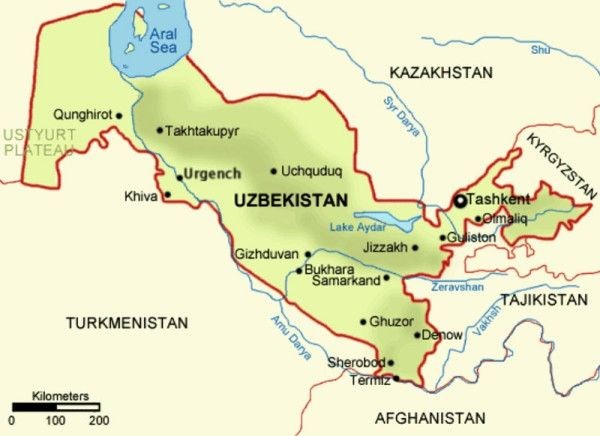
As Authoritarianism Spreads, Uzbekistan Goes the Other Way
Despite the ongoing reforms and political changes, Uzbekistan is yet to do very much to improve its tarnished human-rights record
Apr 1 — “Unraveling a police state is never easy, and just how fraught the process can be has been playing out in a basement cell in Uzbekistan, a rare example of a country seeking to tame a vicious security apparatus at a time when many other nations are doing the opposite.” READ MORE: https://www.nytimes.com/2018/04/01/world/asia/uzbekistan-reform.html
Former Uzbek Deputy Security Service Chief Reportedly Detained In Purge
In recent months, Uzbekistan has arrested several former senior law enforcement officials, including a former top prosecutor and an ex-interior minister, as the Uzbek president is getting rid of the “old guard” in the security services
Apr 3 — “Uzbek police have detained a former deputy head of the country’s National Security Service, the latest in a series of high-profile arrests of senior law enforcement officials, Tashkent sources say. Hayot Sharifkhojaev was detained in a special raid on March 30, a police officer who took part in the operation told RFE/RL’s Uzbek Service on April 2.” READ MORE: https://www.rferl.org/a/former-uzbek-deputy-security-service-chief-detained-purge/29142457.html
Where Is Googoosha, the Missing Uzbek First Daughter?
Many think Gulnara Karimova may be dead, and there is no certain proof to the contrary
Apr 4 — “Every five to 10 minutes, from 7 a.m. to 7 p.m. seven days a week, a fresh group of Uzbek pilgrims troops into the tomb of their late president, the dictator Islam Karimov, to pay homage at his white onyx sarcophagus, and listen to prayers chanted in his honor.” READ MORE: https://www.nytimes.com/2018/04/04/world/asia/uzbekistan-islam-karimov-gulnara-karimova.html
Tajikistan and Uzbekistan: a welcome but fragile thaw
How Tajikistan and Uzbekistan pursue stability and cooperation in the coming years will have important implications for the entire Central Asian region
Apr 6 — “A rare summit held at the strategic crossroads of Russia and China last month signalled a welcome thaw between two regional rivals in Central Asia, Tajikistan and Uzbekistan. Tajik President Emomali Rahmon, who has been in power since 1992, will likely use this reconciliation with his Uzbek counterpart, President Shavkat Mirziyoyev, as an opportunity to strengthen his patronage networks while cracking down further on any opposition.” READ MORE: https://www.lowyinstitute.org/the-interpreter/tajikistan-and-uzbekistan-welcome-fragile-thaw
AFGHANISTAN
The Taliban Have Gone High-Tech. That Poses a Dilemma for the U.S.
The military equipment used by Taliban militants is becoming more sophisticated, and the question is about the origin of that equipment
Apr 1 — “Once described as an ill-equipped band of insurgents, the Taliban are increasingly attacking security forces across Afghanistan using night-vision goggles and lasers that United States military officials said were either stolen from Afghan and international troops or bought on the black market.” READ MORE: https://www.nytimes.com/2018/04/01/world/asia/taliban-night-vision.html
Is Russia arming the Afghan Taliban?
Commander of US forces in Afghanistan accused Russia of exaggerating the number of Islamic State (IS) fighters in Afghanistan “to legitimise the actions of the Taliban and provide some degree of support to the Taliban”
Apr 2 — “The US accuses Russia of trying to destabilise Afghanistan by supporting the Taliban. Senior US officials have been saying for months that Moscow is even supplying the militants with weapons.” READ MORE: http://www.bbc.com/news/world-asia-41842285
Afghanistan is moving from stabilization to growth
The government of Afghanistan says it is doing its best to attract much-needed foreign investment in the war-torn country
Apr 4 — “Aside from the development of Afghanistan’s military capabilities and pursuing the peace process, the other equally important factor that will allow the country to achieve peace and stability is the economy. An economic transformation is taking place in Afghanistan right now, with a goal to boost private investment to create jobs and sustainable industries.” READ MORE: http://thehill.com/opinion/international/381582-afghanistan-is-moving-from-stabilization-to-growth
Opinion: What we’ve learned from Afghanistan — and what’s next?
A new look at international donor assistance to Afghanistan
Apr 5 — “When Afghanistan appears in the media, it is usually in the context of it being a war zone — the site, in fact, of the United States’ longest war. And that’s certainly true. But I have been lucky to see another side of the country — beyond the news headlines — where the Afghan government and international donors are making huge strides in economic development, health, education, and women’s empowerment.” READ MORE: https://www.devex.com/news/sponsored/opinion-what-we-ve-learned-from-afghanistan-and-what-s-next-91247
WORLD
The Rise of Regionalism in Central Asia?
Central Asia has long lacked regional cohesion, but that could be changing — largely thanks to the efforts taken by Uzbekistan’s president
Apr 2 — “Since his appointment in December 2016, Uzbek President Shavkat Mirziyoyev has focused on rekindling regional ties in Central Asia, which had long been neglected by his predecessor Islam Karimov. Mirziyoyev’s first official trip as president was to Turkmenistan, the most isolated of the five Central Asian republics. Most notably, Uzbekistan has also dropped its longstanding opposition to hydroelectric projects in Tajikistan and Kyrgyzstan – Karimov once threatened Tajikistan with war over the its proposed construction of the Rogun dam.” READ MORE: https://thediplomat.com/2018/04/the-rise-of-regionalism-in-central-asia/
Is China’s Belt and Road Initiative signaling the West’s setting sun?
Analyst says China ultimately seeks to create a belt of control throughout Eurasia — one that controls the flow of products, data and capital worldwide
Apr 5 — “While America, and Europe along with it, focuses on the Trump administration’s hawkish tendencies towards the Middle East, Russian influence, and far right fringes in Europe, China is changing the Eurasian geostrategic landscape, one infrastructure project at a time.” READ MORE: https://limacharlienews.com/business/china-belt-and-road-initiative/
Azerbaijan, Iran Reach Breakthrough on Disputed Fields in the Caspian Sea
The Azerbaijani-Iranian deal on the joint development of offshore hydrocarbon fields represents considerable progress toward the broader settlement of the legal status of the Caspian Sea
Apr 5 — “Iranian President Hassan Rouhani paid an official visit to Baku, Azerbaijan, on March 28. During the visit, Azerbaijan and Iran signed a memorandum of understanding on joint development of offshore hydrocarbon fields in the Caspian Sea” READ MORE: https://jamestown.org/program/azerbaijan-iran-reach-breakthrough-on-disputed-fields-in-the-caspian-sea/



 TCA
TCA