• KGS/USD = 0.01144 0%
  • KZT/USD = 0.00196 -0%
  • TJS/USD = 0.10899 -0%
  • UZS/USD = 0.00008 -0%
  • TMT/USD = 0.28490 0%
  • KGS/USD = 0.01144 0%
  • KZT/USD = 0.00196 -0%
  • TJS/USD = 0.10899 -0%
  • UZS/USD = 0.00008 -0%
  • TMT/USD = 0.28490 0%
  • KGS/USD = 0.01144 0%
  • KZT/USD = 0.00196 -0%
  • TJS/USD = 0.10899 -0%
  • UZS/USD = 0.00008 -0%
  • TMT/USD = 0.28490 0%
  • KGS/USD = 0.01144 0%
  • KZT/USD = 0.00196 -0%
  • TJS/USD = 0.10899 -0%
  • UZS/USD = 0.00008 -0%
  • TMT/USD = 0.28490 0%
  • KGS/USD = 0.01144 0%
  • KZT/USD = 0.00196 -0%
  • TJS/USD = 0.10899 -0%
  • UZS/USD = 0.00008 -0%
  • TMT/USD = 0.28490 0%
  • KGS/USD = 0.01144 0%
  • KZT/USD = 0.00196 -0%
  • TJS/USD = 0.10899 -0%
  • UZS/USD = 0.00008 -0%
  • TMT/USD = 0.28490 0%
  • KGS/USD = 0.01144 0%
  • KZT/USD = 0.00196 -0%
  • TJS/USD = 0.10899 -0%
  • UZS/USD = 0.00008 -0%
  • TMT/USD = 0.28490 0%
  • KGS/USD = 0.01144 0%
  • KZT/USD = 0.00196 -0%
  • TJS/USD = 0.10899 -0%
  • UZS/USD = 0.00008 -0%
  • TMT/USD = 0.28490 0%
08 December 2025

Uzbekistan, Tajikistan: as the Karimov wall crumbles, families reunite

BISHKEK (TCA) — As relations between Uzbekistan and Tajikistan have warmed following top-level bilateral meetings, it has become much easier for ordinary Tajiks and Uzbeks to cross the previously tightly-controlled border for visiting relatives in the neighboring country. We are republishing this article on the issue, originally published by Eurasianet:

“And who are you?” Robiya Rahmonova asked expectantly one March morning when a stranger appeared at the gate outside her home in Panjakent, in northwest Tajikistan.

For three days, Robiya, a 58-year-old housewife with a ready smile, had been “expecting guests from Uzbekistan.”

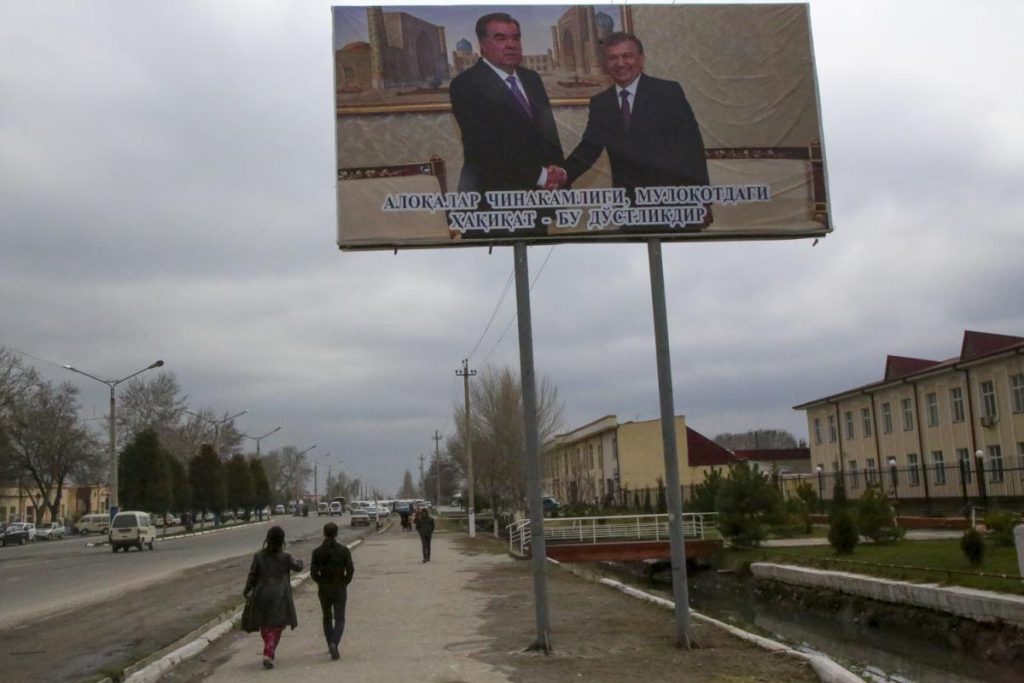
Tajik state television had bombarded viewers with interminable footage of a recently concluded visit from Uzbek President Shavkat Mirziyoyev.

When Robiya’s family heard the news and watched Mirziyoyev on TV hugging his Tajik counterpart and calling one another brothers, they cried with happiness.

“On television they said that there would be a visa-free regime between the countries. I am waiting for my relatives to come and visit,” Robiya said.

As it turned out, the excitement was slightly premature. The visas were not to be scrapped for a few days yet.

Every other family in Panjakent, a lively market town set in the Zeravshan Valley, has relatives across the border. Robiya has eight sisters and brothers in the village of Shopulod, in Uzbekistan, around 40 kilometers away as the crow flies.

Back in the old times, when the Soviet Union was still around, young people thought nothing of borders. Finding a spouse from a nearby town or city was in the natural order of things.

It was four decades ago that Robiya and her husband’s family arranged their nuptials. Their fathers were fast friends and both seasoned circumcisers. It seemed a natural idea to fasten this bond through marriage, although Robiya’s father was initially reluctant because the distance between their homes felt too far. But his guardian spirits tormented him for his prevarication — his children explain — interfering with his work as a circumciser, and he finally relented.

In any case, it was not too difficult to shuttle between homes. Buses then ran hourly along the route from Samarkand, in the Uzbek SSR, to Panjakent, in the Tajik SSR. A ticket cost one Soviet ruble, which in those days would buy fives loaves of bread.

“We didn’t know what a border was, what another state was. We visited one another without a thought. My siblings could come at lunchtime and leave in the evening. It is so unfair now. When we talk about Samarkand, my grandchildren ask: ‘Where is that anyway?’” Robiya said.

Robiya was the third of the nine in the family. Her closest sister was Mukarram, the eldest of the children. They weren’t just siblings, they were close friends.
And then history got in the way. The Soviet Union collapsed and a shared land became two countries. Over the years, the borders got harder.

“It all happened gradually,” said Mukarram, sitting in the living room of the family home in Shopulod, around a half-hour drive from Samarkand. “In the Soviet Union, we didn’t understand that we were crossing a border. Then they built a checkpoint. They began inspecting [documents]. Then they began wanting to see everything that we were carrying with us. The last time I went to Panjakent was in 2010.”

It was that year that the bureaucratic hurdles, most notably the mandatory visas, were given a concrete form in the shape of a three-meter brick wall erected by the Uzbeks across the border checkpoint.

“When they built the wall, all that was left for us was to cry,” said Mukarram.

Robiya has visited her relatives in Uzbekistan three times since 2010.

First she would have to travel to the Tajik capital, Dushanbe, where the Uzbek Embassy is based.

After a week or so of waiting, she would travel back up north through high mountain passes and cross into Uzbekistan at one of the only two border posts still in operation.

“That cost 500 somoni ($56) and a whole day. From here you should be able to stick out your hand and pay 20 somoni [to a taxi driver]. When my uncle died, because I didn’t have a visa, I could not pay my respects,” Robiya said.

The final sums of money involved are an onerous outlay for a low-earning Tajik household. Making the trip for a special event — a wedding or a memorial wake — would also entail the expense of obtaining a respectable gift, just another barely affordable luxury.

Robiya’s husband, Adham Haidarov, said that popping over to Uzbekistan used to be a fun and easy day out.

“Our Panjakent is nice too, but we would go to Samarkand for picnics. Young people used to go to hang out in Samarkand,” he said forlornly.

Matters took a turn for the better following the death in 2016 of Uzbek President Islam Karimov, who was actively hostile to bordering nations. His successor, Mirziyoyev, has by contrast actively pursued a good neighbor policy.

In a symbolic gesture of how relations have begun to blossom anew, on the first day of March, the border wall near Panjakent was ripped down. A little over a week later, Mirziyoyev flew to Dushanbe for a two-day visit that produced a visa-free agreement and several economic deals.

People living near the border in Tajikistan immediately began putting their mind to what line of trade they could get into. For people living in Panjakent and nearby, going to Samarkand will become considerably simpler than a trip to Dushanbe or even Khujand, Tajikistan’s second-largest city, in the north. Before, many thought in terms of importing wares from as far afield as Istanbul, but Uzbekistan now presents a more appealing alternative.

For the time being, entrepreneurs are still in the stage of taking stock of opportunities.

One trader at Panjakent market, a circular high-walled hubbub of commerce set against an imposing mountain backdrop, told Eurasianet that he had crossed over to Uzbekistan without waiting for the visa-free regime to come into force and returned with a haul of shovels to sell. He seemed a little disappointed, however, reporting that similar items from Istaravshan, a northern Tajik town famed for its metalwork, were of much better quality.

Border guards have adapted quickly to the changes. Passage through the border takes minutes, a vivid contrast with the times when gruff Uzbek customs officials would often force travelers to unpack all their bags and account for all the contents. When Eurasianet correspondents made the crossing, one Uzbek official in plainclothes asked meekly to check a mobile phone for extremist content or pornography, but demurred immediately when challenged.

It is a 20-minute drive from the border to Shopulod, where Robiya grew up. The village is a patchwork of small enclosed farmsteads. It took only a few quick enquiries of passing villagers to track down the Rahmonov family home.

Like her sister, Mukarram, 63, was quick to raise her hopes.

“When they said that the border was being opened, that very day, I took my children and grandchildren to the border. But it turned out that there were still formalities stopping us from getting across,” she said.

All the family agrees that it is the Uzbek side’s turn to make the trip. When the nearest border crossing was closed, it made more sense for Robiya to undertake the roundabout trip. After all, she was alone, while for the whole family to go the other way would have been a major operation.

“Every time she came we would hold a tui,” Mukarram said, referring to the banquet held to mark special events like birth and weddings. “We would be in tears taking her back to the border. Now it is our turn to go. She will play the host.”

ADB grant to further improve transport connectivity in Tajikistan

DUSHANBE (TCA) — The Asian Development Bank’s (ADB) Board of Directors has approved a $90 million grant as additional financing for the rehabilitation of a 40-kilometer (km) section of the Dushanbe-Kurgonteppa road to improve connectivity between two major cities and economic hubs in Tajikistan and enhance the safety of the country’s highway network, the Bank said on March 28.

The grant, sourced from ADB’s Asian Development Fund, is under the Central Asia Regional Economic Cooperation (CAREC) Corridors 2, 5, and 6 (Dushanbe-Kurgonteppa) Road Project approved in October 2016.

“Road transport is central to Tajikistan’s economy and development, supporting investment, job creation, and poverty reduction in the country,” said Kamel Bouhmad, Transport Specialist at ADB’s Central and West Asia Department. “The additional financing will not only develop Tajikistan’s economic corridors through transport development, but also strengthen the government’s capacity to maintain these assets.”

The Dushanbe-Kurgonteppa road, which carries about 10,000 vehicles per day, is a strategic north-south link and one of the most heavily traveled roads in Tajikistan, as well as the confluence of CAREC corridors 2, 5, and 6.

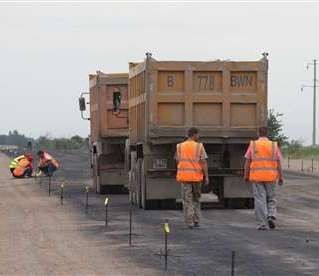
The improvement of the 40-km road section from Chashmasoron to Kurgonteppa includes road expansion from two to four lanes, construction of new pavements and structures, and provision of well-designed facilities to address existing road safety deficiencies.

The additional financing will also support the Ministry of Transport’s program to improve the road safety situation of the national highway network, which may include existing tunnels, intersections, black spots, and failed lengths of pavement.

To date, ADB has approved around $1.6 billion in concessional loans, grants, and technical assistance to Tajikistan. ADB and Tajikistan’s development partnership, which began in 1998, has restored and built the country’s new transport and energy infrastructure, supported social development, expanded agricultural production, and improved regional cooperation and trade.

Iran’s president visits Turkmenistan to enhance cooperation

ASHGABAT (TCA) — Iran’s President Hassan Rouhani arrived in Turkmenistan’s capital Ashgabat on March 27 on a state visit to enhance bilateral ties. President Rouhani held talks with his Turkmen counterpart, Gurbanguly Berdymukhamedov, to discuss bilateral and regional issues.

Speaking at the meeting of the high-ranking delegations of Iran and Turkmenistan, President Rouhani spoke about cooperation between the Islamic Republic of Iran and Turkmenistan in different fields, especially energy, transit and transportation, Mehr News Agency reported.

Rouhani said that “beginning of the project of the third line of power transport from Iran to Turkmenistan, new cooperation in the field of oil and gas in Caspian Sea and providing loans for the development of transport between the two countries can be new steps in economic relations between the two countries.”

Stressing that Iranian road companies are ready to provide services to and carry out projects in Turkmenistan, he said “it was decided that we will soon witness bus export from Iran to Turkmenistan.”

On the need to establish close ties between border provinces of Iran and Turkmenistan, Iran’s President said “Iran and Turkmenistan have ample cultural and historical commonalities, through taking advantage of which we must further grow cooperation in various fields such as science, research and technology, communications and tourism.”

He then referred to the importance of establishing direct Tehran-Ashgabat flight.

President of Turkmenistan Gurbanguly Berdymukhamedov, in turn, expressed happiness over President Rouhani’s visit to the country during Nowruz and said “relations between Iran and Turkmenistan have always been brotherly and amicable for many years.”

“Today, Tehran-Ashgabat relations in various political, economic, trade and cultural fields are at a high level,” he continued.

Turkmenistan’s president described Caspian Sea as the sea of peace and security and added that “cooperation between Iran and Turkmenistan at the shores and waters of the Caspian, as well as special economic zones must further develop.”

President Rouhani was on the first leg of a two-day tour that will also take him to Azerbaijan.

As President Rouhani began his visit to the two countries on Tuesday, he said there existed “enormous capacities for an all-embracing development of relations” between Tehran, Baku and Ashgabat which would be on the agenda of talks, PressTV reported.

“One of the goals of the (Iranian) administration is proximity with the neighboring countries. In this trip, besides developing traditional trade and economic relations with Turkmenistan and Azerbaijan, the issue of the regional transit and connecting southern waters to the Central Asian region and the Caucasus is important,” he told reporters.

Rouhani said two railway projects linking Chabahar port in southeast Iran to Central Asia and Rasht in northern Iran to Astara in Azerbaijan are currently in progress.

Uzbekistan: Tashkent conference backs Afghan government’s peace offer

TASHKENT (TCA) — Following talks in Uzbekistan on March 27, more than 20 countries and organizations declared their support for direct talks between the Kabul government and the Taliban to end the 16-year conflict in Afghanistan, RFE/RL’s Uzbek Service reported.

A joint declaration issued at the end of the conference in the Uzbek capital, Tashkent, noted the signatories’ “strong backing for the National Unity Government’s offer to launch direct talks with the Taliban, without any preconditions.”

They also called upon the Taliban to “accept this offer for a peace process that is Afghan-led and Afghan-owned.”

The conference was attended by Afghan President Ashraf Ghani, European Union foreign-policy chief Federica Mogherini, and a number of foreign ministers, including Sergei Lavrov of Russia, Wang Yi of China, and Turkey’s Mevlut Cavusoglu. The United States was represented by Undersecretary of State for Political Affairs Thomas Shannon.

Earlier this month, Ghani offered to allow the Taliban to establish itself as a political party and said he would work to remove sanctions on the militant group, among other incentives, if it joined the government in peace negotiations.

In return, the militants would have to recognize the Kabul government and respect the rule of law.

But the Taliban has so far ruled out direct talks with Kabul and insisted it would only negotiate with the United States, which it calls a “foreign occupying force.” The Taliban also says that NATO forces must withdraw before negotiations can begin.

The United States has refused to withdraw troops and insisted that the Afghan government must play a lead role in peace negotiations.

While the Tashkent meeting did not lead to any breakthrough, it highlighted the potential reemergence of Uzbekistan as a diplomatic player in the region.

During the conference, Uzbek President Shavkat Mirziyoev offered to host peace negotiations between Afghanistan’s government and the Taliban.

“We stand ready to create all necessary conditions, at any stage of the peace process, to arrange on the territory of Uzbekistan direct talks between the government of Afghanistan and the Taliban movement,” he said.

According to the declaration adopted at the Tashkent conference, delegates “recognize that terrorism, narcotics and organized crime are interlinked global threats and require a common strategy based on the UN Global Counter Terrorism Strategy,” TOLOnews reported.

As item 20 of the declaration states, delegates “affirm that all security assistance to Afghanistan should be provided through the Afghan government and strongly oppose any provision of financial support, material assistance or arms to the Taliban and ISIS/Daesh, which only serves to destabilize Afghanistan and prolong the conflict.”

The declaration was adopted by Afghanistan, China, France, Germany, India, Iran, Italy, Japan, Kazakhstan, Kyrgyzstan, Pakistan, Qatar, Russia, Saudi Arabia, Tajikistan, Turkey, Turkmenistan, United Arab Emirates, United Kingdom, United States, Uzbekistan, EU and UN.