BISHKEK (TCA) — The Publisher’s note: Throughout the 19th and 20th centuries, Central Asia was the scene of intense geopolitical struggle and the Great Game between the British and Russian Empires, and later between the Soviet Union and the West, over Afghanistan and neighboring territories. Into the 21st century, Central Asia has become the area of a renewed geopolitical interest, dubbed the New Great Game, largely based on the region’s hydrocarbon and mineral wealth. On top of that, the region now is perhaps the most important node in the implementation of China’s One Belt, One Road initiative through which Beijing aims to get direct access to Western markets. Every week thousands of news appears in the world’s printed and online media and many of them may escape the attention of busy readers. At The Times of Central Asia, we strongly believe that more information can better contribute to peaceful development and better knowledge of this unique region. So we are presenting this Weekly Digest which compiles what other media have reported on Central Asia over the past week.
KAZAKHSTAN
US-Kazakhstan transit agreement faces challenges from Russia
Kazakhstan has been consistent in pursuing a balanced policy in its relations with the world’s big powers — which is particularly illustrated by Astana’s maneuvering between Russia and the US
Oct 2 — “During the Collective Security Treaty Organization (CSTO) foreign ministers’ meeting in Almaty on June 11, 2018, Russia’s Foreign Minister Sergey Lavrov informed his Kazakh counterpart of Moscow’s concerns over U.S. military logistics planning involving Kazakhstan, and biological laboratories in the country. The protest was prompted by President Nursultan Nazarbayev’s signature on May 5 of amendments to the 2010 U.S.-Kazakhstan agreement on commercial rail transit of special cargo to Afghanistan through Kazakhstan, which allow the U.S. to use Kazakhstan’s territory for supplying U.S. forces in Afghanistan.” READ MORE: https://timesca.com/index.php/news/26-opinion-head/20323-us-kazakhstan-transit-agreement-faces-challenges-from-russia
Kazakhstan’s Next Political Crisis
State power succession remains a very topical and rather complicated issue in Kazakhstan
Oct 3 — “In June 2018, the speaker of Kazakhstan’s parliament, Kassym-Jomart Tokayev, “ dropped a political bombshell ” in an interview with the BBC. He said that the country’s President Nursultan Nazarbayev—who is seventy-eight years old and who has ruled the country since it gained independence from the Soviet Union in the early 1990s—would not run for re-election in 2020. Soon afterwards, Tokayev backtracked , saying that there was “no need to fuel a drama about what [he] said.” READ MORE: https://nationalinterest.org/feature/kazakhstans-next-political-crisis-32562
Some Win, Some Lose as Kazakhstan Gets a $1.1 Billion Check
Kazakhstan is set to get more profits from its oil industry — the main source of the country’s hard-currency revenues
Oct 3 — “Western companies operating at Karachaganak agreed to pay Kazakhstan $1.1 billion, ending an enduring spat with the government” READ MORE: https://thediplomat.com/2018/10/some-win-some-lose-as-kazakhstan-gets-a-1-1-billion-check/
Kazakhstan: Pension plans darken a grim picture
In Kazakhstan, like in other post-Soviet Central Asian countries, the pension issue is very relevant, and often painful, for many citizens
Oct 3 — “Authorities in Kazakhstan are set once again to tinker with how pension funds are managed. And if social media and news website comment boards are any indication, people are livid. Since 2013, pension contributions have been held in an entity called the Single Accumulated Savings Fund, or ENPF in its Russian initials. The fund comprises 10 million accounts worth a total of 9 trillion tenge ($25 billion) and is managed by the National Bank. Now, the government is talking of reverting to the pre-2013 arrangement, wherein the money is managed by private-sector operators.” READ MORE: https://timesca.com/index.php/news/20328-kazakhstan-pension-plans-darken-a-grim-picture
KYRGYZSTAN
A New Ambassador Offers a Chance to Start Again
The new US Ambassador to Kyrgyzstan would address the impasse which has strained U.S.-Kyrgyzstan relations for the past three years
Oct 3 — “Donald Lu, the new U.S. ambassador to Kyrgyzstan, recently took up residence in Bishkek. Kyrgyzstan, a country with some potential for democratic reforms that is nevertheless often overlooked in U.S. foreign policy. Located in a region where the United States seeks to maintain a foothold and promote stability, Kyrgyzstan sits at the heart of the great powers rivalry between China, Russia, and the United States.” READ MORE: https://www.opensocietyfoundations.org/voices/new-ambassador-offers-chance-start-again
Combatting Extremism in Kyrgyzstan: Everyone’s At Risk
Hundreds of people in Kyrgyzstan face trial over allegedly radical books, videos or pamphlets
Oct 3 — “Concerns are rising over Kyrgyzstan’s heavy-handed approach to prosecuting individuals over the possession of supposedly extremist material. A new report by Human Rights Watch (HRW) claims that such criminal cases often serves as part of a more general policy of repression under the guise of combatting Islamist extremism.” READ MORE: https://iwpr.net/global-voices/combatting-extremism-kyrgyzstan-everyones-risk
Kyrgyzstan Moves Toward Stripping Former Presidents of Immunity
Two former prime ministers have been detained on corruption charges in Kyrgyzstan, and some politicians demand investigation into alleged wrongdoings of a former president
Oct 4 — “Only two former Kyrgyz presidents actually still enjoy immunity, but only one — Almazbek Atambayev — looks like a target.” READ MORE: https://thediplomat.com/2018/10/kyrgyzstan-moves-toward-stripping-former-presidents-of-immunity/
Of How I Created My Own Kingdom in Kyrgyzstan
A travel piece on an exciting journey on Kyrgyzstan’s mountain roads
Oct 5 — “That was my seventh month on the bicycle, and after Cambodia, India, Nepal and China, I felt like it would be a piece of cake. The plan was to cross the Kyrgyz border from China, and go to an ATM because I had run out of money. From the Chinese border to Sary Tash it was 70 kilometers, and it was like paradise: beautiful grasslands, crystalline lakes, and huge mountains topped with glaciers 4,000 meters above the level of the sea. At night it was so cold I had to wrap my arms and legs with the rest of my clothes, and in the morning my tent had a layer of ice.” READ MORE: https://egyptianstreets.com/2018/10/05/of-how-i-created-my-own-kingdom-in-kyrgyzstan/
TAJIKISTAN
Tajikistan: Leaders introduced to president-to-be?
The most recent developments suggest that Tajikistan has opted for a father-to-son power succession scheme
Oct 1 — “In a gesture profound in symbolism, Rustam Emomali, the mayor of Tajikistan’s capital and son of the president, last week met with the heads of state visiting Dushanbe to attend a Commonwealth of Independent States summit. In Tajikistan, greeting arriving presidents is typically the purview of the prime minister, making this a noteworthy departure from convention. Thirty-year-old Emomali was captured in photographs as he met in Dushanbe international airport with Russian President Vladimir Putin, Kazakhstan’s Nursultan Nazarbayev, Alexander Lukashenko of Belarus, and others.” READ MORE: https://timesca.com/index.php/news/20318-tajikistan-leaders-introduced-to-president-to-be
Tajikistan: Trucks resume Turkmenistan transit
It may have been Iran that put Turkmenistan up to the blockade against Tajik trucks
Oct 4 — “A month after Turkmenistan inexplicably began denying Tajik trucks permission to pass through its territory, the long-distance haulers have been given the green light. Around 100 trucks either from Tajikistan or heading there had been standing idle on northern and southern border entry points into Turkmenistan since the start of September.” READ MORE: https://eurasianet.org/tajikistan-trucks-resume-turkmenistan-transit
Saudi Arabia carries out $8.14m relief projects in Tajikistan
Saudi Arabia has increased its financial support of Tajikistan, in an apparent effort to squeeze its arch-rival Iran from the Central Asian country
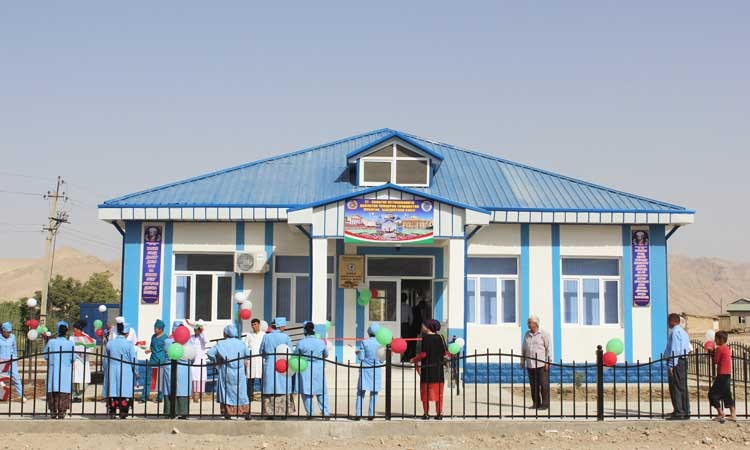
Oct 5 — “Dr. Abdullah Al-Rabeeah, general supervisor of the King Salman Center for Relief and Humanitarian Aid (KSRelief), inaugurated the building project of the Committee for Emergency Situations and Civil Defense (CoES)’s republican education and training center in the Tajik capital of Dushanbe.” READ MORE: http://www.arabnews.com/node/1382736/saudi-arabia
TURKMENISTAN
Turkmenistan: My kingdom for a horse
In its ‘Akhal-Teke: A Turkmenistan Bulletin’, Eurasianet reviews the main news and events in the Central Asian country for the previous week
Oct 2 — “After a decade-long hiatus, Turkmenistan’s President Gurbanguly Berdymukhamedov last week convened the Halk Maslahaty, or People’s Council. In his speech delivered on September 26, he made no mention on why he had decided to summon the council, a gathering of community elders and public figures that he abolished in 2008. The institution had once fundamentally functioned to lend the rule of Berdymukhamedov’s eccentric predecessor, Saparmurat Niyazov, who died in December 2006, the flavor of popular support.” READ MORE: https://eurasianet.org/turkmenistan-my-kingdom-for-a-horse
Turkmenistan enters brave new world of eSports
eSports have arrived in authoritarian Turkmenistan, a country of around five million people which was practically offline just over a decade ago
Oct 4 — “Reclusive, gas-rich Turkmenistan is dipping its toe into the world of eSports having got a taste for gaming at a showcase sporting event it held last year. The Central Asian country is in the process of forming a national eSports team that will represent it in events devoted to Counter-Strike, Dota 2, Hearthstone and other popular computer game titles.” READ MORE: https://www.thestar.com.my/tech/tech-news/2018/10/04/turkmenistan-enters-brave-new-world-of-esports/
U.S. companies see great potential in partnership with Turkmenistan
Cash-strapped Turkmenistan is reaching out to the US in the search for new investments in its crisis-hit economy
Oct 5 — “The business forum Turkmenistan-U.S., which was held recently in New York and was attended by Turkmen President Gurbanguly Berdimuhamedov, identified new ways of developing bilateral business cooperation. The meeting once again demonstrated the impressive economic potential of Turkmenistan.” READ MORE: https://www.azernews.az/region/138641.html
UZBEKISTAN
Uzbek Authorities Deny Reports Of Gulnara Karimova’s Release, Dubai Hotel Stay
Contraversial reports surfaced about the whereabouts of the elder daughter of the late Uzbek president
Oct 3 — “Uzbekistan’s Prosecutor-General’s Office has denied a report that Gulnara Karimova, the imprisoned daughter of deceased former President Islam Karimov, has been freed from state custody and has checked into a luxury hotel in Dubai. The office told RFE/RL’s Uzbek Service on October 3 that Karimova “is serving her sentence in Uzbekistan according to the law.” READ MORE: https://www.rferl.org/a/uzbek-authorities-deny-reports-of-gulnara-karimova-s-release-dubai-hotel-stay/29523937.html
India just rolled out the red carpet for Uzbekistan. But, experts say New Delhi relations with Central Asia could be better considering their keeness
Experts say that New Delhi is not doing enough to strengthen relations with Central Asian countries
Oct 4 — “New Delhi is not doing enough to strengthen relations with Central Asian countries, even as they are keen to enhance ties with India, experts tell FE Online. Lack of interest is holding back India in strengthening ties with the Central Asian countries, which can help New Delhi in balancing relations with China.” READ MORE: https://www.financialexpress.com/defence/india-just-rolled-out-the-red-carpet-for-uzbekistan-but-experts-say-new-delhi-relations-with-central-asia-could-be-better-considering-their-keeness/1336701/
Uzbek expats heed president’s call to return
Veteran investor launches financial services firm to capitalize on reforms in Uzbekistan
Oct 4 — “The economic reforms of Uzbek president Shavkat Mirziyoyev received another vote of confidence in September with the launch of a US-based investment firm focused on the country’s financial services sector. Mirziyoyev has been opening up Uzbekistan’s economy since taking over the presidency in September 2016 after the death of his isolationist predecessor, Islam Karimov. Key moves have included the lifting of draconian restrictions on foreign exchange and a rebuilding of relations with the international community, notably with the multilateral development banks.” READ MORE: https://www.euromoney.com/article/b1b7c7wcf42j7s/uzbek-expats-heed-presidents-call-to-return
Currency crisis comes to Uzbekistan
Analyst says that a weak currency could have negative implications for Uzbekistan’s struggling economy, such as reversing some of the progress made by the reforms
Oct 5 — “It’s been a tough year for some of the world’s major currencies. The Turkish lira, the Russian ruble, the Chinese yuan and many others have declined steadily, with some dropping quite dramatically in August. Some have recovered slightly, but the overall trend remains the same. And now, we can add Uzbekistan to the list. The Uzbek currency, the som, has been declining since early August. On 2 October, it was valued at 8,179 soms to the dollar.” READ MORE: https://www.euractiv.com/section/central-asia/opinion/currency-crisis-comes-to-uzbekistan/
AFGHANISTAN
Dance Like It’s 1949: Afghan Islamists Celebrate Chinese Communism
Afghanistan’s prominent onetime hard-line Islamists were accused of “hypocrisy” by social-media users for watching half naked Chinese girls dancing in Kabul’s Chinese embassy reception
Oct 1 — “Sibghatullah Mojadedi, Mohammad Mohaqiq, and Mohammad Khan are among Afghanistan’s most prominent onetime hard-line Islamists. But the former warlords’ credentials have been questioned by some Afghans after they attended a celebration marking Chinese communism in Kabul.” READ MORE: https://www.rferl.org/a/dance-like-it-s-1949-afghan-islamists-celebrate-chinese-communism/29519519.html
The Islamic State’s Future in Afghanistan
IS-K has always been regarded by Afghans as a foreign force that has little regard for Afghan culture, customs, or traditions. Moreover, unlike the Taliban, IS-K has no supporters or sympathizers among Afghanistan’s neighbors
Oct 4 — “The Islamic State (ISIS) temporarily managed to win over disgruntled elements among the Afghan and Pakistani Taliban, along with youth from the remote districts in Afghanistan’s east, after restructuring and renaming itself Islamic State in Khorasan (IS-K). IS-K’s initial victories against the Taliban and the Afghan government on both the battle and propaganda fronts rang alarm bells in world capitals, particularly among the weaker, neighboring Central Asian states.” READ MORE: https://www.algemeiner.com/2018/10/04/the-islamic-states-future-in-afghanistan/
The War in Afghanistan is Enabling Pedophilia
A new State Department report makes the grim reality clear
Oct 5 — “While Saddam Hussein’s alleged possession of weapons of mass destruction was the main selling point for the 2003 Iraq war, ending the dictator’s many human rights abuses was another key rationale. And chief among those abuses was Saddam’s “rape rooms.” READ MORE: https://www.theamericanconservative.com/articles/the-war-in-afghanistan-is-enabling-pedophilia/
Afghanistan’s Minerals: A Looted Economic Hope for Stability
Afghanistan possesses huge reserves of mineral resources, but their extraction requires large investments and security that is missing in the war-torn country
Oct 5 — “Instead of being looted, Afghanistan’s resources should be strategically exploited for the country’s benefit.” READ MORE: https://thediplomat.com/2018/10/afghanistans-minerals-a-looted-economic-hope-for-stability/
WORLD
Potential Hot Spots: Central Asia Smolders
Central Asia is among the leading ‘exporters’ of terrorists to western countries and Russia
Oct 3 — “Islamic terrorism should be thriving in Central Asia, but it isn’t. Blame it on Russian and Chinese communism as well as local traditions that survived communism and the czars. Most of Central Asia consists of the five former republics of the Soviet Union (Uzbekistan, Kazakhstan, Turkmenistan, Tajikistan and Kyrgyzstan). “ READ MORE: https://www.strategypage.com/qnd/pothot/20181003.aspx
Is Russia becoming Central Asia’s ‘near abroad’?
Russia’s relationship to Central Asia has always been distinctive and ambiguous. Only in the 20th century did it develop a deep sense of mission in this region. Today, Central Asia is fast recovering its traditional regional spirit, which increasingly impacts its former imperial ruler. As this happens, Russia, while remaining a force to be reckoned with in Central Asia, is also becoming an object of Central Asian geopolitical and cultural influence. Hence the notion of Russia as Central Asia’s “near abroad”
Oct 6 — “President Putin’s, and hence Russia’s, attitude towards Central Asia is no secret. He called the collapse of the USSR “the greatest geopolitical tragedy of the twentieth century.” It left Putin with the greatest geopolitical hangover of the twenty-first century. When in the 1990s the Central Asians formed a kind of regional union, Putin demanded to be included as an observer. Two years later he demanded to be a full member. And then he closed down the organization, merging it into what became his Eurasian Economic Union. Immediately after 9:11 he laid out his position: in phone conversations with every Central Asian president he told them they had no right to deal with the Americans without first receiving his OK.” READ MORE: https://timesca.com/index.php/news/26-opinion-head/20339-is-russia-becoming-central-asia-s-near-abroad



 Maria Levina