• KGS/USD = 0.01144 0%
  • KZT/USD = 0.00212 0%
  • TJS/USD = 0.10456 0.19%
  • UZS/USD = 0.00008 0%
  • TMT/USD = 0.28490 0%
  • KGS/USD = 0.01144 0%
  • KZT/USD = 0.00212 0%
  • TJS/USD = 0.10456 0.19%
  • UZS/USD = 0.00008 0%
  • TMT/USD = 0.28490 0%
  • KGS/USD = 0.01144 0%
  • KZT/USD = 0.00212 0%
  • TJS/USD = 0.10456 0.19%
  • UZS/USD = 0.00008 0%
  • TMT/USD = 0.28490 0%
  • KGS/USD = 0.01144 0%
  • KZT/USD = 0.00212 0%
  • TJS/USD = 0.10456 0.19%
  • UZS/USD = 0.00008 0%
  • TMT/USD = 0.28490 0%
  • KGS/USD = 0.01144 0%
  • KZT/USD = 0.00212 0%
  • TJS/USD = 0.10456 0.19%
  • UZS/USD = 0.00008 0%
  • TMT/USD = 0.28490 0%
  • KGS/USD = 0.01144 0%
  • KZT/USD = 0.00212 0%
  • TJS/USD = 0.10456 0.19%
  • UZS/USD = 0.00008 0%
  • TMT/USD = 0.28490 0%
  • KGS/USD = 0.01144 0%
  • KZT/USD = 0.00212 0%
  • TJS/USD = 0.10456 0.19%
  • UZS/USD = 0.00008 0%
  • TMT/USD = 0.28490 0%
  • KGS/USD = 0.01144 0%
  • KZT/USD = 0.00212 0%
  • TJS/USD = 0.10456 0.19%
  • UZS/USD = 0.00008 0%
  • TMT/USD = 0.28490 0%

Iran ramps up support to Taliban in western Afghanistan

BISHKEK (TCA) — Iran’s alleged support of the Taliban in bordering Afghan regions is likely to be caused by Tehran’s intention to control local water resources and its opposition to dam projects in western Afghanistan. We are republishing this article on the issue, written by Abubakar Siddique, originally published by The Jamestown Foundation’s Terrorism Monitor:

During an official visit to Iran in May, Tariq Shah Bahrami, Afghanistan’s defense minister, received assurances that Tehran was fully committed to helping Kabul fight terrorism. It was a welcome guarantee, coming as Afghan forces faced a fresh onslaught from the Taliban, which typically mounts an annual offensive in April. Within months, however, the promise appeared to ring hollow as Afghan officials increasingly blamed Iran for the fighting in Afghanistan’s western Farah province.

A Common Enemy

Speaking after his meeting with Bahrami on May 13, Iranian Army Chief of Staff Mohammad Hossein Baqeri declared that Tehran and Kabul shared a common purpose.

“The shared backgrounds between the two countries of Iran and Afghanistan, including religion and language, have brought them together in such a way that no obstacle can undermine their close relations, especially in combatting the terrorist groups,” he said (Khaama Press, May 13).

However, as Bahrami gathered assurances and pledges of support from the clerical regime’s senior officials in Tehran, a battle was brewing along the nearly 1,000 kilometer-long border between the countries. Hundreds, perhaps thousands of Taliban fighters descended on the western city of Farah, which serves as the capital of the rural Farah province.

Heavily armed Taliban fighters breached Farah’s defenses in the early hours of May 15. By mid-day, they had overrun large swathes of the town, torched several government building and killed and captured government soldiers, policemen and pro-government militia members.

“The incompetent defense minister, the head of the Directorate of National Security [the Afghan secret service] and Mr. President, the residents of Farah are utterly disappointed with you because we were nearly overrun by Iranian and Pakistani spies,” said Humayon Shahzada, a militia member who fought in the battle (Tolo News, May 15).

In Kabul, Afghan interior ministry spokesman Najib Danish was more diplomatic. “What happened today has foreign links but it’s still not clear which country is involved,” he said.

The clashes continued well into the following day, even after Afghan officials claimed to have repulsed the Taliban attack by sending in special forces troops and calling on NATO airpower.

Iranian Influence

Provincial Governor Abdul Basir Salangi claimed that more than 300 Taliban fighters were killed in the fighting, but local lawmakers, residents, and security officials said that Taliban fighters emerged from hiding to mount a fresh attack on Afghan security forces late on May 16 (Gandhara RFE/RL, May 17). Most officials, however, pointed to a foreign hand orchestrating the fighting, and many believe that lying behind this violence is not ideology but control of local resources.

“The construction of the Bakhshabad dam in Farah and the construction of ‘golden lines’ such as the TAPI [the Turkmenistan-Afghanistan-Pakistan-India] gas pipeline that goes through three Farah districts are not acceptable to our neighbor,” Governor Salangi told journalists, in what was a clear reference to Iran (Tolo News, May 16).

A provincial police chief, Fazel Ahmad Sherzad, was more explicit. “Iran directly interferes … insecurity in Farah is in the interest of Iran … Iran is fully funding and equipping the Taliban in Farah,” he said (1TV News, May 16).

Senior Afghan officials, as well as General John Nicholson, the top U.S. and NATO commander in Afghanistan, appear to back these assertions coming from Farah. During a May 19 visit to the province, Afghan interior and defense ministers, the Afghan spy chief and General Nicholson listened to angry local leaders who demanded accountability and blamed Iran for the attacks. Last year, senior Afghan military officials claimed to have evidence that Iran was providing weapons to the Taliban in western provinces bordering Iran.

Water War

Without naming Iran, Defense Minister Bahrami made it absolutely clear that Kabul sees Tehran behind the unrest. “Farah’s war is an absolute and a precise war over water management,” he said. “Since Salma dam completion [in the neighboring Herat Province], and an early work launch on Bakhshabad dam, we have been in this hostility, but it is our right to manage our water,” Bahrami emphasized (Pajhwok News, May 20).

Water appears to be one of the factors prompting Tehran’s Shia clerical regime to now support Afghanistan’s hardline Sunni Taliban movement, despite nearly going to war against it in the 1990s.

“We cannot remain indifferent to the issue [water dams], which is apparently damaging our environment,” Iranian President Hassan Rouhani declared last year.
“Construction of several dams in Afghanistan, such as Kajaki, Kamal Khan, Salma, and others in the north and south of Afghanistan, affect our Khorasan and Sistan-Baluchistan provinces,” he said (Gandhara RFE/RL, July 31, 2017).

Back in late 2001, Tehran had welcomed and supported the U.S.-led military operation that toppled the Taliban regime. As most NATO troops withdrew from Afghanistan in late 2014, Tehran recalibrated its approach and began extending covert support to the Taliban. The emergence of Islamic State (IS) militants in Afghanistan in 2015 cemented this alliance to an extent that the Taliban leader, Akhtar Mohammad Mansur, was killed in a U.S. airstrike in southwestern Pakistan in May 2016, as he returned from visiting Iran.

Mansur had publicly warned IS against operating in Afghanistan in 2015. It is not a coincidence that IS was never able to establish a foothold in Afghan provinces bordering Iran. Later that year, Mohammad Reza Behrami, Iran’s envoy in Kabul, acknowledged that Tehran maintains contacts with the Taliban but insisted that the two do not have a “real relationship” (Tasnim News Agency, December 20, 2016).

In a May 19 interview with Afghanistan’s private Ariana News TV, Behrami acknowledged that Tehran has contacts with the Taliban but rejected that his country supported the fighting in Farah. “In general, we oppose the [United States’] presence in any of the Islamic countries. It has been clear and we have already announced it,” he said (Ayrana News, May 19). “Regarding Afghanistan, we respect the decisions taken by Afghanistan officials. We have reached an agreement with Afghan authorities that our respective territory will not be used against each other.”

He insisted that all of Tehran’s contacts with the Taliban are aimed at supporting Kabul’s efforts to negotiate peace with the insurgents. “All regional countries have such contacts [with the Taliban] … No country has severed this contact. It is because all of us want to play a positive and constructive role … But a few points should be adhered to in the efforts [to bring the Taliban to the negotiating table]. First, the government of Afghanistan is the main pivot. [Second], government-to-government ties should not be affected. Third, the negotiations should be between the government and others,” Behrami said (Ayrana News, May 19).

Tehran’s role in the Taliban operations in western Afghanistan, however, appears to have divided the movement’s leadership. Abdul Qayum Zakir, the former top Taliban military commander, was one of the first Taliban leaders to have visited Iran to establish a covert relationship with Tehran (Jamestown, June 2015). But in a recent pamphlet attributed to him, he criticized the Farah offensive, declaring it to be an independent initiative of Mullah Manan Liwanai, the Taliban commander in neighboring Helmand province, and one that had not been approved by the movement’s leadership.

“The recent clashes, which happened in Farah, have caused huge casualties on the mujahideen [Taliban], and this willful action was carried out by the Taliban’s governor for Helmand, Mullah Manan Liwani,” the pamphlet said (Arman-e Milli, translated by BBC Monitoring, May 27).

Outlook

Kabul sees Tehran’s influence behind the recent clashes in Afghanistan’s Farah province, with Iran working the Taliban to its advantage to secure control of local resources, particularly water.

It is likely that the U.S. withdrawal from the Iran nuclear deal in May has given Tehran an added incentive to support the Taliban in Afghanistan, in the hope of putting further pressure on Washington.

Going forward, Tehran’s Shia clerical regime and Afghanistan’s Sunni Taliban insurgents are unlikely to strike a long-term viable strategic alliance, but covert cooperation between the two is expected to play a role in fomenting insecurity in western and southern Afghanistan, while posing a continued threat to the U.S. and NATO military presence in the country.

Kyrgyzstan protests over Belarus media reports showing wanted ex-PM

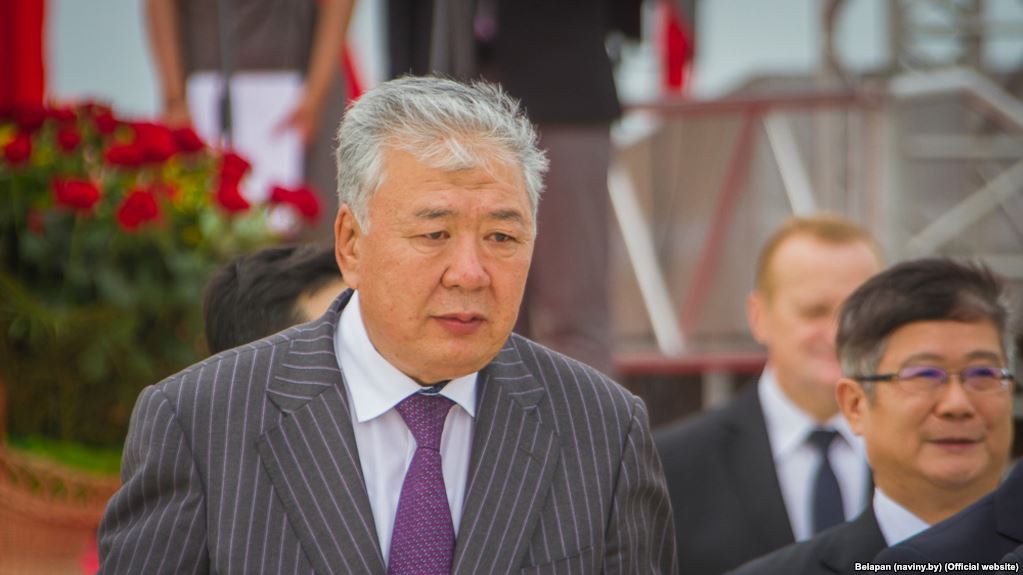
BISHKEK (TCA) — Kyrgyzstan is demanding an explanation from Belarus following media reports that showed a man who looks like former Kyrgyz Prime Minister Daniyar Usenov, who was sentenced to life in prison after an in-absentia trial in Bishkek, and identified him as a Belarusian state agricultural corporation CEO named Daniil Uritski, RFE/RL’s Kyrgyz Service reported.

Continue reading

EBRD president visits Uzbekistan

TASHKENT (TCA) — European Bank for Reconstruction and Development (EBRD) President Suma Chakrabarti is visiting Uzbekistan on 31 July and 1 August to meet with the country’s President Shavkat Mirziyoyev as well as with Deputy Prime Ministers Sukhrob Kholmuradov, Alisher Sultanov and Jamshid Kuchkarov, the Bank said.

Continue reading

Kazakhstan: In two minds about cryptocurrencies

ALMATY (TCA) — The emerging cryptocurrency business has both critics and new followers in Kazakhstan, while authorities warn the population of risks of investing in cryptocurrencies. We are republishing this article on the issue, written by Chris Rickleton, originally published by Eurasianet:

The cryptocurrency business can be a flash in the pan.

In Kazakhstan, few know that better than Zhomart Mametkarim. Late last year, with Bitcoin surging in value, he opened a cafe in the business capital, Almaty, and branded it a Crypto Hub.

The establishment was intended as a celebration of all things cryptocurrency-related. Items on the menu included bit burgers and a take on beshbarmak, Kazakhstan’s beloved noodle and meat dish, which the cafe recast as bit barmak. Customers could even pay in the virtual currency, although few ever actually did. Mametkarim and his partners regularly hosted talks on cryptocurrencies and their underlying blockchain technology at the cafe.

“People are mostly interested in how to earn money from trading,” Mametkarim told Eurasianet. While the menu was a bit of fun, the real aim of the venue was “to provide a space for the community interested in such things.”

When Eurasianet met Mametkarim earlier this year, cryptocurrencies were very much on the up. Bitcoin, the most famous cryptocurrency, had just soared in value by 20 percent in less than a week to pass $10,000 for the first time after a precipitous slump from its all-time high of $19,783 in December.

Bitcoin has had a rocky ride since then and is currently worth around $8,000 per unit. Other less prominent digital currencies have had a similarly torrid time. When Eurasianet dropped by Mametkarim’s cafe in June, it had changed hands and been rebranded. Mametkarim said he would hold crypto-related events at his office instead.

The story of the Crypto Hub brand feels like a salutary warning against overexuberance. Kazakhstan is adopting an accordingly cautious stance.

“In Kazakhstan, the National Bank is very conservative about this issue,” Daniyar Akishev, the young but circumspect chairman of the National Bank, said in March. “We want to prohibit the purchase and sale of the national currency for cryptocurrency. We want to prohibit the activity of exchanges on this segment and any kinds of mining.”

Akishev was tilting at windmills on the trading front, since that is an area of business it is all but impossible to regulate entirely. But it was his remarks on mining that got some people’s hackles up.

Mining, the series of electricity-hungry processes whereby networks of computers verify and record cryptocurrency transactions, is seen by some as a promising sector for Kazakhstan.

“What is mining? Mining is data processing. Mining is calculation. Which of these does he want to ban?” asked Leonid Muravyev, vice president of the Blockchain and Crypto Technology Association of Kazakhstan, a lobby group based in Almaty.

Kazakhstan is in pole position to exploit the global data-mining boom, according to Muravyev, whose association counts one of the largest cloud mining companies in the world, Genesis Mining, among its members.

As mining proponents argue, Kazakhstan produces considerably less electricity than it could. Energy Ministry figures indicate that power output is 20 percent below its potential capacity in winter – and that figure rises in the summer.

That spare capacity is “around half of the power consumed by all Bitcoin operations worldwide,” said Muravyev. Harnessing that potential could turn data-mining into Kazakhstan’s “new oil,” he predicted.

Whether Kazakhstan’s authorities will allow cryptocurrency miners line their pockets while leaching off the nation’s subsidized electricity supply is another matter, however. Other governments have tried to draw the line at such forms of profit-making. Earlier this year, China instructed local authorities to limit allocation of power to data miners as a way of curbing the exploitation of low electricity tariffs. In Georgia, protesting workers this spring claimed that energy-hungry cryptocurrency mining is killing jobs.

If Akishev represents an antagonist for cryptocurrency advocates, his predecessor at the National Bank, Kairat Kelimbetov, who is in charge of the newly opened Astana International Financial Center, or AIFC, is emerging as something of a champion of the technology.

The AIFC, which will operate under English common law rules, is throwing its doors open to investments in cryptocurrency operations, Kelimbetov said earlier this month. Projects involving blockchain and cryptocurrency have political support from the Finance Ministry and will be regulated under as-yet-undeveloped legislation.

“There is no contradiction with the (position of) the National Bank,” he said in quotes picked up by local media on July 5, “since we are working in completely different spheres.”

But even if Kazakhstan is willing and able to supply data-mining services to the global market, fears about local demand for cryptocurrencies abound.

Officials regularly bemoan “low levels of financial literacy” among a population in which many have fallen prey to crude Ponzi schemes.

Shadiness abounds. In December, the country’s biggest bank, Halyk Bank, publicly accused an entity identifying itself as a new Kazakh digital currency — Halykcoin — of committing fraud.

Because it is a new industry “there is a lot of immaturity, you can compare crypto economy to the Wild West,” said Alexey Sidorov, an entrepreneur with almost two decades of experience in the financial sector.

“But what is to prevent people taking advantage of other people in fiat currencies? There are any number of schemes out there,” said Sidorov during an interview at his office, where over 100 people work across two finance-focused companies, ProDengi.kz and Kredit24.

Sidorov’s planned foray into the electronic finance industry is to test cryptocurrencies as a source of startup funding for Lendex, a new peer-to-peer micro-loans outfit targeting underbanked populations in Central and South Asia.

Still in the shadows

The cryptocurrency industry is a magnet for colorful chancers.

One such company is Ice Rock Mining, which claims to operate out of a cave in eastern Kazakhstan and has promised investors annual returns of up to 400 percent producing Bitcoin. The operation is fronted by fresh-faced Kazakh entrepreneurs that argue the cool conditions of the cave are an ideal storage space for equipment that is prone to overheating.

Ice Rock’s initial coin offering, a fundraising method typically involving the exchange of tokens for investors’ crypto cash, wrapped up in May. With investors demanding first returns, the Northern Ireland-registered outfit is now trying to bat away accusations that they are scammers.

“There are some people who are telling that we are hiding something or something like that. Guys, it is totally crazy shit,” one of Ice Rock’s chiefs struck out at the naysayers in an expletive-laden tirade on YouTube last month.

Ice Rock founder Malik Murzashev did not respond to multiple requests for an interview. He also declined to divulge the precise location of the cave.

Muravyev, the blockchain lobbyist, said the horse has already bolted on mining, which he said is already happening on “quite a wide scale” in Kazakhstan. As an example of how data mining can crop up in the most unexpected of places, he cited the case of several IT specialists from the Finance Ministry being caught in February using government computers to mine cryptocurrencies.

But with a clear set of rules, he said, investors will be prepared to pour cash into the sector and take it “out of the shadows”.