• KGS/USD = 0.01144 0%
  • KZT/USD = 0.00215 0%
  • TJS/USD = 0.10637 0%
  • UZS/USD = 0.00008 0%
  • TMT/USD = 0.28530 0%
  • KGS/USD = 0.01144 0%
  • KZT/USD = 0.00215 0%
  • TJS/USD = 0.10637 0%
  • UZS/USD = 0.00008 0%
  • TMT/USD = 0.28530 0%
  • KGS/USD = 0.01144 0%
  • KZT/USD = 0.00215 0%
  • TJS/USD = 0.10637 0%
  • UZS/USD = 0.00008 0%
  • TMT/USD = 0.28530 0%
  • KGS/USD = 0.01144 0%
  • KZT/USD = 0.00215 0%
  • TJS/USD = 0.10637 0%
  • UZS/USD = 0.00008 0%
  • TMT/USD = 0.28530 0%
  • KGS/USD = 0.01144 0%
  • KZT/USD = 0.00215 0%
  • TJS/USD = 0.10637 0%
  • UZS/USD = 0.00008 0%
  • TMT/USD = 0.28530 0%
  • KGS/USD = 0.01144 0%
  • KZT/USD = 0.00215 0%
  • TJS/USD = 0.10637 0%
  • UZS/USD = 0.00008 0%
  • TMT/USD = 0.28530 0%
  • KGS/USD = 0.01144 0%
  • KZT/USD = 0.00215 0%
  • TJS/USD = 0.10637 0%
  • UZS/USD = 0.00008 0%
  • TMT/USD = 0.28530 0%
  • KGS/USD = 0.01144 0%
  • KZT/USD = 0.00215 0%
  • TJS/USD = 0.10637 0%
  • UZS/USD = 0.00008 0%
  • TMT/USD = 0.28530 0%

Afghanistan: president inaugurates power line from Turkmenistan

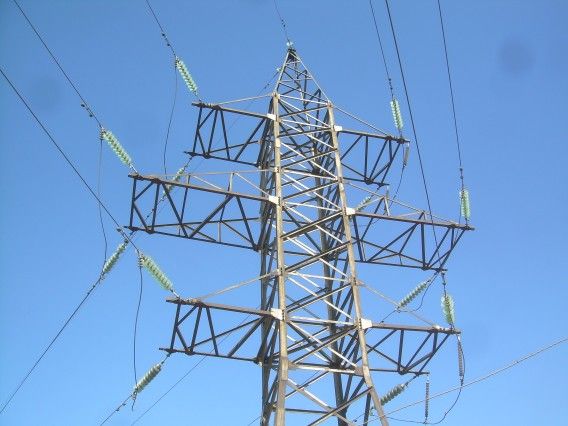
KABUL (TCA) — Afghan President Ashraf Ghani on July 26 traveled to Badghis province where he inaugurated a much-needed power transmission line from neighboring Turkmenistan and a substation, Afghan broadcaster TOLOnews reported.

The 110 kilovolt power line transmits 16 megawatts of imported power from Rabat Kashan in Turkmenistan to the center of Badghis province in Afghanistan over a distance of 52 km.

The project has cost $14 million, local officials said. Work on the project started in December 2010 but was delayed on numerous occasions.

The construction of the substation, which was initially contracted out to an Iranian company, was eventually finished by a local firm.

At least 7,000 families in Qala-e-Naw city, the provincial capital, will benefit from this power, while another 10,000 families in Qades, Muqur and Ab Kamari districts will get the electricity in the near future.

The vast majority of Badghis residents have not had power until now – except for a few who used thermal power at 40 AFs per kilowatt.

“With the inauguration of the substation, the price of power in Badghis for each kilowatt has dropped to 6 AFs from 40 AFs (per kilowatt),” Ghani said at the inauguration event in the province.

Meanwhile, a memorandum of understanding was signed at the event on Thursday between acting minister of energy and water and the minister of energy of Turkmenistan Döwran Rejepow for a 110 kilovolt power transmission line from Ata Murad in Turkmenistan to Khum Ab and Qarqin districts in Jawzjan. Two substations will also be built in the province.

“I firmly believe that with the strengthening of friendly ties and extending of cooperation between the two countries, we will be able to ensure improvement in different sectors and meanwhile it will help improve people’s lives,” Rejepow said.

Uzbekistan: women jailed after trying to meet with president

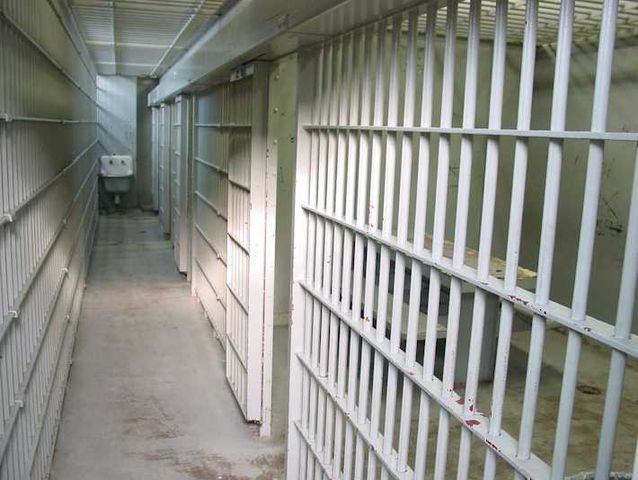
TASHKENT (TCA) — Six Uzbek women were jailed after they tried to approach President Shavkat Mirziyoev to complain about problems they and their families have encountered with police and prosecutors, RFE/RL’s Uzbek Service reported.

Tashkent-based rights defender Tatyana Dovlatova told RFE/RL on July 25 that 30 women were detained on July 23 after they gathered in front of the presidential office.

Six of the women were later convicted of minor hooliganism and sentenced to 15 days in jail. The others were released after about six hours in the Yakka Saroy district police department.

The Yakka Saroy police did not respond to RFE/RL’s request for comment.

Dovlatova told RFE/RL the women wanted to meet with the president to talk about ordeals faced by their family members in police custody and penitentiaries, as well as other issues.

Since taking over the Central Asian country in 2016 following the death of his authoritarian predecessor, Islam Karimov, Mirziyoev has called for more openness and closer ties between officials and ordinary people.

Mirziyoev opened an online “virtual office” to enable people to convey their problems.

Although the government has claimed the virtual office was effectively helping resolve citizens’ problems, Dovlatova said the women decided to meet with the president directly after they were unable to register with the online system.

Mirziyoev’s press service refused to comment, telling RFE/RL that it had no information regarding the jailed women.


Kazakhs increasingly hostile to both Russians and Chinese

ASTANA (TCA) — Kazakhstan remains an important sphere of interest for both Russia and China, and it is difficult for Astana to keep the balance in the relationship with Moscow and Beijing. We are republishing this article on the issue, written by Paul Goble, originally published by The Jamestown Foundation’s Eurasia Daily Monitor:

Kazakhstanis are increasingly skeptical of close ties with both Russians and Chinese, profoundly limiting the ability of the former to recover the influence Moscow once had there and making it far more difficult for Beijing to move in and supplant it. Further complicating this situation is the fact that many ethnic-Kazakhs are convinced Russia is behind the rise in anti-Chinese attitudes in Kazakhstan and that China is behind anti-Russian ones—a view that is likely to negatively impact interethnic relations in this Central Asian country. But more broadly, Astana may be searching for new partners beyond these two paramount ones, either by promoting itself as a regional hegemon or by linking up with some other country farther away. That, in turn, could open the way for a truly complicated mix of foreign and domestic politics as Kazakhstan moves toward a future beyond President Nursultan Nazarbayev’s rule.

The Russian government is alarmed by all this because, if it loses its position in Kazakhstan, its ability to influence the rest of Central Asia and to work with China as an equal partner will be much reduced. Russian commentator Yaroslav Razumov argues that Kazakhstan today “is an ally but not a friend,” because “within Kazakhstan, Russophobic attitudes are intensifying.” That is not good news and it is unlikely to change anytime soon, he suggests. Instead, “Moscow must learn to live with this,” something few in the Russian capital are likely to be comfortable with (Profile.ru, July 18).

Anti-Russian articles are a staple of the Kazakh media, he alleges, while pro-Russian ones are rare. Indeed, many Kazakhstanis now say that Russia and its agents of influence are promoting anti-Chinese attitudes among Kazakhs in a last-ditch effort to maintain the position of the ethnic-Russian minority in the country and preserve Moscow’s leverage over the Kazakhstani government. Meanwhile, Moscow’s other proposals, including having Kazakhstan join some kind of political union with Russia, have backfired, Razumov contends. First of all, ethnic Kazakhs remember what Moscow did to them the last time they were part of a common state. And second of all, the Russian side has overpromised regarding the benefits to Kazakhstan of joining the Eurasian Economic Union (EEU) and the Collective Security Treaty Organization (CSTO) and then not delivered (see EDM, May 9, 2014; March 2, 2016; January 11, 2018; July 12, 2018). Some Kazakhstanis, Razumov suggests, are even questioning the utility for Kazakhstan of remaining in those institutions.

Kazakhstan’s population is also generally skeptical of Moscow’s ability to do anything to help them economically, he says. Russia is simply too technologically backward to be of much use. But it is Moscow’s political moves that have sparked the most anger, including the widespread belief among ethnic Kazakhs that the Russian special services were behind a 2016 effort to organize a coup against President Nazarbayev. Some local commentators even suggested, Razumov continues, that Moscow wanted to carry out “a Ukrainian scenario” in Kazakhstan.

It is clear, the Russian commentator says, that Moscow has “lost the initiative” and that it has a lot of work to do if it is to recover even what it had before. Yet, many Russian officials appear to have thought that Kazakhstan was ready to march in lock step with Russia forever. That is not the case, and the divergence is only going to grow as Kazakhstan drops the Cyrillic script in favor of the Latin alphabet and develops ties with others (see Commentaries, March 5; see EDM, March 20; July 12).

In such a situation, most observers of Central Asia would have predicted that China would be able to pick up the pieces. But that also has not come to pass. Instead, anti-Chinese attitudes have been intensifying right along with anti-Russian ones. The sources are somewhat different, but the results are just as dramatic, and China is worried. It has good reason to be, especially in light of events over the last few days.

Adil Kaukenov, a specialist on China in Astana, recently told CA Monitor that economic interests will overcome any popular attitudes and that Kazakhstan needs China if it is to develop. Moreover, he said, “Sinophobia” in Kazakhstan was “formed two to three generations ago,” under the Soviets, and eventually it will dissipate. At the same time, however, he acknowledged that fears of China’s enormous population as well as Chinese people’s greater economic possibilities and higher standard of living are currently keeping such feelings alive (CA Monitor, July 13).

But now, there is a new and potentially explosive factor: Chinese repression of its Muslim population in Xinjiang is growing worse (see EDM, January 8). Heretofore, this repression was directed primarily against the local Uyghurs; but Sayragul Sauytbay, an ethnic Kazakh who fled from China to Kazakhstan, has attracted attention for describing the repression of Turkic peoples in that region. She has suggested that, after it deals with the Uyghurs, Beijing will turn its attention to the 1.2 million ethnic Kazakhs living in China (Azattyq.org, July 13; News.ru, Taz.de, July 17).

The Chinese authorities have already confined “approximately 2,500 ethnic Kazakhs in a corrective labor camp,” Sauytbay reported (Azattyq.org, July 13). This unprecedented act of repression is certain to lead to a new outburst of anti-Chinese feelings in Kazakhstan. The Kazakhs in China fled there from the Soviet Union during collectivization and sedentarization in the 1920s and 1930s but have, nonetheless, maintained ties with extended family members back in their homeland.

For two decades, the Kazakhstani government has cast itself as a protector of Kazakhs abroad. It now must take a tough stand or lose credibility with the domestic population. And consequently, at a time when Beijing might have expected to gain real influence in Kazakhstan, the actions of Chinese police in Xinjiang are going to make that almost impossible in the near term. At the same time, Astana will be looking for friends and allies elsewhere, perhaps first in the West and then in the Muslim world. Whoever provides support to it now can expect to gain in the future.

New Turkmenistan-Afghanistan power line commissioned

ASHGABAT (TCA) — As it was informed at the video conference on July 23, the launch ceremony of power line Rabat-Kashan—Kalay-Nau would be held later this month with the participation of the President of Afghanistan Ashraf Ghani. Implementation of this important project will give the impulse to economic development of Turkmenistan’s Bathyz province and neighboring regions of Afghanistan, particularly to the construction of new living and social facilities, state Turkmen media reported.

Continue reading

Kazakhstan’s Foreign Minister visits United States to boost ties

ASTANA (TCA) — At the invitation of the US Secretary of State, Michael Pompeo, Foreign Minister of Kazakhstan, Kairat Abdrakhmanov, is attending the first Ministerial Conference on Promoting Religious Freedom, taking place on 25-26 July in Washington, the Kazakh Foreign Ministry said.

Prior to the Conference, on July 25, Mr. Abdrakhmanov conducted a range of meetings with the US State Department authorities, including First Deputy Secretary of State John Sullivan and Ambassador at-Large for International Religious Freedoms Sam Brownback, who contributed to fostering cooperation within the Silk Road Strategy format, when he was a Senator in the 1990s.

The diplomats focused on the dynamic growth of Kazakh-American relations, as well as to the implementation of the agreements reached during the official visit of President Nazarbayev to Washington in January 2018. Special emphasis was made on the enhancement of political and trade and economic partnership between Kazakhstan and the United States.

Minister Abdrakhmanov also met with the management of leading American companies and corporations, who were briefed on the new favorable business environment in Kazakhstan. It was stressed that the successful implementation of the high level agreements between the Presidents of Kazakhstan and the United States gave a boost to business activities, as well as increased the inflow of US investments into the Kazakh economy.

The minister noted that given Kazakhstan’s policy of economic diversification, the country is interested in attracting American experience and capital for the implementation of big high-tech projects, including in processing and manufacturing industries, development of transport infrastructure, agriculture, communications and IT-technologies. These and many other projects will be discussed during the upcoming visits of Kazakh officials to the United States and American trade missions to Kazakhstan.