BISHKEK (TCA) — The Publisher’s note: Throughout the 19th and 20th centuries, Central Asia was the scene of intense geopolitical struggle and the Great Game between the British and Russian Empires, and later between the Soviet Union and the West, over Afghanistan and neighboring territories. Into the 21st century, Central Asia has become the area of a renewed geopolitical interest, dubbed the New Great Game, largely based on the region’s hydrocarbon and mineral wealth. On top of that, the region now is perhaps the most important node in the implementation of China’s One Belt, One Road initiative through which Beijing aims to get direct access to Western markets. Every week thousands of news appears in the world’s printed and online media and many of them may escape the attention of busy readers. At The Times of Central Asia, we strongly believe that more information can better contribute to peaceful development and better knowledge of this unique region. So we are presenting this Weekly Digest which compiles what other media have reported on Central Asia over the past week.
KAZAKHSTAN
Chinese Investor Disappoints Kazakhstan’s National Oil Company
Kazakhstan’s Kazmunaigas will have to hurry to find other ways to get cash to cover its debts and expenses
July 9 — “China’s CEFC will not buy a majority stake in Kazmunaigas International (KMGI), owned by Kazakhstan’s state-owned oil and gas firm Kazmunaigas, a disappointing development for a deal more than two years in the making. CEFC and Kazmunaigas had first agreed to sell a 51 percent stake in its Romanian assets, owned by one of its subsidiaries, KMGI (formerly known as Rompetrol), in December 2015.” READ MORE: https://thediplomat.com/2018/07/chinese-investor-disappoints-kazakhstans-national-oil-company/
Kazakhstan’s Astana turns 20: A tale of two capitals
As Kazakhstan’s capital city has lavishly celebrated its 20th-birthday, some in Kazakhstan argue that the festivities were ‘a feast in time of plague’
July 10 — “The capital of Kazakhstan has just enjoyed a 20th-birthday blowout costing more than $55 million. July 6 was not just a national holiday to celebrate the anniversary of Astana’s elevation to capital status – it was also President Nursultan Nazarbayev’s 78th jubilee. This extravagant and highly personalized state-funded partying is provoking mixed sentiments.” READ MORE: https://timesca.com/index.php/news/19981-kazakhstan-s-astana-turns-20-a-tale-of-two-capitals
Kazakh economic openness good for the country, good for global partners
Kazakhstan is pursuing a policy of encouraging outside investment and partnerships from various players — both in the East and West
July 11 — “Only a few years ago, it seemed that the argument of whether countries thrived best when they had economies open or partially closed to trade and investment was decided. Although there was still a vocal minority who doubted the benefits of removing barriers and focused on the draw-backs of globalisation, it had decreasing influence. Instead, we saw a hardening consensus – supported by the evidence of sustained periods of strong growth and shared prosperity – that open economies were the way forward.” READ MORE: https://astanatimes.com/2018/07/kazakh-economic-openness-good-for-the-country-good-for-global-partners/
Kazakhstan’s banks to gain access to Uzbekistan
Kazakhstan’s banks will be able to open subsidiaries in Uzbekistan or buy assets in existing lenders
July 11 — “The central banks of Kazakhstan and Uzbekistan have come together to agree on cooperation that could culminate in large Kazakh lenders entering the underexplored Uzbek market.” READ MORE: https://eurasianet.org/s/kazakhstans-banks-to-gain-access-to-uzbekistan
KYRGYZSTAN
Envoy hopeful of pact with Qatar soon on hiring Kyrgyz nationals
About 500 Kyrgyz expatriates in Doha are serving in different sectors of Qatar’s economy today
July 8 — “Kyrgyzstan ambassador in Doha Nuran S Niyazaliev has expressed optimism that an agreement with Qatar on the employment of Kyrgyz citizens will be signed in the coming weeks. “I hope this forthcoming week we can sign it with the approval of both sides,” the envoy told Gulf Times on the sidelines of a seminar on Qatar’s Labour Law recently at the embassy.” READ MORE: http://www.gulf-times.com/story/598788/Envoy-hopeful-of-pact-with-Qatar-soon-on-hiring-Kyrgyz-nationals
Kyrgyzstan: Rescue helicopter crashes in mountains with tourists onboard
Security is a relevant issue for attracting more tourists to Kyrgyzstan
July 9 — “A military helicopter in Kyrgyzstan has crashed during a rescue of tourists trapped on the Khan Tengri mountain, injuring several people onboard. The accident occurred on the morning of July 9, when the Mi-8 craft was forced to make a rough landing in the area of the South Inylchek Glacier due to windy conditions.” READ MORE: https://eurasianet.org/s/kyrgyzstan-rescue-helicopter-crashes-in-mountains-with-tourists-onboard
Idea of EEU common currency: more political, less economic
The introduction of a common currency in the EEU may become a strong blow to small economies like those of Kyrgyzstan
July 9 — “The Russian ruble should be made the currency of settlements in the Eurasian Economic Union, Board Chairman of the Eurasian Development Bank (EDB) Andrey Belyaninov recently said at a conference of the Russian TV business channel RBC “Window of opportunities: Investments and new projects in Eurasia”. READ MORE: https://timesca.com/index.php/news/26-opinion-head/19976-idea-of-eeu-common-currency-more-political-less-economic
How social media users in Kyrgyzstan are turned into “extremists”
In Kyrgyzstan, social media users are often persecuted for sharing their opinions online
July 12 — “Since the 2000s, social networks have been widely used both as platform for like-minded users and an instrument for spreading information and ideas. But the rapid dissemination of facts and opinions also results in an uncontrollable stream of information. As a result, we are witnessing an increasing number of posts with negative content – from hate speech to open fomentation of online conflicts on ethnic grounds.” READ MORE: https://www.opendemocracy.net/od-russia/elnura-alkanova/how-social-media-users-in-kyrgyzstan-are-turned-into-extremists
TAJIKISTAN
Tajikistan Crackdown on IRPT an Excuse for Saudi-Incited Hostility toward Iran: Expert
Tajik religious and political expert explicates the reasons behind the Tajik government’s clampdown on Islamic movements and symbols, particularly its strong campaign against the Islamic Renaissance Party of Tajikistan
July 8 — “The Islamic Renaissance Party of Tajikistan (IRPT) has become the victim of an anti-Islamic campaign launched by the Dushanbe government in recent months whose real purpose is to counter Iran with the financial backing of Saudi Arabia, a Tajik political expert said.” READ MORE: https://www.tasnimnews.com/en/news/2018/07/08/1771076/tajikistan-crackdown-on-irpt-an-excuse-for-saudi-incited-hostility-toward-iran-expert
How the War on Drugs Is Making Tajikistan More Authoritarian
Tajikistan is a major drug transit state, with 30 percent of Afghan opiates passing through en route to Russia and Europe
July 9 — “According to a recent study by a leading U.S. government oversight body, 17 years of U.S. counternarcotics efforts in Afghanistan have yielded “negligible” results. Despite the United States spending nearly $8.6 billion to curb the production and sale of poppies since 2001, poppy cultivation hit an all-time high in 2017, with the trend showing few signs of slowing.” READ MORE: https://thediplomat.com/2018/07/how-the-war-on-drugs-is-making-tajikistan-more-authoritarian/
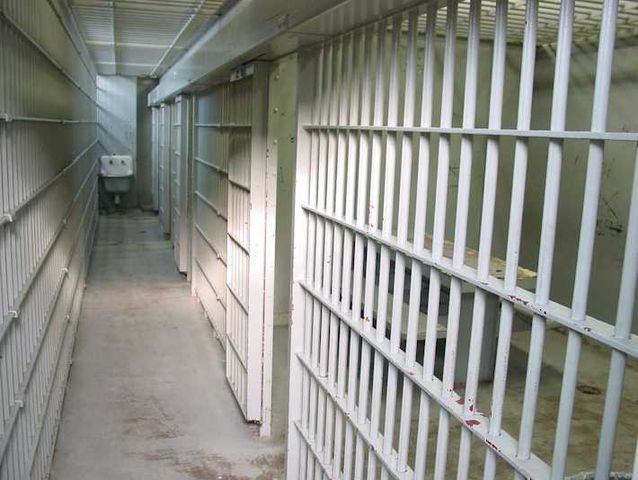
Tajikistan sentences journalist to 12 years in jail
Tajik journalist has been convicted for reporting on alleged corruption of government officials
July 11 — “A court in northern Tajikistan has sentenced a local journalist and comedian to 12 years in a high-security prison on embezzlement charges that supporters say were fabricated. The trial in Khujand city court of Khairullo Mirsaidov, who worked extensively with overseas donor organizations, closed on July 11 to widespread indifference among the international diplomatic community, which has long given up pressing Tajikistan on its human rights commitments.” READ MORE: https://eurasianet.org/s/tajikistan-sentences-journalist-to-12-years-in-jail
TURKMENISTAN
Turkmenistan finds a novel solution to mass emigration
Authorities in crisis-hit Turkmenistan are so desperate to stem emigration that they are simply stopping their countrymen from getting on planes flying abroad
July 5 — “CITIZENS of Turkmenistan are definitely allowed to leave the country, its immigration service insisted in a statement in mid-April. The declaration came in response to reports that men under the age of 30 were being prevented from boarding international flights. But in recent weeks reports have begun emerging again of men as old as 40 not being allowed to travel abroad.” READ MORE: https://www.economist.com/asia/2018/07/05/turkmenistan-finds-a-novel-solution-to-mass-emigration
Turkmenistan: Keep the family close, and keep the population closer
In its ‘Akhal-Teke: A Turkmenistan Bulletin’, Eurasianet reviews the main news and events in the Central Asian country for the previous week
July 10 — “Unlike regular people in Turkmenistan, the ruling family is getting to do a lot of traveling these days. Serdar Berdymukhamedov, the president’s son and deputy foreign minister, had a particularly busy week.” READ MORE: https://eurasianet.org/s/turkmenistan-keep-the-family-close-and-keep-the-population-closer
Turkmenistan’s economy—half empty or half full?
Although official statistics reports economic growth, the economy of Turkmenistan is experiencing a severe crisis, with the population suffering from periodic shortages of some staple food products
July 11 — “It is notoriously challenging to acquire accurate socio-economic data on a country as insulated as Turkmenistan. And the difficulty is further heightened by the fact that the autocratic government in Ashgabat consistently paints society in roseate terms, even as the Turkmenistani opposition scattered abroad relates much darker imagery. The gulf between these disparate portrayals is particularly noticeable in coverage of the country’s economy.” READ MORE: https://timesca.com/index.php/news/19986-turkmenistan-s-economy-half-empty-or-half-full
UZBEKISTAN
The Doctor Will See You — As Soon As He’s Done Street-Cleaning
It is commonplace in Uzbekistan when medical workers participate in compulsory clean-up duty, a practice dating to the Soviet era
July 9 — “Patients of a state-run medical facility in a town in eastern Uzbekistan try to avoid Friday visits. That’s the day doctors and nurses in Quvasoy have different duties to tend to — sweeping the streets and cleaning up garbage.” READ MORE: https://www.rferl.org/a/the-doctor-will-see-you—-as-soon-as-he-s-done-street-cleaning/29353178.html
Uzbek Strip-Search Victim Says Police ‘Ruined My Life’
Police abuse is widespread in Uzbekistan, where police have long been criticized for mistreatment of detainees, as well as corruption
July 10 — “Humiliated by a police strip search that sparked public outrage, an Uzbek woman whose videotaped ordeal led to an outpouring of support would prefer to be left alone.” READ MORE: https://www.rferl.org/a/uzbekistan-strip-search-victim-says-police-ruined-my-life-/29355669.html
Uzbekistan: Hizb ut-Tahrir trial ends with prison term, suspended sentences
Rights activists say the Uzbek authorities have failed an important test on religious freedoms
July 10 — “A court in Uzbekistan’s capital has convicted five people for membership in the banned Islamic group Hizb ut-Tahrir. The trial, which ended on July 9, had been seen as a test of how the government’s stance against non-mainstream Muslims is evolving against a backdrop of slow political reforms. Rights activists argue the Tashkent court’s decision shows little progress has been made.” READ MORE: https://eurasianet.org/s/uzbekistan-hizb-ut-tahrir-trial-ends-with-prison-term-suspended-sentences
Uzbekistan and Russia reach agreement on construction of new nuclear power plant
Uzbekistan, which is heavily dependent on fossil fuel in electricity generation, plans to build its first nuclear power plant to solve its power deficit problems.
July 12 — “A series of meetings since late December 2017 between officials from Uzbekistan and ROSATOM, the Russian state nuclear energy corporation, suggests that both sides have reached an agreement to build a two-reactor nuclear power plant (NPP) in this Central Asian republic.” READ MORE: https://timesca.com/index.php/news/19991-uzbekistan-and-russia-reach-agreement-on-construction-of-new-nuclear-power-plant
AFGHANISTAN
It Still Doesn’t Get Worse Than Afghanistan
Driving the Taliban from power was the easy part, but replacing them with a modern, Western-style constitution and corresponding set of political institutions was a fanciful objective, analyst says
July 9 — “What’s the dumbest aspect of contemporary U.S. foreign and defense policy? There’s no shortage of worthy candidates: the fruitless pursuit of strategic missile defense, which has cost more than $200 billion since the 1980s but still can’t provide convincing protection against even a nuclear pipsqueak like North Korea; President Donald Trump’s foolish flirtation with a global trade war, and especially his transparently comical claim that imports from Canada” READ MORE: https://foreignpolicy.com/2018/07/09/it-still-doesnt-get-worse-than-afghanistan/
As Afghanistan’s Water Crisis Escalates, More Effective Water Governance Could Bolster Regional Stability
Reliable water management is a critical factor for any improvements in Afghanistan, as 80 percent of the nation depends upon agriculture for their livelihoods
July 11 — “ “Kabul be zar basha be barf ne!” This ancient proverb—“May Kabul be without gold rather than snow”—refers to snowmelt from the Hindu Kush Mountains, a primary source of Afghanistan’s water supply. To recover from years of armed conflict, Afghanistan needs a stable water supply, but its sources are increasingly stressed by severe droughts.” READ MORE: https://www.newsecuritybeat.org/2018/07/afghanistans-water-crisis-escalates-effective-water-governance-bolster-regional-stability/
Afghanistan: America’s Self-Made Failure
Afghanistan is today essentially the same failed state it was when the U.S. invaded it in October 2001, an observer believes
July 11 — “Depending on who you’re taking to, the war in Afghanistan has cost America a little more or a bit less than $1 trillion. It has lasted more than 17 years, and no clear end is in sight for it. What transpires today is not the original military campaign. The initial armed confrontation was anticlimactic and of short duration. This subsequent campaign is the second stage of the primary war.” READ MORE: https://www.newsmax.com/finance/nasirshansab/nasir-shansab-afghanistan-failure/2018/07/11/id/871173/
Afghanistan: Islamic State’s Radio Outreach
A radio station affiliated to the Islamic State (IS) continues propaganda broadcasts in an Afghan province and locals ask why it has not been shut down
July 12 — “A Nangarhar radio station affiliated to the Islamic State (IS) is continuing to broadcast daily calls for violence despite the Afghan government’s insistence that it is trying to close it down. The Khelafat Ghag station has been operating for the last three years, spreading propaganda to encourage residents of the eastern province, particular youngsters, to join IS groups and fight the government and its international allies.” READ MORE: https://iwpr.net/global-voices/afghanistan-islamic-states-radio-outreach
WORLD
Central Asia in 2018: What’s the Future of the C5+1?
The US needs to pay more attention to its relations with the strategically important region of Central Asia — both in political and economic spheres
July 11 — “The C5+1 format, a platform for dialogue and cooperation between the five Central Asian nations and the U.S., could gain new momentum after a series of high profile meetings in less than a year. However, how far this initiative can go will depend on the continuous involvement and interest of the parties involved, particularly Washington.” READ MORE: https://www.geopoliticalmonitor.com/central-asia-in-2018-whats-the-future-of-the-c51/
Surveillance fears cloud China’s ‘Digital Silk Road’
Chinese companies are building cross-border communications networks and e-commerce links in countries involved in the Belt and Road initiative, but given the close links between these companies and China’s government, those digital systems could be used for Beijing’s intelligence operations, experts warn
July 11 — “A major element of China’s continent-spanning Belt and Road Initiativehas nothing to do with roads, ports or power plants. Rather, the “Digital Silk Road” aims to construct communications networks across the developing world. Many fear Beijing could use those tools for electronic surveillance.” READ MORE: https://www.cnbc.com/2018/07/11/risks-of-chinas-digital-silk-road-surveillance-coercion.html



 TCA
TCA