• KGS/USD = 0.01144 0%
  • KZT/USD = 0.00215 0%
  • TJS/USD = 0.10641 0%
  • UZS/USD = 0.00008 0%
  • TMT/USD = 0.28530 0%
  • KGS/USD = 0.01144 0%
  • KZT/USD = 0.00215 0%
  • TJS/USD = 0.10641 0%
  • UZS/USD = 0.00008 0%
  • TMT/USD = 0.28530 0%
  • KGS/USD = 0.01144 0%
  • KZT/USD = 0.00215 0%
  • TJS/USD = 0.10641 0%
  • UZS/USD = 0.00008 0%
  • TMT/USD = 0.28530 0%
  • KGS/USD = 0.01144 0%
  • KZT/USD = 0.00215 0%
  • TJS/USD = 0.10641 0%
  • UZS/USD = 0.00008 0%
  • TMT/USD = 0.28530 0%
  • KGS/USD = 0.01144 0%
  • KZT/USD = 0.00215 0%
  • TJS/USD = 0.10641 0%
  • UZS/USD = 0.00008 0%
  • TMT/USD = 0.28530 0%
  • KGS/USD = 0.01144 0%
  • KZT/USD = 0.00215 0%
  • TJS/USD = 0.10641 0%
  • UZS/USD = 0.00008 0%
  • TMT/USD = 0.28530 0%
  • KGS/USD = 0.01144 0%
  • KZT/USD = 0.00215 0%
  • TJS/USD = 0.10641 0%
  • UZS/USD = 0.00008 0%
  • TMT/USD = 0.28530 0%
  • KGS/USD = 0.01144 0%
  • KZT/USD = 0.00215 0%
  • TJS/USD = 0.10641 0%
  • UZS/USD = 0.00008 0%
  • TMT/USD = 0.28530 0%
Uncategorized

Uzbekistan and Russia reach agreement on construction of new nuclear power plant

TASHKENT (TCA) — Uzbekistan, which is heavily dependent on fossil fuel in electricity generation, plans to build its first nuclear power plant to solve its power deficit problems. We are republishing this article on the issue, written by Fozil Mashrab, originally published by The Jamestown Foundation’s Eurasia Daily Monitor:

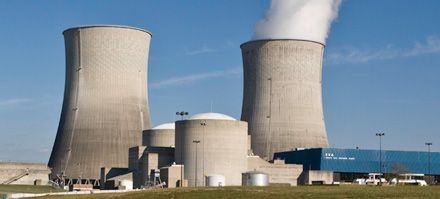
A series of meetings since late December 2017 between officials from Uzbekistan and ROSATOM, the Russian state nuclear energy corporation, suggests that both sides have reached an agreement to build a two-reactor nuclear power plant (NPP) in this Central Asian republic. According to Bakhrom Ashrafkhanov, Uzbekistan’s ambassador to Russia, “[T]he nuclear power plant will definitely be constructed,” and the two sides are working on a road map. It is expected the final deal will be signed this autumn in Tashkent, during President Vladimir Putin’s visit to Uzbekistan (Uzdaily.uz, June 22).

Media outlets suggest that the idea to build an NPP, most likely to be located in the southwestern uranium-mining province of Navoi, came from Uzbekistani authorities. According to the reports, ROSATOM, a global leader in its industry, readily agreed. Plans to build an NPP in Uzbekistan have existed for many years, but were given a final decisive push by President Shavkat Mirziyoyev (Interfax, May 30). The timing is particularly promising—the NPP plan coincides with other bold, wide-ranging reforms meant to rejuvenate the country after years of general economic and political stagnation as well as neglect of the energy sector in particular. However, there are also concerns Uzbekistan’s government or the heavily indebted ROSATOM might require years to raise the necessary funds, particularly given ROSATOM’s existing commitments to build 42 nuclear reactors in 12 countries around the world (RIA Novosti, December 1, 2017).

Uzbekistan’s former president, the late Islam Karimov, also realized the need for constructing an NPP since the country’s fossil fuel–based energy sector is not sustainable in the long term. Proven oil and natural gas reserves are projected to last, at current rates of consumption, for the next 30–35 years; and approximately 86 percent of Uzbekistan’s electricity is generated by thermal power plants running on gas. Nevertheless, due to environmental concerns, high costs, the region’s seismic peculiarities, and, perhaps, Karimov’s inherently cautious and slow-moving approach, Uzbekistan’s nuclear aspirations were put on hold during his rule (Odnako.ru, August 30, 2014).

The late president’s so-called “gradualist approach” became a euphemism among his critics for not taking necessary measures to tackle critical, worsening power shortages. The entire country, with the partial exception of the capital, Tashkent, chronically suffers from acute electricity shortages, especially in winter. Millions of Uzbekistani families struggle to survive the winter season, spending large parts of their already meager incomes to buy traditional sources of energy such as coal and firewood or mini electricity generators that run on gasoline. Similarly, power shortages force owners of many small- and medium-sized businesses in the provinces to scale down their operations or send workers on unpaid leave during the winter months (Ozodlik Radiosi, May 12, 2014).

If constructed, the envisaged NPP will add 2,400 megawatts (MW) of capacity to Uzbekistan’s existing total installed capacity of 14,100 MW. To some extent, this may alleviate current power shortages. Yet, more future brownouts will continue to loom, as the country’s electricity consumption is expected to rise by 50 percent in the next decade (Review.uz, June 29).

Paradoxically, Uzbekistan is a net exporter of both natural resources and electricity. Every year, it earns hundreds of millions of dollars by exporting electricity to neighboring countries, mainly to Afghanistan, and billions of dollars by exporting natural gas to China, Russia and its neighbors. For years, the government prioritized boosting export earnings over domestic consumption needs. Questions persist, therefore, as to whether the planned NPP will really serve to ease the plight of the population, or will merely become another source of export revenues for government officials and affiliated business groups (Sputniknews-uz.com, March 24).

Such fears are not entirely baseless: in order to recoup the cost and to meet loan repayment targets associated with the nuclear plant, Uzbekistan’s government might again be tempted to sell most of the electricity to neighboring markets to generate quick cash. Corroborating these fears, proponents of the NPP within the government tend to look at the issue through the prism of freeing more natural gas for exports, rather than satisfying the growing demand for gas from the people and businesses of Uzbekistan (Review.uz, June 29).

Bahtiyor Ergashev, an Uzbekistani researcher, has voiced mainly positive assessments of the government’s NPP plans. And yet, he also thinks it might make long-overdue radical reforms of the energy sector even more urgent. According to Ergashev, Uzbekistan’s power supply system is “totally rotten, through and through corrupted with unbelievable rates of electricity loss that can reach as high as 38 percent.” Therefore, the rehabilitation and modernization of the existing power generation units and transmission infrastructure are prerequisites for the effective management of the energy system (Vestnik Kavkaza, June 3).

Anvar Husainov, a former senior energy official and political commentator, does not think an NPP would be the most effective solution for Uzbekistan’s energy crisis. Instead of embarking on an enterprise that could cost $10 billion–13 billion, he believes the government should consider investing in neighboring Tajikistan’s long delayed but more cost-effective Rogun Hydro Power Plant (HPP), estimated to cost $4 billion. When fully completed, the dam would cheaply generate 3,600 MW of electricity and could meet the growing energy needs of both Tajikistan and Uzbekistan as well as other countries in the region (YouTube, May 31).

Beginning this year, Uzbekistan has resumed importing electricity from Tajikistan and Kyrgyzstan. The electricity is priced at $2 cents per kilowatt in summer, and $2.5 cents per kilowatt in winter, quite close to Uzbekistan’s prices for domestically generated energy (Podrobno.uz, April 3). Uzbekistan’s attitude toward the Rogun hydro plant and the heretofore similarly controversial Kambarata HPP in Kyrgyzstan has changed dramatically after President Mirziyoyev came to power. Once strongly opposed, Uzbekistan has even expressed a willingness to invest in both of these HPPs, calling them “important projects for the whole region” (President.tj, March 9; Kabar.kg, December 28, 2017).

In the final analysis, construction of the proposed NPP will not completely solve Uzbekistan’s energy shortages. Uzbekistan will still need to expand power-generating capacity (perhaps by building additional NPPs) as well as look for alternative sources of energy, including from neighboring countries. Moreover, the government’s current practice of favoring exporting energy resources without first fully satisfying domestic demand is quite contentious. If it continues, it may undermine Uzbekistan’s ability to fully realize its human and industrial potential.

Uncategorized

Turkmenistan’s economy—half empty or half full?

ASHGABAT (TCA) — Although official statistics reports economic growth, the economy of Turkmenistan is experiencing a severe crisis, with the population suffering from periodic shortages of some staple food products. We are republishing this article on the issue, written by John C. K. Daly, originally published by The Jamestown Foundation’s Eurasia Daily Monitor:

It is notoriously challenging to acquire accurate socio-economic data on a country as insulated as Turkmenistan. And the difficulty is further heightened by the fact that the autocratic government in Ashgabat consistently paints society in roseate terms, even as the Turkmenistani opposition scattered abroad relates much darker imagery. The gulf between these disparate portrayals is particularly noticeable in coverage of the country’s economy. Since January 2016, Turkmenistan’s beleaguered currency, the manat, has endured a perfect storm, depreciating by more than 542 percent; and since the beginning of the year, the unofficial exchange rate skyrocketed from about 10 manats to the dollar up to 29 as of June 3. That drop in value has caused significant increases in the prices of staple products, including gasoline, medicines and wheat (Fergananews.com, June 9). And while the government projects a GDP increase of 6.2 percent this year, the opposition reports that food rationing has begun in the country (Turkmenistan Segodnya, June 8).

Since achieving independence in 1991, Turkmenistan under its first president, Saparmurat Niyazov (a.k.a. Turkmenbashi), and his successor, Gurbanguly Berdimuhamedov, has not only remained under authoritarian centralized government control, but has squandered much of the revenue generated from natural gas exports by pursuing a number of vanity projects. Alongside a new $2.3 billion airport in the capital Ashgabat, the city now houses the most marble buildings in the world—543 new structures clad in 4.5 million square meters of the white stone—earning the municipality a place in The Guinness Book of Records (MIR 24 TV, October 14, 2017).

Beneath the glittering façades, however, life is apparently deteriorating for the country’s citizens. Last October, the government ended the supply of free natural gas, electricity and water, which residents of this former Soviet republic had enjoyed for a quarter century. Now, Turkmenistan has introduced rationing for basic foodstuffs. On June 15, Radio Liberty’s Azatlyk Turkmen service reported that identification cards are now required to buy subsidized bread; in the morning, when the queues are long, police officers are posted in front of each store (Habartm.org, June 13, as cited in Radio Azatlyk, June 15).

Turkmenistan is currently experiencing its worst economic crisis since 1991, setting the government on a desperate search for new export routes for its natural gas. When China’s first 1,242-mile gas pipeline from Turkmenistan became operational in late 2009, Turkmenistan was already also massively exporting to both Russia and Iran; while potential Chinese investment and future gas demand were regionally regarded as virtually limitless. But since then, Russia and Iran effectively ended their imports of Turkmenistani gas, while declines in global energy prices and China’s lower economic growth rates have heavily reduced the region’s overly optimistic expectations. While Turkmenistan has long expressed a strong desire to expand its export markets by selling gas to Europe as well as energy-deficient Pakistan and India, both options face major routing, funding and security concerns (see EDM, April 8, 2016; February 6, 2018; March 28, 2018).

The tightly controlled state media, combined with President Berdimuhamedov’s burgeoning cult of personality, have made actively assessing internal developments in Turkmenistan unusually difficult. The Turkmenistan State News Agency, Turkmenistan Segodnya, remains relentlessly upbeat in its reporting; on June 8, it announced that the Cabinet of Ministers was briefed on the state of the national economy for January–May 2018, with retail trade turnover apparently increasing by 19.4 percent, year on year. Moreover, production rates of all ministries and departments reportedly rose 4.3 percent, while GDP grew by 6.2 percent (Turkmenistan Segodnya, June 8).

In the absence of other statistically reliable data, international financial institutions must rely on the figures provided by the Turkmenistani government. The International Monetary Fund (IMF) has utilized Ashgabat’s optimistic GDP projections for 2018 of 6.2 percent. And yet, the IMF’s April assessment of Turkmenistan’s economy, which the international organization summarized and transmitted to the Central Asian government, evidently proved sufficiently sensitive that the Turkmenistani “authorities have not consented to publication of the staff report and the related press release” (Imf.org, April 25).

On June 3, the IMF’s Middle East and Central Asia deputy head Juha Kahkonen observed that the only interim political options for the country were now to either devalue the manat or reduce government spending (Paruskg.info, June 6). If the domestic economic situation deteriorates further, some experts do not rule out that rioting could break out in the streets (Nezavisimaya Gazeta, June 28).

Berdimuhamedov, known in Turkmenistan by his self-styled moniker “Arkadag” (The Protector), does not yet seem ready to fully confront his country’s profligate spending against the background of economic decline. To give but one example, on May 3, the president conducted a “sudden check” of the army’s combat readiness, with the national TV channel Altyn Asyr (Golden Age) “showing him sitting in the cockpit of a recently purchased Leonardo-Finmeccanica Italian Alenia M-346 jet trainer, as well as inspecting an Alenia C-27J Spartan military transport plane (Centrasia.ru, May 11).

No immediate solutions are at hand to address Turkmenistan’s economic morass caused by declining global energy prices and extravagant government expenditures. The IMF’s proposals to devalue the manat or reduce the state budget are unlikely to be implemented, as the first would further reduce the citizenry’s standard of living, and the latter would call into question the government’s priorities. Accordingly, in the short term it seems that the situation is likely further to drift and worsen, the only question being how quickly.