• KGS/USD = 0.01144 0%
  • KZT/USD = 0.00216 0%
  • TJS/USD = 0.10698 0.09%
  • UZS/USD = 0.00008 0%
  • TMT/USD = 0.28530 0%
  • KGS/USD = 0.01144 0%
  • KZT/USD = 0.00216 0%
  • TJS/USD = 0.10698 0.09%
  • UZS/USD = 0.00008 0%
  • TMT/USD = 0.28530 0%
  • KGS/USD = 0.01144 0%
  • KZT/USD = 0.00216 0%
  • TJS/USD = 0.10698 0.09%
  • UZS/USD = 0.00008 0%
  • TMT/USD = 0.28530 0%
  • KGS/USD = 0.01144 0%
  • KZT/USD = 0.00216 0%
  • TJS/USD = 0.10698 0.09%
  • UZS/USD = 0.00008 0%
  • TMT/USD = 0.28530 0%
  • KGS/USD = 0.01144 0%
  • KZT/USD = 0.00216 0%
  • TJS/USD = 0.10698 0.09%
  • UZS/USD = 0.00008 0%
  • TMT/USD = 0.28530 0%
  • KGS/USD = 0.01144 0%
  • KZT/USD = 0.00216 0%
  • TJS/USD = 0.10698 0.09%
  • UZS/USD = 0.00008 0%
  • TMT/USD = 0.28530 0%
  • KGS/USD = 0.01144 0%
  • KZT/USD = 0.00216 0%
  • TJS/USD = 0.10698 0.09%
  • UZS/USD = 0.00008 0%
  • TMT/USD = 0.28530 0%
  • KGS/USD = 0.01144 0%
  • KZT/USD = 0.00216 0%
  • TJS/USD = 0.10698 0.09%
  • UZS/USD = 0.00008 0%
  • TMT/USD = 0.28530 0%

Kazakhs increasingly hostile to both Russians and Chinese

ASTANA (TCA) — Kazakhstan remains an important sphere of interest for both Russia and China, and it is difficult for Astana to keep the balance in the relationship with Moscow and Beijing. We are republishing this article on the issue, written by Paul Goble, originally published by The Jamestown Foundation’s Eurasia Daily Monitor:

Kazakhstanis are increasingly skeptical of close ties with both Russians and Chinese, profoundly limiting the ability of the former to recover the influence Moscow once had there and making it far more difficult for Beijing to move in and supplant it. Further complicating this situation is the fact that many ethnic-Kazakhs are convinced Russia is behind the rise in anti-Chinese attitudes in Kazakhstan and that China is behind anti-Russian ones—a view that is likely to negatively impact interethnic relations in this Central Asian country. But more broadly, Astana may be searching for new partners beyond these two paramount ones, either by promoting itself as a regional hegemon or by linking up with some other country farther away. That, in turn, could open the way for a truly complicated mix of foreign and domestic politics as Kazakhstan moves toward a future beyond President Nursultan Nazarbayev’s rule.

The Russian government is alarmed by all this because, if it loses its position in Kazakhstan, its ability to influence the rest of Central Asia and to work with China as an equal partner will be much reduced. Russian commentator Yaroslav Razumov argues that Kazakhstan today “is an ally but not a friend,” because “within Kazakhstan, Russophobic attitudes are intensifying.” That is not good news and it is unlikely to change anytime soon, he suggests. Instead, “Moscow must learn to live with this,” something few in the Russian capital are likely to be comfortable with (Profile.ru, July 18).

Anti-Russian articles are a staple of the Kazakh media, he alleges, while pro-Russian ones are rare. Indeed, many Kazakhstanis now say that Russia and its agents of influence are promoting anti-Chinese attitudes among Kazakhs in a last-ditch effort to maintain the position of the ethnic-Russian minority in the country and preserve Moscow’s leverage over the Kazakhstani government. Meanwhile, Moscow’s other proposals, including having Kazakhstan join some kind of political union with Russia, have backfired, Razumov contends. First of all, ethnic Kazakhs remember what Moscow did to them the last time they were part of a common state. And second of all, the Russian side has overpromised regarding the benefits to Kazakhstan of joining the Eurasian Economic Union (EEU) and the Collective Security Treaty Organization (CSTO) and then not delivered (see EDM, May 9, 2014; March 2, 2016; January 11, 2018; July 12, 2018). Some Kazakhstanis, Razumov suggests, are even questioning the utility for Kazakhstan of remaining in those institutions.

Kazakhstan’s population is also generally skeptical of Moscow’s ability to do anything to help them economically, he says. Russia is simply too technologically backward to be of much use. But it is Moscow’s political moves that have sparked the most anger, including the widespread belief among ethnic Kazakhs that the Russian special services were behind a 2016 effort to organize a coup against President Nazarbayev. Some local commentators even suggested, Razumov continues, that Moscow wanted to carry out “a Ukrainian scenario” in Kazakhstan.

It is clear, the Russian commentator says, that Moscow has “lost the initiative” and that it has a lot of work to do if it is to recover even what it had before. Yet, many Russian officials appear to have thought that Kazakhstan was ready to march in lock step with Russia forever. That is not the case, and the divergence is only going to grow as Kazakhstan drops the Cyrillic script in favor of the Latin alphabet and develops ties with others (see Commentaries, March 5; see EDM, March 20; July 12).

In such a situation, most observers of Central Asia would have predicted that China would be able to pick up the pieces. But that also has not come to pass. Instead, anti-Chinese attitudes have been intensifying right along with anti-Russian ones. The sources are somewhat different, but the results are just as dramatic, and China is worried. It has good reason to be, especially in light of events over the last few days.

Adil Kaukenov, a specialist on China in Astana, recently told CA Monitor that economic interests will overcome any popular attitudes and that Kazakhstan needs China if it is to develop. Moreover, he said, “Sinophobia” in Kazakhstan was “formed two to three generations ago,” under the Soviets, and eventually it will dissipate. At the same time, however, he acknowledged that fears of China’s enormous population as well as Chinese people’s greater economic possibilities and higher standard of living are currently keeping such feelings alive (CA Monitor, July 13).

But now, there is a new and potentially explosive factor: Chinese repression of its Muslim population in Xinjiang is growing worse (see EDM, January 8). Heretofore, this repression was directed primarily against the local Uyghurs; but Sayragul Sauytbay, an ethnic Kazakh who fled from China to Kazakhstan, has attracted attention for describing the repression of Turkic peoples in that region. She has suggested that, after it deals with the Uyghurs, Beijing will turn its attention to the 1.2 million ethnic Kazakhs living in China (Azattyq.org, July 13; News.ru, Taz.de, July 17).

The Chinese authorities have already confined “approximately 2,500 ethnic Kazakhs in a corrective labor camp,” Sauytbay reported (Azattyq.org, July 13). This unprecedented act of repression is certain to lead to a new outburst of anti-Chinese feelings in Kazakhstan. The Kazakhs in China fled there from the Soviet Union during collectivization and sedentarization in the 1920s and 1930s but have, nonetheless, maintained ties with extended family members back in their homeland.

For two decades, the Kazakhstani government has cast itself as a protector of Kazakhs abroad. It now must take a tough stand or lose credibility with the domestic population. And consequently, at a time when Beijing might have expected to gain real influence in Kazakhstan, the actions of Chinese police in Xinjiang are going to make that almost impossible in the near term. At the same time, Astana will be looking for friends and allies elsewhere, perhaps first in the West and then in the Muslim world. Whoever provides support to it now can expect to gain in the future.

New Turkmenistan-Afghanistan power line commissioned

ASHGABAT (TCA) — As it was informed at the video conference on July 23, the launch ceremony of power line Rabat-Kashan—Kalay-Nau would be held later this month with the participation of the President of Afghanistan Ashraf Ghani. Implementation of this important project will give the impulse to economic development of Turkmenistan’s Bathyz province and neighboring regions of Afghanistan, particularly to the construction of new living and social facilities, state Turkmen media reported.

Continue reading

Kazakhstan’s Foreign Minister visits United States to boost ties

ASTANA (TCA) — At the invitation of the US Secretary of State, Michael Pompeo, Foreign Minister of Kazakhstan, Kairat Abdrakhmanov, is attending the first Ministerial Conference on Promoting Religious Freedom, taking place on 25-26 July in Washington, the Kazakh Foreign Ministry said.

Prior to the Conference, on July 25, Mr. Abdrakhmanov conducted a range of meetings with the US State Department authorities, including First Deputy Secretary of State John Sullivan and Ambassador at-Large for International Religious Freedoms Sam Brownback, who contributed to fostering cooperation within the Silk Road Strategy format, when he was a Senator in the 1990s.

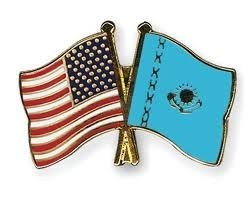
The diplomats focused on the dynamic growth of Kazakh-American relations, as well as to the implementation of the agreements reached during the official visit of President Nazarbayev to Washington in January 2018. Special emphasis was made on the enhancement of political and trade and economic partnership between Kazakhstan and the United States.

Minister Abdrakhmanov also met with the management of leading American companies and corporations, who were briefed on the new favorable business environment in Kazakhstan. It was stressed that the successful implementation of the high level agreements between the Presidents of Kazakhstan and the United States gave a boost to business activities, as well as increased the inflow of US investments into the Kazakh economy.

The minister noted that given Kazakhstan’s policy of economic diversification, the country is interested in attracting American experience and capital for the implementation of big high-tech projects, including in processing and manufacturing industries, development of transport infrastructure, agriculture, communications and IT-technologies. These and many other projects will be discussed during the upcoming visits of Kazakh officials to the United States and American trade missions to Kazakhstan.

EU approves 98-million-euro funding to support reforms in Afghanistan

KABUL (TCA) — On July 25, the European Union (EU) informed the Afghan government about its decision to disburse € 98 million to support Afghanistan in carrying out reforms to finalize and operationalize its development policies (ANPDF and NPPs), maintain macroeconomic stability and mobilize domestic revenue, advance sound public financial management and strengthen state budget transparency.

Continue reading

Russia, Tajikistan conduct joint exercise in Badakhshan, near border with Afghanistan

DUSHANBE (TCA) — Russian and Tajikistan military held joint exercises in the remote Tajik region, aimed at countering possible security threats coming from neighboring Afghanistan. We are republishing this article on the issue, written by John C. K. Daly, originally published by The Jamestown Foundation’s Eurasia Daily Monitor:

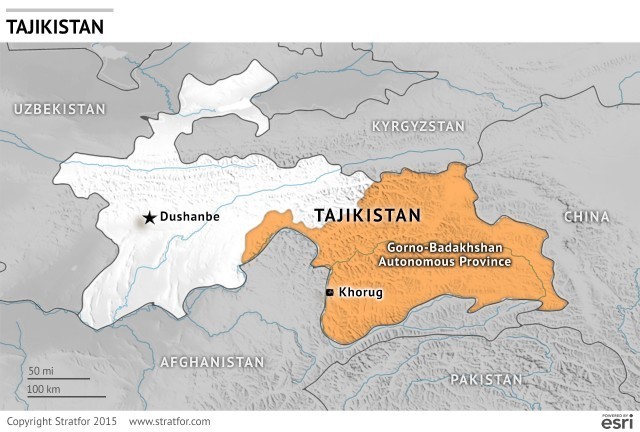
Tajikistan’s Armed Forces began a four-day joint training exercise, on July 17, with forces from Russia’s 201st military base, located on the territory of this Central Asian republic. Notably, the exercise, for the first time, took place along the Afghan border in Tajikistan’s mountainous eastern Gorno-Badakhshan Autonomous Region. Specifically, the drills were held at the Jilondi training range, 75 miles east of Khorugh. The press service of Russia’s Central Military District reported that 400 Russian service members and 700 Tajikistani reservists trained for how to counter the possible intrusion of militants from northern Afghanistan, eliminate indigenous extremist threats and organize territorial defenses (Mil.ru, July 17). The exercise concluded on July 21.

The Ministry of Defense of Tajikistan explicitly declared that the maneuvers were directed at countering possible threats emanating from Afghanistan: “The premise of the exercises is that numerous armed terrorist groups are trying to exit Afghanistan, with the possibility that some of the terrorists can break through. The task of the personnel participating in the exercises is both to repel attacks and eliminate the terrorists if they cross the frontier” (Regnum, July 16). Underscoring the importance of the exercise, the commander in charge was Lieutenant General Sherali Mirzo, Tajikistan’s minister of defense.

After the collapse of the Soviet Union in 1991, the Soviet Army’s 201st Motorized Rifle Division was placed under the command of the Soviet military’s successor, the Allied Forces of the Commonwealth of Independent States (CIS). While remaining mostly neutral in the violent 1992–1997 Tajik Civil War, the 201st Motorized Rifle Division was tasked with protecting critical local infrastructure sites, including the Nurek Hydropower Plant (which generated the majority of the country’s hydroelectric output), the Iavan electromechanical combine, the Vakhsh nitrogen fertilizer plant and a number of military facilities, along with several highways in the mountain passes in Kuliab and Kurgan-Tiubinskii provinces (Centrasia.ru, August 3, 2015).The 201st Motorized Rifle Division was reorganized in 2009 as the 201st Russian military base—currently, the largest military facility beyond Russia’s borders—with troops deployed between Dushanbe and Bokhtar. The 201st military base came under the direct control of the Armed Forces of the Russian Federation’s Central Military District. According to a 2012 bilateral government agreement signed between Tajikistan and Russia, Russian troops will remain at the base until 2042 (Fb.ru, September 10, 2017).

Even as Russian and Tajikistani troops undertake military exercises in Gorno-Badakhshan, concern about the militant threats emanating from Afghanistan’s neighboring Badakhshan province extends beyond Tajikistan. In March, the Afghan National Amy’s 209th Shaheen Military Corps said that its Kokcha-18 anti-terrorism operation, part of the countrywide “Grand Nasrat offensive,” resulted in the deaths of two Chinese citizens who were reportedly members of the East Turkestan Islamic Movement (ETIM). In all, seven militants were killed in Mirawab Raghak as a result of the engagement (Pajwok, March 31).

Beyond the Afghan Army’s ground operations in Badakhshan, rising militant activity there has invited increased offensive operations by the North Atlantic Treaty Organization (NATO). On February 7, United States Air Force Major General James B. Hecker, the commander of NATO Air Command Afghanistan, told reporters via satellite that US forces conducted air operations to strike Taliban and ETIM training facilities in Badakhshan. This was the first such aerial operation in the province, he noted, adding, “The destruction of these training facilities prevents terrorists from planning any acts near the border with China and Tajikistan. ETIM enjoys support from the Taliban in the mountains of Badakhshan, so hitting these Taliban training facilities and squeezing the Taliban’s support networks degrades ETIM capabilities” (Defense.gov, February 7). At the time of the Badakhshan airstrikes, according to the US Department of Defense, the Afghan Air Force conducted at least 40 airstrikes every week and the US Air Force carried out 25 airstrikes weekly (Tolo News, February 7).

Meanwhile, in a sign of growing trans-border cooperation, in June Afghanistan extradited to Tajikistan four Tajikistanis, arrested in the Afghan Badakhshan province town of Borak, opposite Darvaz District in Tajikistan’s Gorno-Badakhshan (Fergananews.com, June 28). The quartet had supported former Tajikistani minister of defense General Abduhalim Nazarzoda, who attempted a rebellion in September 2015 and was subsequently killed by Tajikistan’s security forces (see EDM, September 23, 2015). A number of Nazarzoda’s mutineer cohorts had consequently fled to Afghanistan.

Badakhshan is a vast, remote and rugged region that spans Afghanistan and Tajikistan. Today, it suffers from pervasive drug smuggling and heightened militant activity, making it among the most troubled of Afghanistan’s 34 provinces as well as a security concern to the central authorities in Dushanbe (see EDM, July 27, 2012). In light of the Afghan government’s struggle to quell unrest there on its side of the border, neighboring China and Tajikistan (the latter supported by Russia) are seeking to insulate themselves from the chaos spilling across the porous frontier. As there is little indication that Afghanistan will be pacified anytime soon, such measures will likely both continue and increase.

Failure to contain unrest there could have ominous implications beyond Central Asia; On June 1, Afghani Badakhshan police announced they arrested two men possessing a Stinger man-portable air-defense (MANPAD) system, “which they wanted to shift elsewhere” (Pajhwok.com, June 1). While military aircraft generally possess MANPAD countermeasures, civilian aircraft do not, adding a further element of urgency to pacification efforts in Afghanistan’s northeastern province. And since Badakhshan shares a southern border with Pakistan, also subject to extremist violence, immediate prospects for the province’s pacification seem slight, even as Afghanistan’s northern and eastern neighbors pursue increasingly aggressive defensive postures.