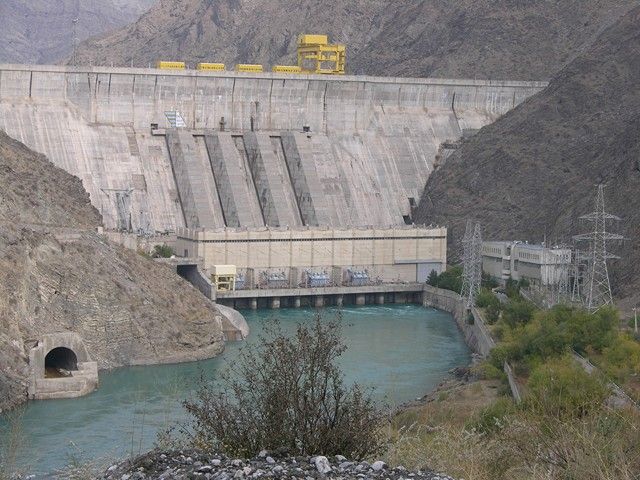
BISHKEK (TCA) — Russia has not ruled out the possibility of building a hydroelectric power plant in Kyrgyzstan, Russian Deputy Prime Minister Arkady Dvorkovich said at the sixth Russian-Kyrgyz interregional conference in Bishkek on December 15.
Russia had begun several hydropower projects in Kyrgyzstan, but not everything turned out as planned at the first stage, Dvorkovich said. With the emergence of sufficient markets under acceptable conditions, Russia will be able to resume the implementation of those projects, he said.
The Upper Naryn hydropower plants (HPPs) cascade is not the only promising project for selling electricity to other countries, Dvorkovich added.
Background
Kyrgyzstan denounced its agreement with Russia on the construction of the Upper Naryn cascade in January 2016. Russia’s RusHydro JSC, which had invested $37 million in the project, asked Kyrgyzstan to return the money.
RusHydro said it was ready for a constructive dialogue and discussion of options for repaying the debt by the Kyrgyz side. At the same time, the company has the right to initiate an international arbitration to claim compensation.
It was planned to build the Naryn cascade within six years, and the first hydraulic unit of the main Naryn HPP-1 should have been put into operation in 2016. The Upper-Naryn cascade would include Ak Bulun, Naryn HPP-1, Naryn HPP-2, and Naryn HPP-3 power plants. The total capacity of the cascade should be at least 191 MW, with average annual electricity production of 1.55 billion kilowatt-hours. The project was estimated at $425 million in 2012, and it was increased to $727 million at the end of 2013.
According to the Kyrgyz side, Russia did not find sources of funding for 2016. This led to delays of the HPPs construction. In addition, Russia had offered new terms that did not meet the interests of Kyrgyzstan.
Failed project
In July 2017, the Kyrgyz Government and the Czech company Liglass Trading signed an agreement on the construction and commissioning of the Akbulun HPP and Naryn HPP-1 of the Upper Naryn cascade, as well as construction of ten small HPPs in Kyrgyzstan.
According to the investment agreement, the Czech company had to contribute $37 million to the authorized capital of Upper Naryn HPPs cascade CJSC to start the procedure for transferring RusHydro’s stake in the amount of 50% of shares to Liglass Trading.
However, Liglass Trading did not fulfill its obligations to pay $37 million, and the Government of Kyrgyzstan terminated the contract in September 2017.
Potential investors
There were talks that no investors would come to the Upper Naryn cascade but it is not true, Prime Minister of Kyrgyzstan Sapar Isakov told journalists on December 7.
There are two companies which show interest in the Upper Naryn cascade, and the Government is negotiating with potential investors. As soon as the negotiation is over, the Government will make an official statement, Isakov said.
Unprofitable tariffs
The development of Kyrgyzstan’s energy potential through public-private partnership implies an increase in tariffs, international experts believe.
The electricity tariffs should comply with world tariffs, and Kyrgyzstan’s tariffs are currently the lowest in Central Asia.
When setting electricity prices, export tariffs should be taken into account, as well as tariffs in other countries. The average electricity price exceeds 6 US dollar cents per kWh in the region while it is 4.5 cents in Kyrgyzstan. Therefore, investors are reluctant to enter the market with unfavorable tariffs, experts say.
“We clearly understand that without an optimal approach to the tariff policy we will not be able to develop the energy sector,” Prime Minister Isakov said earlier this year. “We have been discussing this issue for a very long time, but to increase the price for electricity, it is necessary to provide our population with adequate wages and social benefits,” he concluded.
Oil and gas industry
According to Russian Deputy Prime Minister Dvorkovich, Russia is planning to implement not only electricity projects but also investment projects in the oil and gas sector in Kyrgyzstan. Russian oil companies are interested in developing and modernizing processing facilities in Kyrgyzstan, he said.
In 2018, Russia is ready to supply about 1 million tons of oil and oil products duty-free to Kyrgyzstan, Dvorkovich said. Last year, the State Duma of Russia ratified the agreement between Russia and Kyrgyzstan on duty-free supplies of crude oil and finished petroleum products to the country.




 TCA
TCA