• KGS/USD = 0.01144 0%
  • KZT/USD = 0.00211 0%
  • TJS/USD = 0.10438 0%
  • UZS/USD = 0.00008 0%
  • TMT/USD = 0.28490 0%
  • KGS/USD = 0.01144 0%
  • KZT/USD = 0.00211 0%
  • TJS/USD = 0.10438 0%
  • UZS/USD = 0.00008 0%
  • TMT/USD = 0.28490 0%
  • KGS/USD = 0.01144 0%
  • KZT/USD = 0.00211 0%
  • TJS/USD = 0.10438 0%
  • UZS/USD = 0.00008 0%
  • TMT/USD = 0.28490 0%
  • KGS/USD = 0.01144 0%
  • KZT/USD = 0.00211 0%
  • TJS/USD = 0.10438 0%
  • UZS/USD = 0.00008 0%
  • TMT/USD = 0.28490 0%
  • KGS/USD = 0.01144 0%
  • KZT/USD = 0.00211 0%
  • TJS/USD = 0.10438 0%
  • UZS/USD = 0.00008 0%
  • TMT/USD = 0.28490 0%
  • KGS/USD = 0.01144 0%
  • KZT/USD = 0.00211 0%
  • TJS/USD = 0.10438 0%
  • UZS/USD = 0.00008 0%
  • TMT/USD = 0.28490 0%
  • KGS/USD = 0.01144 0%
  • KZT/USD = 0.00211 0%
  • TJS/USD = 0.10438 0%
  • UZS/USD = 0.00008 0%
  • TMT/USD = 0.28490 0%
  • KGS/USD = 0.01144 0%
  • KZT/USD = 0.00211 0%
  • TJS/USD = 0.10438 0%
  • UZS/USD = 0.00008 0%
  • TMT/USD = 0.28490 0%

Convention on legal status of Caspian Sea to be signed in first half of 2018

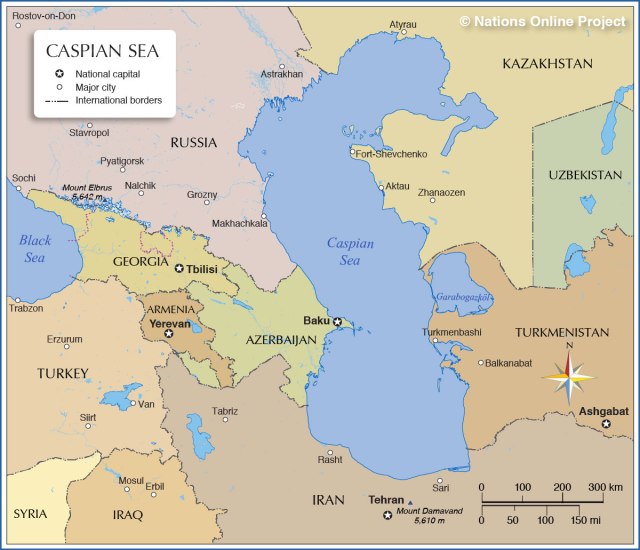
BISHKEK (TCA) — The five Caspian Sea littoral states — Azerbaijan, Iran, Kazakhstan, Russia, and Turkmenistan — have agreed on the draft Convention on the Legal Status of the Caspian Sea, which will be signed at the Fifth Caspian Summit to be held in Kazakhstan in the first half of next year, Russian Foreign Minister Sergey Lavrov said in a statement following the Meeting of the Caspian Littoral States’ Foreign Ministers in Moscow on December 5.

“We have agreed to continue to vigorously promote the implementation of new promising joint projects, especially in the transport sector with its various aspects – from infrastructure development and commercial navigation to improving navigation safety – and the deepening of economic cooperation between the Caspian Five,” Lavrov said.

He also said that the foreign ministers “have positively evaluated the interaction between our defence ministries in the Caspian Sea,” adding that this year, almost all coastal states exchanged friendly visits by their Navy ships.

Meanwhile, Azerbaijani Foreign Minister Elmar Mammadyarov said that there is “a need for maximum efforts to reach a consensus” on all remaining issues before the summit, RFE/RL reported.

The foreign ministers did not say what the remaining sticking points were.

The Caspian Sea is the largest inland body of water in the world, with huge hydrocarbon resources.

Its legal regime has been under discussion since 1991, when Azerbaijan, Kazakhstan, and Turkmenistan gained independence following the collapse of the Soviet Union.

If the Caspian is legally declared a sea, all five littoral countries would map out their territorial waters and exploit the resources as they see fit.

If it is designated as a lake, all the resources of the Caspian, and profits from those resources, would be split equally among the five countries.

Turkmenistan to take $1.8 billion gas dispute with Iran to international arbitration

ASHGABAT (TCA) — Turkmenistan plans to take to international arbitration a dispute with Iran over $1.8 billion Ashgabat claims Tehran owes for Turkmen natural gas deliveries, Turkmen media reported on December 5.

Turkmenistan stopped the gas flow to Iran in January 2017, demanding that the Islamic Republic settle a debt which allegedly remained outstanding from previous supplies, Iran’s PressTV reported.

Ashgabat claims Iran owes it $1.8 billion from sales between 2007 and 2008 when freezing winters led to severe shortages across 20 Iranian provinces, forcing the country to raise gas imports from its northeastern neighbor.

At the time, Turkmenistan demanded a nine-fold hike which raised the price of gas up to $360 from $40 for every 1,000 cubic meters.

Iran has its own major gas fields in the south of the country but had imported gas from Turkmenistan since 1997 for distribution in its northern provinces, especially during the winter.

According to Turkmen officials, the balance has built up to a debt of $1.8 billion which Iran is rejecting and has threatened to take the case to international arbitration.

In January, the National Iranian Gas Company (NIGC) said a plan was on agenda to file a lawsuit against Turkmenistan over stopping gas exports to Iran.

Myrat Archayev, the head of Turkmenistan’s state-controlled Turkmengas company, now says that negotiations with Iran over the dispute have been unsuccessful, and the Iranian side had proposed taking the matter to arbitration, RFE/RL’s Turkmen Service reported.

Turkmen President Gurbanguly Berdymukhamedov instructed Archayev to accept the offer to seek mediation in an international arbitration court, according to the Turkmen state news agency.

In 2016, Russia stopped buying gas from Turkmenistan. With the cutoff of supplies to Iran, Ashgabat is now left with China as its sole buyer of natural gas.

Uzbekistan and Afghanistan sign railway deal

TASHKENT (TCA) — During Afghanistan President Ashraf Ghani’s official visit to Tashkent on December 5, Uzbekistan and Afghanistan signed an agreement to extend a railroad connecting the two countries in a move which may eventually give landlocked Uzbekistan a direct link to sea ports, RFE/RL reported.

In 2011, Uzbek state railway company, Ozbekiston Temir Yollari, built a short link between Hairatan, a town on the Uzbek-Afghan border, and Mazar-e Sharif, a major city in northern Afghanistan.

Tashkent has since expressed interest in extending that line to Herat, another Afghan city in the northwest, and a gateway to Iran. Another link, already under construction, will connect Herat to Iran, which may eventually enable Uzbekistan to send cargoes to and from Iran’s Gulf ports.

Uzbek President Shavkat Mirziyoyev’s office said in a statement that he and Afghan President Ashraf Ghani signed an agreement on the construction of the Mazar-e Sharif-Herat railroad.

The statement from Mirziyoyev’s office provided no details on the cost or source of funding for the rail project. The original, short link was almost fully financed by the Asian Development Bank, which has also financed studies for the expansion project.

Mirziyoyev and Ghani also signed 20 other deals, including an agreement on the construction of a new electric power line and deals for supplies of Uzbek agricultural products, medicines, and other goods to Afghanistan.

The Afghan National Security Adviser and his Uzbek counterpart also signed a Memorandum of Understanding on maintaining the security of the Hairatan bridge, TOLOnews reported.

At a joint press conference after the signing of the agreement, Mirziyoyev said his country strongly supports peace and stability in Afghanistan.

“Tashkent strongly valued cooperation with Afghanistan in all spheres, including economic and security ties. Cooperation agreements signed between the two nations are worth millions of dollars,” he said.

Kazakhstan: prime minister promises paradise for foreign investors

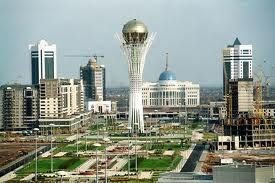
ASTANA (TCA) — On December 5, at Kazakhstan Global Investment Roundtable in Astana, Prime Minister Bakytzhan Sagintayev discussed topical issues of investing in Kazakhstan with representatives of more than 100 major companies from 30 countries, the official website of the Prime Minister of Kazakhstan reports.

The event was attended by heads of international companies and organizations, such as Nasdaq, Mitsui & Co., Master Card, Yildirim Holding, World Bank, COSCO Shiping, COFCO, China Gezhouba International Engineering, Calik Holding, Alstom, Aberdeen Standard Life, Tokyo Rope, Marubeni, ENI, Farm Frites, ROSATOM, Cottonex, CIS-Airbus Group, and others.

During the plenary session “Kazakhstan’s Economic Reform Program: Challenges and Opportunities” Prime Minister Sagintayev told the forum participants about the measures taken in the country to develop the investment climate and expand investment opportunities.

Sagintayev said that the recently launched Third Modernization of Kazakhstan opens new opportunities for investors in various sectors of the economy: metallurgy, machine building, the agro-industrial sector, processing and food industry.

Investors get access to the largest markets through Kazakhstan’s integration policy, Sagintayev said, adding that the country’s integration within the Eurasian Economic Union opens large prospects for investors in Kazakhstan.

The Prime Minister emphasized that Kazakhstan’s Astana International Financial Centre is not only a financial instrument of integration with the foreign stock exchanges, but a center where investors could settle economic disputes in accordance with the principles and norms of the British legal system with proceedings in the English language.

Sagintayev pointed out that the market share of the state is shrinking, and 902 companies in Kazakhstan are to be transferred into competitive environment. He invited foreign investors to participate in the country’s second wave of large-scale privatization.

The Prime Minister confirmed the commitment of Kazakhstan’s Government to the policy of creating the most favorable conditions for investors through:
– improvement of public advisory and consultancy services to investors – feedback to be provided in English language within 10 days of application;
– provision of public services to foreigners in English starting from 2020;
– all the key regulatory and legislative documents are to be published in English on the websites of the Ministry of Justice, Ministry of Foreign Affairs, and national company Kazakh Invest;
– introduction of electronic visas for foreign investors.

Kyrgyzstan-Tajikistan territorial disputes threaten regional stability

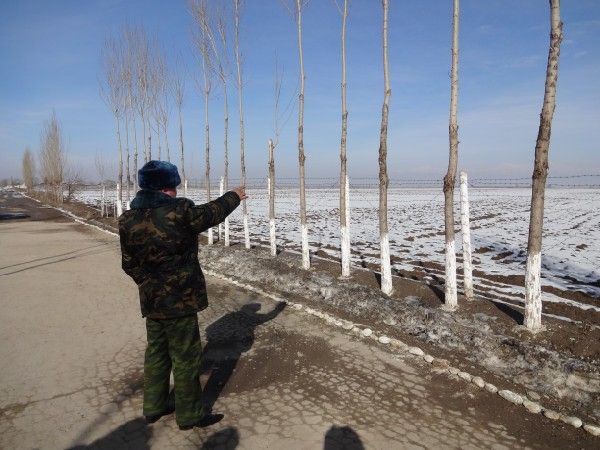
BISHKEK (TCA) — Shared by Kyrgyzstan, Tajikistan, and Uzbekistan, the densely-populated Fergana Valley is an area of disputed borderlines, enclaves and exclaves. While Kyrgyzstan and Uzbekistan have of late agreed on delimitation of the majority of their border, the situation with the Kyrgyz-Tajik border delimitation remains unresolved. We are republishing this article by Paul Goble on the issue, originally published by The Jamestown Foundation’s Eurasia Daily Monitor:

After gaining their independence a quarter century ago, all of the countries of the post-Soviet space have had to delimit their borders with each other. Most have had conflicts, but all but a few of those have since been resolved. One of the most serious of the remaining border conflicts involves the state border between Kyrgyzstan and Tajikistan as well as the status of an ethnic-Tajik exclave (Borukh) within the borders of Kyrgyzstan. Disagreements about the location of the border led to an armed clash three years ago (see EDM, February 11, 2014; May 20, 2014). And now, some incautious language by the outgoing president of Kyrgyzstan threatens to reignite an issue local experts say is “a delayed action mine” that threatens not only the stability of these two countries but also of Central Asia as a whole (News.tj, November 24, 2017).

For the first decade after gaining their independence, Kyrgyzstan and Tajikistan were so beset with domestic problems that they did not even try to negotiate with one another on the delimitation of borders, although Tajikistanis believe to this day that Bishkek used this period to reroute highways so as to cut off the Tajik exclave of Borukh and to make it more difficult, if not impossible, for ethnic Tajiks living along the populated portion of the border to move about. Seventeen years ago, the two countries began talks, and by early 2015, they had agreed on the delimitation and demarcation of 503 of the 971 kilometers of their borders.

Since that time, however, there has been almost no progress at all. Two reasons account for this. First, the portions of the border agreed to before 2015 were almost all unpopulated, while the 460 kilometers that are left pass through ethnically mixed villages and rural areas. The division of these communities is extremely controversial because lines would either have to be drawn between houses, or people would have to be moved. Second, the two sides have not been willing to make any progress on the question of what to do with the Borukh exclave. The economic situation there has become dire—there are few jobs, no free land, inadequate health and educational institutions, and no reliable surface transportation to Tajikistan. Consequently, more than 13,000 of Borukh’s 33,000 registered residents are now guest workers residing in the Russian Federation (Fergananews.com, November 29).

Meanwhile, the reasons the borders are such a problem and why efforts to reach an agreement on them are proving so difficult are rooted in three things: the way in which the Soviet government divided up these territories in the 1920s, the frequency with which the Communist regime changed the borders between these two republics (just as it did in the case of other republics), and the nationalist agendas of the newly independent states.

Before 1917, the region was not divided along ethnic lines; but in 1924, Moscow created a Tajik Autonomous Soviet Socialist Republic (ASSR) within the Uzbekistan Soviet Socialist Republic (SSR—that is, a “union republic,” administratively, considered the highest federal entity within the Soviet Union). The Tajik ASSR was not elevated to union republic status until 1929. The situation with the Kyrgyz lands was more complicated. Before the Russian Revolution, the Kyrgyz were known as Kara-Kazakhs. And in 1924, the central authorities created another autonomy, this time within the Russian Soviet Federal Socialist Republic (RSFSR—the precursor of the post-Soviet Russian Federation) and joined the Kyrgyz to it. A year later, in 1925—and this date matters now because of a recent statement made by the Kyrgyz Republic’s former president, Almazbek Atambayev (see below)—the Kremlin corrected this error and transformed the Kyrgyz ASSR into the Kazakh ASSR. What is now Kyrgyzstan became a union republic only in 1936.

These divisions were enshrined in Soviet documents, but the central authorities routinely shifted the borders between these republics for economic convenience, irrigation programs, or even as concessions to favored representatives of the national elites. For the local populations, this seldom mattered because republic borders did not matter that much in the single state that was the Union of Soviet Socialist Republics (USSR). But as a result, both Kyrgyz and Tajiks came to view borders as flexible and something that could be changed for one’s benefit. Since 1991, however, this attitude has become a serious problem.

For much of the 1990s, Tajikistan was embroiled in a civil war and could not address the border issue. But the government of Kyrgyzstan saw a chance: it built new highways to integrate ethnic-Kyrgyz-populated areas and isolate Tajik ones, and generally made it far easier for Kyrgyz near the border to integrate with Kyrgyzstan than for ethnic Tajiks to do the same with Tajikistan. Now, the Tajiks have decided they need to respond. And Atambayev’s latest statement about the borders is widely seen as a match that could set off “the delayed action mine” (News.tj, November 24).

What the Kyrgyzstani leader said seems anodyne enough on its surface. He called for the still non-delimited sections of the border between the two states to be drawn according to the same principles used to draw the portion of the borders they have already agreed to. If that principle were followed, the two would use the maps of 1924, before either was a republic, rather than maps of 1940 and later when they were. The earlier maps show a much larger Kyrgyzstan and the later ones a much smaller one. Not surprisingly, the Tajikistani authorities want to adopt exactly the opposite approach.

If it were not for the enclaves and for the new roads and irrigation systems, this might simply result in deadlock. But poverty among Tajiks in both Borukh and in the border areas is pushing Dushanbe to use force to demonstrate its commitment. Bishkek will respond. And consequently, a dispute about maps is likely to explode in the coming months into one costing real lives and threatening the stability of these two countries and neighboring Uzbekistan and Kazakhstan as well.