• KGS/USD = 0.01144 0%
  • KZT/USD = 0.00210 0%
  • TJS/USD = 0.10438 0%
  • UZS/USD = 0.00008 0%
  • TMT/USD = 0.28490 0%
  • KGS/USD = 0.01144 0%
  • KZT/USD = 0.00210 0%
  • TJS/USD = 0.10438 0%
  • UZS/USD = 0.00008 0%
  • TMT/USD = 0.28490 0%
  • KGS/USD = 0.01144 0%
  • KZT/USD = 0.00210 0%
  • TJS/USD = 0.10438 0%
  • UZS/USD = 0.00008 0%
  • TMT/USD = 0.28490 0%
  • KGS/USD = 0.01144 0%
  • KZT/USD = 0.00210 0%
  • TJS/USD = 0.10438 0%
  • UZS/USD = 0.00008 0%
  • TMT/USD = 0.28490 0%
  • KGS/USD = 0.01144 0%
  • KZT/USD = 0.00210 0%
  • TJS/USD = 0.10438 0%
  • UZS/USD = 0.00008 0%
  • TMT/USD = 0.28490 0%
  • KGS/USD = 0.01144 0%
  • KZT/USD = 0.00210 0%
  • TJS/USD = 0.10438 0%
  • UZS/USD = 0.00008 0%
  • TMT/USD = 0.28490 0%
  • KGS/USD = 0.01144 0%
  • KZT/USD = 0.00210 0%
  • TJS/USD = 0.10438 0%
  • UZS/USD = 0.00008 0%
  • TMT/USD = 0.28490 0%
  • KGS/USD = 0.01144 0%
  • KZT/USD = 0.00210 0%
  • TJS/USD = 0.10438 0%
  • UZS/USD = 0.00008 0%
  • TMT/USD = 0.28490 0%

Kyrgyzstan ensures smooth operation of country’s largest gold mine

BISHKEK (TCA) — Kyrgyzstan’s Parliament has approved amendments to the country’s Water Code which allow the development of Davydov and Lysyi glaciers at the country’s largest gold deposit, Kumtor. The amendments are necessary for the State Agency for Environmental Protection and Forestry to permit further work at the deposit.

The Government submitted the bill to the Parliament after Kyrgyzstan and Centerra Gold signed a new agreement on compliance with environmental standards in Kumtor’s development.

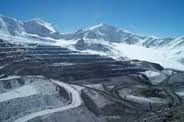
Kumtor, the largest gold mine in Central Asia, is located in Kyrgyzstan’s Tien Shan mountains. Canada-based Centerra owns 100% of the Kumtor mine through its wholly owned subsidiary Kumtor Gold Company. The Kyrgyz Republic holds 26.6% shares in Centerra through the state gold company KyrgyzAltyn.

Kyrgyzstan’s Government initiated amendments to the Water Code back in 2015 but under the pressure of society, the bill was withdrawn from Parliament. Civil society and environmentalists believe that the adoption of the document would legitimize the destruction of glaciers.

Debates on the problem continue so far, and the public has divided into two camps. Some consider the adoption of the law necessary for the economy of the country, while others advocate the environment protection.

Government’s arguments

Due to amendments to the Water Code, the Government will be able to raise an additional 12.7 billion Kyrgyz soms ($182 million) for the development of the country’s economy, said the then Deputy Prime Minister of Kyrgyzstan Duishenbek Zilaliev last week.

In the first nine months of 2017, Kumtor contributed more than 6.8 billion soms in taxes and mandatory payments to the national budget of Kyrgyzstan, and more than $238 million in 2016. Kyrgyzstan received $10 million annually as dividends from its shares in Centerra valued at $415 million, he said.

In addition, Kumtor will allocate a one-time $10 million payment for cancer treatment in the country. The company paid $310,000 for environmental damage annually but according to the recent agreement, the payment was increased to $3 million. Summing up all the money coming from Kumtor, 12.7 billion soms will be directed to the development of Kyrgyzstan’s economy.

When the document is signed by the President, Centerra will be able to conduct a full-scale development in the areas of the Davydov and Lysyi glaciers.

If Kumtor does not work, the glaciers will collapse into the quarry and the Government will have to clear it at its own expense, Zilaliyev explained.

According to Chairman of the State Committee for Industry, Energy and Subsoil Use Ulanbek Ryskulov, it is impossible to exclude the excavation of ice during mining operations, because the ice masses were deformed towards the quarry and are dangerous for mining operations. They need to be moved to protect the quarry and to maintain safe working conditions.

The Lysyi Glacier has been developed by 10% and it will be developed by 20% by the end of the mine operation, he added. The Davydov Glacier has been worked out at 45-50% (70% after completion).

In the future, the Environmental Protection Agency will not allow mining companies to develop glaciers, its director Rustamov said. Kyrgyzstan now has to implement the agreement on Kumtor concluded earlier with Centerra Gold. The agency recently sued Kumtor, and the Supreme Court of Kyrgyzstan decided that “the state authorities should take all necessary measures to ensure the smooth operation of the Kumtor project.” To execute the court decision, the Government had to amend the legislation.

Glaciers in Kyrgyzstan

Amendments to the Water Code allow the development of Kumtor’s Lusyi and Davydov glaciers only while the Ak-Shyirak glacial mass includes 152 glaciers. These glaciers are 0.3% of the total massif, said the author of the project on the modernized preservation of the Ala-Too glaciers and Toktogul reservoir, Anarbek Estebesov.

Kyrgyzstan can lose millions of dollars due to the discontent of people, he added. Kyrgyzstan is not a rich country to refuse from Kumtor’s money, he added.

Civil activists against the amendments

Civil activists, Government members, and MPs gathered last week to find a common solution but the meeting ended in a scandal.

According to environmentalists, the Kumtor deposit was not developed in Soviet times because that would be detrimental to the ecology of the country and the whole region.

The Government’s arguments that Kyrgyzstan could not receive budget revenues and some citizens would lose their jobs do not justify rash political decisions. The consequences of the destructive impact on nature will turn into an unrecoverable ecological catastrophe, they said.

According to ecologists, earlier the Davydov glacier’s volume was 720 million cubic meters, and it has decreased by 400 million cubic meters over the Kumtor operation. The situation with the Lysyi Glacier is also disturbing. However, some ecologists explain glacier retreat as a result of climate change, rather than mining activities.

MP from the Ata Meken opposition political party Natalya Nikitenko shares the view of the civil activists. The Parliament is legalizing past sins on Kumtor and continues lawlessness which took place before, she believes. There are all grounds for the public and civic activists to raise the acute problem of glaciers’ destruction, she said.

Civil activists held a rally to protest against the amendments to the Water Code and promised to collect signatures for the early dissolution of the Parliament. Activists believe that the bill will lead not only to the destruction of the glaciers but also have environmental consequences for all of Central Asia.

Lesson to learn

By supporting the amendments to the Water Code the Parliament created conditions to solve the situation with further exploitation of the Kumtor mine, the Association of Miners and Geologists of Kyrgyzstan said in a statement.

It was a compromise solution. The Davydov Glacier is moving, and this irreversible process began not today or yesterday. The current Government turned out to be a hostage of the decisions on the Kumtor project made in the 1990s and early 2000s, the Association said.

In 2009, the ratification of the Agreement on New Terms for the Kumtor project created a conflict with the national legislation of Kyrgyzstan. The current situation should become for all of us a great lesson to learn. From the very beginning of the Kumtor project, serious miscalculations and mistakes were made. The then leadership of the country made decisions behind closed doors, without public discussion and involvement of mining specialists.

The current Government and Parliament have assumed responsibility for ensuring the uninterrupted operation of the country’s largest enterprise, the association concluded.

Russia tacitly entices Uzbekistan with benefits of EEU, CSTO membership

TASHKENT (TCA) — After the death of longtime Uzbek President Islam Karimov, who preferred that Uzbekistan stay away from any Russia-led economic or military bloc, Moscow is currently taking active steps to get Tashkent involved in Russia’s sphere of economic, and political, influence. Will Tashkent continue its new rapprochement with Moscow? We are republishing this article by Fozil Mashrab on the issue, originally published by The Jamestown Foundation’s Eurasia Daily Monitor:

Since President Shavkat Mirziyoyev’s state visit to Moscow in April 2017, bilateral relations between his country of Uzbekistan and Russia have been steadily expanding. And the frequency of subsequent bilateral exchanges suggests that this trend will most likely continue with the full support of both governments (RIA Novosti, November 2).

This “new phase in Uzbek-Russian relations” was cemented during Russian Prime Minister Dmitry Medvedev’s recent official trip to Uzbekistan, on November 2–3. Medvedev led a high-level delegation to attend the Commonwealth of Independent States (CIS) meeting in Tashkent. During a bilateral intergovernmental meeting on the sidelines of the CIS summit, both sides confirmed their commitment to further deepening relations and signed a package of new cooperation and investment agreements (Vesti, November 2).

According to Russian officials, bilateral trade between Uzbekistan and Russia in the first eight months of 2017 grew by 21 percent to reach $2.1 billion. Russian exports to Uzbekistan grew by 15.9 percent, and Uzbekistani exports increased by more than 30 percent (Rossiyskaya Gazeta, November 2). Uzbekistan is Russia’s fourth-largest trading partner among the CIS countries. Between January and August 2017, 18.5 percent of Uzbekistan’s foreign trade turnover was with Russia. The latter country has regained its status as Uzbekistan’s largest trading partner, which was briefly lost to China in the recent past (Interfax, November 2).

During his visit to Tashkent, the Russian prime minister also observed that “it was absolutely obvious trade-economic relations between the two countries were gaining in weight and were being enhanced more energetically, with significant growth in such important areas as agriculture, food exports, [as well as] industrial and military-technical cooperation” (Rossiyskaya Gazeta, November 2). The Russian government has not only shown a willingness to supply Tashkent with modern weapons at favorable terms but also agreed to help Uzbekistan develop its own military-industrial complex (see EDM, February 15; Ozodlik.org, October 30).

Moreover, Medvedev stated with satisfaction that “practically in all possible areas of cooperation both countries are witnessing the intensification of contacts.”
Since Mirziyoyev’s state visit to Russia last April, more than 20 Russian delegations of different levels have visited Uzbekistan, including two deputy prime ministers, ministers of internal affairs, agriculture, trade and industry, heads of the Russian Security Council and military intelligence, leaders of Tatarstan and Chechnya, the governor of St. Petersburg, the patriarch of the Russian Orthodox Church, as well as trade union leaders and migration officials. A similar number of Uzbekistani delegations also made reciprocal trips to Russia (Rossiyskaya Gazeta, November 2). Moreover, in early October, the two countries carried out their first joint military exercises in 12 years, held in Uzbekistan’s Dzhizak province (see EDM, October 3).

All these positive developments in Uzbekistani-Russian relations are benefitting both sides. Uzbekistan is gaining easier access to the Russian market for its main export products. Moscow has granted so-called “green-corridors”—a simplified customs regime—for Uzbekistani fruits and vegetables to enter Russian market by removing various selectively applied photo-sanitary and other restrictions (Uzagroexport.uz, September 6). Moreover, both sides are working on arranging similar “green corridors” for Uzbekistan’s textiles and other exports to Russia (TASS, October 23).

Breaking with the highly protectionist practices of the Islam Karimov era, President Mirziyoyev has introduced sweeping liberalization of foreign trade by abolishing, as of October 1, import duties on more than 30 product groups. This policy shift opens up access to Uzbekistan’s market for many Russian and other neighboring countries’ products (Sputnik-tj.com, October 2).

All along, this intensified cooperation had been taking place based on the understanding that such closer ties will not necessarily lead to Uzbekistan’s integration into Russian-led economic and military-political unions such as Eurasian Economic Union (EEU) or the Collective Security Treaty Organization (CSTO) (see EDM, April 24). Uzbekistan’s late president, Islam Karimov, had long ruled out joining these organizations because, he said, they reminded him of the former Soviet Union (Tengrinews.kz, January 13, 2015). And today, officials serving under President Mirziyoyev continue to claim that membership in the EEU or the CSTO remains off the table (Regnum, July 5, 2017). According to the Uzbekistani authorities, current bourgeoning relations with Russia are part of Tashkent’s attempt to “de-politicize and de-ideologize inter-state relations with neighboring countries by removing artificial barriers for mutually beneficial cooperation” (Gazeta.uz, December 19, 2016).

Yet, Russia is undoubtedly facilitating trade, investment and military relations with Uzbekistan in this way in order to demonstrate to the new leadership in Tashkent the practical benefits of close cooperation with Moscow. As such, this situation could easily turn out to have been a temporary “free trial” session, susceptible to unilateral changes by the Kremlin, rather than a permanent arrangement if Uzbekistan continues to stay out of the Russian-led integrationist organizations. Expanding the EEU to include all Central Asian countries still remains a high priority for Russian foreign policy (see EDM, March 2, 2016; Mid.ru, October 5, 2017).

Local proponents of joining the EEU and the CSTO claim that Uzbekistan’s membership in these organizations would institutionalize the current favorable trade regime as well as close economic and military cooperation with Russia, thus stabilizing bilateral relations. Moreover, it would help the 2 million–3 million Uzbekistani migrant workers in Russia who continue to face hardships there, despite various recently signed bilateral agreements meant to ease their access to the Russian labor market. The Uzbekistani guest workers’ difficult situation would probably be further eased thanks to their native country’s EEU membership. Incoming migrant laborers from EEU member states are exempted from Russian-language and Russian-history exams, enjoy access to free medical services, have their university degrees recognized and, most importantly, are not required to purchase costly work permits (Eurasia.Expert, October 24).

As bilateral relations continue to expand, it will become increasingly difficult for Uzbekistan to delay EEU or CSTO membership indefinitely if the benefits of these closer ties are implicitly seen to be temporary. Even the existing strong pro-Uzbekistan lobby in Russia—which includes Kremlin-friendly Russian oligarchs of Uzbek origin—may only delay but not cancel the requirement for Tashkent to accede to the EEU and CSTO at some point in the near future, if this new trouble-free burgeoning cooperation is to continue smoothly (BBC—Russian Service, July 6).

During the reception for Mirziyoyev in the Kremlin earlier this year, President Vladimir Putin quoted an Uzbek proverb that can be translated as “united we stand, while divided we fall” (Russia 24, April 5). So privately, Russian officials might already be pressuring Uzbekistan to join these two Eurasian integrationist organizations.

Weekly Digest of Central Asia

BISHKEK (TCA) — The Publisher’s note: Central Asia is an important geopolitical area between Europe, Russia and China. It is in Central Asia that world powers have confronted each other for centuries; it is here that China needs to succeed with its new Silk Road Belt for direct access to the Western markets; and it is here that a large wealth of raw materials has its origin. Every week thousands of news appears all over the world in printed and online media and it is quite understandable that many of them may escape the attention of busy readers. At The Times of Central Asia, we strongly believe that more information can better contribute to peaceful development and better knowledge of the region, and for this reason we are presenting this Weekly Digest of Central Asia which compiles what other media have reported during the past week.

Continue reading

ADB approves first full country partnership strategy for Turkmenistan

ASHGABAT (TCA) — The Asian Development Bank’s (ADB) Board of Directors has endorsed a 5-year Country Partnership Strategy (CPS) for Turkmenistan to support regional cooperation and economic diversification during 2017-2021. This is ADB’s first full CPS with Turkmenistan since the country joined ADB in 2000, the Bank said on November 17.

Fueled by its hydrocarbon exports—Turkmenistan is the 12th largest natural gas producer in the world, with the 4th largest natural gas reserves, and the 10th highest oil producer in the Asia and Pacific region—the country’s economy has grown rapidly. However, highly concentrated export basket and export markets have made the economy vulnerable to changes in commodity prices. Turkmenistan’s national development strategy aims to shift to a growth model based on economic diversification, innovation, and sustainable development, with greater regional cooperation.

“Turkmenistan has made important progress in recent years and achieved upper middle-income status,” said Sean O’Sullivan, Director General of ADB’s Central and West Asia Department. “ADB will work with the government and people of Turkmenistan to build on this progress by enabling the country to diversify its energy markets, improve its regional transport connectivity, and diversify its non-hydrocarbon economy.”

The CPS provides three main avenues of support: hydrocarbon market diversification and energy trade promotion; diversification of the non-hydrocarbon sectors through transport infrastructure investments to improve market connectivity, and supporting private sector development, including small and medium-sized enterprises; and knowledge work on economic diversification and reforms.

Regional power interconnection projects such as Turkmenistan-Uzbekistan-Tajikistan-Afghanistan-Pakistan (TUTAP), Turkmenistan-Afghanistan-Pakistan (TAP), and the Turkmenistan-Afghanistan-Pakistan-India (TAPI) natural gas pipeline project will be the primary vehicles of ADB support to diversify Turkmenistan’s power and natural gas export markets to South Asia. ADB has been instrumental for TAPI’s progress to date, serving as the TAPI secretariat since 2003 and, more recently, acted as transaction advisor. Going forward, ADB will continue to support the project, including the possibility of providing financial advice, financing shareholder equity in TAPI pipeline company, and non-sovereign loans, and credit enhancement.

ADB will support transport infrastructure investments to improve market access and regional connectivity. Modernizing institutions to increase the role of the private sector in the non-hydrocarbon economy, starting with small and medium-sized financing, will be a key area of engagement. To meet the needs of policymakers, ADB will also support knowledge work on economic diversification and economic reforms. Regional cooperation and integration, particularly within the Central Asia Regional Economic Cooperation (CAREC), which Turkmenistan joined in 2010, is a priority area of the CPS.