• KGS/USD = 0.01144 0%
  • KZT/USD = 0.00211 0%
  • TJS/USD = 0.10454 -0.1%
  • UZS/USD = 0.00008 0%
  • TMT/USD = 0.28571 0.28%
  • KGS/USD = 0.01144 0%
  • KZT/USD = 0.00211 0%
  • TJS/USD = 0.10454 -0.1%
  • UZS/USD = 0.00008 0%
  • TMT/USD = 0.28571 0.28%
  • KGS/USD = 0.01144 0%
  • KZT/USD = 0.00211 0%
  • TJS/USD = 0.10454 -0.1%
  • UZS/USD = 0.00008 0%
  • TMT/USD = 0.28571 0.28%
  • KGS/USD = 0.01144 0%
  • KZT/USD = 0.00211 0%
  • TJS/USD = 0.10454 -0.1%
  • UZS/USD = 0.00008 0%
  • TMT/USD = 0.28571 0.28%
  • KGS/USD = 0.01144 0%
  • KZT/USD = 0.00211 0%
  • TJS/USD = 0.10454 -0.1%
  • UZS/USD = 0.00008 0%
  • TMT/USD = 0.28571 0.28%
  • KGS/USD = 0.01144 0%
  • KZT/USD = 0.00211 0%
  • TJS/USD = 0.10454 -0.1%
  • UZS/USD = 0.00008 0%
  • TMT/USD = 0.28571 0.28%
  • KGS/USD = 0.01144 0%
  • KZT/USD = 0.00211 0%
  • TJS/USD = 0.10454 -0.1%
  • UZS/USD = 0.00008 0%
  • TMT/USD = 0.28571 0.28%
  • KGS/USD = 0.01144 0%
  • KZT/USD = 0.00211 0%
  • TJS/USD = 0.10454 -0.1%
  • UZS/USD = 0.00008 0%
  • TMT/USD = 0.28571 0.28%

ADB approves first full country partnership strategy for Turkmenistan

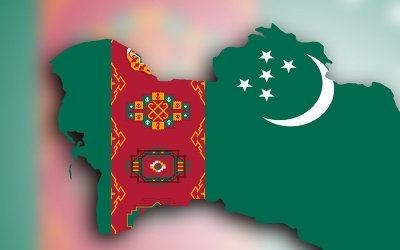
ASHGABAT (TCA) — The Asian Development Bank’s (ADB) Board of Directors has endorsed a 5-year Country Partnership Strategy (CPS) for Turkmenistan to support regional cooperation and economic diversification during 2017-2021. This is ADB’s first full CPS with Turkmenistan since the country joined ADB in 2000, the Bank said on November 17.

Fueled by its hydrocarbon exports—Turkmenistan is the 12th largest natural gas producer in the world, with the 4th largest natural gas reserves, and the 10th highest oil producer in the Asia and Pacific region—the country’s economy has grown rapidly. However, highly concentrated export basket and export markets have made the economy vulnerable to changes in commodity prices. Turkmenistan’s national development strategy aims to shift to a growth model based on economic diversification, innovation, and sustainable development, with greater regional cooperation.

“Turkmenistan has made important progress in recent years and achieved upper middle-income status,” said Sean O’Sullivan, Director General of ADB’s Central and West Asia Department. “ADB will work with the government and people of Turkmenistan to build on this progress by enabling the country to diversify its energy markets, improve its regional transport connectivity, and diversify its non-hydrocarbon economy.”

The CPS provides three main avenues of support: hydrocarbon market diversification and energy trade promotion; diversification of the non-hydrocarbon sectors through transport infrastructure investments to improve market connectivity, and supporting private sector development, including small and medium-sized enterprises; and knowledge work on economic diversification and reforms.

Regional power interconnection projects such as Turkmenistan-Uzbekistan-Tajikistan-Afghanistan-Pakistan (TUTAP), Turkmenistan-Afghanistan-Pakistan (TAP), and the Turkmenistan-Afghanistan-Pakistan-India (TAPI) natural gas pipeline project will be the primary vehicles of ADB support to diversify Turkmenistan’s power and natural gas export markets to South Asia. ADB has been instrumental for TAPI’s progress to date, serving as the TAPI secretariat since 2003 and, more recently, acted as transaction advisor. Going forward, ADB will continue to support the project, including the possibility of providing financial advice, financing shareholder equity in TAPI pipeline company, and non-sovereign loans, and credit enhancement.

ADB will support transport infrastructure investments to improve market access and regional connectivity. Modernizing institutions to increase the role of the private sector in the non-hydrocarbon economy, starting with small and medium-sized financing, will be a key area of engagement. To meet the needs of policymakers, ADB will also support knowledge work on economic diversification and economic reforms. Regional cooperation and integration, particularly within the Central Asia Regional Economic Cooperation (CAREC), which Turkmenistan joined in 2010, is a priority area of the CPS.

IMF welcomes Uzbekistan efforts to improve investment climate

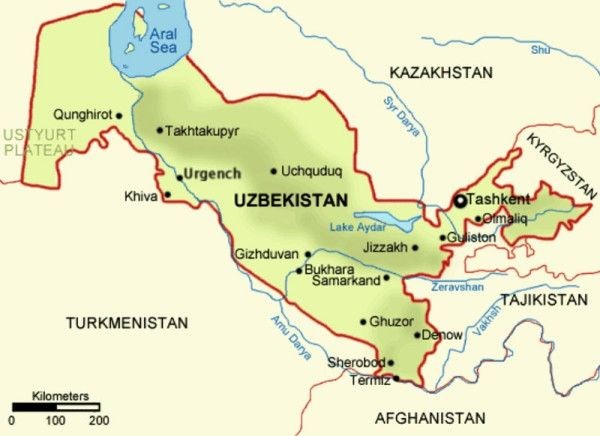
TASHKENT (TCA) — An International Monetary Fund (IMF) mission visited Uzbekistan during November 7–16 and welcomed the Uzbek authorities’ continued efforts to adopt a more effective macroeconomic stabilization framework and to improve the economy’s investment climate, in line with the priorities of the development strategy of the country’s President.

The mission noted that the liberalization of the foreign exchange market in Uzbekistan in early-September was a significant first step, which seemed to be welcomed by all stakeholders.

“The authorities expressed their determination to follow up on the foreign exchange reform by liberalizing most prices, restructuring state-owned enterprises, and removing remaining bottlenecks to international trade and foreign direct investment,” the mission said in a statement at the conclusion of the visit.

“The mission noted that the next reform steps should aim at improving the investment climate and protecting the vulnerable segments of the population.

“Improved international commodity prices and trading partner growth will provide a favorable backdrop to the authorities’ reform efforts.

“Growth prospects remain broadly favorable, but there are risks to growth during this phase of economic transformation, as earlier experiences of other transition economies suggest.

“The mission welcomed the authorities’ focus on keeping inflationary pressures in check. To be able to more effectively control inflation, the Central Bank of Uzbekistan (CBU) is overhauling its monetary framework and is enhancing its operational capabilities.

“The mission also welcomed the authorities’ intention to allow the nominal exchange rate to respond to fundamental shifts in the supply and demand for foreign exchange. Further steps to liberalize transactions in the foreign exchange market would be welcome.

“Fiscal policy will have to continue to play the leading role in stabilizing the economy. In this context, the mission noted that it will be important that fiscal policy, defined as including all on- and off-budget operations, will need to remain tight going forward to help contain inflationary pressures.

“Following the liberalization of the foreign exchange market, the banking system remains well-buffered. But there was agreement that banks’ asset quality and liquidity needs to be monitored carefully, especially against the backdrop of the restructuring of the large state-owned enterprise sector.

“The mission welcomed the first concrete steps toward improving the quality and transparency of economic statistics. A new consumer price index measure, aligned with international standards, will be used to measure inflation from February 2018 onward. Uzbekistan has also progressed toward joining the IMF’s enhanced General Data Dissemination System (E-GDDS),” the statement concludes.

Reform in Uzbekistan: pain precedes gain

TASHKENT (TCA) — As gasoline and diesel prices have jumped up in Uzbekistan, analysts are trying to explain the reason for the situation — which could be the lack of crude oil at Uzbek refineries and the inefficient, centralized system of fuel supply and distribution in the country. We are republishing this article on the issue, originally published by EurasiaNet.org:

On the morning of November 15, motorists in Uzbekistan arrived at filling stations to find shockingly high new prices for their gasoline and diesel.

The unwelcome surprise is the talk of the town in the capital, Tashkent, and on social media.

The relatively low-quality AI-80 category is selling at 3,800 sum ($0.40) per liter, more than one-third higher than the previous rate of 2,800 sum. Higher-grade AI-91 is going for 4,300 sum per liter, a massive jump from 3,000 sum.

Until October last year, gas price increases were typically only slight — a few cents at a time. The cycle of economic liberalization initiated in the wake of President Islam Karimov’s death, however, has injected volatility into a sensitive area of everyday life.

This latest development was not wholly unexpected. Rumors of an imminent hike earlier in November sparked a surge in demand, which in turn caused shortages and massive lines at filling stations. Such was the escalating public concern that Uzbeknefteprodukt, the state-run company responsible for running the fuel retail market, appealed in a statement on November 11 for motorists not to “succumb to panic and the influence of unreliable rumors.”

In what now appears like an attempt to mislead the public, an Uzbeknefteprodukt representative at one point announced publicly that there were no plans for a price rise.

“You know that we need to have a basis for such a development. If the government issues a decree, then we can talk about a rise in prices. But so far these are just rumors,” the company representative was quoted as saying by Podrobno.uz.

But even as those reassurance were rolling in, state-run television station Uzbekistan-24 was reporting on how gas stations all across the country — in Bukhara, Samarkand, Andijan and Kashkadarya — were running short of supplies. One report showed hawkers by the side of roads selling gasoline at 4,000-5,500 sum per liter, considerably higher than the officially sanctioned rate. The overall tenor of the TV news coverage has leaned toward blaming speculators over the state-organized system of fuel distribution for current problems. At one stage, an Uzbekistan-24 report suggested in a leading manner that perhaps allowing gas stations to charge more might cause speculative middlemen to disappear.

Some motorists are pinning the blame on filling station operators, accusing them of exploiting the sudden shortfall in supplies.

“Where are these middlemen getting their gas? They can hardly be making it themselves?” Sanat Sadikov, a taxi driver in the Ferghana Valley town of Kokand, said.

But the owner of one gas station in the city of Karshi, in southern Uzbekistan, assured Eurasianet.org that the shortage was real, not artificially created.

“They only deliver four tons of gas per week from the fuel distribution center. That gets sold in two days, so we have to close for the remaining days,” the gas station owner, Hamro Riskulov, said. “We have to deal with these fuel deficits somehow. Just making it more expensive is not going to make more [fuel] appear.”

The government is taking belated, but wide-ranging action on this front. President Shavkat Mirziyoyev on November 16 ordered the Finance Ministry to extend an interest-free $250 million loan to two oil refineries to fund an increase in the import of crude oil. He also decreed that the import duties on crude hydrocarbons will be waived until January 1, 2020. In a measure intended to lighten the burden on motorists, Mirziyoyev also has ordered that excise taxes on the sale of gas will slashed by half.

In an ambitious attempt at regulating the market and squeezing out speculators, the government last October mandated that all gas should be sold at uniform prices at filling stations across the country. In the past, prices in filling stations located further from distribution facilities were higher, as transportation costs had to be factored in. Yet none of these efforts appears to have been especially successful in making the sector more predictable. The sight of small-time traders standing by the side of the road with repurposed water bottles and jerry cans full of fuel remain common.

Uzbeknefteprodukt is also part of the problem. The company operates in effect as a state monopoly as it is the only entity authorized to distribute fuel to retailers. Filling stations are not allowed to source their gas on the international market, and no foreign fuel companies are currently permitted to operate on the Uzbek market.

Economist Yuliy Yusupov, who has been a prolific commentator on the government’s economic reform agenda, said more liberalization would help mitigate the problem.

“What we need in this market is to bring in free pricing and competition. But what you have now is a centralized management and pricing system,” Yusupov told Eurasianet.org.

Economic affairs commentator Navruz Melibayev also pointed to activity on the currency exchange front as a cause for retail price volatility. In a big bang break with former practice, authorities in September allowed the Uzbek sum to trade freely at the market rate. As a result, the official rate of 4,210 sum to the dollar was permitted to drop to 8,100 overnight, which was close to the going rate on the black market used by most Uzbeks. That has hit companies like Uzbeknefteprodukt badly.

“Previously, Uzbeknefteprodukt bought oil, gasoline and other products at the preferential foreign exchange rate set by the Central Bank of Uzbekistan. Now the dollar rates are aligned and so the company has to import fuel at 8,100 sum to the dollar. That is what is causing the sharp jump in the price of gas,” Melibayev told Eurasianet.org.

That currency liberalization explanation was also offered by senior Uzbeknefteprodukt executive Adhamjon Isomov in an interview to Uzbek-language news website Daryo.uz.

“The prices we charge for fuel today do not cover the cost of buying the gas in the first place. I can say that we supply the population at a loss. The government covers our costs,” Isomov said.

Uzbek citizens are already bracing for the impact higher gas prices will have on the cost of transportation and, as a direct result, on their grocery bills.

“Without a doubt, retailers and producers will face higher transport bills and so they will pass the costs onto the end user,” Melibayev said.

Uzbekistan holds Central Asian International Exhibition

TASHKENT (TCA) — The Central Asian International Exhibition – 2017 started in Tashkent, Uzbekistan on November 15. “Mining World Uzbekistan – 2017”, “Machinery Central Asia – 2017”, “Trans Uzbekistan/Trans Logistica – 2017” and “CAIPS/Securika Central Asia – 2017” international exhibitions began their work within its framework, the Jahon information agency reports.

Continue reading